

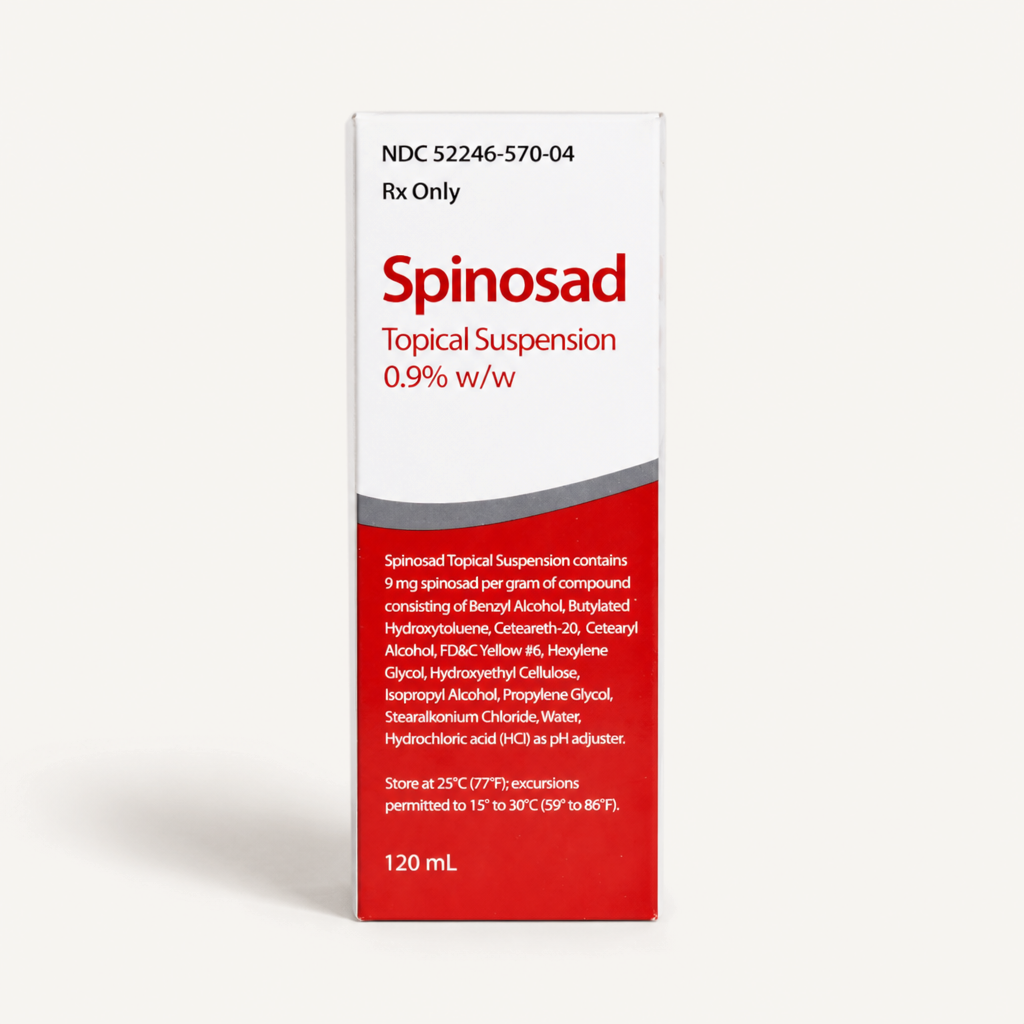
How It Works
Spinosad works by neutralizing lice and mites with a powerful neurotoxin. When the insects come into contact with spinosad, the medication binds to their nicotinic acetylcholine and GABA receptors, causing their nervous systems to malfunction. This leads to involuntary muscle contraction, paralysis, and eventual death.
When treating lice, spinosad is formulated to kill both the insects and their eggs. This is crucial because many patients only require a single treatment to completely clear the infestation.
| Quick Facts | |
|---|---|
| Common Brands | Natroba |
| Drug Class | Pediculicide / scabicide (antiparasitic) |
| Generic Status | Generic for Natroba |
| Availability | Prescription only |
Dosing
When using spinosad, lice treatments and scabies treatments each require a different application process. Following each step is the best way to ensure total eradication and prevent recurring infestation.
Treating Head Lice
- Start With Dry Hair: Prior to application, it is not advised to wet your hair or use conditioner.
- Apply: First spread the topical suspension over the scalp, then work it through to the ends of the hair.
- Check for Full Saturation: Per standard guidelines, you must use enough spinosad to completely saturate your hair and scalp. Long or thick hair may require a larger bottle of medication.
- Rinse: Rinse your hair with warm water. If you wish, you can shampoo your hair as soon as you’re finished rinsing.
- Monitor: Seven days after applying the topical suspension, check for lice and, if the infestation is still present, contact your provider about a second treatment.
Treating Scabies
- Cover Your Body: Per standard guidelines, treating scabies with spinosad requires applying the topical suspension everywhere from the neck down to the soles of the feet.
- Be Thorough: It is advised to pay extra close attention when applying the topical in skin folds, between fingers and toes, and under fingernails.
- Dry Time: The medication typically takes about 10 minutes to dry. It is recommended to wait until the medication is completely dry before putting your clothes back on.
- Duration: Standard guidelines advise to leave the medication on your skin for at least 6 hours before showering.
Note: Dosing information is educational only. Your prescribing physician will determine your specific dose based on your individual health needs. Always follow your healthcare provider’s instructions for exact dosing.
Uses
FDA-Approved Uses
Spinosad – specifically Natroba – is FDA-approved to treat head lice and scabies. With this approval granted for scabies in 2021, spinosad became the first prescription-strength scabicide to meet the FDA’s then-new “complete cure” criteria.
Off-Label Uses
You may see Spinosad prescribed for uses that are not “FDA-approved.” This is a very common and legal practice called “off-label” prescribing, where a doctor uses their clinical judgment to prescribe a drug for a different (but well-researched) purpose.
Spinosad has some notable off-label uses, but they generally don’t apply to human patients. Veterinarians may use spinosad off-label to treat fleas and certain parasites in pets. The drug has also been shown to control a wide range of garden pests, such as caterpillars, beetles, and leafminers.
Side Effects
Like all medications, spinosad can cause side effects. Some common side effects may improve over time as your body adjusts to the medication. Other side effects may be serious and require medical attention.
Common Side Effects
Spinosad’s effects are typically localized and mild because your bloodstream absorbs very little of the drug. Common side effects include:
- Redness on the scalp or skin
- Mild stinging or burning at the application site
- Dry skin
- Eye redness
Serious Side Effects
Serious side effects are rare, but it’s important to know what to look for if they do occur. Serious side effects that can occur from using spinosad include:
- Contact dermatitis: Dermatitis is characterized as an intense, itchy rash that persists after the spinosad is removed.
- Hair loss or thinning: Hair loss and thinning is an extremely rare side effect of spinosad and is usually temporary.
- Severe allergic reaction: As with many other types of medication, spinosad may cause anaphylaxis in people who are allergic to one or more of its ingredients.
Call your doctor immediately if you experience any concerning or prolonged symptoms.
Pharmacist Tips
Forgo the Conditioner
Conditioner – while beneficial in its own way – can coat hair shafts and form a barrier that protects lice and nits from medication. It is advised to avoid any conditioning product for at least 24 hours prior to treatment.
Use the Sink
When rinsing hair after the topical suspension has been applied, patients are advised to lean over a sink to do so. Rinsing hair in the shower increases the likelihood of the medication coming into contact with other areas of the body.
Decontaminate Your Household Items
In addition to using spinosad to eradicate infestations from your body, you should wash all towels, sheets, hats, and other potentially contaminated household items in water heated to at least 130 degrees. This temperature threshold ensures lice and mites won’t survive the cycle.
Plan for a 1-Week Check
Seven days after using spinosad treatment, perform a thorough self-check to ensure there aren’t any insects or nits present on your body. This ensures late-hatching eggs are caught before they’re able to reproduce.
Drug Interactions
Spinosad is applied topically with minimal systemic absorption, so there are no significant interactions between this drug and any oral medications. Known interactions with spinosad include:
- Topical products: It is advised to avoid medicated hair treatments and strong chemical dyes or peels while using spinosad, as combining these can produce strong skin irritation.
- Alcohol: While there are no contraindications for consuming alcohol while using spinosad, excessive drinking can increase the drug’s flushing effects for people with sensitive skin.
Always give your doctor and pharmacist a complete list of all your medications, vitamins, and supplements to check for potential interactions.
FAQs
Why is spinosad easier to use than OTC lice treatments?
Many over-the-counter lice treatments require at least two applications because they do not kill the eggs. Spinosad is formulated to kill lice and nits, so many people only require one round of treatment.
Do I have to comb out the nits when using spinosad?
Technically no, you shouldn’t have to comb out the nits when using spinosad because the medication is ovicidal, meaning it kills the developing louse inside the egg. However, running a comb through hair is an optional step for people who need extra peace of mind.
Does spinosad kill the lice eggs or just the live lice?
Spinosad kills both live lice and lice eggs. It is one of the few medications available with a high ovicidal rate, meaning it kills eggs before they hatch.
How long do I need to leave spinosad on the hair before rinsing?
To treat head lice, it is advised to leave spinosad on the hair for at least 10 minutes before rinsing.
Is spinosad safe for color-treated or chemically treated hair?
Generally, spinosad is considered safe for color-treated or chemical-treated hair, but the drug and any medicated suspension can have a drying effect on hair. You may test out the drug on a small patch of hair before undergoing a full application if you are worried about damaging an expensive or time-consuming professional hair service.
What is the difference between spinosad and permethrin?
Many lice populations are now resistant to permethrin. Since spinosad uses a different biological pathway, it can be more effective at eradicating these lice populations.
Do I need to wash the hair with regular shampoo before applying spinosad?
Per standard guidelines, spinosad should only be applied to dry hair. If your hair is visibly dirty or oily, it is recommended to wash with plain, non-conditioner shampoo before using spinosad, but the hair must be completely dry before the topical suspension is applied.
Can I use a hair dryer to dry the hair after applying spinosad?
It is recommended to let your hair air-dry after using spinosad, rather than using a hair dryer. Excessive heat from an electric dryer may interfere with how the topical suspension works, and can also increase skin irritation.
What should I do if I see live lice after treatment?
If you see lice immediately after rinsing out the spinosad, standard guidelines recommend waiting 7 days. If lice are still present after 7 days, your provider will likely recommend a second treatment.
Is spinosad flammable like malathion?
No, spinosad is a non-flammable topical suspension. Malathion is an alcohol-based treatment, making it potentially flammable.
Can spinosad be used for body lice or pubic lice?
Spinosad is FDA-approved for head lice and scabies. It might be effective against other forms of lice, but it is recommended to speak with your provider before using the drug to treat these infestations.
How much spinosad do I need for long or thick hair?
A full 120-milliliter bottle will probably be needed for shoulder-length or very thick hair. Not using enough product is one of the most common reasons why treatment doesn’t work.
Can I put a shower cap on while the medication is working?
A shower cap is not necessary for using spinosad, but standard guidelines for the drug do not forbid it. A shower can help prevent the medication from dripping into your eyes or onto your furniture while you wait for the topical suspension to dry.
Does spinosad work on “super lice” that are resistant to other treatments?
Yes, spinosad has been recognized for its ability to kill lice that have developed resistance to older medications such as pyrethroid-based treatments.
Can I use conditioner after rinsing out the spinosad?
Yes, standard guidelines state you can use conditioner after rinsing out the spinosad and shampooing your hair. Conditioner is not recommended for at least 24 hours before spinosad treatment because it can create a coating around hair shafts and protect lice from the medication.
Comparable Medications
Spinosad, Ivermectin, Malathion, Benzyl Alcohol, Dimethicone, or Permethrin?
Spinosad is a prescription-strength topical suspension used to treat heat lice and scabies infestations. It is a powerful neurotoxin that kills both the insects and their eggs, so your provider may recommend a spinosad alternative based on your symptoms and medical history. Alternatives to spinosad include:
Ivermectin – Scabies
From $79.99
Ivermectin is a prescription-strength antiparasitic that works by paralyzing the louse's gut. Spinosad targets the insect's entire nervous system. Both involve the same application process, but spinosad's success rate is slightly higher based on clinical trials.
Malathion
From $399.99
Malathion, or Ovide, is an effective antiparasitic, but the medication comes with a few drawbacks. It is highly flammable, carries an unpleasant odor, and must remain on the hair for up to 12 hours. Spinosad has a milder smell, is considered safer, and works faster for most people.
Benzyl alcohol
Sold under the brand name Ulesfia, benzyl alcohol works by suffocating lice but does not kill eggs or nits. A second treatment is almost always needed for complete eradication. Since spinosad kills live insects and their eggs, most people only need one treatment.
Dimethicone
Dimethicone – available under the brand name LiceMD – is non-toxic and works by smothering lice by obstructing their breathing passages. It is considered safer than spinosad, but typically requires multiple combings and treatments to be effective.
Permethrin
From $34.99
Permethrin, sold under the brand name Nix, was once considered the gold standard for head lice treatment. Lice populations have become resistant to the drug over time, so this over-the-counter option is less common throughout much of the United States. Spinosad is known to eradicate lice populations that are resistant to permethrin and other forms of treatment.
We Have Spinosad in Stock. Get Yours Today!
Important: Information on this page is for educational purposes only. Prescribing decisions are made by independent, licensed providers. TelyRx operates technology-enabled pharmacies and a telehealth platform that connects patients with licensed providers. Prescriptions, when provider-approved and issued, are filled and shipped by TelyRx-affiliated pharmacies. We do not employ physicians or make prescribing decisions. Learn more about our editorial standards here.