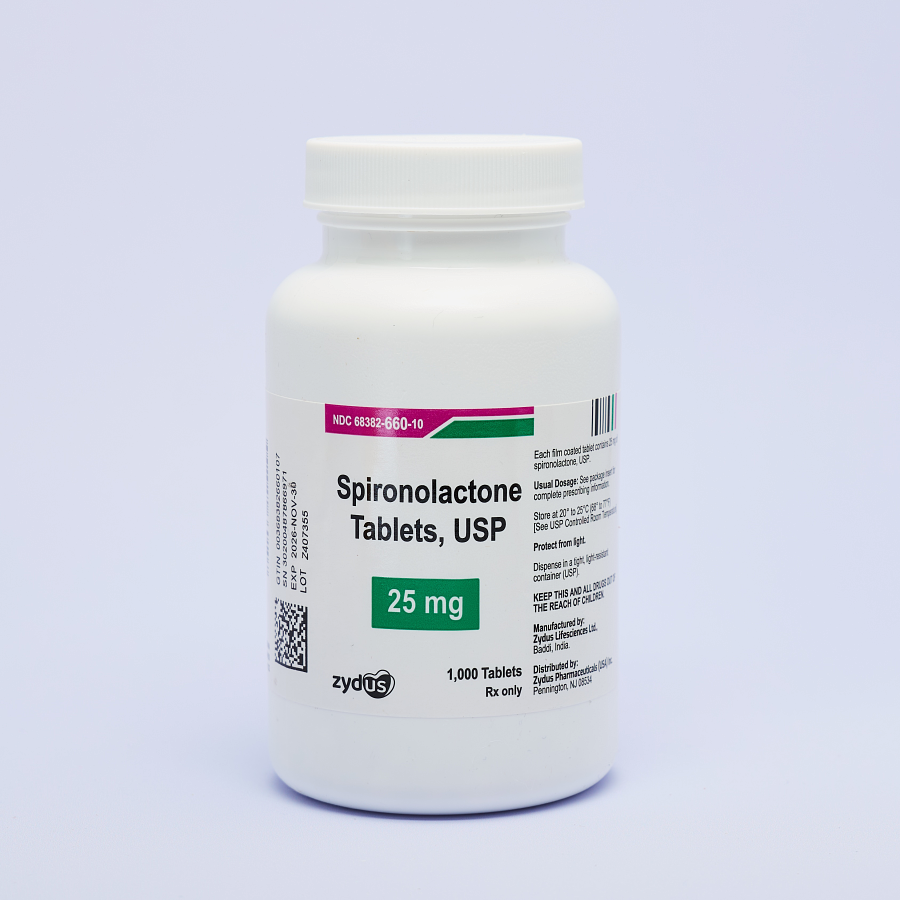
How It Works
Spironolactone is a diuretic, or “water pill,” that works by blocking a specific hormone in the body called aldosterone. Aldosterone is responsible for making the body retain sodium and water, which can lead to increased blood pressure and fluid buildup. As an aldosterone antagonist, spironolactone blocks this hormone and signals the kidneys to release extra water and sodium through the urine. This can reduce the volume of fluid in blood vessels, lowering blood pressure and reducing the workload on the heart.
Unlike other types of diuretics that cause the body to lose potassium along with fluids, spironolactone is a potassium-sparing diuretic. Even though it makes you urinate more often to remove excess fluid, it helps the body retain potassium in the process, preventing your levels from dropping too low.
Spironolactone also possesses anti-androgen activity and blocks male sex hormones such as testosterone. It may be prescribed off-label to treat hormonal conditions in women related to higher testosterone levels, such as moderate to severe acne or hirsutism (increased facial and body hair growth) associated with polycystic ovary syndrome (PCOS).
| Quick Facts | |
|---|---|
| Common Brands | Aldactone, CaroSpir |
| Drug Class | Potassium-sparing diuretic/Aldosterone antagonist |
| Generic Status | Generic version of Aldactone |
| Availability | Prescription Only |
Dosing
Spironolactone is available in different forms, including oral tablets and oral suspensions (liquids). The tablets are available in dosage strengths of 25 mg, 50 mg, and 100 mg, while the oral suspension comes in a 25 mg/5 mL strength. Spironolactone tablets (Aldactone) and the oral suspension (CaroSpir) are not the same and cannot be substituted for one another.
Spironolactone dosing can depend on the condition it’s prescribed to treat.
- High blood pressure (hypertension): The recommended starting dosage range is 25 mg to 100 mg taken daily by mouth. This may be taken as a single dose or divided into separate doses throughout the day. The oral suspension form may have different dosing requirements, typically ranging from 20 mg to 75 mg daily, also in single or divided doses.
- Heart failure: The recommended starting dose of 25 mg taken once daily by mouth. Based on your response and potassium levels, your healthcare provider may either increase the dosage to 50 mg daily or change it to 25 mg every other day.
- Edema (swelling related to liver or kidney disease): The recommended starting dose may be 100 mg taken daily by mouth, which may be in single or divided doses. As needed, the maintenance dose may be adjusted and range from 25 mg to 200 mg daily.
- Hyperaldosteronism: The recommended dose is 100 mg to 400 mg taken daily by mouth in preparation for surgery.
- Hormonal acne and hirsutism (off-label): Dosing may range from 25 mg to 100 mg taken daily by mouth, in single or divided doses.
Uses
FDA-Approved Uses
Spironolactone is FDA-approved for:
- Heart failure
- High blood pressure (hypertension)
- Edema (swelling) caused by liver cirrhosis or nephrotic syndrome
- Primary hyperaldosteronism
Off-Label Uses
You may see spironolactone prescribed for uses that are not “FDA-approved.” This is a very common and legal practice called “off-label” prescribing, where a doctor uses their clinical judgment to prescribe a drug for a different (but well-researched) purpose.
Healthcare providers may prescribe spironolactone off-label to help treat moderate to severe acne in females. Due to its anti-androgen activity, it is not recommended for treating acne in males. Spironolactone may also be prescribed off-label to treat excess facial and body hair growth (hirsutism) in females with PCOS.
Get Savings Updates for Spironolactone
Join our mailing list for exclusive deals and more.
Side Effects
Like all medications, Spironolactone can cause side effects. Common side effects may improve as your body adjusts to the medication, but others may be serious and require medical attention.
Common Side Effects
- Dizziness
- Stomach upset
- Breast pain or tenderness
- Increased urination
- Low blood pressure
- High potassium levels
- Irregular periods in women
- Enlarged breast growth (gynecomastia) in males
- Reduced sex drive in males
- Headache
- Drowsiness
- Nausea
- Vomiting
- Diarrhea
- Leg or stomach cramps
Serious Side Effects
Serious side effects are rare, but it’s important to know what to look for if they do occur. Stop using spironolactone and call your doctor immediately if you experience:
- High potassium levels (hyperkalemia): If untreated, this can be fatal. Symptoms include muscle weakness, difficulty breathing, slow or irregular heartbeat, nausea, vomiting, and numbness or tingling sensations.
- Electrolyte imbalances: Beyond potassium, spironolactone may also cause low sodium, magnesium, calcium, or chloride levels. Symptoms include weakness, muscle cramps, constipation, nausea, vomiting, confusion, difficulty breathing, fainting, seizure, or irregular heartbeats.
- Low blood pressure and worsening kidney function: Fluid loss from spironolactone can lead to dehydration and dangerously low blood pressure. Signs may include feeling faint or dizzy when standing up, decrease in the amount of urine, dark or strong-smelling urine, weakness or fatigue, dry mouth, and headache.
- Severe allergic reactions: Symptoms include swelling of the face, lips, tongue, or throat; difficulty breathing or swallowing; severe rash or itching; fever.
Call your doctor immediately if you experience any concerning or prolonged symptoms.
Pharmacist Tips
Stay Consistent
You can take spironolactone with or without food, but it is recommended to take it the same way every time (e.g., always with food or always without).
Take It in the Morning or Afternoon
Because spironolactone is a diuretic, it will make you urinate more often. To avoid waking up in the middle of the night to use the restroom, try taking your dose in the morning or afternoon.
Watch Your Potassium Intake
Avoid eating foods high in potassium, such as bananas, nuts, certain leafy greens, and salt substitutes containing potassium. Spironolactone increases potassium levels in the blood, and adding more through your diet can be dangerous.
Manage Dizziness
Spironolactone can cause dizziness and lightheadedness, so it may be recommended to avoid alcohol while taking it. Be careful when getting up from a seated or lying position to avoid falling.
Keep Up With Bloodwork
Your healthcare provider may recommend regular blood testing to ensure the medication is not affecting your kidneys or electrolyte levels.
Missed Doses
If a dose is missed, take it as soon as you remember, unless it’s almost time for your next dose. In that case, skip the missed dose and take your next dose as usual. Do not double up on doses of spironolactone.
Liquid Formulations
If you are prescribed the liquid form of spironolactone, shake the bottle well before each use and use the included measuring cup to take an accurate dose.
Drug Interactions
Spironolactone can interact with other medications, potentially altering their effectiveness or increasing the risk of side effects. For example:
- NSAId pain relievers: Nonsteroidal anti-inflammatory drugs like ibuprofen (Advil), acetylsalicylic acid (Aspirin), naproxen (Aleve) can interact with spironolactone and potentially affect kidney function and blood pressure.
- Blood pressure & heart medications: ACE inhibitors (e.g., lisinopril, benazepril) and Angiotensin Receptor Blockers (ARBs) (e.g., losartan) can increase the risk of high potassium and kidney issues when taken with spironolactone.
- Potassium supplements: Taking potassium pills or using salt substitutes containing potassium while on spironolactone can lead to dangerously high potassium levels.
- Abiraterone: Spironolactone may interact with this hormone medication used for prostate cancer.
- Lithium: Spironolactone may interact with lithium, a medication used for depression.
- Digoxin: Spironolactone may interfere with digoxin, a heart failure medication.
- Diuretics: Combining spironolactone with other “water pills” can increase dehydration risks.
- Cholestyramine: Taking spironolactone with this cholesterol medication may raise potassium levels in the blood.
Always give your doctor and pharmacist a complete list of all your medications, vitamins, and supplements to check for potential interactions.
FAQs
How long does it take for spironolactone to clear hormonal acne?
While spironolactone is not FDA-approved for acne, when prescribed off-label, it may take anywhere from a few weeks to a few months for skin to become less oily and prone to breakouts.
Does spironolactone cause you to pee more often?
Yes. Spironolactone is a diuretic, or “water pill,” meaning it helps your body get rid of extra fluids. This naturally leads to an increased need to urinate.
Is spironolactone used for hair loss or hair growth?
Spironolactone may be prescribed off-label to limit hair growth in women with hirsutism (excess facial and body hair) since it lowers testosterone levels. However, hair loss has been reported as a potential side effect of spironolactone.
Does spironolactone cause weight loss?
People taking spironolactone did not report weight gain as a side effect in clinical studies. Because it removes excess fluid from the body, some patients might experience a reduction in water weight, but spironolactone is not a weight loss drug.
Can I drink alcohol while taking spironolactone?
It is generally recommended to avoid or limit drinking alcohol when taking spironolactone. Alcohol is also a diuretic, which can increase the risk of dehydration and side effects like dizziness.
Is it better to take spironolactone in the morning or at night?
Providers may recommend taking spironolactone in the morning or afternoon. Taking it too close to bedtime may cause you to wake up frequently to urinate, disrupting your sleep.
Does spironolactone affect my menstrual cycle or cause irregular periods?
Yes, irregular menstrual cycles or spotting are known side effects of spironolactone. Some women may experience a lack of periods altogether.
Can I take ibuprofen or naproxen with spironolactone?
You should discuss this with your healthcare provider. NSAIDs like ibuprofen and naproxen can interact with spironolactone, potentially affecting the kidneys and blood pressure levels.
Is spironolactone safe to take during pregnancy?
Spironolactone is generally not recommended for people who are pregnant, as a limited number of studies suggest it can cause harm to a developing baby. If you are planning to become pregnant, talk with your provider before starting spironolactone.
Can spironolactone help with PCOS (Polycystic Ovary Syndrome) symptoms?
While spironolactone is not FDA-approved to treat PCOS, it may be prescribed off-label to help with symptoms often associated with the condition, such as hormonal acne and hirsutism (excess body hair) in women.
Is spironolactone a steroid?
Spironolactone has the chemical structure of a steroid, but it’s classified as a potassium-sparing diuretic (“water pill”) and an aldosterone antagonist.
Comparable Medications
Spironolactone, Amiloride, Isotretinoin, Doxycycline/Minocycline, Furosemide, or Minoxidil?
There are several medications that your doctor can prescribe in place of spironolactone. Here are a few possible alternatives below.
Amiloride
Another potassium-sparing diuretic that treats high blood pressure and heart failure.
Furosemide
From $24.99
A diuretic used to treat high blood pressure and swelling (edema) related to heart failure, or liver or kidney problems.
Lisinopril
From $22.99
An Angiotensin-Converting Enzyme (ACE) inhibitor that is used to treat high blood pressure and heart failure, and lower the risk of death after a heart attack.
Isotretinoin
A prescription medication for severe acne.
Doxycycline/minocycline
Tetracycline antibiotics that treat a variety of bacterial infections and acne.
Minoxidil Tablets
From $39.99
An oral medication that treats high blood pressure or a topical that promotes hair regrowth caused by alopecia (male or female pattern baldness).
We Have Spironolactone in Stock. Get Yours Today!
Important: Information on this page is for educational purposes only. Prescribing decisions are made by independent, licensed providers. TelyRx operates technology-enabled pharmacies and a telehealth platform that connects patients with board-certified licensed providers. Prescriptions, when provider-approved and issued, are filled and shipped by TelyRx-affiliated pharmacies. We do not employ physicians or make prescribing decisions. Learn more about our editorial standards here.