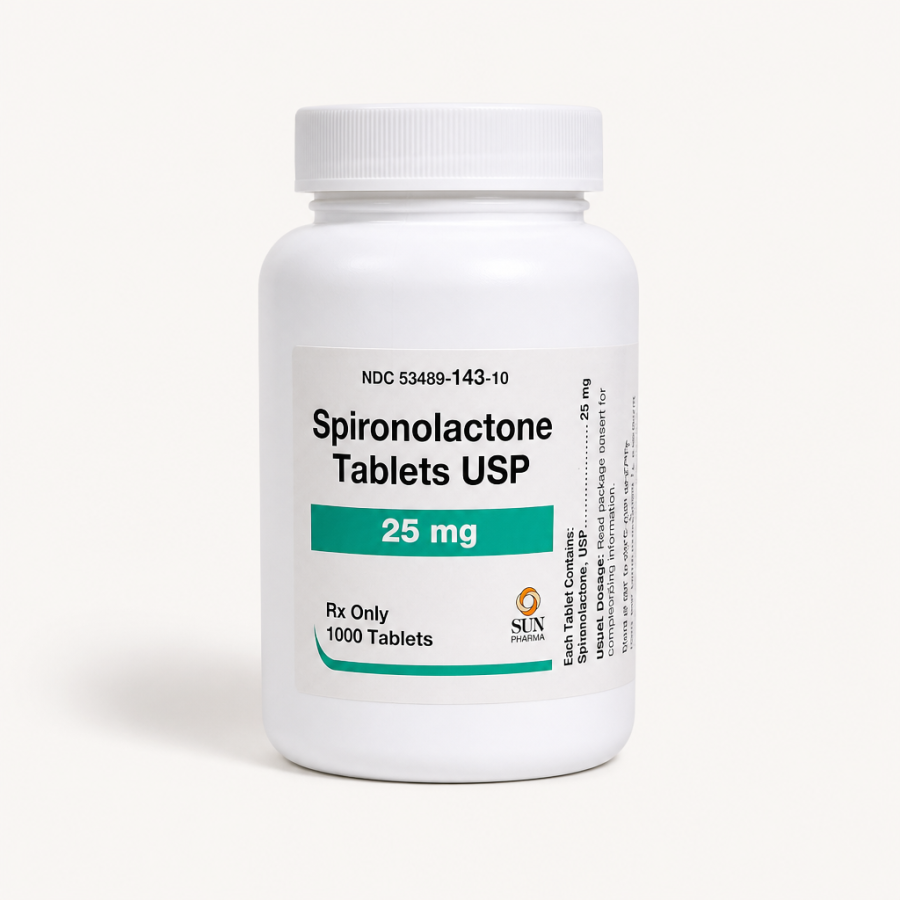
Spironolactone tablets (Aldactone®) are a prescription medication that belong to a class of drugs called potassium-sparing diuretics, also known as aldosterone antagonists. They are FDA-approved to treat conditions such as high blood pressure, heart failure, and fluid retention (edema) caused by liver cirrhosis, kidney disease, or other medical problems. Spironolactone works by blocking the effects of aldosterone, a hormone that causes the body to retain salt and water. This action helps the body eliminate excess fluid while conserving potassium.
In addition to its approved uses, spironolactone is often prescribed off-label for hormonal acne and in women with polycystic ovary syndrome (PCOS) to help reduce symptoms such as acne, excess hair growth, and irregular menstrual cycles.
How to Use:
Typically prescribed as one or more tablets taken once or twice daily, with food to reduce stomach irritation.
Dosages vary widely depending on the condition being treated:
High blood pressure: often 25–100 mg daily.
Heart failure or edema: doses may be higher, as directed by a healthcare provider.
Hormonal acne/PCOS: often prescribed at lower doses, commonly 50–100 mg daily.
Tablets should be swallowed whole with water.
Take spironolactone exactly as prescribed; do not adjust the dose without medical guidance.
Important Notes and Warnings:
Common side effects may include dizziness, stomach upset, breast tenderness, irregular periods, or increased urination.
Because spironolactone is potassium-sparing, it can raise potassium levels in the blood (hyperkalemia). Patients should avoid potassium supplements, salt substitutes containing potassium, or very high-potassium diets unless approved by a provider.
Blood tests to monitor potassium and kidney function are often recommended during treatment.
Inform your healthcare provider if you have kidney disease, liver disease, or adrenal gland disorders before starting therapy.
Rare but serious side effects may include severe electrolyte imbalances, abnormal heart rhythms, or allergic reactions.
Spironolactone should not be used during pregnancy due to potential risks to the fetus. Breastfeeding patients should discuss risks and benefits with their provider.