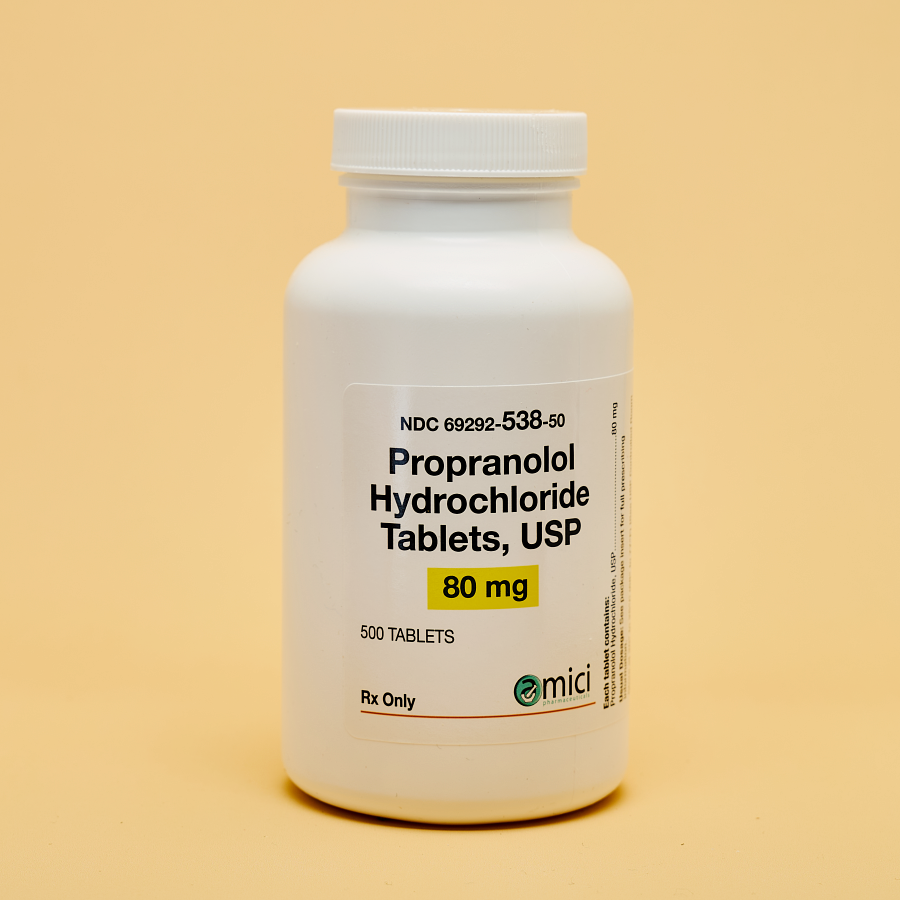
How It Works
Propranolol forms a shield around beta receptors in the heart and blood vessels. During moments of physical or emotional stress, hormones like adrenaline (epinephrine) and noradrenaline bind to these beta receptors as part of your body’s “fight or flight” response.
When adrenaline and noradrenaline cannot bind to beta receptors, the result is often a slower and more regular heart rate, improved blood flow, lower blood pressure, and less severe shaking or tremors. Similarly, propranolol can alleviate headaches by relaxing blood vessels in the brain and reducing the excitability of nerve cells that contribute to migraines.
| Quick Facts | |
|---|---|
| Common Brands | Inderal LA, Inderal XL, Innopran XL, Hemangeol |
| Drug Class | Non-selective beta-adrenergic receptor blocker |
| Generic Status | Generic version of Inderal LA, Inderal XL, Innopran XL |
| Availability | Prescription Only |
Dosing
Note: Dosing information below is educational only. Your prescribing physician will determine your specific dose based on your individual health needs.
Each patient is prescribed an individualized dose of propranolol. The drug can affect heart rate and blood pressure, so providers often start patients at a lower dose and titrate – or increase the dose slowly over time – based on that person’s clinical response and heart rate. Specific dosage and form of medication usually depend on the condition being treated, which may include:
- Performance Anxiety: Standard dosing guidelines for people taking propranolol for performance anxiety recommend a dose of 10 milligrams (mg) to 40 mg about 30 to 60 minutes before the speech or performance. Providers may advise taking the drug on an empty stomach to expedite the absorption process.
- Hypertension: A standard propranolol dosage for hypertension, or high blood pressure, is typically 40 mg twice a day with immediate-release tablets or 80 mg once a day with extended-release tablets.
- Migraine Prevention: Many people with migraines start their propranolol treatment at 80 mg daily, which may be divided into subdoses or taken all at once with an extended-release tablet. Daily doses may be increased up to 240 mg based on provider recommendations.
- Essential Tremor: To treat essential tremor – a neurological condition characterized by involuntary shaking in the head, voice, limbs, and trunk – doctors typically prescribe a dose of propranolol 40 mg taken twice daily.
Always follow your healthcare provider’s instructions for exact dosing.
Uses
FDA-Approved Uses
Propranolol is FDA-approved for a wide range of clinical uses, including:
- Managing high blood pressure to reduce the risk of heart attack and stroke
- Managing long-term angina pectoris, or chest pain caused by heart disease
- Regulating heart rate for patients with atrial fibrillation (irregular heartbeat)
- Reducing the involuntary shakes that can occur with essential tumor
- Acting as a migraine prophylaxis by decreasing the frequency and severity of episodes
- Improving survival rates for people who have recently had a myocardial infarction (heart attack)
- Improving blood flow and alleviating symptoms related to the condition known as hypertrophic subaortic stenosis
- Managing blood pressure for people with pheochromocytoma, a rare type of adrenal gland tumor
This is not an exhaustive list of FDA-approved uses, and propranolol also has several off-label uses (see list below).
Off-Label Uses
You may see propranolol prescribed for uses that are not “FDA-approved.” This is a very common and legal practice called “off-label” prescribing, where a doctor uses their clinical judgment to prescribe a drug for a different (but well-researched) purpose.
Off-label uses for propranolol currently found in clinical practice and research include the following:
- Performance Anxiety: Propranolol can help mitigate “stage fright” symptoms that appear due to stress over an upcoming presentation, speech, or performance.
- Overactive Thyroid: Propranolol can reduce and control heart rate for people with thyroid storm, hyperthyroidism, and other conditions that cause an overactive thyroid.
- Portal Hypertension: For people with cirrhosis of the liver, propranolol can help prevent bleeding caused by esophageal varices.
- Akathisia: Akathisia, or physical restlessness that occurs after taking antipsychotic medication, can be managed with a propranolol treatment plan.
Side Effects
Side effects from taking propranolol are common, and many are linked to the drug taking effect and slowing down different systems in the body. Many patients experience mild side effects during the first few weeks of treatment that gradually diminish over time. These include:
Common Side Effects
- Dizziness or lightheadedness
- Fatigue, tiredness, and weakness in the limbs
- Cold or numb extremities
- Diarrhea, constipation, and mild nausea
- Vivid dreams or difficulty falling asleep
Serious Side Effects
Serious side effects are rare, but it’s important to know what to look for if they do occur.
- Serious side effects that can occur after taking propranolol include:
- Bradycardia: Bradycardia, or a slow heart rate, can occur after taking propranolol with symptoms such as fainting, confusion, and extreme weakness.
- Bronchospasm: People with underlying lung conditions who take propranolol may experience bronchospasm, which causes wheezing and difficulty breathing.
- Worsening Heart Failure: Taking propranolol can worsen the symptoms of heart failure, leading to symptoms like sudden weight gain, swelling of the ankles and feet, and shortness of breath.
- Severe Skin Reaction: Taking propranolol can lead to a severe skin reaction with painful blisters or peeling.
- Raynaud’s Phenomenon: Propranolol can bring on symptoms of Raynaud’s, which include extreme sensitivity to the cold in the fingers and toes.
- Mental Health Changes: Propranolol may cause new symptoms of depression or hallucinations, or worsen existing issues.
Call your doctor immediately if you experience any concerning or prolonged symptoms.
Pharmacist Tips
Stand Up Slowly
Since propranolol can cause dizziness, it is recommended to exercise caution when rising to your feet.
Regulate Alcohol Intake
Alcohol can increase the levels of propranolol in your blood, which in turn can lead to dangerously low blood pressure. For this reason, many providers recommend limiting or cutting out drinking.
Ease off the Drug
Quitting propranolol “cold turkey” can cause sharp spikes in blood pressure and, in some cases, lead to a heart attack. It is recommended to follow your doctor’s instructions when tapering off the drug’s dosage.
Consider Quitting Smoking
Smoking can negatively affect how your liver processes the medication. Your doctor may advise you to quit smoking and provide information about tobacco cessation programs.
Monitor Your Blood Sugar
If you have diabetes and take propranolol, keep an eye on your blood sugar levels – the drug can mask the symptoms of hypoglycemia, or low blood sugar.
Take Caution With Asthma
As a beta blocker, propranolol can cause the airways to constrict. This can cause complications for people with asthma and chronic obstructive pulmonary disease (COPD).
Drug Interactions
Propranolol interacts with a wide array of medication types. Your doctor may adjust the dose or increase monitoring based on how you respond to the initial doses. Known interactions with propranolol include:
FAQs
Does propranolol help with performance anxiety?
Yes, propranolol can help treat performance anxiety – this is one of the drug’s most common off-label uses. Propranolol may not reduce the mental stress of performance anxiety, but it can help alleviate physical symptoms.
How quickly does propranolol start working for physical anxiety symptoms?
Immediate-release propranolol tablets typically start taking effect within 30 to 60 minutes of dosing. Per standard guidelines for peak effectiveness, it is advised to take the drug about an hour before the performance. As their name implies, extended-release tablets require more time to take effect.
Can I take propranolol if I have asthma or COPD?
No, most people with asthma or COPD do not take propranolol because it is a non-selective beta blocker. This means the medication can block all beta receptors, including beta-2 receptors in the lungs that help regulate healthy breathing, and cause the airways to constrict.
Does propranolol cause weight gain?
Some people who take propranolol experience mild to moderate weight gain up to 5 pounds. Sudden or rapid weight gain should be reported to your healthcare provider, as this may indicate an adverse reaction to the medication or an underlying medical condition.
Does propranolol make you feel sleepy?
Yes, propranolol can cause sleepiness – dizziness and fatigue are two of the drug’s most common side effects. Feelings of sluggishness can occur because the drug slows heart rate and decreases blood pressure. People often feel sleepy when first taking propranolol, but this side effect diminishes over time.
Can propranolol cause nightmares?
Yes, some people who take propranolol report vivid dreams or nightmares. The exact reasons for this are unknown, but some experts believe propranolol is a “lipophilic” medication that can cross the blood-brain barrier more easily than other drugs.
Does propranolol lower blood pressure and heart rate?
Yes, lowering blood pressure and heart rate are primary functions of propranolol. Reducing blood pressure and heart rate helps lower the patient’s overall systemic blood pressure.
Why do my hands and feet feel cold while taking propranolol?
Propranolol can cause mild vasoconstriction in the extremities and reduce heart output, reducing blood flow to the finger and toes and causing the hands and feet to feel very sensitive to cold.
Is propranolol addictive or a controlled substance?
No, propranolol is not a narcotic with higher potential for addiction and abuse or a controlled substance. However, a prescription is required to obtain propranolol.
Does propranolol cause hair loss?
Alopecia, or hair loss, is very rare but has been observed in some people who take propranolol and other beta blockers. The hair loss may be reversible when the patient stops taking this medication.
Does propranolol affect my ability to exercise?
Yes, propranolol can affect your ability to exercise by preventing the heart rate from increasing in response to adrenaline. This can make you feel fatigued more easily when exercising.
How long does propranolol last?
Immediate-release propranolol tablets typically last six to eight hours, necessitating multiple doses per day. Extended-release tablets taken once per day are designed to last up to 24 hours.
Comparable Medications
Propranolol, Nadolol, Metoprolol, Clonidine, or Ativan?
Propranolol is a prescription-only beta blocker used to treat a wide range of medical conditions. It is widely available, but not the only option for patients. Common propranolol alternatives include the following:
Clonidine Tablets
From $29.99
Clonidine is an alpha-agonist intended to decrease nerve signals that constrict blood vessels. This mechanism differs from that of propranolol, which targets the blood vessels directly. Side effects of clonidine tend to be more pronounced, especially dry mouth, and the drug has more sedating effects.
Metoprolol
Metoprolol is a cardioselective beta blocker, meaning it primarily targets the heart and does not affect the lungs as much. Metoprolol is a safer option for patients with preexisting and mild respiratory problems, while propranolol may be preferred for “systemic” effects to curb issues like tremors and performance anxiety.
Nadolol
Like propranolol, nadolol is a non-selective beta blocker. The key difference between these drugs is half-life, with nadolol’s effects lasting much longer. For this reason, nadolol is almost always prescribed as a once-daily, extended-release dose, while propranolol is often preferred for situational anxiety that requires a short-term fix.
Ativan
Ativan, a benzodiazepine often sold under the brand name Lorazepam, sedates the central nervous system to quell anxiety. This is a controlled substance and may be habit-forming. Propranolol treats physical symptoms of anxiety without sedating the patient or increasing their risk of addiction.
We Have Propranolol in Stock. Get Yours Today!
Important: Information on this page is for educational purposes only. Prescribing decisions are made by independent, licensed providers. TelyRx operates technology-enabled pharmacies and a telehealth platform that connects patients with board-certified licensed providers. Prescriptions, when provider-approved and issued, are filled and shipped by TelyRx-affiliated pharmacies. We do not employ physicians or make prescribing decisions. Learn more about our editorial standards here.