
The Wellness Collective

What to Know About Mupirocin

Reviewed by Ashley Robinson, PharmD, Pharmacy Manager for TelyRx

Mupirocin ointment via TelyRx

Table of Contents

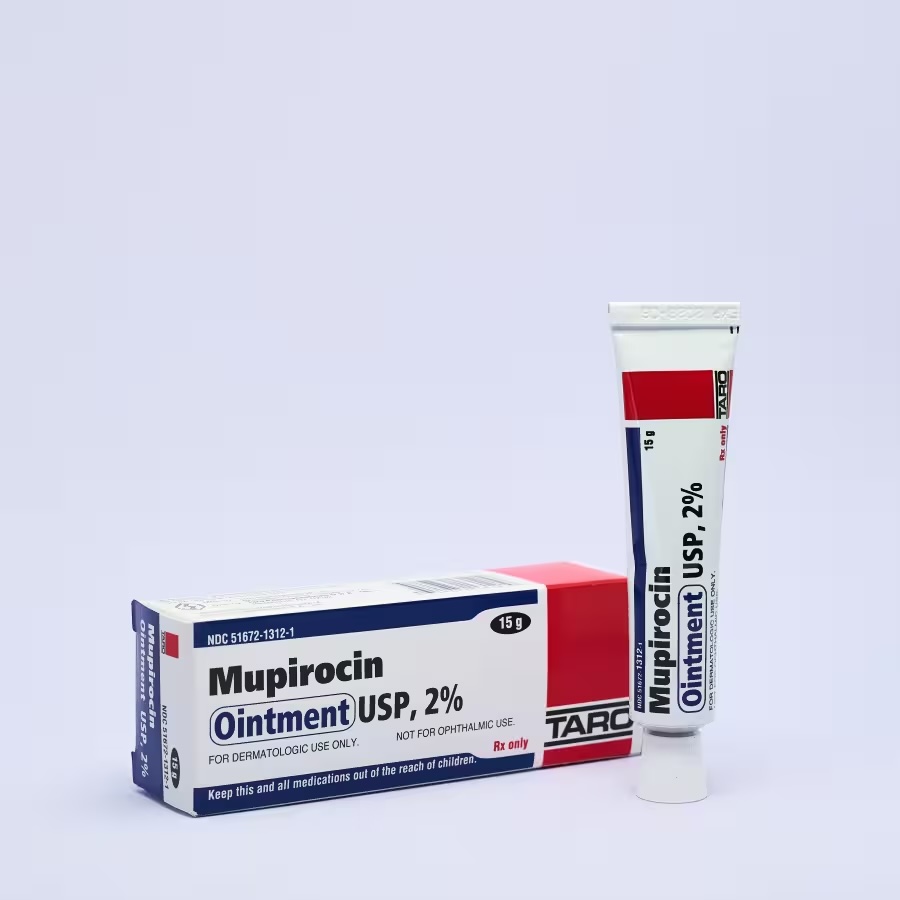
Mupirocin is an antibacterial topical medication that is used to treat a wide range of skin infections, including some caused by drug-resistant bacteria strains. It is available in two formulations, a 2% ointment or 2% cream. Side effects are typically mild and limited to the site of application.

Mupirocin is often prescribed to treat impetigo and a deeper form of impetigo known as ecthyma. Doctors may also recommend mupirocin for secondary skin infections that occur when bacteria colonize a preexisting wound, burn, or eczema patch.

How Does Mupirocin Work?

Mupirocin works by infiltrating bacteria cells and binding to isoleucyl t-RNA synthetase, an enzyme that assists with protein building. By binding to and disrupting this enzyme, mupirocin shuts down protein production within the cell. This means the bacteria can no longer grow or replicate, and leads to bacterial death.

One key characteristic of mupirocin is its ability to target bacteria that are resistant to other drugs. It works differently than penicillin and cephalosporin drugs and may eradicate “superbugs” more efficiently. Research has shown mupirocin is effective for treating methicillin-resistant staphylococcus aureus (MRSA).

Drug Facts

Common Brands Batcroban, Centany
Drug Class Topical Antibiotic
Generic Status Generic for Bactroban
Availability Prescription only

Dosing

Note: Dosing information below is educational only. Your prescribing physician will determine your specific dose based on your individual health needs. 

Mupirocin is intended for short-term treatment and it is not advised to use the drug past the prescribed treatment course – otherwise, your body may become resistant to it. Standard dosage guidelines are roughly the same for each patient, but your doctor may provide specific instructions based on your diagnosis.

  • Frequency: Most providers recommend applying the topical to the infection site three times per day.
  • Duration: Mupirocin treatment courses usually run for 7 to 10 days.
  • Application: A small amount of mupirocin is recommended for each application – per standard guidelines, the topical should create a thin film over the infection site. It is recommended to apply it using a clean cotton swab or gauze pad, and to avoid direct contact between your finger and the infected area.
  • Coverage: After the topical has been applied, it’s recommended to cover the treated area with gauze dressing. 
  • Monitoring: Patients should start to see improvements within 3 to 5 days. If no changes have occurred, it is recommended to contact your healthcare provider for a re-evaluation.

Always follow your healthcare provider’s instructions for exact dosing.

FDA-Approved Uses

Mupicorin is FDA-approved to treat impetigo, specifically the honey-colored sores that occur with impetigo brought on by a staph or strep bacterial infection. It is also FDA-approved to treat secondary skin infections that appear on wounds, abrasions, and surgery sutures.

Common Off-Label Uses

You may see Mupirocin prescribed for uses that are not “FDA-approved.” This is a very common and legal practice called “off-label” prescribing, where a doctor uses their clinical judgment to prescribe a drug for a different (but well-researched) purpose.

Common off-label uses for mupirocin currently found in clinical research and practice include:

  • MRSA decolonization: Carrier colonies of MRSA often infiltrate the inside of the nose, so doctors may prescribe mupirocin to eradicate these colonies.
  • Folliculitis: Bacterial infections in the hair follicles, known as folliculitis, can be treated with a mupirocin course.
  • Infected eczema: Mupirocin can help clear localized bacterial flare-ups that prevent the skin from healing around infected eczema patches.
  • Chronic furunculosis: This condition, which occurs in people prone to staph infections and is characterized by large and painful boils, is sometimes treated with mupirocin if other drugs are not effective.

Side Effects

Common Side Effects

Most patients tolerate mupirocin well and only experience mild side effects, if any, with most symptoms occurring at the site of topical application. The most common side effects from using mupirocin include:

  • Temporary burning or stinging when the topical is first applied
  • Mild skin irritation and itching as skin reacts to the medication and heals
  • Minor inflammation or redness at the infection site
  • Dry or flaky skin
  • Headache

Serious Side Effects

Serious side effects are rare, but it’s important to know what to look for if they do occur.

Serious side effects of using mupirocin can include:

  • Severe allergic reaction: As with many other types of medication, mupirocin can trigger anaphylaxis and a severe allergic reaction in some people. Symptoms include itchy skin, difficulty breathing, and swelling of the face, lips, tongue, and throat.
  • Antibiotic-associated diarrhea: Mupirocin, when applied to large areas of skin, can be absorbed into the gut and potentially cause a C. difficile infection. This typically presents as severe, watery, or bloody diarrhea.
  • Kidney problems: The mupirocin ointment contains polyethylene glycol (PG), which is potentially toxic when large quantities are absorbed into the skin of people with preexisting kidney issues.
  • Superinfection: Prolonged use of mupirocin can lead to overgrowth of organisms the drug is unable to treat, including fungal/yeast infections.

Call your doctor immediately if you experience any concerning or prolonged symptoms.

Pharmacist Tips

  • Complete the course. Standard guidelines recommend completing the entire mupirocin treatment course, even if symptoms subside or disappear before the scheduled end date. Taking the entire course is the best way to ensure the bacteria causing the infection have been eradicated.
  • Follow the “nose rule”: Per standard guidelines, it is not advised to place mupirocin inside the nose unless a doctor has prescribed the mupirocin nasal ointment. Standard formulations contain ingredients that can irritate the hyper-sensitive mucous membranes found in the nasal cavity.
  • Practice good hygiene. It is recommended to thoroughly wash your hands before and after applying the mupirocin topical cream or ointment. If you are treating an infection in your hands, wash them before application, but not after.
  • Watch the eyes. Mupirocin is not an ophthalmic medication and not intended to treat infections of the eye. If the topical comes into contact with either eye, thoroughly rinse it out with cool tap water.
  • Stick to small areas. Mupirocin is meant for small localized infections, and it is not advised to apply the topical over large areas of skin. If the infection is spreading quickly, a stronger medication such as an oral antibiotic may be necessary – your doctor can provide proper guidance in this situation.

Drug Interactions

Due to its minimal systemic absorption, mupirocin does not interact with most oral medications. However, other drug interactions have been observed.

  • Other topical medications: Standard guidelines discourage the use of lotions, ointments, cosmetics, and other skin products on infection sites where mupirocin has already been applied. “Double coating” can interfere with the mupirocin and make the drug less effective.
  • Medical tubing: In clinical settings, mupirocin should not be applied close to intravenous or medical tubing sites. This can promote fungal growth around the insertion point.
  • Kidney-sensitive medications: People with kidney issues should chat with their doctor before using mupirocin ointment, especially if the topical is meant to cover a large area. The ointment’s polyethylene glycol (PG) can interact with other medications meant to treat kidney-related conditions.

Always give your doctor and pharmacist a complete list of all your medications, vitamins, and supplements to check for potential interactions.

FAQs

What is mupirocin ointment used to treat?

Mupirocin is primarily used to treat impetigo skin infections caused by staph or strep bacteria. It is also FDA-approved to treat secondary infections that occur in preexisting wounds, burns, and surgical sutures.

Is mupirocin the same thing as Neosporin?

No, mupirocin and Neosporin are not the same. Neosporin is an over-the-counter topical medication that contains three different antibiotics. Mupirocin is a prescription-strength topical with a unique formulation to combat drug-resistant bacteria, so it may be more effective than neosporin.

Can I use mupirocin for acne or pimples?

Mupirocin is not considered first-line treatment for acne and pimples. Although the drug kills bacteria, its target range is largely limited to infections caused by staph and strep bacteria. Using mupirocin to clear acne may not be effective, and can contribute to your antibiotic resistance.

Why shouldn’t I use the regular mupirocin ointment inside my nose?

Standard mupirocin topical medication contains ingredients that can irritate the mucous membrane in your nasal cavity, which is very sensitive. A special mupirocin nasal ointment with gentler ingredients is normally prescribed for staph or strep infections inside the nose.

Does mupirocin treat fungal infections like ringworm or athlete’s foot?

No, mupirocin is formulated to treat bacterial infections and is not effective against fungal infections like ringworm or athlete’s foot. Your doctor will likely recommend an antifungal treatment to address these issues.

Can I use mupirocin on an open wound or deep cut?

Mupirocin should only be applied to an open wound or deep cut if the patient’s provider has explicitly instructed them to do so. For larger wounds, more powerful systemic antibiotics are often prescribed as first-line treatment.

How long does it take for mupirocin to clear up impetigo?

Results vary by patient, but most patients see improvements to their impetigo after 3 to 5 days of prescribed daily application. However, doctors recommend completing the treatment course – even if symptoms have completely cleared up – to ensure the bacteria is completely eradicated.

Can I use mupirocin for a stye or near my eyes?

It is generally advised to keep mupirocin away from the eyes, as this is not an ophthalmic medication. Your doctor may be able to recommend alternatives for treating styes and other eye infections.

Is mupirocin available over-the-counter (OTC)?

No, mupirocin is not available over the counter. It requires a valid doctor’s prescription to obtain. 

Can I use mupirocin on a burn?

You should only apply mupirocin to a burn if your doctor explicitly directs you to do so. The drug is meant to treat bacterial infections, and may not be effective against minor burns. Mupirocin ointment also contains polyethylene glycol (PG), which can be potentially toxic when the body absorbs large quantities.

Does mupirocin kill MRSA (Methicillin-resistant Staphylococcus aureus)?

Yes, mupirocin is one of the few antibiotic medications known to be effective against MRSA.

What is the difference between mupirocin cream and mupirocin ointment?

Mupirocin ointment is normally used to treat impetigo, whereas mupirocin cream is most often prescribed for infected cuts or suture wounds. The cream is considered more “breathable” for certain types of lesions, and – unlike the ointment – does not contain polyethylene glycol (PG).

Does mupirocin help with eczema?

Yes, mupirocin can be used to help eczema, but only if the eczema shows signs of a secondary bacterial infection. In these cases, doctors may prescribe mupirocin to treat the bacterial infection as an adjunct to whatever first-line medication the patient is using to treat their eczema. 

How often should I apply Mupirocin?

Specific dosage varies by patient and doctor recommendations, but standard guidelines for using mupirocin call for three applications per day over a 7- to 10-day treatment course. It is not advised to apply mupirocin after the course has finished, as this can contribute to antibiotic resistance.

Compare Medications

Compared: Mupirocin, Retapamulin, Neomycin-Polymyxin-Bacitracin, Polysporin, Benzoyl Peroxide, Cephalexin, or Sulfamethoxazole-Trimethoprim?

Mupirocin is an antibiotic topical medication primarily used to treat infections caused by staph or strep bacteria. It may also help with secondary infections. Your doctor may prescribe mupirocin or a mupirocin alternative, depending on what’s being treated. Common alternatives to mupirocin include:

  • Retapamulin: Sold under the brand name Altabax, retapamulin is another antibiotic topical medication prescribed to treat impetigo. Both can be effective, but mupirocin is usually considered first-line treatment and retapamulin is reserved as a backup if mupirocin has failed or the patient is allergic to it.
  • Neomycin-polymyxin-bacitracin: Sold as Neosporin, this over-the-counter topical helps prevent infections in minor cuts that haven’t developed yet. Mupirocin, on the other hand, is a prescription-strength topical and used to treat infections that are already established.
  • Bacitracin and polymyxin B: : Like Neosporin, bacitracin and polymyxin B – sold under brand names like Polysporin – is an over-the-counter topical medication used to prevent infections in minor cuts, scrapes, and burns. It works against a broad range of bacteria, but is not considered potent enough to attack staph or strep bacterial infections the same way that mupirocin does.
  • Benzoyl peroxide: Known as BPO for short, this over-the-counter keratolytic and antimicrobial medication is primarily used to treat acne. Doctors may combine BPO and mupirocin for complex infections, with the former alleviating inflammation and reducing bacterial load while the latter targets resistant bacteria.
  • Cephalexin: Sold under the brand name Keflex, cephalexin is an oral antibiotic for treating widespread infections that are deeply rooted or accompanied by a fever. Doctors typically prescribe mupirocin for localized infections since it does not cause the same systemic side effects as oral medications.
  • Sulfamethoxazole-trimethoprim: Sold under the brand name Bactrim, this oral antibiotic medication is commonly prescribed for broader systemic infections such as respiratory and urinary tract infections. Mupirocin, on the other hand, targets localized skin infections and does not normally cause the same systemic side effects as Bactrim and other oral antibiotics.
  •  
Disclaimer

Important: Information on this page is for educational purposes only. Prescribing decisions are made by independent, licensed providers. TelyRx operates technology-enabled pharmacies and a telehealth platform that connects patients with board-certified licensed providers. Prescriptions, when provider-approved and issued, are filled and shipped by TelyRx-affiliated pharmacies. We do not employ physicians or make prescribing decisions.

Prescription medications made easy with TelyRx.