
The Wellness Collective

What to Know About Hydroquinone

Reviewed by Ashley Robinson, PharmD, Pharmacy Manager for TelyRx

Hydroquinone cream via TelyRx

Table of Contents

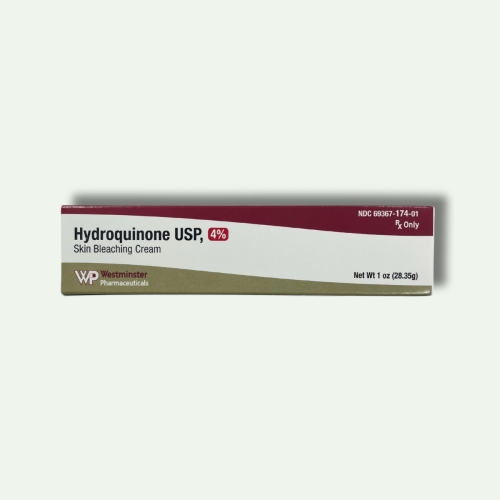
Hydroquinone is a topical prescription medication that lightens dark spots (hyperpigmentation) caused by a range of conditions, including melasma (“mask of pregnancy”), age or liver spots, acne scars, eczema, or hormonal treatments.

Hydroquinone comes in cream and liquid forms, and is applied topically to the affected areas of the skin. Common hydroquinone side effects include skin irritation, redness, dryness, stinging, or cracking.

How Does Hydroquinone Work?

As a depigmenting agent, hydroquinone works by decreasing the amount of melanin in the skin. Melanin is the natural pigment your body produces that gives your skin its distinct color. Using hydroquinone with other sun protection, such as sunscreen, can help dark spots fade away with time.

Drug Facts

Common Brands Obagi-C, Melquin HP
Drug Class Skin-lightening agent
Generic Status Generic for Melquin HP
Availability Prescription only

Dosing

Note: Dosing information below is educational only. Your prescribing physician will determine your specific dose based on your individual health needs.

Hydroquinone is typically applied to the affected areas of the skin twice daily, or exactly as directed by your healthcare provider. 

  • Wash and dry the skin first. It’s recommended to wash and dry your hands thoroughly before and after applying the medication. Ensure the skin is completely clean and dry before application.
  • Apply to the affected area. Apply just enough hydroquinone to cover the affected area with a thin layer. Rub the medication in gently but completely.
  • Avoid sensitive areas. Hydroquinone should not be applied near or inside the eyes, mouth, or nose. If accidental contact occurs, wash the area thoroughly with large amounts of water.
  • Time other topical medications. If you are using other skin medications, it may be recommended to apply them at different times of the day to avoid potential irritation or interaction with hydroquinone.

Always follow your healthcare provider’s instructions for exact dosing.

FDA-Approved Uses

Hydroquinone is FDA-approved to lighten dark spots (hyperpigmentation) caused by a range of conditions, including melasma, age or liver spots, acne scars, eczema, or hormonal treatments.

Common Off-Label Uses

To date, there are no commonly known off-label uses.

Side Effects

Like all medications, hydroquinone can cause side effects. Common side effects are typically localized to the area where the cream is applied. These effects may improve over time as your body adjusts to the medication. Other side effects may be serious and require medical attention.

Common Side Effects

  • Skin dryness
  • Skin redness
  • Stinging or burning sensation
  • Mild skin irritation
  • Cracking or peeling skin

Serious Side Effects

Serious side effects are rare, but it’s important to know what to look for if they do occur. Stop using hydroquinone and call your doctor immediately if you experience: 

  • Severe allergic reactions: Symptoms include swelling of the face, lips, tongue, or throat; difficulty breathing or swallowing; severe rash or itching; and/or fever.
  • Darkening of the skin (exogenous ochronosis): This is a rare condition characterized by a gradual blue-black darkening of the skin. This risk is higher in Black people, but it can occur in Hispanic and Caucasian people as well.
  • Severe skin irritation (contact dermatitis):  While hydroquinone can cause mild contact dermatitis, severe reactions can also occur, such as severe blistering, crusting, burning, or swelling of the treated skin.

Call your doctor immediately if you experience any concerning or prolonged symptoms.

Pharmacist Tips

  • Perform a patch test. Before using hydroquinone for the first time, it is recommended to apply a small amount to an unbroken spot of skin. Wait 24 hours to check for severe reactions such as blistering or extreme itching. If only minor redness or itching occurs, it is generally considered safe to proceed.
  • Use sun protection. When using hydroquinone, it is recommended to use sunscreen with an SPF of 30 or higher, wear protective clothing to cover the treated skin, and avoid sunlamps and tanning beds. Even a small amount of sunlight can darken the treated area again, reversing the effects of the medication.
  • Store it at room temperature. Hydroquinone should be stored at room temperature between 68°F and 77°F (20°C and 25°C), although it can be temporarily exposed to lower temperatures if needed (such as transportation). Keep it in a cool, dry place and ensure the container is tightly closed.
  • Monitor your progress. If you do not see any improvement after two months of treatment with the cream (or three months with the solution), consult your healthcare provider.

Drug Interactions

Hydroquinone can interact with other medications, potentially altering their effectiveness or increasing the risk of side effects. For example:

  • Benzoyl peroxide: This topical acne treatment may interact with hydroquinone and should not be used at the same time.
  • Photosensitizing medications: If you are taking other medications that increase sensitivity to sunlight — such as doxycycline, methotrexate, or tretinoin (Retin-A) — extra care is required to protect your skin from UV exposure.
  • Other topicals: Before starting hydroquinone, ask your healthcare provider if it is safe to combine it with your current prescription or over-the-counter creams, lotions, or supplements.

Always give your doctor and pharmacist a complete list of all your medications, vitamins, and supplements to check for potential interactions.

FAQs

How long does it take to see results from hydroquinone? 

While individual results vary, people typically apply the cream twice daily. It generally takes a few months of consistent daily use to begin showing significant results. If no improvement is observed after two months of cream use or three months of solution use, talk to your healthcare provider.

Why is it important to take a break or “cycle” off hydroquinone? 

If improvement isn’t seen within 2-3 months, your provider may recommend stopping as long-term use may increase the risk of blue-black darkening of the skin (exogenous ochronosis).

Can I use hydroquinone if I am pregnant or breastfeeding? 

It is currently unknown if hydroquinone affects pregnancy or causes fetal harm. It is also not known if the drug passes into breast milk. Before using hydroquinone, tell your healthcare provider if you are pregnant, planning to become pregnant, or breastfeeding so they can advise you on whether it is safe for you.

Why did my hydroquinone cream turn brown, and is it still safe to use? 

Any change in the product’s appearance or packaging should be reported to your pharmacist immediately.

Can I use hydroquinone during the day, or only at night? 

Hydroquinone is typically applied twice daily. Daily sun protection is strongly recommended when using hydroquinone, such as using a sunscreen with a SPF of 30 or higher and wearing protective clothing.  

Why does my skin look darker or redder after starting hydroquinone? 

Mild skin irritation, redness, and stinging are common side effects of hydroquinone. However, if you experience a blue-black darkening of the skin, it could be a serious condition called exogenous ochronosis. If this occurs, stop using the product and contact your provider. Also, not using sunscreen can cause dark spots to reappear or worsen when exposed to sunlight.

Can I use retinol or tretinoin at the same time as hydroquinone? 

Tretinoin (Retin-A) is a medication that makes you more sensitive to sunlight. If you are using hydroquinone with other medications like tretinoin, you may need to take extra care to protect your skin, such as wearing protective clothing, using sunscreen with a SPF of 30 or higher, and avoiding sunlight or tanning beds. Ask your healthcare provider if it is safe to combine these specific products in your routine.

Is hydroquinone safe for darker skin tones? 

Hydroquinone can be used on various skin tones, but the risk of exogenous ochronosis (gradual blue-black darkening) is noted to be higher in Black people, although it can occur in other races as well. If you notice this discoloration, stop using hydroquinone and contact your healthcare provider immediately.

Can I use benzoyl peroxide with hydroquinone? 

Interactions can occur when hydroquinone is used with benzoyl peroxide. Ask your healthcare provider before combining these acne treatments.

Does hydroquinone permanently lighten skin? 

No. Hydroquinone works by decreasing the amount of melanin your body makes. It temporarily blocks the body from making this pigment. If you stop using it or expose the skin to sunlight without protection, dark spots can reappear.

Can I put hydroquinone on my entire face or just the dark spots? 

It’s recommended to apply just enough hydroquinone to cover the affected area. The medication is used to bleach skin areas that are darkened, rather than for whole-face lightening. Avoid applying it to sensitive areas like the eyes, mouth, nose, or lips.

What SPF sunscreen is required while using hydroquinone? 

It’s recommended to use a sunscreen with a SPF of 30 or higher when using hydroquinone, even on cloudy days.

Can I use vitamin C serum with hydroquinone? 

Vitamin C (ascorbic acid) is not known to interact with hydroquinone. However, it’s best to tell your provider about all vitamins, supplements, and topicals you are using to check for potential interactions before using hydroquinone.

Compare Medications

Compared: Hydroquinone, Thiamidol, Azelaic Acid (Finacea, Azelex), Tretinoin (Retin-A), or Tri-Luma?

There are several medications that your doctor can prescribe in place of Hydroquinone. Here are a few possible alternatives below.

  • Thiamidol: A depigmenting agent that is used to lighten dark spots caused by acne, sun damage, age, and mask of pregnancy (melasma).
  • Azelaic acid (Finacea, Azelex): A topical acne treatment that is FDA-approved to treat mild to moderate acne and rosacea.
  • Tretinoin (Retin-A): A topical treatment used to treat acne, hyperpigmentation, and sun damage along with sunscreen, similar to hydroquinone.
  • Tri-Luma: A topical cream that is FDA-approved to treat moderate to severe melasma (mask of pregnancy).
Disclaimer

Important: Information on this page is for educational purposes only. Prescribing decisions are made by independent, licensed providers. TelyRx operates technology-enabled pharmacies and a telehealth platform that connects patients with board-certified licensed providers. Prescriptions, when provider-approved and issued, are filled and shipped by TelyRx-affiliated pharmacies. We do not employ physicians or make prescribing decisions.

Prescription medications made easy with TelyRx.