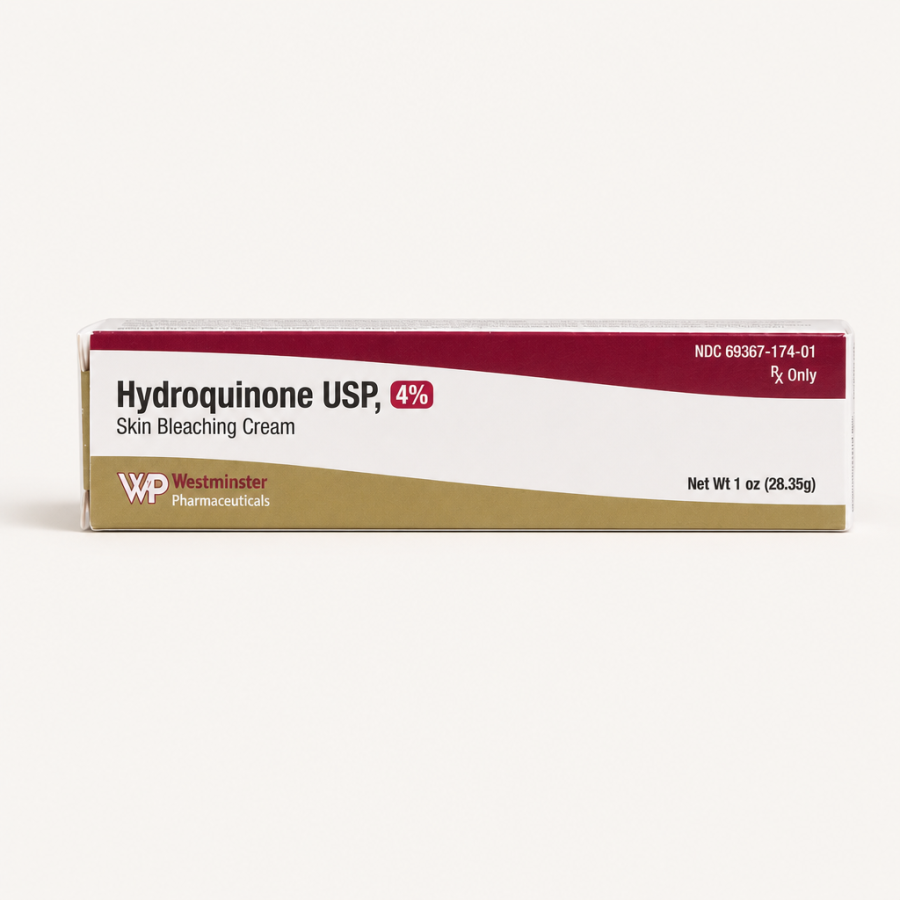
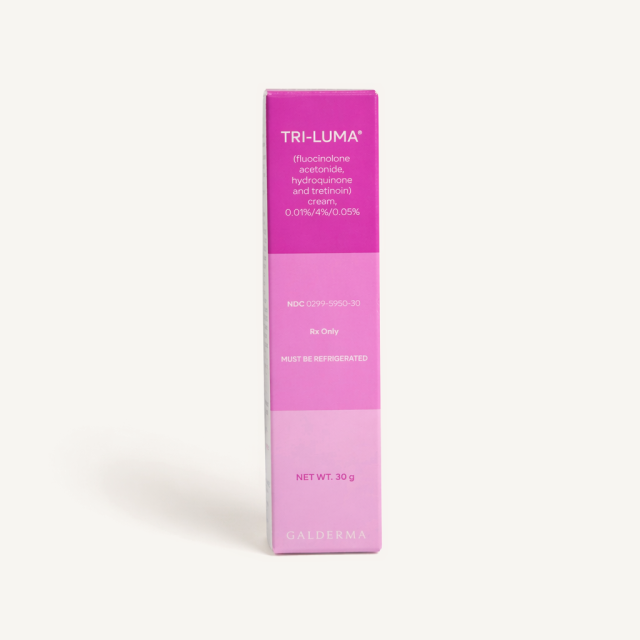
Hydroquinone topical cream is a skin-lightening agent used to reduce the appearance of hyperpigmented areas, including melasma, age spots, sun damage, and discoloration from acne or eczema. It works by inhibiting the enzyme tyrosinase, which is involved in melanin production, gradually fading dark patches of skin over time.
Under the direction of a healthcare provider, apply hydroquinone topical cream sparingly to clean, dry skin twice daily on affected areas only. Treatment duration typically ranges from 3 to 6 months. Prolonged use beyond 6 months should be discussed with a healthcare provider, as overuse may increase the risk of skin irritation or ochronosis (skin darkening).
To ensure optimal results and prevent re-darkening of treated areas, daily use of a broad-spectrum sunscreen with SPF 30 or higher is strongly recommended. Avoid prolonged sun exposure and wear protective clothing on treated skin.
How To Use:
Fades dark spots caused by melasma, acne, eczema, and sun damage
Apply sparingly to hyperpigmented areas twice daily as directed by a healthcare provider
Use for up to 6 months under medical supervision unless other wise advised by your provider
Daily sun protection is highly encouraged (SPF 30+ required)
Do not apply to broken or irritated skin
Side effects may include local irritation, dry skin, stinging of the skin, and redness. Rare, but severe side effects may include change in color of skin to blue-black, and blisters or sores.
This information should not be used to decide whether or not to take this medicine or any other medicine. Only a healthcare provider has the knowledge and training to decide which medicines are right for you. TelyRx does not endorse any medicine as safe, effective, or approved for treating any patient or health condition. This is only a limited summary of general information about the medicine’s uses from the patient education materials and is not intended to be comprehensive. This limited summary does NOT include all information about the possible uses, directions, warnings, precautions, interactions, adverse effects, or risks that may apply to this medicine. This information is not intended to provide medical advice, diagnosis or treatment and does not replace information you may receive from your healthcare provider. For a more detailed summary of information about the risks and benefits of using this medicine, please review the entire patient education information you receive with the medication.