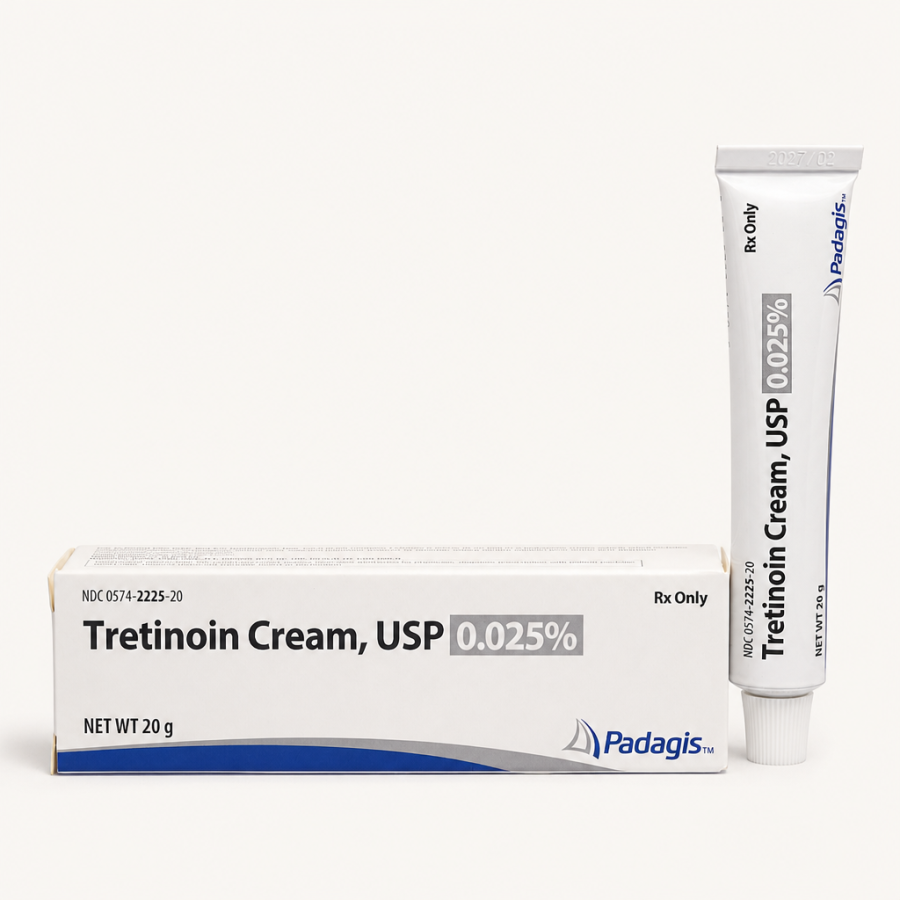
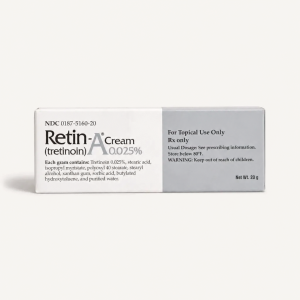
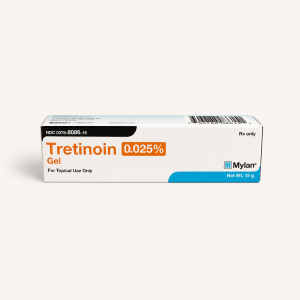
Retin-A® cream (tretinoin) is a prescription topical retinoid that has been widely studied for its effects on skin renewal. While its FDA-approved use is for the treatment of acne, Retin-A is also often prescribed off-label to improve the appearance of photoaged skin, including fine lines, rough texture, and areas of uneven pigmentation caused by sun exposure. It works by increasing skin cell turnover and stimulating collagen production, which helps smooth the skin’s surface and gradually reduce the appearance of wrinkles.
Because Retin-A accelerates skin renewal, patients may notice temporary redness, dryness, or peeling during the first several weeks of use. With consistent use under medical supervision, many patients see improvements in skin tone and texture over time.
How to Use:
Typically prescribed for once-daily application at bedtime, or as directed by your healthcare provider.
Cleanse the skin gently and allow it to dry completely before applying a thin layer of cream to the affected areas.
Avoid applying near the eyes, mouth, or corners of the nose unless directed.
Use only the amount prescribed; applying more will not increase effectiveness and may cause irritation.
Visible results may take several months of consistent use.
Important Notes and Warnings:
Common side effects include redness, dryness, flaking, or mild burning at the site of application, especially early in treatment.
Retin-A increases sun sensitivity; daily sunscreen use and protective clothing are strongly recommended.
Avoid harsh exfoliants, waxing, or chemical peels on treated areas to prevent irritation.
Retin-A should not be used during pregnancy; discontinue use if pregnancy occurs.
Inform your healthcare provider about all other topical or oral skincare or acne medications you are using, as some may increase irritation.
Improvements are gradual; initial irritation does not mean the cream is not working.
Side effects may include dry skin, itching, burning, and sun sensitivity. This product must not be applied to sunburned skin and must be avoided with alcohol, astringents, spices, and citrus peels (e.g. lime).