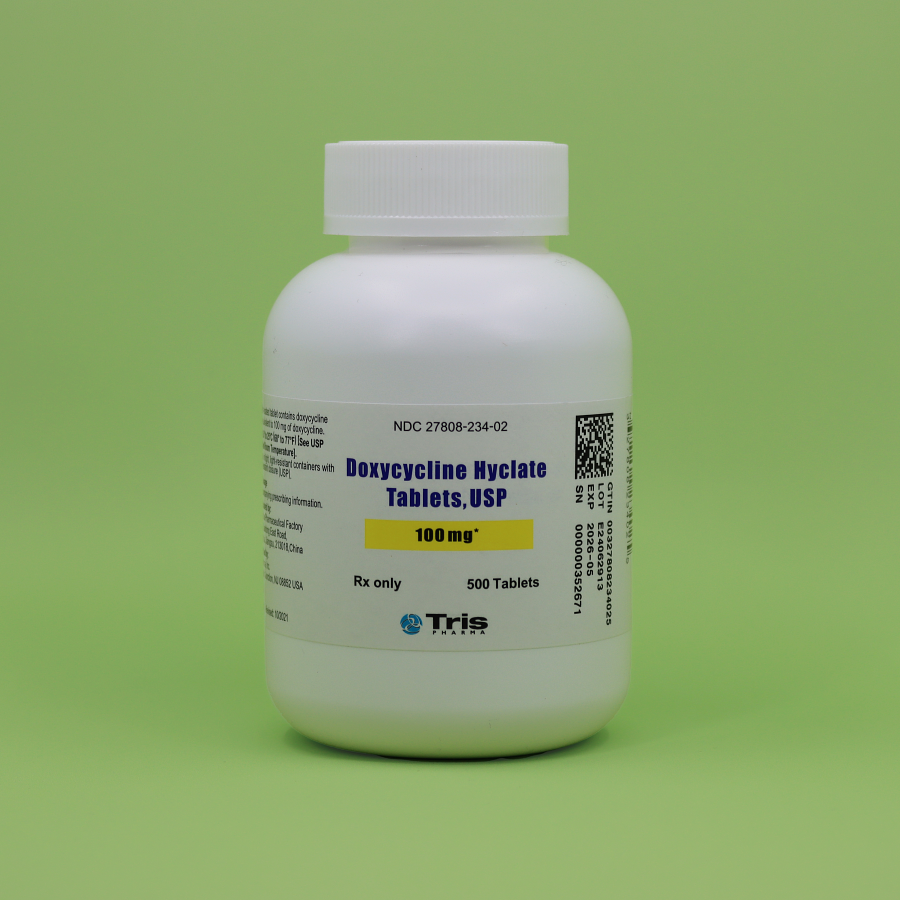
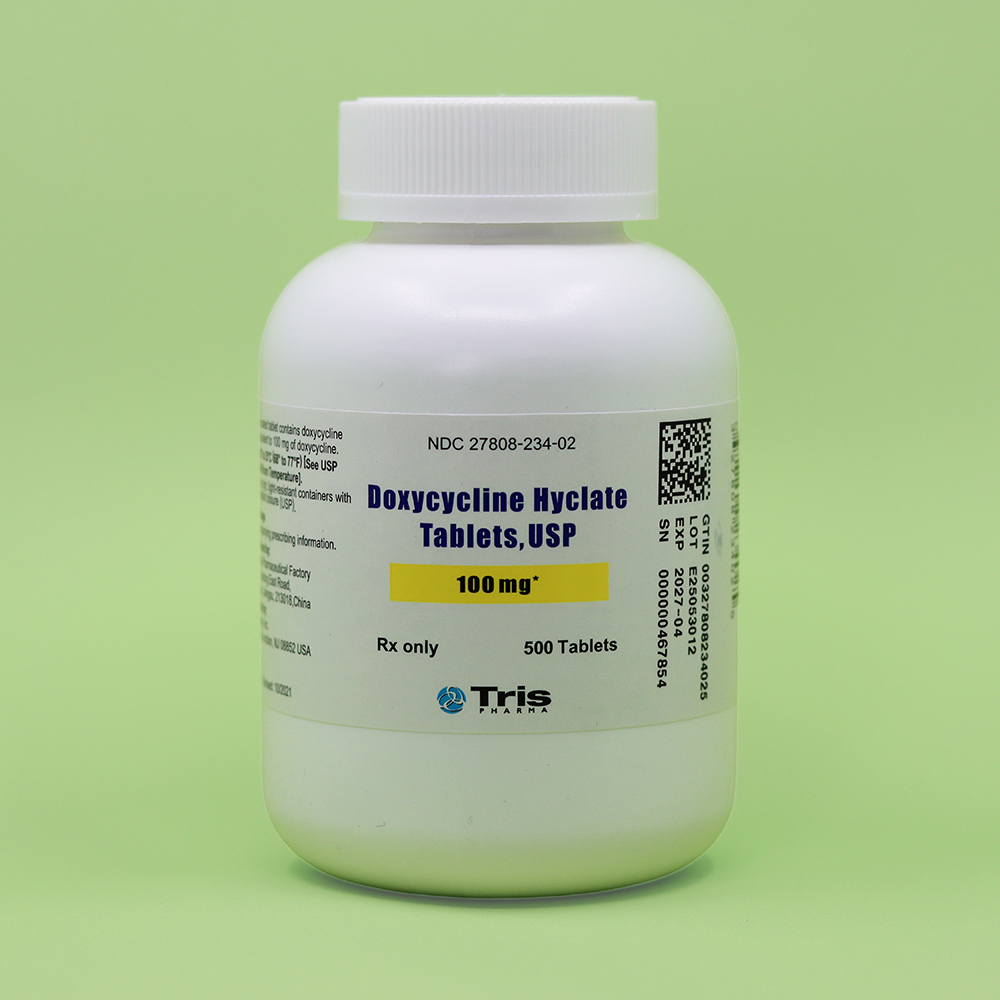
How It Works
Doxycycline hyclate works to treat bacterial infections by stopping the growth and spread of bacteria within the body. It blocks bacteria from creating the proteins it needs to reproduce and multiply. Researchers don’t know exactly how doxycycline hyclate prevents malaria, but it seems to have similar effects on the parasite that causes malaria.
| Quick Facts | |
|---|---|
| Common Brands | Acticlate, Monodox, Doryx, Doryx MPC, Targadox, Vibramycin |
| Drug Class | Tetracycline antibiotic |
| Generic Status | Generic for Vibramycin |
| Availability | Prescription only |
Dosing
The dosage of doxycycline hyclate depends on the condition being treated, the severity of the infection, and the person’s weight.
- Bacterial infections: For most infections, the typical adult dose is 100 mg taken by mouth once or twice daily for 7–10 days. Depending on the infection, your healthcare provider may prescribe doxycycline hyclate for up to 4 weeks.
- Malaria prevention: When used to prevent malaria, the typical dose is 100 mg once daily. Treatment typically begins 1–2 days before travel, continues daily during the stay, and lasts for 4 weeks after leaving the area.
- A note on delayed-release tablets (Doryx, Doryx MPC): Delayed-release formulations allow the medication to dissolve more slowly in your body over time. They have specific dosing and should not be interchanged with regular-release formulations once treatment has begun.
Note: Dosing information is educational only. Your prescribing physician will determine your specific dose based on your individual health needs. Always follow your healthcare provider’s instructions for exact dosing.
Uses
FDA-Approved Uses
Doxycycline hyclate is FDA-approved to prevent malaria and treat infections such as:
- Rickettsial infections
- Sexually transmitted infections (STIs)
- Respiratory tract infections
- Bacterial infections such as plague and cholera
- Eye infections
- Anthrax
- Certain infections when penicillin can’t be used instead
It is also FDA-approved to be a complementary therapy for severe acne and acute intestinal amebiasis, a type of gut infection caused by a parasite.
Off-Label Uses
You may see doxycycline hyclate prescribed for uses that are not “FDA-approved.” This is a very common and legal practice called “off-label” prescribing, where a doctor uses their clinical judgment to prescribe a drug for a different (but well-researched) purpose.Doxycycline hyclate may be prescribed “off-label” for rosacea.
Get Savings Updates for Doxycycline Hyclate
Join our mailing list for exclusive deals and more.
Side Effects
Like all medications, doxycycline hyclate can cause side effects. Most side effects improve as your body adjusts to the medication, but others can be serious and may require medical attention.
Common Side Effects
- Loss of appetite
- Nausea
- Vomiting
- Diarrhea
- Rash
- Hives
- Photosensitivity, increasing the risk of sunburn
Serious Side Effects
Serious side effects are rare, but it’s important to know what to look for if they do occur. Stop using doxycycline hyclate and call your doctor immediately if you experience:
- Severe allergic reactions: Swelling of the face, lips, tongue, or throat; difficulty breathing; severe rash or itching; fever; dark-colored urine; yellowing of the skin or eyes.
- Antibiotic-associated diarrhea (C. diff): Severe, watery, or bloody diarrhea accompanied by stomach cramps and fever, which can occur even after stopping the drug.
- Severe skin reactions: Painful red or purple rash, blister, or peeling skin; painful, red, or watery eyes.
- Intracranial hypertension: Increased pressure around the brain, which can cause symptoms like severe headaches, dizziness, nausea, vomiting, blurred or double vision, or vision loss.
- Blood disorders: Hemolytic anemia or low platelet levels, which can cause symptoms like easy bruising or bleeding, unusual tiredness, shortness of breath, pale skin, fever, headache, abnormal heartbeat, or lightheadedness.
- Esophageal damage: Irritation or ulcers in the esophagus (food pipe) can occur if the pill is taken right before lying down or without enough water to wash it down.
Call your doctor immediately if you experience any concerning or prolonged symptoms.
Pharmacist Tips
Protect Your Esophagus
Take every dose with a full glass of water to ensure the pill reaches your stomach. Do not lie down for at least 30 minutes after taking it to prevent irritation and ulcers in the esophagus.
Avoid the Sun
This medication increases sensitivity to UV light. Wear protective clothing, hats, and sunscreen, and avoid tanning beds to prevent severe sunburn.
Be Cautious With Calcium
Calcium can block the absorption of doxycycline. Avoid having dairy products like milk, yogurt, or calcium-fortified foods at the same time as your dose.
Timing Antacids
Antacids containing aluminum, calcium, magnesium, or iron supplements should be taken at a different time than doxycycline hyclate. Doxycycline hyclate may be taken 2 hours before or 6 hours after antacids.
Finish the Course
Even if you feel better, complete the full prescribed amount. Stopping doxycycline hyclate early can allow the infection to return and become resistant to antibiotics.
Delayed-Release Tablets
If you are prescribed Doryx or Doryx MPC, do not crush or chew the tablets. You may carefully break them and sprinkle the pellets onto cold applesauce, but they must be swallowed immediately without chewing.
Avoid if Pregnant or Breastfeeding
Doxycycline hyclate should not be taken if you are pregnant or breastfeeding as it may harm the fetus.
Drug Interactions
Doxycycline hyclate interacts with several other substances, which may alter its effectiveness or increase side effects.
- Antacids and supplements: Products containing aluminum, calcium, magnesium, iron, and zinc can prevent doxycycline hyclate from being absorbed by the body.
- Blood thinners: Doxycycline hyclate can interact with anticoagulants like warfarin (Coumadin), potentially raising the risk of bleeding. Your provider may need to adjust your blood thinner dosage.
- Oral retinoids: Combining doxycycline hyclate with isotretinoin (Accutane) increases the risk of intracranial hypertension (high brain pressure).
- Birth control pills: Antibiotics like doxycycline hyclate may reduce the efficacy of oral contraceptives. It is advisable to use an additional form of barrier birth control, such as condoms, during treatment.
- Seizure medications: Drugs like barbiturates, carbamazepine, and phenytoin can speed up the metabolism of doxycycline.
- Penicillin: Doxycycline should not be used with penicillin.
Always give your doctor and pharmacist a complete list of all your medications, vitamins, and supplements to check for potential interactions.
FAQs
Why can’t I lie down immediately after taking doxycycline?
Lying down too soon can cause the medication to remain in the esophagus (the “food pipe”) rather than moving into the stomach. This can lead to irritation, burning sensations, and even ulcers in the esophagus. It is best to stay upright for at least 30 minutes after a dose.
How long do I need to wait to eat dairy products after taking doxycycline?
Dairy products contain calcium, which binds to doxycycline hyclate and prevents it from being absorbed. It’s recommended to avoid eating dairy or calcium-fortified foods at the same time as your dose.
Does doxycycline make your skin sensitive to the sun?
Yes, doxycycline causes photosensitivity. Exposure to sunlight or tanning beds can lead to severe sunburns, blistering, or swelling. Always use sunscreen and wear protective clothing when outdoors.
Can I drink alcohol while taking doxycycline?
While the manufacturer does not explicitly warn against a direct interaction, alcohol may worsen common side effects of doxycycline hyclate like stomach upset and nausea.
What is the difference between doxycycline hyclate and doxycycline monohydrate?
These are two different salt forms of the same active ingredient. Both are antibiotics that fight infections, but the chemical difference (“hyclate” vs. “monohydrate”) may affect how quickly they dissolve.
Does doxycycline treat acne?
Yes, doxycycline may be used to treat severe acne. It works by reducing the bacteria associated with acne and decreasing inflammation.
How long does it take for doxycycline to cure chlamydia?
For chlamydia, the standard treatment course is 7 days. It is critical to finish the entire course to ensure the infection is fully eradicated, even if symptoms disappear earlier.
What should I do if I miss a dose of doxycycline?
If a dose is missed, it should be taken as soon as you remember. However, if it is almost time for your next scheduled dose, skip the missed one and continue with your regular schedule. Do not take double doses to catch up.
Does doxycycline treat viral infections like the flu?
No, doxycycline is an antibiotic and is only prescribed for bacterial and parasitic infections. It will not treat viral infections such as the common cold or flu.
Can I take doxycycline if I am allergic to penicillin?
Yes, doxycycline is a tetracycline antibiotic, not a penicillin. It is often considered a good alternative for treating infections in patients who have penicillin allergies.
Why does doxycycline cause nausea?
Nausea is a common side effect often caused by the medication irritating the stomach lining.
Comparable Medications
Minocycline
From $32.99
A generic tetracycline antibiotic prescribed for acne, STIs, UTIs, and bacterial infections, similar to doxycycline hyclate.
Amoxicillin Capsules
From $28.99
A penicillin antibiotic that is prescribed for bacterial infections.
Azithromycin
From $28.99
A macrolide antibiotic that is prescribed for bacterial infections.
Sulfamethoxazole / Trimethoprim DS
From $29.99
A combination antibiotic that is prescribed for bacterial infections and pneumonia.
We Have Doxycycline Hyclate in Stock. Get Yours Today!
Important: Information on this page is for educational purposes only. Prescribing decisions are made by independent, licensed providers. TelyRx operates technology-enabled pharmacies and a telehealth platform that connects patients with board-certified licensed providers. Prescriptions, when provider-approved and issued, are filled and shipped by TelyRx-affiliated pharmacies. We do not employ physicians or make prescribing decisions. Learn more about our editorial standards here.