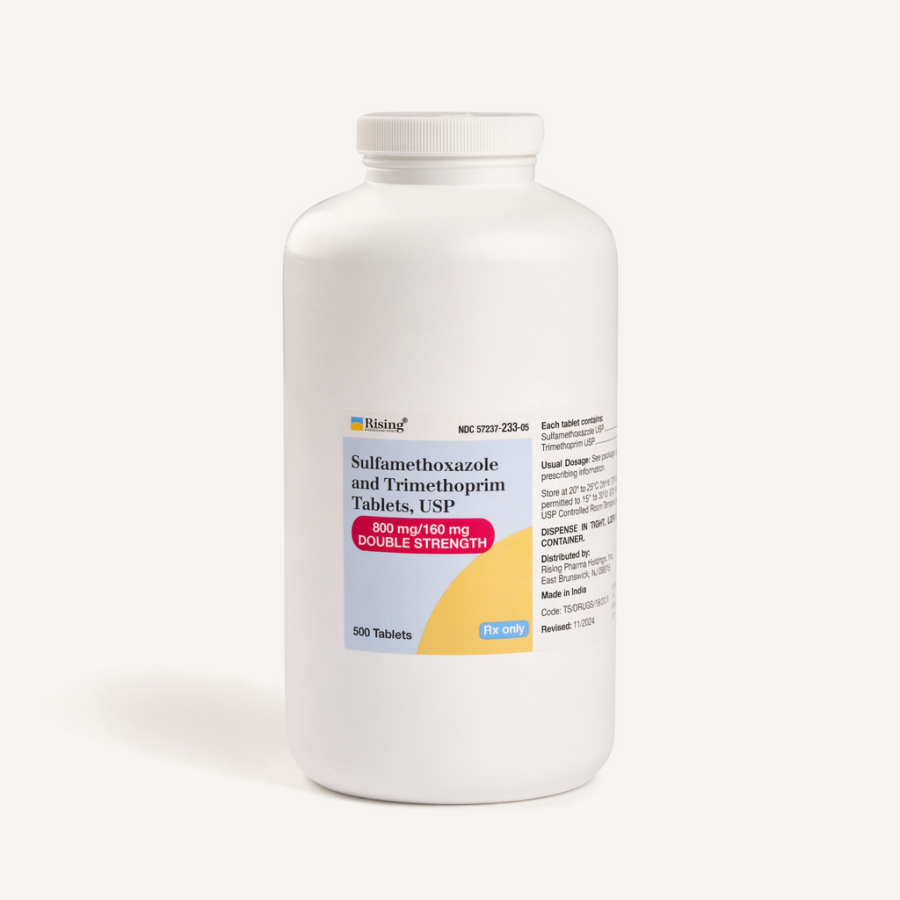
Sulfamethoxazole and trimethoprim tablets (Bactrim®, Septra®) are a prescription antibiotic combination commonly prescribed to treat a wide range of bacterial infections. These include urinary tract infections (UTIs), middle ear infections (otitis media), certain types of bronchitis, traveler’s diarrhea, and some intestinal infections. They are also used in specific cases to prevent or treat Pneumocystis jirovecii pneumonia (PJP), an opportunistic infection that can occur in patients with weakened immune systems.
This antibiotic works by combining two agents with different mechanisms: sulfamethoxazole inhibits the formation of folic acid in bacteria, while trimethoprim blocks a later step in the same pathway. Together, they prevent bacterial growth more effectively than either drug alone.
How to Use:
Typically prescribed as one double-strength (DS) tablet (800 mg sulfamethoxazole / 160 mg trimethoprim) taken every 12 hours, though dosing varies by infection type and severity.
Tablets should be swallowed whole with a full glass of water.
It is important to drink plenty of fluids during treatment to help prevent kidney stones or crystalluria.
Take exactly as prescribed and complete the full course, even if symptoms improve earlier, to ensure the infection is fully treated.
Dosing may be adjusted in patients with kidney problems or those on long-term preventive therapy.
Important Notes and Warnings:
Common side effects include nausea, vomiting, loss of appetite, and mild skin rash.
Serious but less common risks include severe allergic reactions (including Stevens-Johnson syndrome), blood disorders, liver or kidney injury, and electrolyte imbalances (such as high potassium levels).
Patients allergic to sulfa medications should not use this drug.
Inform your healthcare provider if you are taking blood thinners (such as warfarin), ACE inhibitors, ARBs, diuretics, or other medications that can affect kidney function or potassium levels, as interactions are possible.
This medication should not be used during late pregnancy, in breastfeeding infants under 2 months, or in patients with severe liver or kidney disease.
Sun sensitivity can occur; protective clothing and sunscreen are recommended.