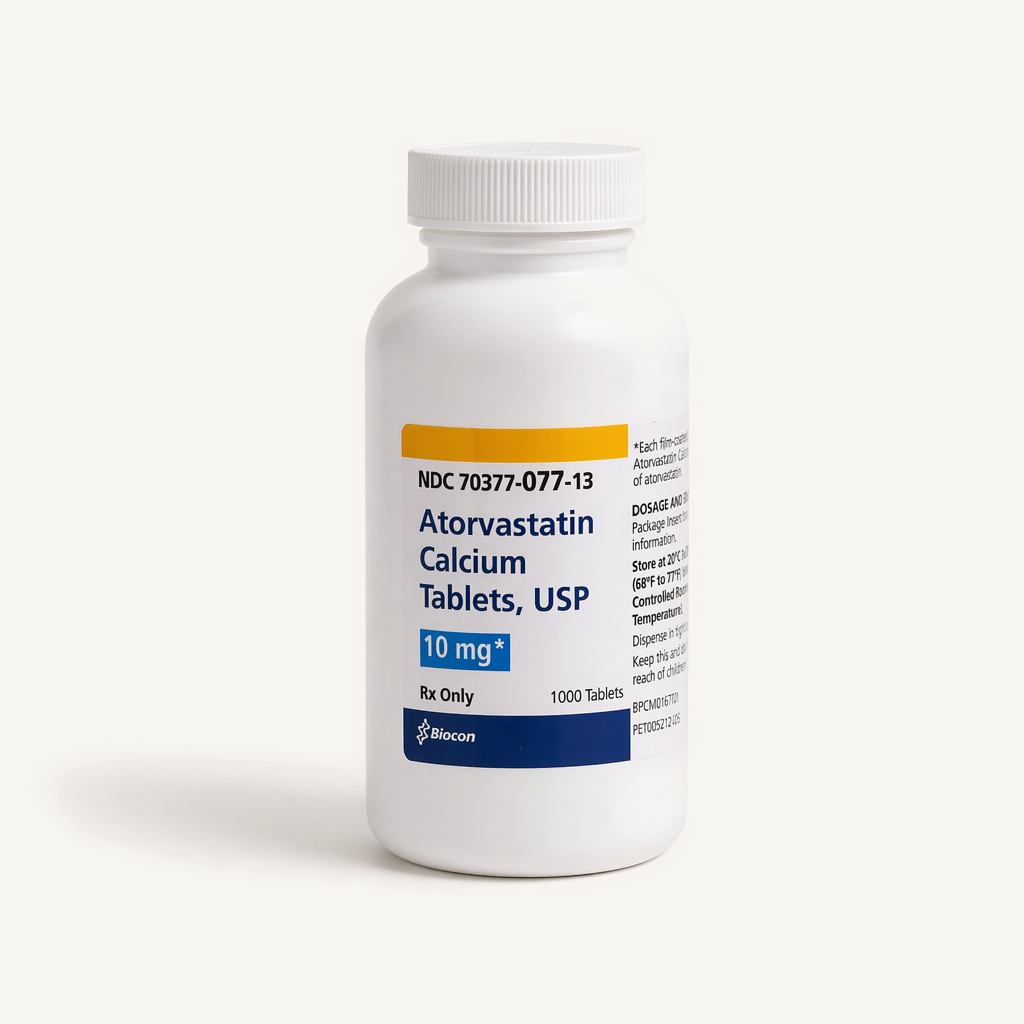
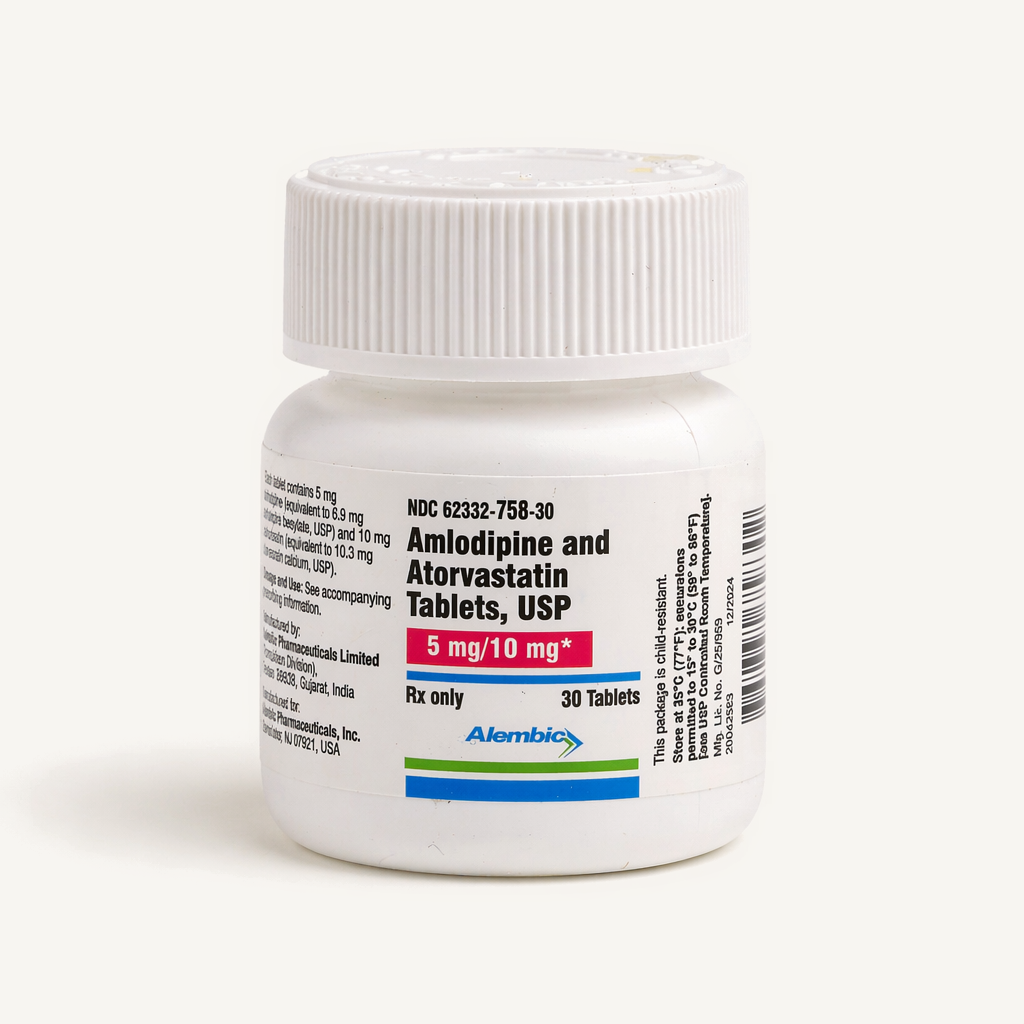
How It Works
Atorvastatin belongs to a class of medications called HMG-CoA reductase inhibitors, or more simply, “statins.”
Atorvastatin works by blocking a specific enzyme in the liver that is responsible for producing cholesterol. By inhibiting this enzyme, the drug reduces the amount of cholesterol produced by the liver. This lowers the levels of low-density lipoprotein (LDL or “bad” cholesterol) and triglycerides (fats) in the bloodstream while helping to raise high-density lipoprotein (HDL or “good” cholesterol).
| Quick Facts | |
|---|---|
| Common Brands | Lipitor, Atorvaliq |
| Drug Class | HMG-CoA reductase inhibitor (statin), Lipid-lowering agent |
| Generic Status | Generic version of Lipitor |
| Availability | Prescription only |
Dosing
Atorvastatin oral tablets come in dosage strengths of 10 mg, 20 mg, 40 mg, and 80 mg. For those who have difficulty swallowing tablets, a liquid suspension (Atorvaliq) is also available.
Atorvastatin is taken daily, with or without food. The recommended starting dose is 10 mg or 20 mg once daily, although your provider may recommend a starting dose of 40 mg depending on your LDL cholesterol levels. Depending on your LDL targets and how your body responds to the medication, your provider may increase your dose up to 80 mg daily.
Note: Dosing information is educational only. Your prescribing physician will determine your specific dose based on your individual health needs. Always follow your healthcare provider’s instructions for exact dosing.
Uses
FDA-Approved Uses
Atorvastatin is FDA-approved to:
- Treat hyperlipidemia (high LDL cholesterol and triglycerides in the blood)
- Reduce cardiovascular risk such as heart attack, stroke, or death in high-risk adults
Off-Label Uses
You may see atorvastatin prescribed for uses that are not “FDA-approved.” This is a very common and legal practice called “off-label” prescribing, where a doctor uses their clinical judgment to prescribe a drug for a different (but well-researched) purpose.
Healthcare providers may prescribe atorvastatin off-label to reduce the risk of death in people who have received a heart transplant.
Side Effects
Like all medications, atorvastatin can cause side effects. Some common side effects may improve over time as your body adjusts to the medication. Other side effects may be serious and require medical attention.
Common Side Effects
- Stuffy or runny nose
- Sore throat
- Joint pain
- Pain in the arms and legs
- Diarrhea
- Upset stomach or indigestion
- Pain while urinating, increased need to urinate, or other symptoms of a urinary tract infection (UTI)
Serious Side Effects
Serious side effects are rare, but it’s important to know what to look for if they do occur. Stop using atorvastatin and call your doctor immediately if you experience:
- Severe allergic reactions: Symptoms include swelling of the face, lips, tongue, or throat; difficulty breathing or swallowing; severe rash or itching; fever.
- High blood sugar: Atorvastatin can increase blood sugar levels, which is a particular concern for people with diabetes. Symptoms include increased thirst, urination, and hunger, as well as confusion, tiredness, and nausea.
- Muscle problems: In rare cases, statins like atorvastatin can cause serious muscle problems (myopathy) or breakdown (rhabdomyolysis). Symptoms include unexplained muscle pain, cramping, tenderness, or weakness; fever; fatigue; dark-colored urine; stomach pain; and nausea or vomiting.
- Liver damage: Atorvastatin affects the liver and may cause damage in rare cases. Symptoms include yellowing of the skin or eyes (jaundice), severe stomach pain, nausea, vomiting, light stools, and dark urine.
Call your doctor immediately if you experience any concerning or prolonged symptoms.
Pharmacist Tips
Take Your Dose Consistently
It is recommended to take atorvastatin at the same time every day. The tablets can be taken with or without food. If using the liquid solution, take your dose on an empty stomach 1 hour before or 2 hours after eating.
Grapefruit Awareness
Avoid drinking large quantities of grapefruit juice (1.2 liters or more daily) while on atorvastatin, as it can increase the drug levels in your blood and raise the risk of side effects.
Limit or Avoid Alcohol
Daily alcohol consumption can increase the risk of liver problems while taking statin medications like atorvastatin. Tell your healthcare provider if you drink more than 2 glasses of alcohol daily before starting atorvastatin.
Make Healthy Lifestyle Changes
It is recommended to take atorvastatin in combination with a low-fat diet and regular exercise.
Store at Room Temperature
Store atorvastatin at room temperature (68°F to 77°F, or 20°C to 25°Ç) in a cool, dry place. The liquid suspension should be used within 60 days of opening.
Pregnancy or Breastfeeding Warning
Atorvastatin is contraindicated for women who are pregnant or breastfeeding, as it may cause harm to unborn or breastfeed babies. If you become pregnant while taking atorvastatin, tell your healthcare provider immediately.
Missed Doses
If you miss a dose of atorvastatin, take it as soon as you remember, unless it’s been more than 12 hours since your scheduled time. In that case, skip the missed dose and take your next dose as scheduled. Do not take two doses at once.
Keep Up with Bloodwork
Your healthcare provider will recommend regular blood testing to ensure atorvastatin is lowering your cholesterol levels and not disrupting liver function.
Drug Interactions
Atorvastatin can interact with other medications, potentially altering their effectiveness or increasing the risk of side effects. For example:
Always give your doctor and pharmacist a complete list of all your medications, vitamins, and supplements to check for potential interactions.
FAQs
Why do I have to avoid grapefruit while taking atorvastatin?
Grapefruit contains compounds that block the enzyme responsible for breaking down atorvastatin. Consuming large amounts of grapefruit juice (1.2 liters or more) can lead to dangerously high levels of the drug in your body, increasing the risk of liver damage and severe muscle breakdown.
Is it better to take atorvastatin in the morning or at night?
Atorvastatin is long-acting and can be taken at any time of the day. The important thing is to take it consistently at the same time every day.
Can I stop taking atorvastatin if my cholesterol levels go down?
Oftentimes, atorvastatin is a lifetime, chronic medication. It is generally recommended to keep taking the medication until your healthcare provider tells you to stop. Stopping atorvastatin can cause cholesterol levels to rise again, increasing the risk of heart issues.
Should I take CoQ10 (Coenzyme Q10) supplements with atorvastatin?
Talk to your healthcare provider before taking CoQ10 to manage muscle-related side effects of atorvastatin. To avoid negative drug interactions, it’s important to tell your healthcare provider about any vitamins, herbal products, or supplements you are using before starting atorvastatin.
Can I drink alcohol while taking atorvastatin?
It’s recommended to avoid or limit alcohol while taking atorvastatin. Drinking significant amounts of alcohol while taking atorvastatin can increase the risk of liver damage. Atorvastatin may not be safe for people who drink more than 2 glasses of alcohol daily.
Is atorvastatin safe to take during pregnancy?
No, atorvastatin may cause harm to an unborn baby and should not be taken during pregnancy. If you become pregnant, stop taking it right away and contact your provider.
How long does it take for atorvastatin to lower cholesterol?
Atorvastatin typically begins to have an initial effect within weeks of starting treatment, but it can take months to see the full effect on your cholesterol levels.
What is the difference between atorvastatin and rosuvastatin (Crestor)?
Both are statins used to lower cholesterol. Atorvastatin is a moderate-to-high-potency statin, while rosuvastatin (Crestor) is a high-potency statin. Your doctor will recommend the best option based on your specific risk factors and medical history.
Can atorvastatin cause erectile dysfunction?
Erectile dysfunction (ED) is not a known side effect of atorvastatin. If you experience ED while taking atorvastatin, make an appointment with your healthcare provider to investigate other causes.
Can I take Advil or Tylenol with atorvastatin?
These common pain relievers are not known to interact with atorvastatin. To be safe, tell your healthcare provider about all OTC medicines you’re taking to avoid drug interactions.
What is rhabdomyolysis, and how do I know if I have it?
Rhabdomyolysis is a rare but serious condition that involves the breakdown of muscle tissue that can lead to kidney damage. Symptoms include severe muscle pain or weakness, unusual fatigue, fever, and dark-colored urine.
Do I need to take atorvastatin with food?
You can take atorvastatin tablets with or without food, but the liquid solution should be taken on an empty stomach — either 1 hour before or 2 hours after eating.
Comparable Medications
Rosuvastatin
From $19.99
A higher-potency statin used to lower u0022badu0022 cholesterol and triglycerides, and to reduce the risk of heart or blood vessel problems in people with a high risk of heart disease.
Ezetimibe
From $24.99
A cholesterol absorption inhibitor used to treat high cholesterol and lower triglycerides in the blood.
Gemfibrozil Tablets
From $29.99
A fibrate medication used to lower triglycerides and reduce the risk of heart disease.
Fenofibrate
From $24.99
A fibrate used to lower “bad” cholesterol and triglycerides.
We Have Atorvastatin in Stock. Get Yours Today!
Important: Information on this page is for educational purposes only. Prescribing decisions are made by independent, licensed providers. TelyRx operates technology-enabled pharmacies and a telehealth platform that connects patients with licensed providers. Prescriptions, when provider-approved and issued, are filled and shipped by TelyRx-affiliated pharmacies. We do not employ physicians or make prescribing decisions. Learn more about our editorial standards here.