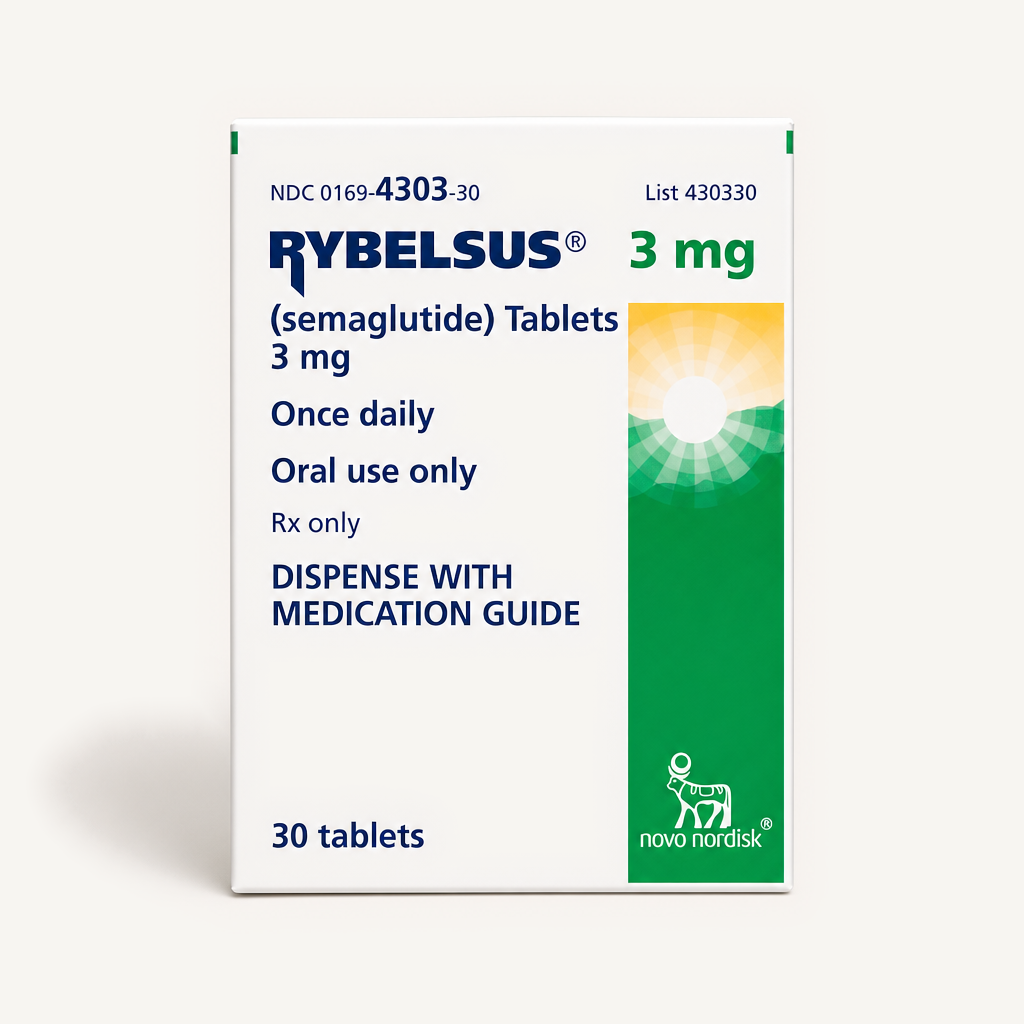
How It Works
Rybelsus works by mimicking GLP-1, an incretin hormone the gut releases naturally in a healthy metabolic state. This mechanism achieves three goals:
- Insulin stimulation: Rybelsus signals the pancreas to release insulin when blood sugar levels are high. This helps prevent the “crashes” associated with older diabetes medications.
- Glucagon suppression: Rybelsus prevents the liver from releasing excess sugar into the blood, a common problem for people who are resistant to insulin.
- Gastric emptying: Rybelsus slows the rate at which food empties from the stomach. Slower digestion often means fewer “sugar spikes” after meals and can also help patients feel more satiated after eating. Some patients report weight changes while taking Rybelsus.
| Quick Facts | |
|---|---|
| Common Brands | Rybelsus |
| Drug Class | GLP-1 receptor agonist |
| Generic Status | No generic available |
| Availability | Prescription only |
Dosing
For most patients, providers prescribe Rybelsus at a “beginner” dose and gradually titrate, or increase the dose, as their body adapts to the medication. Specific dosage varies by patient, but standard guidelines include:
- Starting phase: Providers typically begin Rybelsus treatment with a 3-milligram (mg) tablet taken once a day for 30 days. This low dose helps align the body with the medication, and usually is not therapeutic for blood sugar control.
- Maintenance phase: After the first month of treatment, providers often increase the daily dose to 7 mg. This course also lasts 30 days.
- Maximal phase: If the patient still requires increased glycemic control after 30 days with a 7-mg daily dose, providers may increase the daily dose to 14 mg.
- Alternative formulations: Some providers may slightly tweak the doses and titration schedule if they deem this the best course of action for their patient.
The standard guidelines for taking Rybelsus are fairly strict. It is advised to follow these steps when taking the medication:
- Take Rybelsus first thing in the morning on an empty stomach
- Take the tablet with no more than 4 ounces of plain, non-flavored water
- Wait at least half an hour to eat or drink anything, including coffee, or take other oral medications
Note: Dosing information is educational only. Your prescribing physician will determine your specific dose based on your individual health needs. Always follow your healthcare provider’s instructions for exact dosing.
Uses
FDA-Approved Uses
Rybelsus is FDA-approved to improve glycemic control in adults with Type 2 diabetes mellitus as an adjunct to diet and exercise. It is also FDA-approved to lower the risk of major adverse cardiovascular events in adults with Type 2 diabetes and established heart disease.
Off-Label Uses
You may see Rybelsus prescribed for uses that are not “FDA-approved.” This is a very common and legal practice called “off-label” prescribing, where a doctor uses their clinical judgment to prescribe a drug for a different (but well-researched) purpose.
Common off-label uses for Rybelsus currently found in clinical practice and research include the following:
- Weight management: Rybelsus may be prescribed off-label as weight management medication to people who do not have Type 2 diabetes but meet body mass index (BMI) criteria for being overweight or obese.
- Polycystic ovary syndrome (PCOS): Because Rybelsus affects insulin sensitivity and weight, some specialists prescribe the drug to manage the metabolic symptoms of PCOS.
Side Effects
Most Rybelsus side effects are generally mild and quick to subside as the body adapts to the medication.
Common Side Effects
- Nausea and vomiting
- Abdominal pain
- Diarrhea or constipation
- Decreased appetite
Serious Side Effects
Serious side effects are rare, but it’s important to know what to look for if they do occur. Serious side effects of taking Rybelsus can include:
- Thyroid C-cell tumors: Semaglutide has been shown to potentially cause tumors in animal studies. It is not yet known if the drug has the same effect on humans, but people with a family history of Medullary Thyroid Carcinoma are usually advised not to take Rybelsus.
- Pancreatitis: Rybelsus may cause pancreatitis, an inflammation of the pancreas characterized by severe, radiating abdominal and back pain.
- Diabetic retinopathy complications: Rapid improvements in blood sugar from taking medications like Rybelsus can temporarily worsen this diabetes-related eye disease.
- Kidney injury: Taking Rybelsus can lead to dehydration from vomiting and diarrhea, which in turn can increase the risk of kidney injury.
- Gallbladder problems: Gallstones and cholecystitis, or gallbladder inflammation, may occur after taking Rybelsus.
Call your doctor immediately if you experience any concerning or prolonged symptoms.
Pharmacist Tips
Time Your Next Bite
Eating or drinking too soon after taking Rybelsus can prevent the semaglutide from entering your bloodstream, rendering the drug ineffective. Standard guidelines suggest waiting 30 minutes – and using a timer to do so – before eating or drinking after your dose.
Watch the Water Intake
Drinking too much water with your Rybelsus dose can dilute the medication in the stomach. Not enough water, on the other hand, may not allow the tablet to properly dissolve. Standard dosage guidelines call for taking the tablet with exactly 4 ounces of water, but your provider may have specific recommendations for you.
Keep Nausea at Bay
Nausea is a common side effect of taking Rybelsus, but some people can mitigate this issue by eating smaller, more frequent meals throughout the day. It is advised to avoid heavily fried or sweetened foods while taking Rybelsus.
Achieve a Hydration Balance
Staying hydrated throughout the day is key to protecting your kidneys, not to mention maintaining your overall health. Drink plenty of water throughout the day while taking Rybelsus, especially if you experience diarrhea.
Drug Interactions
Because Rybelsus slows the process of gastric emptying, the drug can interact with other medications and affect how they are absorbed in the body. Known interactions with Rybelsus include:
- Levothyroxine: Rybelsus may increase exposure to levothyroxine, a common thyroid medication. Patients taking both drugs should have their thyroid levels monitored frequently.
- Warfarin: The body’s process of absorbing Rybelsus can affect how long it takes the blood to clot and can interfere with warfarin, a blood thinner sold under the brand name Coumadin. Frequent monitoring is recommended.
- Insulin and sulfonylureas: Both of these medications actively lower blood sugar levels. Taking them with Rybelsus can increase a patient’s risk of hypoglycemia, or low blood sugar.
- Oral contraceptives: Clinical trials have not shown that Rybelsus decreases birth control effectiveness. However, the drug could theoretically affect how the body absorbs oral contraceptives.
Always give your doctor and pharmacist a complete list of all your medications, vitamins, and supplements to check for potential interactions.
FAQs
Why must I take Rybelsus on an empty stomach?
It is advised to take Rybelsus on an empty stomach because the drug can only be absorbed in the body under certain environmental conditions. Food and liquids prevent the medication from being properly absorbed and passing into the bloodstream of the stomach lining.
Is Rybelsus the same medication as Ozempic?
Yes and no. Rybelsus and Ozempic contain the same active ingredient, semaglutide, but the drugs are administered differently and follow a different dosage schedule. Ozempic is a weekly injection, while Rybelsus is an oral tablet taken once daily.
Does Rybelsus cause weight loss like the GLP-1 injections do?
Yes, clinical trials suggest Rybelsus can promote weight loss. The drug slows digestion and increases feelings of satiation, often resulting in lower caloric intake and weight loss.
Why do I feel nauseous after taking Rybelsus?
Nausea often occurs after taking Rybelsus because the drug slows down the body’s digestive process. Food remains in the stomach longer, increasing feelings of satiation, and this “fullness” can mimic nausea. Most people who take Rybelsus feel less nauseous after one to two weeks of treatment.
Can I drink coffee immediately after taking Rybelsus?
No, it is advised to avoid any food or drink – including coffee – for at least 30 minutes after taking Rybelsus. Food and beverages can alter the stomach’s pH level and prevent the medication from absorbing properly.
What should I do if I miss a dose of Rybelsus?
If you miss a dose of Rybelsus, it is recommended to skip it entirely and resume taking the medication with your next dose. It is not advised to “double dose” to make up for a missed dose.
Does Rybelsus cause hair loss?
During clinical trials, hair loss has not been observed as a common side effect of taking Rybelsus. However, rapid weight loss can trigger a condition known as telogen effluvium, which is characterized by thinning hair.
Can Rybelsus cause “Ozempic face” (facial aging/sagging)?
The condition colloquially called “Ozempic face” is not caused by the medication, but rather a result of rapid weight loss and fat reduction in the face. This can occur with any type of rapid weight loss, whether achieved through diet, exercise, medication, or surgery.
Is Rybelsus insulin?
No, Rybelsus is a GLP-1 receptor agonist used to treat Type 2 diabetes. It helps the body produce more insulin, but it does not contain insulin and cannot be used to treat Type 1 diabetes.
Do I need to keep Rybelsus tablets in the refrigerator?
No, unlike Ozempic and Wegovy, Rybelsus tablets do not need to be refrigerated. Current guidelines recommend storing the drug at room temperature in a dry place.
Does Rybelsus interact with birth control pills?
Current data suggests Rybelsus does not significantly reduce the effectiveness of birth control pills, but the drug’s effect on gastric emptying may interfere with how quickly the body absorbs oral contraceptives.
Comparable Medications
Ozempic®
From $1149.99
Ozempic is a medication injected once per week, while Rybelsus is an oral tablet taken daily, but both contain semaglutide as an active ingredient. Results are mixed, but initial findings show Ozempic injections at maximum doses may result in slightly higher weight loss.
Tirzepatide
Tirzepatide, sold under brand names like Mounjaro and Zepbound, is a "dual agonist" (GLP-1 and GIP). It is typically more effective than Rybelsus at helping patients lose weight, but is currently only available as a weekly injection.
Liraglutide Injection Prefilled Pens
From $299.99
Liraglutide, sold under the brand names Victoza and Saxenda, is an older GLP-1 receptor agonist consisting of daily injections. Rybelsus is generally considered more potent and robust than liraglutide for blood sugar and weight management, and is available as an oral tablet for those who dislike needles.
Metformin
From $27.99
Metformin, or Glucophage, is considered first-line treatment for Type 2 diabetes. It works primarily in the liver and does not affect gastric emptying. Rybelsus may be used in conjunction with metformin when additional blood sugar control or cardiovascular protection is needed.
Jardiance®
From $879.99
Empagliflozin, sold under the brand name Jardiance, is an SGLT2 inhibitor that helps the kidneys remove sugar through the urine. Both empagliflozin and Rybelsus provide cardiovascular protection, albeit through different pathways. Providers often prescribe both as combination treatment to improve heart and kidney health.
We Have Rybelsus in Stock. Get Yours Today!
Important: Information on this page is for educational purposes only. Prescribing decisions are made by independent, licensed providers. TelyRx operates technology-enabled pharmacies and a telehealth platform that connects patients with licensed providers. Prescriptions, when provider-approved and issued, are filled and shipped by TelyRx-affiliated pharmacies. We do not employ physicians or make prescribing decisions. Learn more about our editorial standards here.