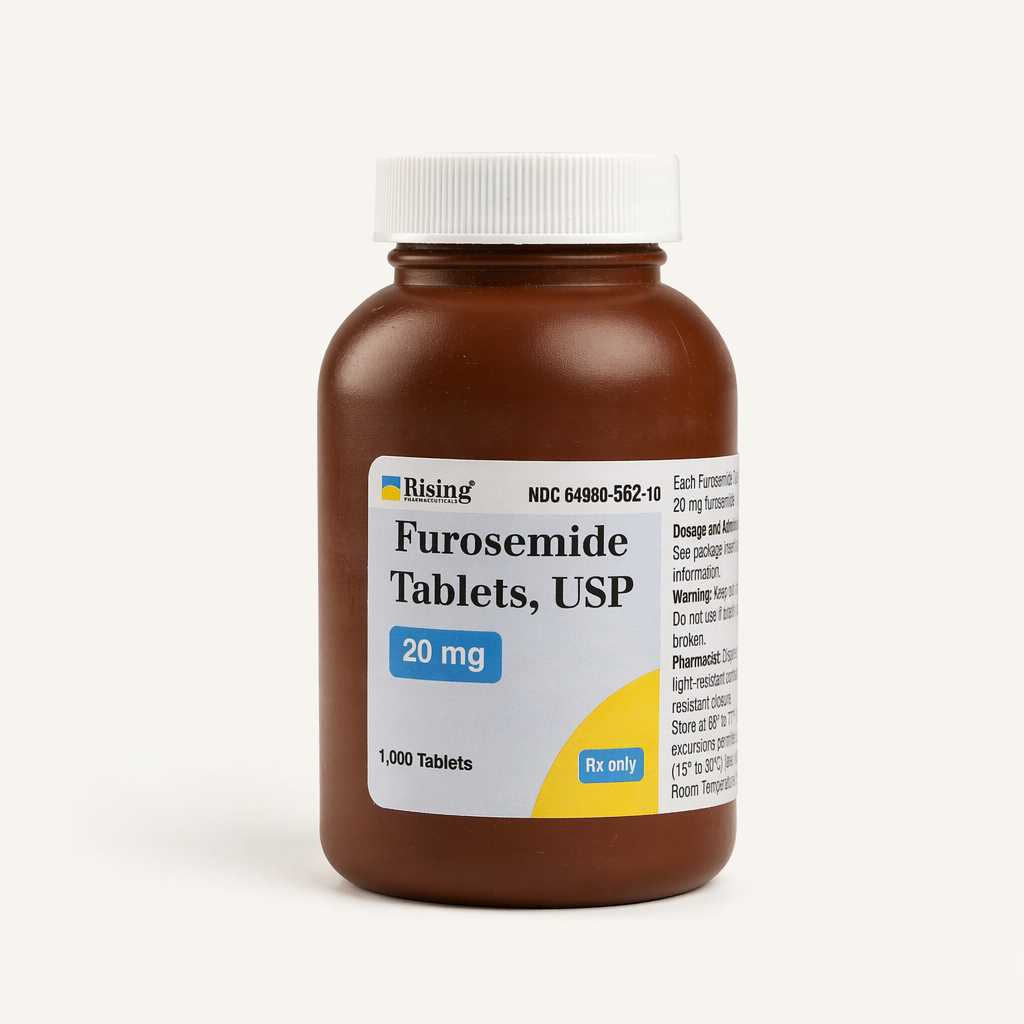
How It Works
Furosemide is considered a “loop” diuretic because it targets the Loop of Henle, a small section of the nephrons in kidneys that determine whether a substance is kept in the body or excreted as waste. The Loop of Henle is responsible for reabsorbing sodium, potassium, and water.
Furosemide blocks sodium, potassium, and chloride from being reabsorbed into kidney tubes, increasing urine output in the process. It also uses osmotic pressure to remove extra salt, which can stubbornly remain inside the kidney tubes. As water follows salt, more urine is produced in the body.
| Quick Facts | |
|---|---|
| Common Brands | Lasix |
| Drug Class | Loop Diuretic |
| Generic Status | Generic version of Lasix |
| Availability | Prescription Only |
Dosing
Note: Dosing information below is educational only. Your prescribing physician will determine your specific dose based on your individual health needs.
Doctors prescribe furosemide based on medical condition, severity of symptoms, and the patient’s age, among other factors. Dosage for the drug is typically as follows:
- Edema: For adults with edema, most providers prescribe an initial dose of 20 milligrams (mg) to 80 mg. Patients may take the tablet once or twice daily, and specific dosage depends on how much fluid their body is retaining.
- Hypertension: Providers generally start hypertension patients at 40 mg of furosemide twice a day. This dosage may be adjusted with the results of subsequent blood screenings.
- Fluid Maintenance: After initial treatment, also known as the dry weight phase when excess fluid is removed from the body, doctors may prescribe furosemide at a reduced dose to maintain healthy fluid levels.
Always follow your healthcare provider’s instructions for exact dosing.
Uses
FDA-Approved Uses
Furosemide is FDA-approved to treat edema associated with congestive heart failure, hepatic cirrhosis, and renal disease. It is also FDA-approved as a standalone treatment or in combination with other drugs to treat hypertension.
Off-Label Uses
You may see furosemide prescribed for uses that are not “FDA-approved.” This is a very common and legal practice called “off-label” prescribing, where a doctor uses their clinical judgment to prescribe a drug for a different (but well-researched) purpose.
Common off-label uses for furosemide found in clinical practice and research include:
Acute Kidney Injury: Doctors and nurses may use furosemide in hospital or clinical settings to maintain healthy urine output when treating patients with certain types of kidney stress.
Hypercalcemia: Doctors may prescribe a high-dose course of furosemide to treat hypercalcemia, which is characterized by an excessively high concentration of calcium in the blood. Furosemide helps the body excrete the excess calcium and maintain healthy levels in the bloodstream.
Hypermagnesemia: As with hypercalcemia, furosemide can help the body excrete excess levels of magnesium in the blood and maintain healthy levels.
Side Effects
People often experience side effects during their first few weeks of furosemide treatment. Many of the most common side effects occur due to the drug’s water-clearing mechanisms, and include:
Common Side Effects
- Increased urination
- Dizziness and lightheadedness
- Headache
- Sensitivity to sunlight
- Constipation, diarrhea, and stomach cramps
Serious Side Effects
Serious side effects are rare, but it’s important to know what to look for if they do occur.
- Dehydration: Loop diuretics like furosemide flush water and minerals out of the body, and this can cause dangerously low magnesium, potassium, and sodium levels. Extreme thirst, muscle cramps, and a heart flutter are some of the most common symptoms of dehydration and electrolyte imbalance.
- Ototoxicity: High-dose furosemide treatments can lead to a ringing in the ears or hearing loss.
- Skin Reaction: While rare, people can develop a severe rash or blisters after taking furosemide.
- Kidney Strain: Although furosemide is used in part to help maintain healthy fluid levels in the kidneys, the increased production and excretion of urine can strain the kidneys and cause renal injury.
Call your doctor immediately if you experience any concerning or prolonged symptoms.
Pharmacist Tips
Plan a Morning Dose
It is recommended to take your single dose of furosemide in the morning, or to take daily doses in the morning and afternoon, as taking it in the evening can interrupt sleep due to increased need for urination.
Take a Minute Standing Up
If you take furosemide, your blood pressure may drop quickly in response to standing up. It is advised to rise slowly to reduce your risk of falling or stumbling.
Keep an Eye on the Scale
Your provider may recommend weighing yourself at least once per day, as sudden gains in weight – up to 3 pounds in a day – may indicate the dosage needs to be adjusted.
Use Sun Protection
Furosemide increases your sensitivity to sunlight and can make you more susceptible to severe sunburn, so high-SPF sunscreen and protective layers can safeguard your skin when you’re outside.
Watch Potassium Levels
Furosemide is designed to help flush excess potassium from the body, but this can decrease potassium levels too much. If this happens, it is recommended to talk to your provider about potassium-rich foods like bananas and spinach that can be integrated into your diet.
Drug Interactions
Since furosemide is active in the kidneys, it may interact with other drugs. These include:
- Nonsteroidal Anti-Inflammatory Drugs (NSAIDs): NSAIDs like ibuprofen and naproxen can reduce the effectiveness of furosemide and contribute to a higher risk of kidney damage.
- Digoxin: Furosemide can cause potassium levels that increase the toxicity potential for digoxin, a foxglove-derived drug primarily used to treat heart failure and atrial fibrillation.
- Lithium: Furosemide can prevent the kidneys from flushing out lithium, a mood-stabilizing medication primarily used to treat bipolar disorder, and lead to dangerously high levels.
- Antibiotics: Combining furosemide with certain antibiotics like gentamicin can increase the risk of hearing loss.
- Corticosteroids: Furosemide and other diuretics reduce potassium levels, and taking corticosteroids can exacerbate this effect and deplete potassium levels.
Always give your doctor and pharmacist a complete list of all your medications, vitamins, and supplements to check for potential interactions.
FAQs
Why does furosemide make me urinate so much?
Furosemide blocks the reabsorption of salt and water in the kidneys by redirecting them to your bladder. This causes an increase in urine output, which allows your body to remove excess salt and fluid to reduce swelling.
What is the best time of day to take furosemide?
If you’ve been prescribed a single daily dose of furosemide, it is advised to take your tablet in the morning. Since the medication’s effects can last up to eight hours, a morning dose helps ensure that the increased need to urinate won’t impact sleep. People with two daily doses can take them in the morning and early afternoon to achieve the same objective.
Do I need to eat more potassium foods while taking furosemide?
Your provider may recommend increasing your potassium intake in order to counteract the furosemide. Too much potassium can also have adverse health effects, so be sure to follow your doctor’s dietary instructions for maintaining healthy potassium levels.
Can I drink alcohol while taking furosemide?
It is advised to limit alcohol consumption while taking furosemide. Alcohol lowers blood pressure and has a diuretic effect of its own, so drinking while taking furosemide can cause severe dizziness, fainting, and dehydration.
How fast does furosemide work?
Results vary, but the kidneys generally begin producing more urine within an hour of taking the furosemide dose.
Can furosemide cause ringing in the ears?
Yes, furosemide can cause ringing in the ears. This side effect, known as ototoxicity, typically occurs when patients have taken a high dose of the medication. People who notice a loud ringing or roaring in their ears should contact their doctor immediately.
Is furosemide the same thing as Lasix?
Yes, Lasix is the brand name of furosemide.
Does furosemide cause weight loss?
Furosemide causes the body to shed “water weight” but it does not reduce body fat. People who take furosemide may notice fluctuations in their weight due to this fluid buildup leaving their body.
Why do I feel dizzy when I stand up while taking furosemide?
While taking furosemide, you may feel dizzy standing up because the medication causes a drop in blood pressure as your fluid levels change. This is a common side effect, especially for people beginning their treatment.
Can furosemide raise my blood sugar levels?
Loop diuretics like furosemide may interfere with glucose tolerance. Patients with diabetes are advised to closely monitor their blood sugar levels while taking furosemide, and to contact their doctor if noticeable changes occur.
Can furosemide cause gout flare ups?
Yes, furosemide can cause gout to flare up because the medication can cause the kidneys to retain – rather than excrete – uric acid. A high uric acid level is a common gout trigger.
Comparable Medications
Furosemide, Torsemide, Hydrochlorothiazide, or Spironolactone?
Many people take furosemide as a water pill, but this is not the only option for diuretic medication. Common furosemide alternatives include the following:
Torsemide
From $24.99
Like furosemide, torsemide is a loop diuretic, but its potency is stronger and its duration of action is longer. For some people with conditions like severe heart failure that cause swelling in the gut, torsemide may be more effective than less potent alternatives.
Hydrochlorothiazide
From $25.99
This drug, HCTZ for short, is a thiazide diuretic that targets a different area of the nephron. HCTZ is considered first-line treatment for hypertension, but furosemide is prescribed more frequently for edema-related swelling.
Spironolactone
From $26.99
This potassium-bearing diuretic helps your body retain more potassium. Providers often prescribe furosemide and spironolactone together, with the former flushing out excess potassium and the latter storing extra potassium to maintain balanced levels.
We Have Furosemide in Stock. Get Yours Today!
Important: Information on this page is for educational purposes only. Prescribing decisions are made by independent, licensed providers. TelyRx operates technology-enabled pharmacies and a telehealth platform that connects patients with licensed providers. Prescriptions, when provider-approved and issued, are filled and shipped by TelyRx-affiliated pharmacies. We do not employ physicians or make prescribing decisions. Learn more about our editorial standards here.