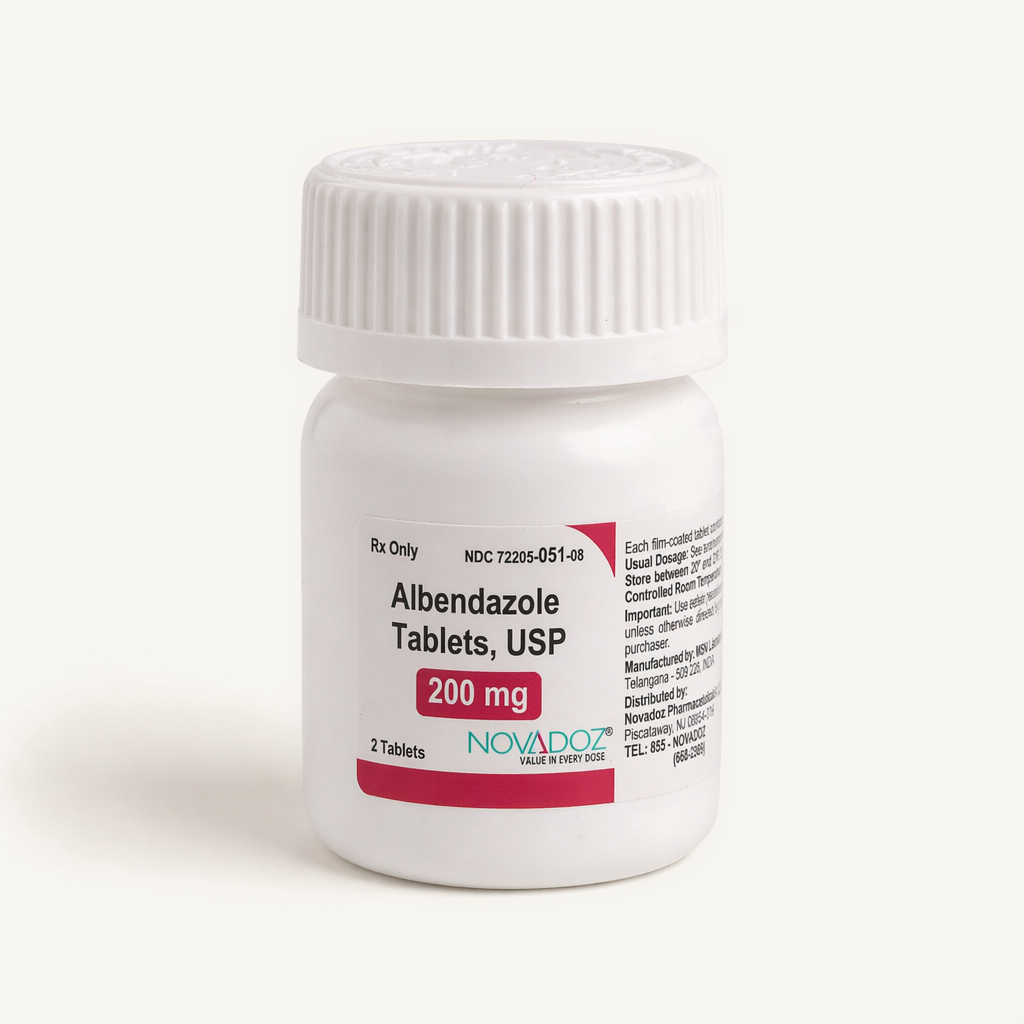
How It Works
Albendazole works by preventing parasites from absorbing glucose (sugar). Parasites rely on glucose for energy to survive and reproduce. Without the necessary energy, the parasite is unable to survive and eventually dies.
| Quick Facts | |
|---|---|
| Common Brands | Albenza |
| Drug Class | Benzimidazole anthelmintic |
| Generic Status | Generic version of Albenza |
| Availability | Prescription Only |
Dosing
Dosing for albendazole depends on the person’s body weight and the type of infection being treated.
- Tapeworm infections: For individuals weighing 60 kg (132 lbs) or more, the recommended dose is usually 400 mg taken by mouth twice daily with meals. For those weighing less than 60 kg, providers can calculate the dose based on body weight (15 mg/kg per day), which is then split into two doses and taken twice daily with meals. Treatment duration can vary. For infections affecting the brain, a period of 8–30 days is recommended. For cysts in other organs, treatment may run in 28-day cycles, followed by 2 weeks off, for a total of 3 cycles.
- Pinworm infections: A single dose of 400 mg may be recommended for pinworms, taken by mouth with a high-fat meal. Because pinworm eggs can easily spread and reinfect the host or family members, this dose is typically repeated in two weeks to ensure the infection is fully cleared. It is often recommended to treat the entire household simultaneously to prevent the spread of eggs among family members.
Uses
FDA-Approved Uses
Albendazole is FDA-approved to treat parasitic infections caused by tapeworms. These include:
- Hydatid disease (tapeworm infections that cause cysts in body organs, such as the liver or lungs)
- Neurocysticercosis (tapeworm infections that affect the brain)
Off-Label Uses
You may see albendazole prescribed for uses that are not “FDA-approved.” This is a very common and legal practice called “off-label” prescribing, where a doctor uses their clinical judgment to prescribe a drug for a different (but well-researched) purpose.
Albendazole may be prescribed “off-label” for infections caused by pinworms, hookworms, and roundworms.
Side Effects
Like all medications, albendazole can cause side effects. Common side effects may improve as your body adjusts to the medication, but others can be serious and may require medical attention.
Common Side Effects
- Abnormal liver blood test results
- Stomach pain
- Nausea
- Vomiting
- Headache
- Temporary hair loss
- Dizziness or vertigo
- Fever
- Signs of meningitis (stiff neck, fever, headache)
Serious Side Effects
Serious side effects are rare, but it’s important to know what to look for if they do occur. Stop using albendazole and call your doctor immediately if you experience:
- Bone marrow suppression: This medication can lower the number of blood cells (red, white, and platelets), leading to symptoms like tiredness, pale skin, frequent fevers or infection, and unexplained bruising or bleeding. This can be life-threatening and requires regular blood monitoring.
- Liver damage: Serious liver injury (hepatotoxicity) can manifest as severe stomach pain, persistent nausea or vomiting, dark urine, pale stools, or yellowing of the skin or eyes (jaundice).
- Neurological reactions (seizures/intracranial pressure): Dying parasites can increase pressure around the brain, leading to seizures, severe headaches, and vision changes.
- Vision damage: Sometimes, tapeworm infections can affect the eye, causing damage to the retina and potential vision loss.
- Severe allergic reactions: Swelling of the face, lips, tongue, or throat; difficulty breathing or swallowing; severe rash or itching; fever.
Call your doctor immediately if you experience any concerning or prolonged symptoms.
Pharmacist Tips
Take with Food
It is highly recommended to take albendazole with food, ideally a fatty meal, to help the body absorb the drug.
Swallow the Tablet
Albendazole tablets should be swallowed whole with water. If you have difficulty swallowing pills, the tablet can be crushed or chewed and swallowed with a drink of water.
Do Not Stop Early
Even if symptoms improve, it is vital to complete the full course of treatment. Stopping early may result in the infection not fully clearing.
Avoid Grapefruit
Grapefruit and grapefruit juice should generally be avoided while taking albendazole.
Missed Doses
If a dose is missed, take it as soon as you remember unless it is almost time for the next dose. Never take two doses at once to make up for a missed one.
Pregnancy Precautions
Albendazole is generally not recommended during pregnancy as animal studies have shown potential harm to the unborn baby. A pregnancy test may be required before starting. It is advised to use birth control during treatment and for at least 3 days after the final dose.
Drug Interactions
Albendazole may interact with other medications, potentially affecting how they work or increasing the risk of side effects. These include:
- Dexamethasone: A corticosteroid used for inflammation.
- Praziquantel: A medication used for worm infections.
- Cimetidine (Tagamet HB): A medicine used for heartburn.
- Theophylline: A medicine used for asthma and other respiratory conditions.
- Alcohol: Both albendazole and alcohol can affect the liver, and combining them may increase the risk of liver damage.
Always give your doctor and pharmacist a complete list of all your medications, vitamins, and supplements to check for potential interactions.
FAQs
Why do I need to take albendazole with a fatty meal?
Taking Albendazole with a fatty meal helps your body absorb the medication much better than taking it on an empty stomach.
How long does it take for albendazole to kill pinworms?
Clinical guidelines for pinworm treatment often recommend a second dose two weeks after the first. This spacing helps ensure that any eggs that may have hatched after the initial dose are also eliminated.
Do I need to take a second dose of albendazole?
It depends on what you are treating. For pinworm infections, a second dose is typically taken two weeks after the first dose. For other tapeworm infections, the medication is taken daily for weeks or months, sometimes in repeated cycles. Always follow your provider’s instructions.
What is the difference between albendazole and mebendazole?
Both medications are in the same family of drugs known as benzimidazole anthelmintics. They work in a similar way, by interfering with the parasite’s ability to absorb sugar (glucose) and essentially starving the worm of the energy it needs to survive. Dosing regimens and specific FDA-approved indications may differ between the two.
Does albendazole kill the eggs of the parasite?
Albendazole works by preventing the parasite from absorbing sugar, causing it to lose energy and die. In the context of pinworms, the entire household is often treated because eggs are easily spread and can cause reinfection.
Can albendazole cause hair loss?
Yes, reversible thinning or loss of hair has been reported as a side effect of Albendazole.
What are the signs of an allergic reaction to albendazole?
Signs of a serious allergic reaction include swelling of the face, lips, mouth, tongue, or throat; trouble swallowing or breathing; wheezing; racing heart; fever; and skin reactions like rash, itching, or hives.
Does albendazole affect your liver?
Yes, Albendazole can affect liver health. It frequently causes mild changes in liver blood tests (enzymes). In rare cases, it can cause serious liver damage or failure. Your provider may order blood tests to monitor your liver function during treatment.
What should I do if I miss a dose of albendazole?
If you miss a dose of albendazole, take it as soon as you remember. However, if it is almost time for your next scheduled dose, skip the missed dose and continue with your regular schedule. Do not take double doses or extra doses to make up for the missed one.
Can I buy albendazole over-the-counter?
No. In the United States, albendazole is not available over-the-counter and requires a prescription from a healthcare provider.
Comparable Medications
Albendazole, Mebendazole, or Ivermectin?
Mebendazole
A medication in the same drug class as albendazole that’s prescribed to treat pinworm, whipworm, roundworm, and hookworm infections.
Ivermectin Cream
From $199.99
Another medication in the same drug class that’s prescribed to treat river blindness and worm infections, including those caused by threadworm. Ivermectin is also commonly used for lice and scabies.
We Have Albendazole in Stock. Get Yours Today!
Important: Information on this page is for educational purposes only. Prescribing decisions are made by independent, licensed providers. TelyRx operates technology-enabled pharmacies and a telehealth platform that connects patients with licensed providers. Prescriptions, when provider-approved and issued, are filled and shipped by TelyRx-affiliated pharmacies. We do not employ physicians or make prescribing decisions. Learn more about our editorial standards here.