
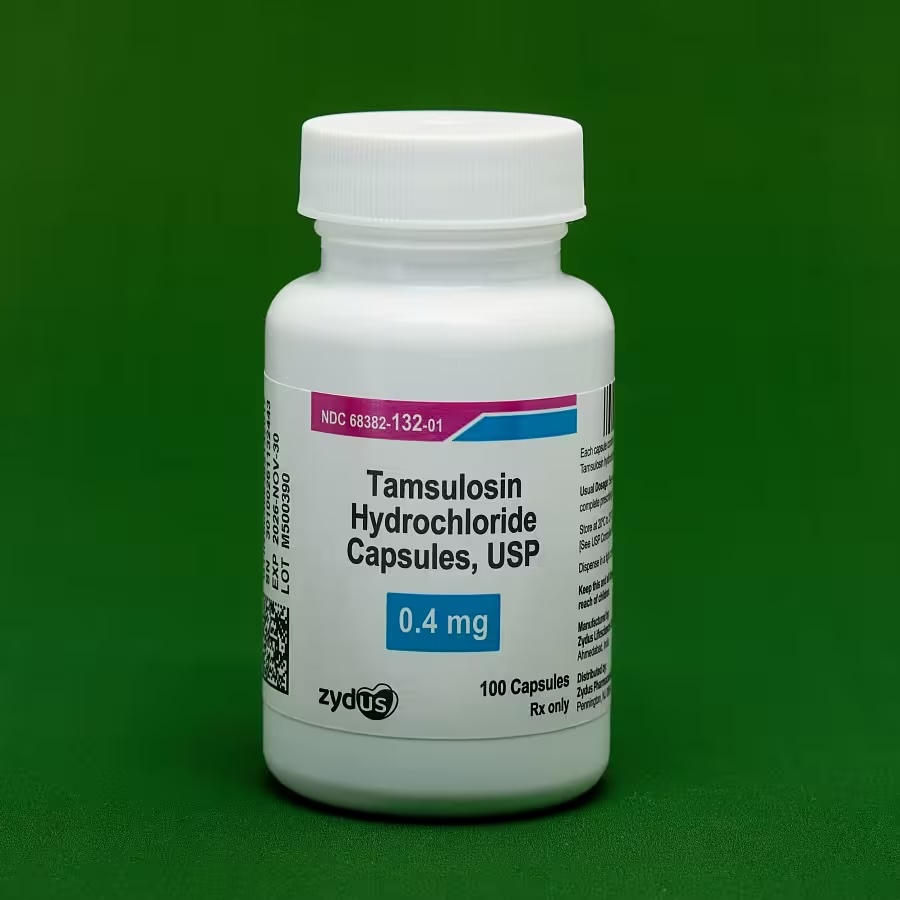
What Is Tamsulosin?
Uses, Side Effects, Dosage, and FAQs (2026 Guide)
Tamsulosin is a prescription-only oral medication sold under the brand name Flomax that belongs to the alpha-1 blocker drug class. It is primarily used to treat the symptoms of benign prostatic hyperplasia (BPH).
In addition to BPH, tamsulosin may be used off-label to treat other conditions like kidney stones and female urinary retention. The medication is normally administered as an oral capsule, and generally well-tolerated by patients with minimal side effects.
How It Works
BPH-related prostate growth not caused by cancer can compress the urethra and cause obstructive symptoms like weakened urine stream. Tamsulosin does not shrink the prostate, but instead alleviates the tension that causes the obstructions.
As a uroselective alpha-1 blocker, tamsulosin targets the alpha-1A and alpha-1D receptors found in the prostate gland and bladder. This in turn relaxes muscles and prevents them from tightening, widening the urinary passage, allowing people with BPH to urinate more comfortably.
| Quick Facts | |
|---|---|
| Common Brands | Flomax |
| Drug Class | Alpha-1 blocker |
| Generic Status | Generic for Flomax |
| Availability | Prescription only |
Dosing
Tamsulosin is maintenance medication, meaning it works most effectively when patients have consistent levels of the drug in their bloodstream. Standard guidelines for tamsulosin dosage are as follows:
- Starting dose: The typical starting dose for tamsulosin is 0.4 milligrams (mg), taken once daily.
- Time: It is generally advised to take your tamsulosin dose roughly 30 minutes after a meal. Consistency is important, so it’s recommended to take it after the same meal every day.
- Administration: Standard guidelines caution that tamsulosin should be swallowed whole. Crushing them can cause the medication to release too quickly, increasing the risk of side effects like high blood pressure.
Note: Dosing information is educational only. Your prescribing physician will determine your specific dose based on your individual health needs. Always follow your healthcare provider’s instructions for exact dosing.
Uses
FDA-Approved Uses
Tamsulosin is FDA-approved to manage the lower urinary tract symptoms associated with benign prostatic hyperplasia (BPH). These include nocturia (waking up at night to urinate), frequency and urgency to urinate, and weak stream.
Off-Label Uses
You may see tamsulosin prescribed for uses that are not “FDA-approved.” This is a very common and legal practice called “off-label” prescribing, where a doctor uses their clinical judgment to prescribe a drug for a different (but well-researched) purpose.
Common off-label uses for tamsulosin currently found in clinical research and practice include:
- Ureteral stones: Known commonly as kidney stones, these hard masses of calcium compounds that form in the kidneys can pass more easily when the ureter is relaxed. Providers may prescribe tamsulosin to help “expel” the ureteral stones.
- Female urinary retention: Although tamsulosin is primarily given to men to manage BPH, doctors may prescribe the drug to women experiencing bladder outlet obstruction or some types of neurogenic bladder dysfunction.
- Chronic prostatitis: Tamsulosin can help alleviate the pelvic pain associated with this condition, which causes chronic inflammation of the prostate.
Get Savings Updates for Tamsulosin
Join our mailing list for exclusive deals and more.
Side Effects
Common Side Effects
Tamsulosin is typically well-tolerated and side effects are minimal for most people. However, since the drug is taken orally and affects smooth muscle, its effects can extend beyond the urinary tract. Common side effects of taking tamsulosin include:
- Dizziness
- Nasal congestion
- Abnormal ejaculation, whereby semen enters the bladder instead of exiting the penis
- Headache
- Cold or flu infections with associated symptoms
Serious Side Effects
Serious side effects are rare, but it’s important to know what to look for if they do occur. Serious side effects of taking tamsulosin can include:
- Orthostatic hypotension: Taking tamsulosin can lead to this condition, a sudden drop in blood pressure when standing up quickly after sitting or lying down.
- Priapism: Taking tamsulosin can cause this rare but serious condition that is characterized by a painful erection that lasts longer than 4 hours. Immediate medical intervention is needed to prevent permanent tissue damage.
- Severe allergic reaction: Like many other medications, tamsulosin can cause anaphylaxis for people who are allergic to one or more of its ingredients.
- Intraoperative floppy iris syndrome: IFIS for short, this complication during cataract or glaucoma surgery can cause the iris to become loose. People who take tamsulosin are at a higher risk of this complication.
Call your doctor immediately if you experience any concerning or prolonged symptoms.
Pharmacist Tips
Take Caution With the First Dose
Your provider may suggest taking your first tamsulosin dose at bedtime. This helps minimize the risks of falls or injuries associated with dizziness and fainting.
Always Take With Food
Taking tamsulosin on an empty stomach can cause the medication to be absorbed too quickly and make you feel dizzy. Standard guidelines suggest taking the capsule 30 minutes after the same meal each day.
Be Careful When Standing
Tamsulosin causes dizziness, and one of the drug’s potential side effects is a severe drop in blood pressure when standing. It is recommended to take extra time to stand after sitting or lying down.
Talk to Your Doctor About Eye Surgery
Patients planning glaucoma or cataract surgery should speak to their provider prior to their procedure in case their dosage needs to be adjusted, as tamsulosin can increase the risk of a complication called intraoperating floppy iris syndrome (see “Serious Side Effects”).
Drug Interactions
Tamsulosin interacts with a wide range of other medications, primarily those that affect blood pressure or are processed by liver enzymes. Known interactions with tamsulosin include:
- Erectile dysfunction (ED) medications: Taking tamsulosin with Viagra, Cialis, and other ED medications can cause a steep drop in blood pressure. For patients who need to take tamsulosin and ED medication, providers typically prescribe the lowest possible starting dose for both medications.
- Alpha- and beta-blockers: Taking tamsulosin with alpha-blockers and beta-blockers intended to lower blood pressure can cause the patient’s blood pressure to drop too low.
- CYP34A inhibitors: Ketoconazole, erythromycin, and other CYP34A inhibitors can interfere with the body breaking down tamsulosin, potentially leading to dangerously high levels of tamsulosin in the system.
- Alcohol: Since alcohol dilates blood vessels, drinking while on tamsulosin can exacerbate the dizziness and low pressure associated with the medication.
Always give your doctor and pharmacist a complete list of all your medications, vitamins, and supplements to check for potential interactions.
FAQs
Why must I take tamsulosin after the same meal every day?
Taking tamsulosin on an empty stomach can cause blood pressure to drop quickly and make you feel dizzy. Food slows down how quickly your body absorbs tamsulosin, and since day-to-day consistency is key, providers recommend taking the drug with the same meal.
Does tamsulosin help pass kidney stones?
Yes, kidney stone treatment plans often include tamsulosin as a common off-label use. Tamsulosin relaxes muscles around the bladder and ureter, allowing kidney stones to pass more efficiently.
Why do I feel dizzy when I stand up while taking tamsulosin?
Orthostatic hypotension, or a steep drop in blood pressure caused by standing up too quickly, is a side effect of taking tamsulosin. The drug relaxes blood vessels, so your body needs a few more seconds to send enough blood to the brain when you stand up after sitting or lying down.
Can women take tamsulosin?
Yes, doctors may prescribe tamsulosin off-label to treat female urinary retention or help women pass large kidney stones, but the drug is not FDA-approved for use in women.
Can I take erectile dysfunction meds (like Viagra or Cialis) with tamsulosin?
Yes, you can take erectile dysfunction medication like Viagra and Cialis while taking tamsulosin, but it is strongly advised to do so under a doctor’s strict supervision. For people who take both drugs simultaneously, providers usually prescribe the lowest starting dose for each.
Does tamsulosin lower blood pressure?
Tamsulosin is not classified as a blood pressure medication, but the drug can lower blood pressure as a secondary side effect. It is advised to take the medication with caution if you already have low blood pressure, and you should speak to your doctor before doing so.
Can I drink alcohol while taking tamsulosin?
Most providers recommend avoiding alcohol entirely or drinking in strict moderation while taking tamsulosin. Both alcohol and tamsulosin lower blood pressure, so combining them can cause extreme dizziness and increases the risk of injury from a fall.
Is tamsulosin safe for long-term use?
Yes, tamsulosin is safe for long-term use and has been shown to benefit people with benign prostatic hyperplasia (BPH). However, the drug’s side effects can also become more pronounced over time.
Do I need to avoid driving when I first start taking tamsulosin?
Yes, it is generally advised to avoid driving or operating heavy machinery when you begin tamsulosin. A brief respite from these activities gives you time to assess how the medication affects your motor skills.
Will my sexual function return to normal if I stop taking tamsulosin?
Yes, most people find their sexual function returns to normal after they stop taking tamsulosin. Side effects like abnormal ejaculation are “dose-dependent” and reversible. Once the medication is out of the system, most people notice the symptoms resolving and their sexual function returning within 3 days.
Comparable Medications
Tamsulosin, Silodosin, Doxazosin, Finasteride, or Dutasteride?
Tamsulosin is often prescribed as first-line medication for managing symptoms of Benign Prostatic Hyperplasia (BPH), and can also be used off-label to treat kidney stones. Your provider may recommend this medication or an alternative to tamsulosin, depending on your medical history and severity of symptoms.
Silodosin
Like tamsulosin, silodosin is an alpha-1 blocker that is uroselective for receptors in the prostate. Some studies indicate silodosin might be even more uroselective, but the risk for side effects like abnormal ejaculation are higher.
Doxazosin is an alpha-blocker, but isn’t uroselective like tamsulosin. Instead, the drug is selective to alpha receptors throughout the body. This makes it more likely to significantly change blood pressure, so it is frequently used by people who want to treat hypertension and manage BPH symptoms at the same time.
Finasteride is an alpha reductase inhibitor. Unlike tamsulosin, which is fast acting to relax muscles around the prostate and bladder, finasteride works over the course of 6 to12 months to gradually shrink the prostate by blocking hormones. Patients often take the two drugs together, tamsulosin for immediate relief and finasteride for long-term symptomatic management.
Similar to finasteride, dutasteride is an alpha reductase inhibitor that gradually shrinks the prostate over the course of several months. Providers frequently prescribe tamsulosin and dutasteride together for short- and long-term management of BPH – particularly when symptoms are moderate to severe.
We Have Tamsulosin in Stock. Get Yours Today!
Important: Information on this page is for educational purposes only. Prescribing decisions are made by independent, licensed providers. TelyRx operates technology-enabled pharmacies and a telehealth platform that connects patients with board-certified licensed providers. Prescriptions, when provider-approved and issued, are filled and shipped by TelyRx-affiliated pharmacies. We do not employ physicians or make prescribing decisions. Learn more about our editorial standards here.