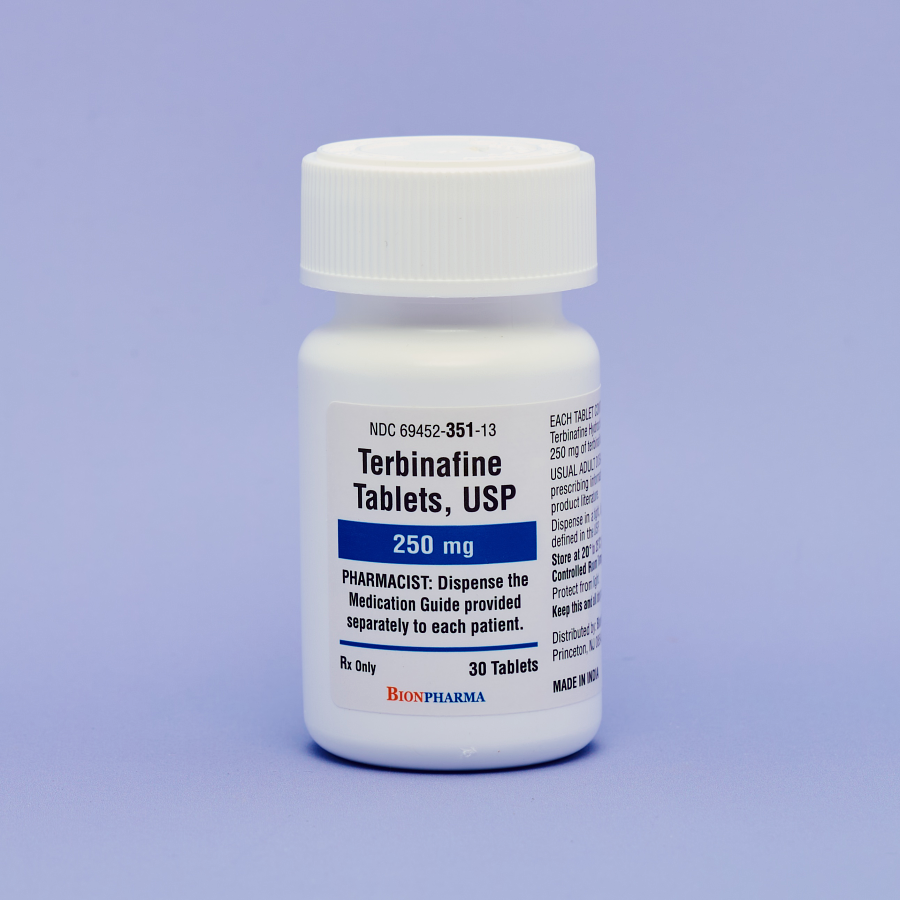
How It Works
Terbinafine belongs to a class of antifungals called allylamines. It works by inhibiting a specific enzyme called squalene epoxidase.
Fungi need a substance called ergosterol to build their cell membranes. By blocking the enzyme squalene epoxidase, terbinafine stops the fungus from producing ergosterol.
Furthermore, this blockage causes a toxic buildup of another substance called squalene inside the fungal cell. This dual action — deficiency of the cell membrane and toxic accumulation — results in fungal cell death.
| Quick Facts | |
|---|---|
| Common Brands | Lamisil |
| Drug Class | Antifungal |
| Generic Status | Generic version of Lamisil |
| Availability | Prescription Only |
Dosing
Terbinafine dosing is straightforward, but the duration depends on where the infection is.
- Fingernail infections: Taken once daily for 6 weeks.
- Toenail infections: Taken once daily for 12 weeks.
It can be taken with or without food.
Note: Dosing information is educational only. Your prescribing physician will determine your specific dose based on your individual health needs. Always follow your healthcare provider’s instructions for exact dosing.
Uses
FDA-Approved Uses
- Onychomycosis (nail fungus) – Treating fungal infections of the fingernail and toenail caused by dermatophytes (tinea unguium).
- Scalp ringworm (tinea capitis) – Oral granules are sometimes used for fungal infections of the scalp, but tablets are generally the standard treatment form.
Off-Label Uses
You may see terbinafine prescribed for uses that are not “FDA-approved.” This is a very common and legal practice called “off-label” prescribing, where a doctor uses their clinical judgment to prescribe a drug for a different (but well-researched) purpose.
While topical creams are usually preferred for skin infections, oral terbinafine is sometimes prescribed off-label for severe or widespread cases of:
- Ringworm (tinea corporis)
- Jock itch (tinea cruris)
- Athlete’s foot (tinea pedis)
Get Savings Updates for Terbinafine
Join our mailing list for exclusive deals and more.
Side Effects
Common Side Effects
- Headache
- Diarrhea, gas, or indigestion
- Nausea
- Mild skin rash or itching
- Photosensitivity; your skin may burn more easily in the sun.
Serious Side Effects
Serious side effects are rare, but it’s important to know what to look for if they do occur. Stop taking terbinafine and contact your doctor immediately if you experience:
- Liver Damage (hepatotoxicity): This is rare but serious. Symptoms include persistent nausea, vomiting, right upper stomach pain, dark urine (tea-colored), pale stools (clay-colored), or yellowing of the skin/eyes (jaundice).
- Taste or smell changes: Some people lose their sense of taste or smell while on this drug. This usually reverses after stopping, but in very rare cases, it can be permanent. Report this immediately.
- Severe skin reactions: Signs of Stevens-Johnson syndrome (SJS) or DRESS syndrome, such as widespread red/purple rash, blistering, peeling skin, fever, or swollen lymph nodes.
- Depression: New or worsening symptoms of depression or mood changes.
- Lupus flares: It can worsen or trigger symptoms in people with lupus erythematosus.
- Blood cell disorders: Unexplained bruising, bleeding, or frequent infections (signs of low white blood cells or platelets).
Call your doctor immediately if you experience any concerning or prolonged symptoms.
Pharmacist Tips
The “Waiting Game”
Terbinafine kills the fungus, but it does not instantly clear the nail. You will not see the full result until the healthy nail grows out. This can take 6 months for fingernails and 9-12 months for toenails. Don’t stop taking it just because the nail still looks damaged at week 4.
Protect Your Liver
Avoid heavy alcohol consumption while on this medication, as the combination puts extra stress on your liver. Your doctor may order a blood test (liver panel) before you start.
Wear Sunscreen
Because this drug makes you sensitive to sunlight, wear protective clothing and sunscreen to avoid severe burns.
Watch Your Coffee
Terbinafine can decrease your body’s ability to process caffeine. You may find that your morning coffee makes you feel more jittery or keeps you awake longer than usual.
Finish the Course
Fungal infections are stubborn. Even if the nail looks a little better, you must finish the full 6 or 12-week course to prevent the fungus from returning.
Drug Interactions
Terbinafine interacts with several medications.
- Antidepressants: Terbinafine can increase the levels of Tricyclic Antidepressants (TCAs) and SSRIs (like paroxetine or fluoxetine).
- Beta-blockers: Can interact with certain heart medications (like metoprolol).
- Caffeine: As noted, it keeps caffeine in your system longer.
- Warfarin: May alter the effects of this blood thinner.
- Cimetidine: Can increase terbinafine levels.
- Rifampin: Can decrease terbinafine levels.
Always give your doctor and pharmacist a complete list of all your medications, vitamins, and supplements to check for potential interactions.
FAQs
How long does it take for terbinafine to cure nail fungus?
While the treatment course is typically only 6 or 12 weeks, the “cure” isn’t visible until the damaged nail grows out and is trimmed away. For toenails, this often takes 9 to 12 months.
Is terbinafine bad for your liver?
Liver injury is a rare but known risk. It occurs in roughly 1 in 45,000 to 1 in 120,000 patients. Because the risk exists, doctors typically check liver enzymes before prescribing it. Avoiding alcohol helps mitigate this risk.
Can I drink alcohol while taking terbinafine?
It is strongly recommended to limit or avoid alcohol. Both terbinafine and alcohol are processed by the liver. Combining them increases the workload on the liver and may increase the risk of damage.
Does it cure fungus forever?
High cure rates (around 70-80%) are achieved, but recurrence is possible. Fungus lives in the environment (shoes, showers). To prevent reinfection, keep feet dry, change socks daily, and discard or treat old shoes that may harbor fungal spores.
Why does my coffee make me feel jittery now?
Terbinafine inhibits a liver enzyme that breaks down caffeine. This means caffeine stays in your bloodstream longer than normal, potentially increasing side effects like jitters, anxiety, and rapid heartbeat.
Can I stop taking it if my taste changes?
If you notice you can’t taste food or things taste metallic/wrong, stop the medication and call your doctor. Usually, taste returns within a few weeks of stopping, but continuing the drug can increase the risk of long-term issues.
Can I wear nail polish while taking oral terbinafine?
Unlike topical antifungal lacquers (which require bare nails to work), oral terbinafine works from the inside out through your bloodstream. You can wear nail polish, though some doctors recommend keeping nails bare to allow them to “breathe” and to easily monitor the growth of healthy nail.
What should I do if I miss a dose?
Take it as soon as you remember. However, if it is less than 4 hours until your next scheduled dose, skip the missed dose and continue your regular schedule. Do not take two doses at the same time to catch up.
Is terbinafine an antibiotic?
No, it is an antifungal. Antibiotics treat bacterial infections; antifungals treat fungal infections. Terbinafine will not treat colds, the flu, or bacterial skin infections.
Can I stop taking it early if my nail starts looking better?
You must finish the full prescribed course (usually 6 or 12 weeks) to ensure the infection is completely eradicated. Fungi are resilient; stopping early often allows the infection to return, potentially harder to treat than before.
Comparable Medications
Terbinafine, Itraconazole, or Jublia?
Treating nail fungus is difficult. Here is how oral terbinafine compares to other options.
Terbinafine
From $57.49
Considered the most effective ("gold standard") treatment with the highest cure rates. Requires liver monitoring. 6–12-week course.
Itraconazole Capsules
From $46.99
Another oral antifungal. Effective, but has more drug interactions (especially with statins) and a risk of heart failure complications. Often used if terbinafine fails.
Topical Solutions (Jublia, Kerydin, Penlac)
Applied directly to the nail daily for many weeks. These have minimal liver risks and very few side effects, but the cure rates are significantly lower than oral medications because they struggle to penetrate the nail.
We Have Terbinafine in Stock. Get Yours Today!
Important: Information on this page is for educational purposes only. Prescribing decisions are made by independent, licensed providers. TelyRx operates technology-enabled pharmacies and a telehealth platform that connects patients with board-certified licensed providers. Prescriptions, when provider-approved and issued, are filled and shipped by TelyRx-affiliated pharmacies. We do not employ physicians or make prescribing decisions. Learn more about our editorial standards here.