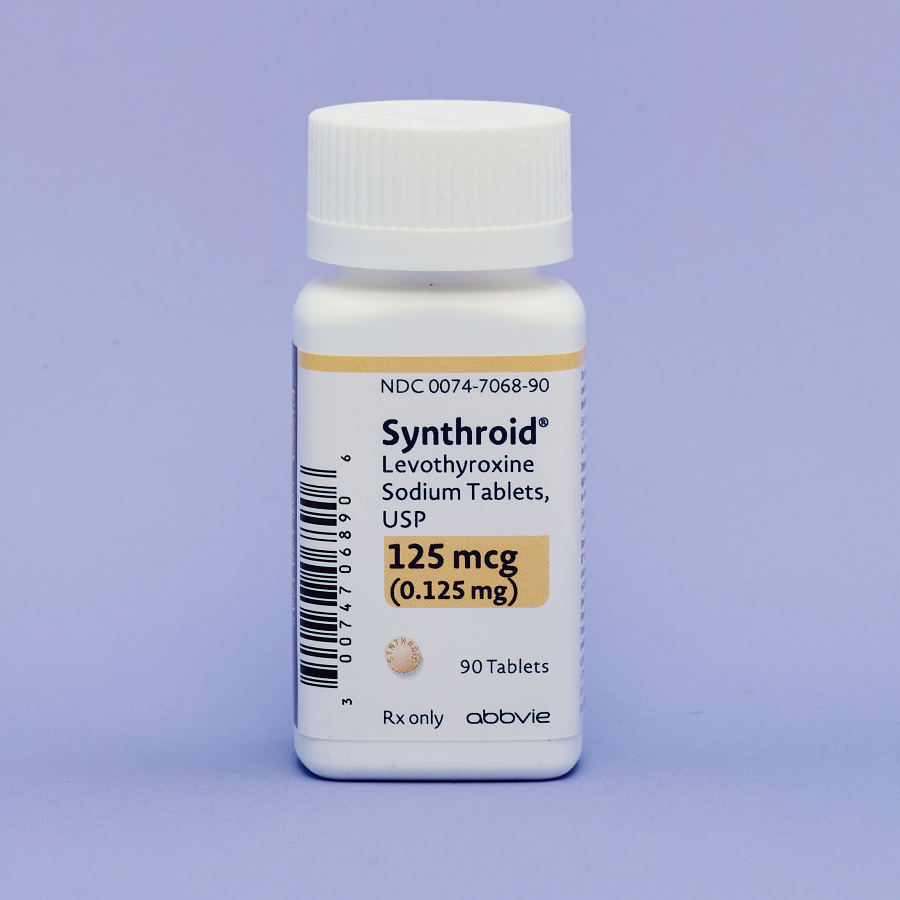
How It Works
Synthroid works by replenishing the body’s supply of T4 for people who have an underactive thyroid gland. The medication enters the bloodstream and follows the same pathway as the natural thyroxine hormone. Once it begins circulating, the synthetic T4 converts into triiodothyronine (T3), an active hormone that helps fuel cellular energy.
In a healthy body, the pituitary gland in the brain monitors hormone production and releases thyroid-stimulating hormone (TSH) to make the thyroid work harder. For people who take Synthroid, TSH levels decrease because the pituitary gland detects a sufficient amount of hormone production.
Since the thyroid gland is a hub of hormone production and activity, an underactive thyroid can affect a wide range of metabolic processes and bodily functions. Synthroid can help those with low thyroid activity, and the drug is also used in the management of thyroid cancer.
| Quick Facts | |
|---|---|
| Common Brands | Synthroid |
| Drug Class | Thyroid hormones; synthetic T4 (thyroxine) |
| Generic Status | Generic version available |
| Availability | Prescription only |
Dosing
Synthroid dosage is individualized and based on factors like the patient’s age, weight, heart health, and severity of symptoms. Standard dosing guidelines include the following:
- Initial dose: Most adults begin their Synthroid treatment with a daily dose of 1.6 micrograms (mcg) for each kilogram of their body weight, taken as an oral tablet with water on an empty stomach.
- Adjustment period: Synthroid generally takes 4 to 6 weeks to stabilize hormone levels in the blood. During the adjustment period after beginning treatment, your doctor may fine-tune the dosage based on how your body responds. Side effects are common during this timeframe.
- Elderly and cardiac patients: Providers usually recommend a much lower starting dose for elderly and cardiac patients taking Synthroid. This is because the medication increases the heart’s workload and doctors don’t want to over-stress people with preexisting conditions.
Note: Dosing information is educational only. Your prescribing physician will determine your specific dose based on your individual health needs. Always follow your healthcare provider’s instructions for exact dosing.
Uses
FDA-Approved Uses
Synthroid is FDA-approved as hormone replacement therapy for different types of congenital and acquired hypothyroidism. These include primary hypothyroidism caused by an underactive thyroid gland, secondary hypothyroidism that occurs because the pituitary gland doesn’t release enough TSH, and tertiary hypothyroidism, a rare condition characterized by insufficient hormone production in the brain’s hypothalamus.
Synthroid is also FDA-approved as an adjunct to surgery and radiation to suppress TSH production in people with certain forms of thyroid cancer.
Off-Label Uses
You may see Synthroid prescribed for uses that are not “FDA-approved.” This is a very common and legal practice called “off-label” prescribing, where a doctor uses their clinical judgment to prescribe a drug for a different (but well-researched) purpose.
Common off-label uses for Synthroid currently found in clinical research and practice include:
- Subclinical hypothyroidism: This variant of the condition occurs when TSH levels are elevated but the patient’s T4 count is stable. Synthroid can help manage symptoms of subclinical hypothyroidism, such as fertility issues and extreme fatigue.
- Myxedema coma: During acute or life-threatening emergencies, intravenous forms of Synthroid may be administered to treat people with severe thyroid deficiency.
- Depression: Low thyroid function can affect mental health, so doctors may prescribe Synthroid for people with depression whose thyroid activity is low to normal.
Get Savings Updates for Synthroid
Join our mailing list for exclusive deals and more.
Side Effects
Like all medications, Synthroid can cause side effects. Common side effects may improve as your body adjusts to the medication, but others may be serious and require medical attention.
Common Side Effects
Synthroid does not cause many side effects on its own, but patients taking the drug may experience symptoms due to having too much or too little T4 in their system as the treatment progresses. Common side effects include:
- Increased appetite and weight loss
- Heat intolerance and excessive sweating
- Headache
- Nervousness, tremors, and shaking hands
- Changes in menstrual cycle
- Temporary hair loss
Serious Side Effects
Serious side effects are rare, but it’s important to know what to look for if they do occur. Serious side effects of taking Synthroid can include:
- Cardiovascular events: These events are more common in older adults with heart disease who take Synthroid. Symptoms include a rapid heartbeat, chest pain, and shortness of breath.
- Adrenal crisis: If a patient has an untreated adrenal deficiency, thyroid hormone replacement therapy can cause a dangerous drop in blood pressure and extreme weakness.
- Bone density loss: In the long term, thyroid replacement therapy can lead to osteoporosis or weakened bones. This is especially common in postmenopausal women.
- Severe allergic reaction: As with many different types of medication, there is potential for a severe allergic reaction in people who are allergic to the drug’s ingredients. Symptoms include difficulty breathing, hives, and swelling of the face, lips, tongue, or throat.
Call your doctor immediately if you experience any concerning or prolonged symptoms.
Pharmacist Tips
Set a Dose Schedule
Unless directed to do otherwise by your doctor, it is advised to take Synthroid in the morning on an empty stomach roughly 30 to 60 minutes before your first meal. This helps ensure your body fully absorbs the medication.
Consistency Is Crucial
It is recommended to take Synthroid at the same time and in the same manner every day. It is not advised to change your routine or switch to a different version of levothyroxine sodium without talking to your doctor.
Time Your Morning Coffee
Coffee – like food – can interfere with Synthroid absorption. Standard guidelines suggest waiting at least an hour after your first dose to enjoy your morning cup of joe.
Wait To Take Supplements
Certain medications and supplements can interfere with Synthroid absorption, so standard guidelines recommend waiting at least 4 hours after your Synthroid dose to take them. These include iron and calcium supplements, antacids, and some cholesterol medications.
Practice Proper Storage
It is recommended to store Synthroid in a dry, dark place where the drug won’t be exposed to moisture or sunlight.
Drug Interactions
Since Synthroid affects the body’s metabolic rate and processes, it interacts with a wide range of other medications. Known interactions for Synthroid include:
- Diabetes medications: Synthroid and other forms of thyroid replacement therapy can affect blood sugar levels. If you take synthroid and diabetes medication, you may need to adjust the latter’s dosage in accordance with your doctor’s recommendations.
- Blood thinners: Synthroid can exacerbate the effects of Warfarin and other blood thinners, increasing the patient’s risk of bleeding.
- Anti-seizure medication: Carbamazepine, phenytoin, and other anti-seizure medications can increase the rate at which your body processes thyroid hormone, which might mean you need a higher Synthroid dose.
- Estrogen: Estrogen increases the level of thyroid-binding globulin (TBG) in your blood. When Synthroid is introduced into the bloodstream, the synthetic T4 may bind to TBG and lower the amount of free thyroid hormone in the body. With their doctor’s approval, people who take estrogen and Synthroid may need to increase their dose for the latter.
Always give your doctor and pharmacist a complete list of all your medications, vitamins, and supplements to check for potential interactions.
FAQs
Why must I take Synthroid on an empty stomach?
Food can bind to Synthroid in your gut and prevent it from entering your bloodstream. This is especially true for high-fiber foods. Taking Synthroid on an empty stomach helps ensure you’ll get your full dose of the medication.
How long do I have to wait after taking Synthroid before I can drink coffee?
It is recommended to wait at least 60 minutes after your Synthroid dose to drink coffee. Coffee, like food, can affect how your body absorbs the medication and make the drug less effective.
Does Synthroid cause hair loss?
Yes, temporary hair loss can occur during the first few months of Synthroid therapy as your body adjusts to the medication. In most cases, the hair loss is mild and resolves in a matter of weeks.
Is it safe to switch from brand-name Synthroid to generic levothyroxine?
Synthroid and generic levothyroxine are considered “bio-equivalent” in terms of their mechanisms and effects. However, since thyroid replacement therapy depends on a precise individualized dose, most providers recommend sticking with one specific drug and manufacturer to ensure consistent results.
Why do I need to wait before taking calcium or iron supplements?
It is recommended to wait at least 4 hours after your Synthroid dose to take calcium and iron supplements. These minerals bind to synthetic T4 and decrease how much of the medication is absorbed in the stomach.
Does Synthroid help with weight loss?
Synthroid is not considered a weight loss drug. While it can help restore a sluggish metabolism brought on by hypothyroidism, Synthroid can lead to dangerous results for obese adults with normal thyroid function.
Can I take Synthroid at night instead of in the morning?
Yes, you can take Synthroid at night as long as your doctor approves and the dose takes place at least 3 to 4 hours after your last meal of the day. Providers stress that consistency from day to day is more important for effective Synthroid treatment than the specific time of day patients take their dose.
What are the signs that my Synthroid dose is too high?
Common signs and side effects of a Synthroid dose that’s too high include a racing heart, anxiety, sleep problems, and unexplained weight loss.
How often do I need to check my TSH levels while on Synthroid?
Most providers recommend checking TSH levels every 4 to 8 weeks until the dose is stable. After the dose has stabilized, people typically get their TSH levels checked once or twice a year.
Can I eat grapefruit or drink grapefruit juice while taking Synthroid?
Grapefruit is thought to delay the absorption of levothyroxine in the body. This is not considered a severe interaction, but something to keep in mind if your regular diet includes grapefruit.
What happens if I miss a dose of Synthroid?
If you miss a dose of Synthroid, it is advised to wait until your next dose. It is not recommended to “double dose” to make up for the missed dose.
Does Synthroid contain gluten or lactose?
Synthroid contains lactose. The drug may also contain trace amounts of gluten, which fall below the threshold for U.S. Food & Drug Administration (FDA) limitations but can still trigger symptoms for people with severe gluten sensitivity or intolerance. Talk to your doctor before taking Synthroid if you have celiac disease, gluten sensitivity, or lactose intolerance.
Can Synthroid cause heart palpitations or anxiety?
Yes, Synthroid can cause heart palpitations and anxiety. These are common side effects when the drug’s dose is too high and may be indicative of the medication causing hyperthyroidism, or an overactive thyroid.
Is Synthroid used to treat thyroid cancer?
Yes, Synthroid can be used to treat thyrotropin-dependent, well-differentiated thyroid cancer. It is prescribed as an adjunct to surgery and radiation for patients with this type of cancer.
Comparable Medications
Levoxyl and Euthyrox
Levoxyl and Euthyrox, like Synthroid, are brand-name versions of the generic levothyroxine medication. They share the same purpose and mechanism, but differ in terms of "fillers" or inactive ingredients used to formulate the oral tablet. For this reason, providers generally recommend sticking with one form of the medication and discouraging switching to another manufacturer.
Levothyroxine
From $24.99
Synthroid and generic levothyroxine share the same active ingredients. However, generic levothyroxine's formulation may gradually change over time, whereas Synthroid has a narrow therapeutic index and the formulation must remain constant for the drug to be effective. For this reason, patients may appreciate the consistency of Synthroid over the potential fluctuations of generic levothyroxine.
Natural desiccated thyroid (NDT)
NDT, a type of Synthroid alternative that includes Armour Thyroid and NP Thyroid, is derived from the thyroid glands of pigs and contains both T3 and T4. Some patients prefer NDT, but it is harder to regulate and stabilize than Synthroid because hormone levels are different in humans compared to pigs and other animals.
We Have Synthroid in Stock. Get Yours Today!
Important: Information on this page is for educational purposes only. Prescribing decisions are made by independent, licensed providers. TelyRx operates technology-enabled pharmacies and a telehealth platform that connects patients with board-certified licensed providers. Prescriptions, when provider-approved and issued, are filled and shipped by TelyRx-affiliated pharmacies. We do not employ physicians or make prescribing decisions. Learn more about our editorial standards here.