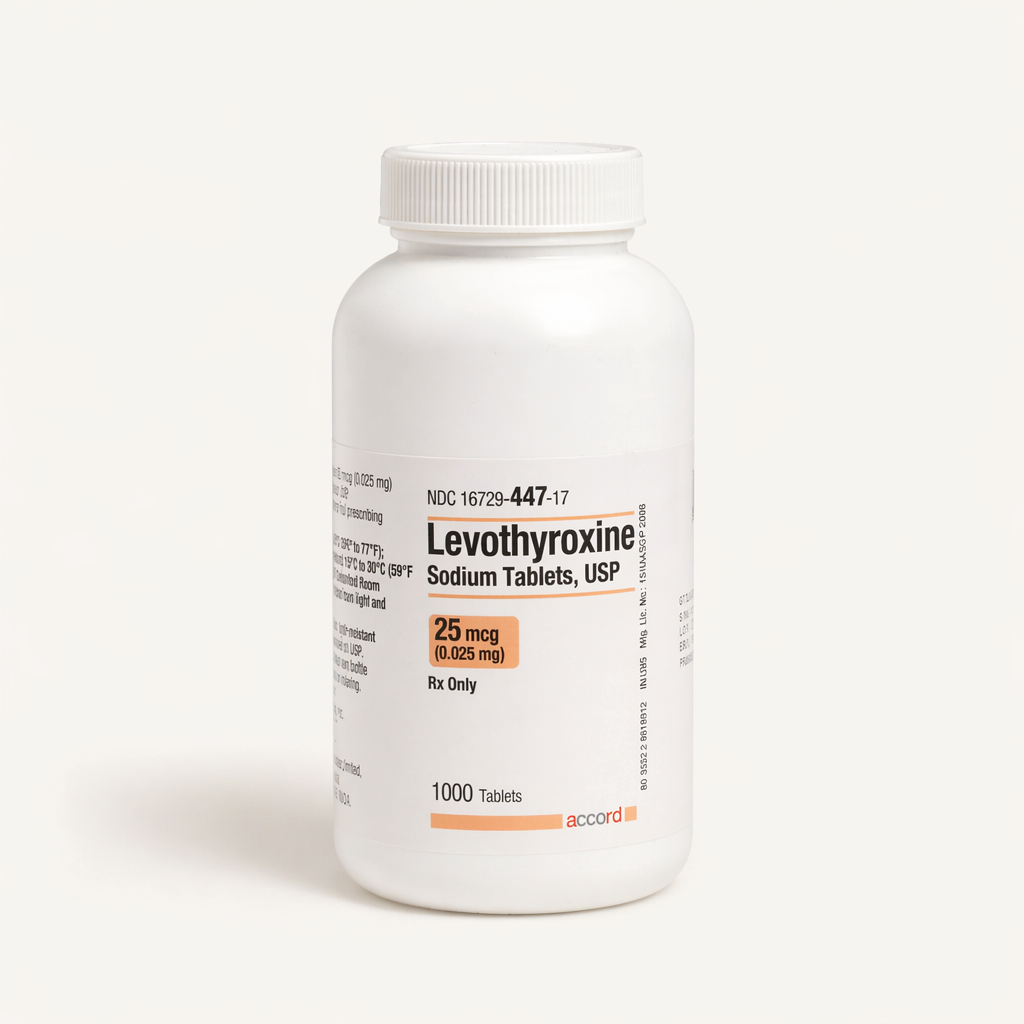
How It Works
Levothyroxine is a synthetic hormone replacement therapy that works by mimicking thyroxine (T4), a hormone naturally produced in the thyroid. When taken at the recommended dose, it can improve and maintain metabolism, energy, heart rate, and body temperature.
| Quick Facts | |
|---|---|
| Common Brands | Ermeza, Levothroid, Levoxyl, Synthroid, Tirosint/Tirosint-Sol, Unithroid |
| Drug Class | Thyroid hormone (thyroid agent) |
| Generic Status | Generic for Synthroid |
| Availability | Prescription only |
Dosing
Levothyroxine is available as an oral tablet, oral capsule, or ingestible liquid. Capsules and tablets can be swallowed whole, while the liquid should be measured out to ensure the correct dose.
- Daily dose: Adults under the age of 65 typically start at a dose of 100 to 125 micrograms (mcg) per day. The exact dose is calculated for roughly 1.6 mcg per kilogram (kg) of bodyweight. Most adults 65 and older start at a lower dose of up to 25 mcg per day to reduce the risk of serious side effects. This dose gradually increases over time, based on lab work and per doctor recommendations.
- Monitoring: If you take levothyroxine, you’ll need to undergo regular blood tests to check for thyroid-stimulating hormone (TSH) levels and ensure your dose is correct. You may not notice the effects of the drug for several weeks after your first dose.
- Maximum dose: Doses of 200 to 300 mcg per day are rarely prescribed.
Note: Dosing information is educational only. Your prescribing physician will determine your specific dose based on your individual health needs. Always follow your healthcare provider’s instructions for exact dosing.
Uses
FDA-Approved Uses
Levothyroxine is FDA-approved to treat hypothyroidism in adults and children, a condition classified as an underactive thyroid gland and low thyroid hormone levels.
Off-Label Uses
You may see levothyroxine prescribed for uses that are not “FDA-approved.” This is a common and legal practice called “off-label” prescribing, where a doctor uses their clinical judgment to prescribe a drug for a different (but well-researched) purpose.
Levothyroxine may be prescribed off-label to treat female infertility for women with preexisting hypothyroidism. It can also provide partial TSH suppression for people with benign thyroid nodules and non-toxic multinodular goiters.
Side Effects
The most common levothyroxine side effects mimic the natural symptoms of having excessively high thyroid hormone levels. Many side effects occur due to the way levothyroxine interacts with certain foods, drinks, and drugs.
Common Side Effects
- Weight changes
- Headache
- Joint pain and leg cramps
- Nausea and vomiting
- Diarrhea
- Changes in appetite and weight loss
- Irregular menstrual cycles or spotting
- Temporary hair loss when treatment begins
Serious Side Effects
Serious side effects are rare, but it’s important to know what to look for if they do occur.
- Heart problems: Symptoms may include a rapid or irregular heartbeat, chest pain, and shortness of breath. Heart attack can occur.
- Severe allergic reaction: Swelling of the face, tips, tongue, or throat may occur due to allergic reaction. Other symptoms can include hives, itching, respiratory problems, and fever.
- Hyperthyroidism: Taking levothyroxine can lead to excessively high thyroid hormone levels with symptoms like diarrhea, profuse sweating, heat sensitivity, fever, tremors, anxiety, weight loss, and sleep difficulties.
- Adrenal crisis: If you have untreated adrenal insufficiency and take levothyroxine, you may experience fatigue, stomach pain, dizziness, vomiting, or bodily weakness.
- Weak bones: Taking levothyroxine can weaken your bones and increase your risk of osteoporosis, or bone loss, which causes your bones to break more easily. This risk is further increased for postmenopausal women who take higher doses of levothyroxine.
Call your doctor immediately if you experience any concerning or prolonged symptoms.
Pharmacist Tips
Dosage Timing
It is recommended to take one dose daily on an empty stomach roughly 30 minutes to an hour before your first meal. Consistently taking your dose at the same time every day is crucial. If early morning won’t work for your schedule, ask your doctor when to take levothyroxine during the day.
Drink Plenty of Water
If using levothyroxine tablets or capsules, take your dose with at least 8 ounces of water to prevent a choking hazard and ensure your body properly absorbs the medication.
Food Interactions
Certain foods can affect how your body absorbs levothyroxine. These include soybean flour, walnuts, and grapefruit juice. Talk to your doctor about modifying your diet as needed for the levothyroxine to be effective.
Hair Loss
Hair loss is a common side effect of taking levothyroxine. However, for most people, the hair loss is temporary and primarily occurs when treatment begins. Long-term hair loss may warrant a conversation with your doctor.
Drug Interactions
Levothyroxine increases your thyroid hormone levels to treat hypothyroidism. This can affect how your body absorbs or interacts with a wide range of other medications, such as:
- Calcium and iron supplements: Levothyroxine may interact with certain OTC supplements such as calcium carbonate and ferrous sulfate.
- Antacids: Levothyroxine is known to interact with certain antacids, sucralfates, and proton pump inhibitors (PPIs) that treat issues related to stomach acid. These include esomeprazole, lansoprazole, omeprazole, pantoprazole, and rabeprazole.
- Anti-inflammatory drugs: Interactions may occur between levothyroxine and non-steroidal anti-inflammatory drugs like ibuprofen and naproxen used to treat swelling and pain.
- Cholesterol medication: Levothyroxine may affect the body’s absorption of slow-release nicotinic acid and bile acid sequestrants used to treat high blood pressure, such as cholestyramine, colestipol, and colesevelam.
- Hormones: Levothyroxine can interact with hormone supplements, including estrogen, progestin, testosterone, and steroid hormone medications such as prednisone and cortisone.
- Tyrosine-kinase Inhibitors (TKIs): Levothyroxine can interact with 5-fluorouracil (5-FU), asparaginase, mitotane, tamoxifen, and other TKIs used as chemotherapy drugs to treat some types of cancer.
- Methadone: Levothyroxine may affect the absorption of methadone, an opioid medicine used to treat opioid use disorder.
Always give your doctor and pharmacist a complete list of all your medications, vitamins, and supplements to check for potential interactions.
FAQs
What does levothyroxine do to your body?
Levothyroxine increases the levels of thyroid hormone in your body to treat hypothyroidism, a condition that occurs when the thyroid does not naturally produce enough thyroid hormone.
Can levothyroxine cause weight gain?
Yes, weight gain is a common side effect of taking levothyroxine. Conversely, weight loss is another common side effect. Talk to your doctor about modifying your diet and daily exercise routine if you notice weight changes after taking levothyroxine.
Can levothyroxine cause dizziness?
Yes, you may experience dizziness after taking levothyroxine. This often occurs due to under-replacement or over-replacement of the thyroid hormone, so talking to a doctor about changing your dose might mitigate this issue.
Does levothyroxine give you energy?
Yes, taking levothyroxine can give you energy. The thyroid hormone helps restore and maintain energy and metabolism, so healthy thyroid hormone levels can result in a noticeable energy boost.
What foods to avoid while taking levothyroxine?
When taking levothyroxine, it is recommended to avoid foods with soybean flour, cottonseed meal, and walnuts. You should also avoid high-fiber foods and grapefruit juice.
Does levothyroxine speed up your metabolism?
Yes, levothyroxine speeds up your metabolism by replacing the natural thyroid hormone and restoring metabolic rate that has decreased due to hypothyroidism.
Can I drink coffee with levothyroxine?
It is not advised to take coffee with your levothyroxine dose. Coffee can slow down the rate at which your body absorbs the medication. Instead, take your levothyroxine with a glass of water and continue to hydrate throughout the day.
What vitamins should not be taken with thyroid medication?
It is not advised to take calcium or iron supplements, such as calcium carbonate and ferrous sulfate, within 4 hours of your daily levothyroxine dose. These vitamins can block or interfere with your body’s ability to absorb the levothyroxine. Biotin (B7) can cause inaccurate thyroid level readings, and other supplements such as iodine, zinc, and vitamin C can affect thyroid function and interfere with thyroid hormone levels – especially if you’re taking a higher dose of levothyroxine.
What cancels out levothyroxine?
A wide range of foods, beverages, and medications can hinder – if not completely cancel out – the effects of levothyroxine. These include soy, high-fiber foods, coffee, calcium, iron, antacids and PPIs, cancer drugs, and cholesterol medication.
How long does levothyroxine stay in your system?
Levothyroxine stays in your system up to 6 weeks after your most recent dose. Certain factors like age, body mass, and thyroid function can shorten or extend how long the drug remains in your system.
Is levothyroxine the same as Synthroid?
Yes, Synthroid is a brand-name version of levothyroxine. Other brand name versions of levothyroxine include Ermeza, Levothroid, Levoxyl, Tirosint, Tirosint-Sol, and Unithroid.
How long does it take for levothyroxine to work?
Levothyroxine starts working immediately to restore thyroid hormone levels that have decreased due to hypothyroidism. However, it can take weeks before your thyroid hormone levels stabilize and your symptoms improve.
Comparable Medications
There are several medications that your doctor can prescribe in place of levothyroxine. We’ll explain how levothyroxine compared to some common levothyroxine alternatives:
Armour Thyroid®
From $54.99
Armour thyroid is a synthetic hormone replacement drug derived from dried pig thyroid glands. It contains both triiodothyronine (T3) and thyroxine (T4).
Euthyrox
Euthyrox is the brand-name equivalent of generic levothyroxine. It does not contain many inactive ingredients, and is administered in tablet, capsule, or liquid form.
We Have Levothyroxine in Stock. Get Yours Today!
Important: Information on this page is for educational purposes only. Prescribing decisions are made by independent, licensed providers. TelyRx operates technology-enabled pharmacies and a telehealth platform that connects patients with licensed providers. Prescriptions, when provider-approved and issued, are filled and shipped by TelyRx-affiliated pharmacies. We do not employ physicians or make prescribing decisions. Learn more about our editorial standards here.