

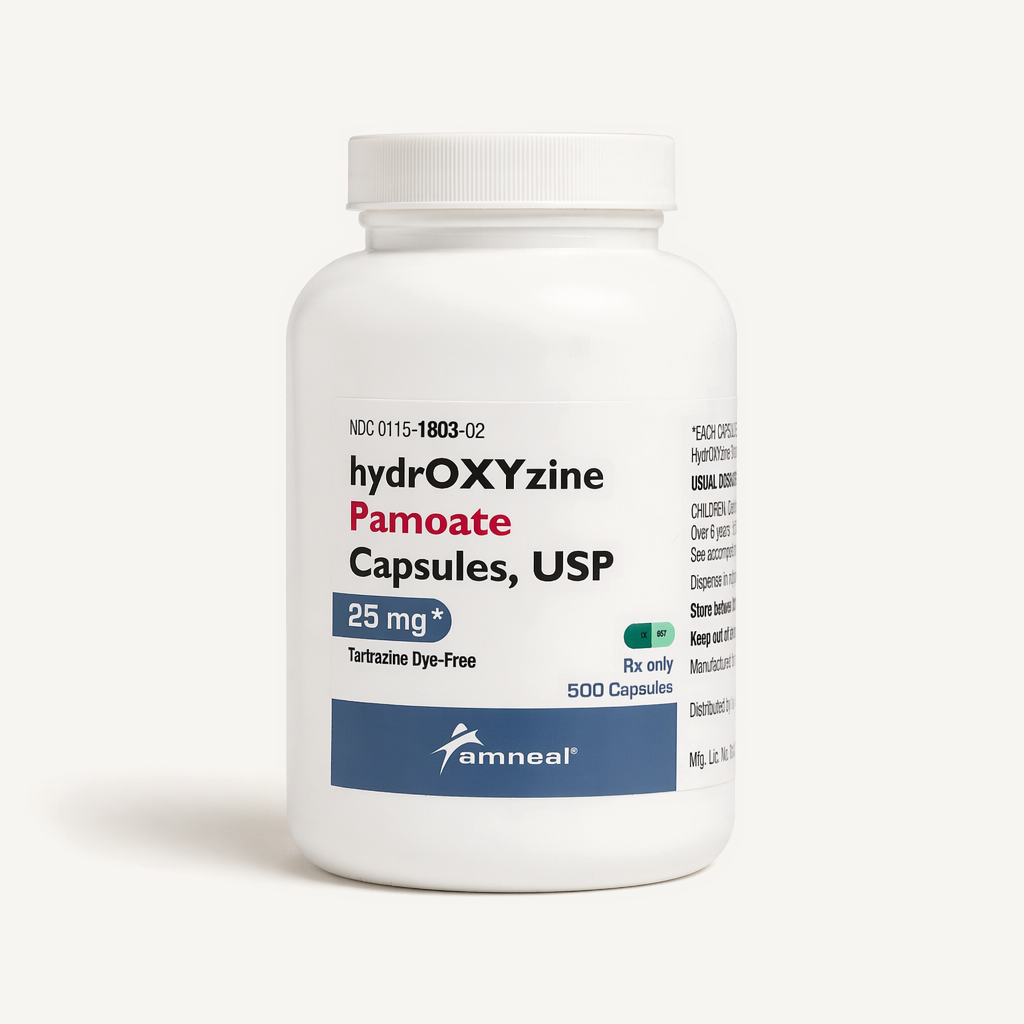
How It Works
Hydroxyzine works within the brain and body using “two-pronged” approach:
- Peripheral action (body): The chemical histamine (H1) is released in the body when an allergic reaction occurs, leading to redness, swelling, and itching. Hydroxyzine is an histamine antagonist that blocks H1 receptors. In doing so, hydroxyzine prevents histamine from binding to cells and essentially “shuts down” the allergic response.
- Central action (brain): Hydroxyzine impacts subcortical regions of the brain and decreases activity in the central nervous system, giving the drug its sedating and anxiety-reducing effects. Some research also suggests that hydroxyzine targets serotonin receptors and can play a role in mood regulation.
| Quick Facts | |
|---|---|
| Common Brands | Vistaril, Orgatrax, Atarax (discontinued) |
| Drug Class | First-generation antihistamine; anxiolytic |
| Generic Status | Generic version of Atarax |
| Availability | Prescription only |
Dosing
Hydroxyzine dosage varies significantly, depending on factors like the condition being treated and the patient’s age and medical history. Standard guidelines for hydroxyzine dosage include the following:
- Pruritus (allergic itching): For people with allergic itching, standard guidelines suggest a starting hydroxyzine dose of 25 milligrams (mg) taken as an oral tablet 3 to 4 times per day. Some people find that a single dose before bedtime can effectively relieve nighttime itching.
- Anxiety and tension: Providers generally prescribe 50 mg to 100 mg of hydroxyzine per day to adults with anxiety or tension. This daily allotment may be divided into three or four individual doses.
- Pre-operative sedation: When hydroxyzine is used to sedate adult patients prior to medical operations, doctors typically administer 50 mg to 100 mg.
- Geriatric patients: For patients 65 and older, doctors may prescribe a lower dose of hydroxyzine to reduce the sedating effects and potential for “brain fog.”
Note: Dosing information is educational only. Your prescribing physician will determine your specific dose based on your individual health needs. Always follow your healthcare provider’s instructions for exact dosing.
Uses
FDA-Approved Uses
Hydroxyzine is FDA-approved for three indications:
- Relief of anxiety and tension symptoms associated with psychoneurosis
- Management of pruritus (allergic itching) due to conditions like chronic hives, atopic dermatitis, and contact dermatitis.
- Sedation used as premedication following general anesthesia.
Off-Label Uses
You may see hydroxyzine prescribed for uses that are not “FDA-approved.” This is a very common and legal practice called “off-label” prescribing, where a doctor uses their clinical judgment to prescribe a drug for a different (but well-researched) purpose.
Common off-label uses for hydroxyzine currently found in clinical practice and research include:
- Insomnia: Hydroxyzine has strong sedative effects that make it a commonly prescribed sleep aid, especially for patients who do not want a habit-forming medication.
- Panic attacks: Hydroxyzine is fast-acting, so it is sometimes used in acute management of panic symptoms.
- Nausea and motion sickness: Hydroxyzine, like Dramamine and other antihistamines, can settle the stomach to alleviate nausea and motion sickness.
- Opioid withdrawal: Hydroxyzine may be used in clinical detox settings to aid with the anxiety and restlessness associated with opioid withdrawal.
Side Effects
Like all medications, hydroxyzine can cause side effects. Common side effects may improve as your body adjusts to the medication, but others may be serious and require medical attention.
Common Side Effects
Most patients eventually adapt to taking hydroxyzine, but initial side effects are somewhat common. Many of these side effects resolve as the body acclimates to the medication, and may include:
- Long-lasting drowsiness
- Dry mouth
- Mild or transient headache
- Dizziness
- Thickened bronchial secretions, making it harder to clear phlegm
Serious Side Effects
Serious side effects are rare, but it’s important to know what to look for if they do occur. Serious side effects of taking hydroxyzine can include:
- QT prolongation: Taking hydroxyzine can trigger this rare heart rhythm disorder. Standard guidelines suggest taking another medication if the patient has a pre-existing “long QT” interval or other heart rhythm medications.
- Severe skin reaction: Acute generalized exanthematous pustulosis (AGEP) and other severe reactions can occur from taking hydroxyzine. It is advised patients should seek medical attention if they experience a fever and a rash with small, pus-filled blisters.
- Anaphylaxis: As with many other medications, hydroxyzine can cause a severe allergic reaction in some people. Signs and symptoms include difficulty breathing, rapid pulse, and swelling of the face, lips, tongue, and throat.
- Seizures: While very rare, seizure-related convulsions have been reported in patients with preexisting epilepsy who take high doses of hydroxyzine.
- Hallucinations and confusion: Hallucinations and confusion can occur after taking hydroxyzine, but most of these cases involve elderly patients or accidental overdose.
Call your doctor immediately if you experience any concerning or prolonged symptoms.
Pharmacist Tips
Stay Hydrated
Dry mouth is a common side effect of taking hydroxyzine. Sipping water throughout the day, chewing sugar-free gum, and using saliva substitutes can all help you remain properly hydrated.
Be Cautious The Morning After
Hydroxyzine has deep sedating effects that can last up to 8 hours. If you take the drug before bed and don’t get 8 hours of sleep, it is advised to wait until the grogginess wears off before driving or operating machinery.
Avoid Double Dosing
Taking over-the-counter antihistamines with hydroxyzine can lead to an accidental overdose. Talk to your doctor if you aren’t sure which one is best for you.
Drink With Care
Alcohol can exacerbate the sedative qualities of hydroxyzine – potentially to dangerous levels. Doctors generally recommend avoiding alcohol while taking hydroxyzine.
Store The Medication Properly
Standard guidelines recommend storing hydroxyzine in a cool, dry place with a constant temperature of 59 to 86 degrees Fahrenheit. Humidity can degrade the tablets over time.
Drug Interactions
Hydroxyzine can interact with a wide range of other medications, particularly those that affect heart rhythm or the central nervous system. Known interactions for hydroxyzine include:
- QT-prolonging drugs: Most doctors do not recommend taking hydroxyzine with QT-prolonging drugs, including antipsychotics (thioridazine), antibiotics (erythromycin), or anti-arrhythmics (amiodarone).
- Central nervous system (CNS) depressants: Taking hydroxyzine with opioids, barbiturates, and benzodiazepines like Xanax and Ativan can elevate your risk of severe respiratory depression.
- Anticholinergics: When taken with hydroxyzine, anticholinergics used to treat overactive bladder or manage Parkinson’s disease can exacerbate side effects like dry mouth and confusion.
- Monoamine oxidase (MAO) inhibitors: Medications in this class of drugs, which mostly consists of antidepressants, have been shown to intensify the side effects of hydroxyzine.
- Cholinesterase inhibitors: Hydroxyzine may reduce the effectiveness of cholinesterase inhibitors used to manage Alzheimer’s disease.
Always give your doctor and pharmacist a complete list of all your medications, vitamins, and supplements to check for potential interactions.
FAQs
Is hydroxyzine a benzo like Xanax?
No, hydroxyzine is not in the benzodiazepine drug glass like Xanax and other similar anxiety medications. Both hydroxyzine and Xanax can treat anxiety, but do so using different mechanisms. Unlike Xanax, hydroxyzine is not considered addictive.
Does hydroxyzine work immediately for panic attacks?
Hydroxyzine typically begins working within 30 to 60 minutes. This is a slower response compared to sublingual benzodiazepine drugs, but can prevent panic and manage building anxiety when an attack occurs.
What is the difference between hydroxyzine pamoate (Vistaril) and hydroxyzine HCL (Atarax)?
Both Vistaril and Atarax are brand name versions of hydroxyzine. The primary difference is form and purpose. Vistaril often comes in capsules and is used to treat anxiety. Atarax typically comes in an oral tablet or syrup, and is primarily used to manage skin conditions.
Can I take hydroxyzine every night for sleep?
Although hydroxyzine is not considered addictive, your body may develop a tolerance to the effects. This means taking the drug every night may lose its effectiveness over time. Short-term use is generally recommended.
Is hydroxyzine addictive or habit-forming?
No, hydroxyzine is not considered addictive or habit-forming. There is no “high” effect from taking the drug, and current research does not suggest physical addiction occurs.
Does hydroxyzine cause weight gain?
Weight gain is not a common side effect of hydroxyzine. That said, some people who take the drug experience an increase in appetite that leads to more eating and weight gain.
Can I drink alcohol while taking hydroxyzine?
No, it is generally advised not to drink alcohol while taking hydroxyzine. This can create a dangerous sedative combination with life-threatening health risks.
Is hydroxyzine safe to take during pregnancy?
Standard guidelines recommend avoiding hydroxyzine during the first trimester of pregnancy. Talk to your OB-GYN about alternatives to hydroxyzine you can take during this period.
Why does hydroxyzine make me feel so tired the next day?
Hydroxyzine has significant sedating effects and the drug remains in your system for several hours. This can create a “hangover” effect marked by grogginess and confusion after waking up in the morning – especially for patients who take high doses right before bed.
Does hydroxyzine affect heart rhythm?
In rare cases, hydroxyzine can affect heart rhythm and cause QT prolongation. Most doctors avoid prescribing hydroxyzine to patients with preexisting heart rhythm conditions.
Can I take hydroxyzine with Benadryl or Zyrtec?
It is generally not advised to mix hydroxyzine with over-the-counter allergy medication, as this can increase the risk of both side effects and overdose.
Does hydroxyzine help with nausea?
Yes, hydroxyzine is sometimes prescribed off-label to manage nausea and vomiting. This is particularly common for treating motion sickness and managing post-operative recovery.
Can hydroxyzine cause memory loss or “brain fog”?
Yes, hydroxyzine can cause memory loss and brain fog. Like other first-generation antihistamines, hydroxyzine crosses the blood-brain barrier, affects the central nervous system, and causes sedation.
For this reason, the drug is associated with more memory loss and brain fog than second-generation antihistamines that don’t cross the blood-brain barrier.
How long does hydroxyzine stay in your system?
Hydroxyzine typically remains in the body for 4 to 5 days after the most recent dose. However, its strongest anti-anxiety effects wear off in about 4 to 6 hours.
Is hydroxyzine used for itching or anxiety?
Yes, hydroxyzine is FDA-approved to treat allergic itching and manage anxiety. However, doctors may prescribe different forms of the medication and dosages for each condition.
Can I drive after taking hydroxyzine?
Yes, you can drive after taking hydroxyzine, but it is advised to wait until after all of the drug’s drowsiness-inducing effects have worn off.
Comparable Medications
Diphenhydramine
Sold over the counter as Benadryl, diphenhydramine is – like hydroxyzine – a first-generation antihistamine. However, Benadryl's effects are much less intense and the drug is primarily used for sleep and mild allergies. Hydroxyzine is prescription-only and considered more effective for managing anxiety.
Doxylamine
Doxylamine, or Unisom, is an over-the-counter antihistamine with strong sedative properties. It does not address anxiety like hydroxyzine, and is more likely to cause next-day grogginess.
Promethazine
From $39.99
Sold under the brand name Phenergan, promethazine is a prescription-only antihistamine that's heavily focused on treating nausea and motion sickness. Both promethazine and hydroxyzine have sedative effects, but the latter is usually preferred for allergic itching and mental tension.
Propranolol
From $24.99
Propranolol, or Inderal, is a beta-blocker used to manage a racing heartbeat, shaking hands, and other physical symptoms of anxiety. Hydroxyzine, on the other hand, sedates the brain. Both of these drugs may be used together as combination treatment for people who need comprehensive anxiety management.
Cetirizine Tablets
From $22.99
Sold under the brand name Zyrtec, cetirizine is a second-generation antihistamine that's actually derived from hydroxyzine. It is a "non-drowsy" option for seasonal allergies and hay fever, but does not have any sedating properties and is not used to manage anxiety.
We Have Hydroxyzine in Stock. Get Yours Today!
Important: Information on this page is for educational purposes only. Prescribing decisions are made by independent, licensed providers. TelyRx operates technology-enabled pharmacies and a telehealth platform that connects patients with licensed providers. Prescriptions, when provider-approved and issued, are filled and shipped by TelyRx-affiliated pharmacies. We do not employ physicians or make prescribing decisions. Learn more about our editorial standards here.