
The Wellness Collective

What to Know About Armour Thyroid

Reviewed by Ashley Robinson, PharmD, Pharmacy Manager for TelyRx

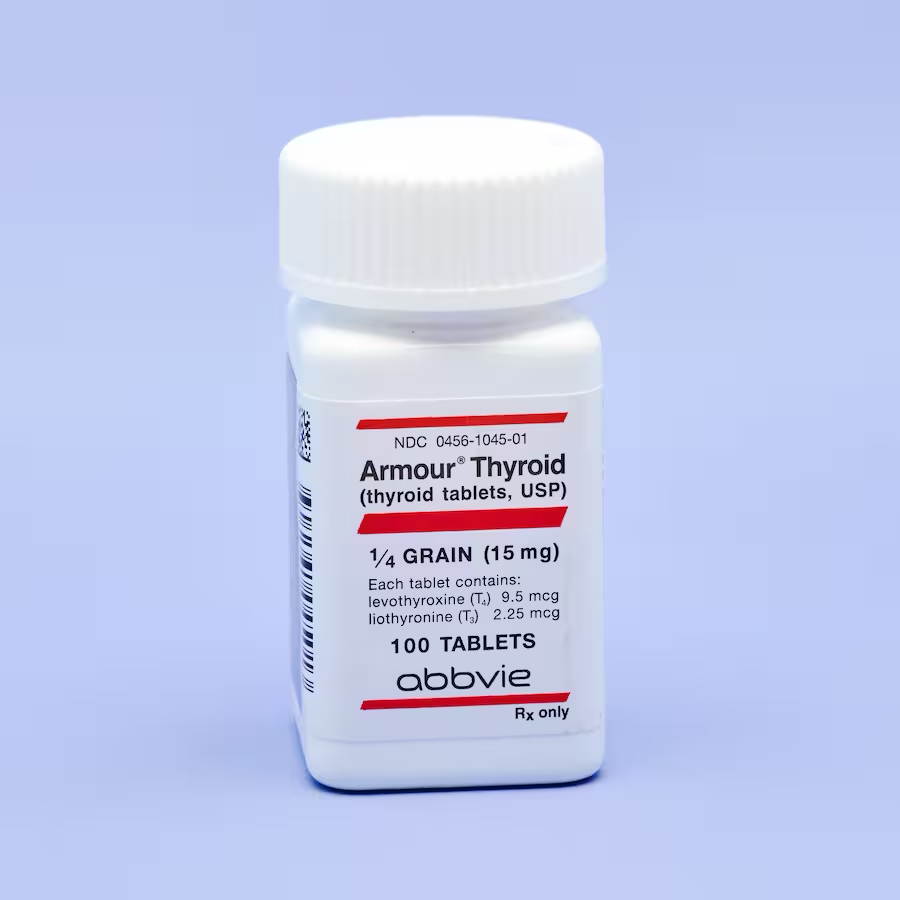
Armour Thyroid tablets via TelyRx

Table of Contents

Armour Thyroid (desiccated thyroid extract) is a hormone replacement therapy that is prescribed for underactive thyroid, or hypothyroidism. Armour Thyroid is also prescribed to prevent or manage thyroid growths such as enlarged thyroid (goiter), Hashimoto’s disease, and thyroid cancer.

Unlike synthetic thyroid medications, Armour Thyroid is naturally derived from the dried (desiccated) thyroid glands of pigs, so it contains both types of thyroid hormones: thyroxine (T4) and triiodothyronine (T3).

Armour Thyroid is not FDA-approved. Common side effects include joint or muscle pain, fatigue, weight gain, and allergic reactions.

How Does Armour Thyroid Work?

Armour Thyroid works by mimicking the output of a healthy human thyroid gland. Normally, the thyroid gland produces a mixture of hormones, namely thyroxine (T4) and triiodothyronine (T3). When you have hypothyroidism, your thyroid gland does not produce enough of these thyroid hormones. Armour Thyroid contains both of these hormones, so taking it can restore your levels back to normal.

In addition to underactive thyroid, Armour Thyroid is also prescribed for goiter and thyroid cancers. These conditions are caused by too-high levels of thyroid-stimulating hormone (TSH), which encourage the thyroid gland to grow too much (leading to goiter) or grow cancerous cells (leading to thyroid cancer).

Armour Thyroid works by telling your pituitary gland to reduce TSH production, which can help “shrink” an enlarged gland or suppress the regrowth of cancerous thyroid tissues after surgery.

Drug Facts

Common Brands Armour Thyroid
Drug Class Thyroid agents
Generic Status No generic available
Availability Prescription Only

Dosing

Note: Dosing information below is educational only. Your prescribing physician will determine your specific dose based on your individual health needs.

Armour Thyroid is an oral medication that is taken on a daily basis. Dosages are individualized to the patient and depend on what you’re taking it for.

  • For hypothyroidism, the recommended starting dose is typically 30 mg daily. After 2–4 weeks, your provider may order blood tests to see if your TSH, T4, and T3 levels are normal. If needed, they may increase your dose in increments of 15 mg every 2–3 weeks until they find an effective dosage for you.
  • For managing goiter or thyroid cancer, the recommended dose is calculated by body weight and given for 7–10 days.

It is recommended to take Amour Thyroid on an empty stomach with water every morning, at the same time each day. Most providers recommend waiting 30–60 minutes before eating or drinking anything besides water.

Always follow your healthcare provider’s instructions for exact dosing.

FDA-Approved Uses

The FDA has not approved the labeling or ingredients of Armour Thyroid and recommends that patients transition to an FDA-approved medication.

Common Off-Label Uses

To date, there are no commonly known off-label uses.

Side Effects

Like all medications, Armour Thyroid can cause side effects. Often, these can be a sign that the dosage is too high.

Common Side Effects

  • Temporary hair loss
  • Insomnia (trouble sleeping)
  • Rash
  • Tremors
  • Arrhythmias (abnormal heart rhythms)
  • Heart attack
  • Shortness of breath
  • Chest pain
  • Headache
  • Nervousness
  • Irritability
  • Muscle weakness
  • Increased appetite
  • Weight loss
  • Diarrhea
  • Sweating or trouble tolerating heat
  • Fever
  • Changes in menstrual period

Serious Side Effects

Serious side effects are rare, but it’s important to know what to look for if they do occur. Some serious reactions to Armour Thyroid are signs of thyroid hormone toxicity, which can happen when you have too much Armour Thyroid. Call your doctor immediately if you experience:

  • Boxed warning (weight loss): Armour Thyroid has a warning for a high risk of toxicity if used for weight loss. Armour Thyroid is not effective for weight loss and should never be used for this reason.
  • Cardiovascular issues: Rapid or irregular heartbeat (palpitations), chest pain, or shortness of breath.
  • Neurological symptoms: Severe nervousness, tremors, irritability, or extreme trouble sleeping.
  • Serious allergic reactions: Swelling of the face, lips, tongue, or throat; difficulty breathing; severe rash or itching.
  • Bone density loss: Long-term over-replacement (taking more than the body needs) of thyroid hormone can lead to a decrease in bone mineral density, increasing the risk of osteoporosis.

Call your doctor immediately if you experience any concerning or prolonged symptoms.

Pharmacist Tips

  • Dose timing: Armour Thyroid is a daily medication. It is best absorbed on an empty stomach. It is usually taken first thing in the morning with water, at least 30 to 60 minutes before eating or drinking anything else.
  • Missed dose: Do not skip doses. If you miss a dose, it is recommended to take it as soon as you remember, unless it is almost time for your next dose. Do not double up.
  • Storage: Armour Thyroid should be stored in a tightly sealed container at room temperature (59°F to 86°F), away from moisture and light.
  • Food: Certain foods can make Armour Thyroid less effective, including soy, cottonseed meal, walnuts, grapefruit juice, and dietary fiber. If you eat any of these regularly, ask your doctor about whether your dose needs to be adjusted.
  • Supplements: Certain supplements can disrupt how Armour Thyroid works. Your provider will likely recommend you take Armour Thyroid at least 4 hours before or after taking antacids or any supplements or multivitamins containing iron or calcium.

Drug Interactions

Armour Thyroid interacts with a wide variety of substances. Because it affects metabolism, it can change how your body processes other drugs.

  • Insulin and oral diabetes medications: Thyroid hormones can increase blood sugar levels. Your doctor may adjust your insulin or oral medication doses when starting or changing your Armour Thyroid dose.
  • Oral anticoagulants (blood thinners): Armour Thyroid may increase the effect of blood thinners like warfarin, potentially increasing the risk of bleeding. It is recommended to check your blood clotting status often.
  • Cholesterol medications: Drugs like cholestyramine and colestipol can trap thyroid hormone in the digestive tract. These should be taken at least 4–5 hours apart from your thyroid dose.
  • Estrogens and oral contraceptives (birth control pills): Birth control pills or hormone replacement therapy can increase the amount of thyroid proteins in your blood, so your doctor may need to prescribe a higher dose of Armour Thyroid.
  • Foods and dietary supplements: Certain foods (soy, cottonseed meal, walnuts, grapefruit juice, dietary fiber) and supplements (iron, calcium, antacids) can affect the absorption of Armour Thyroid. Talk to your doctor if you take these regularly.

Always give your doctor and pharmacist a complete list of all your medications, vitamins, and supplements to check for potential interactions.

FAQs

Why is Armour Thyroid not FDA approved?

The FDA has not approved Armour Thyroid and similar animal-derived thyroid medications due to concerns with the safety, quality, and potency of these drugs. Tablets can have inconsistent doses, even among the same manufacturing batch, and using animal tissue can inherently raise the risk of impurities in manufacturing. The FDA has received complaints of adverse events from patients taking unapproved medications.

What to avoid when taking Armour Thyroid?

Foods containing soy and cottonseed meal, as well as walnuts, grapefruit juice, and dietary fiber can affect the absorption of Armour Thyroid. Also, it can interact with some drugs, so it’s important to provide your doctor with a full medication list prior to taking Armour Thyroid.

What vitamins should not be taken with thyroid medication?

Calcium and iron can both significantly block the absorption of thyroid hormones. Supplements and multivitamins containing these minerals should be taken at least four hours after your Armour Thyroid dose.

What are the negative effects of Armour Thyroid?

Negative effects usually arise if the dose is too high (causing symptoms of an overactive thyroid like anxiety and heart palpitations) or if the patient is allergic to porcine-derived products.

Is Armour Thyroid or levothyroxine better?

There is no “better” medication in an absolute sense; there is only what is better for the individual. Levothyroxine is synthetic T4 and is the standard first-line treatment. Armour Thyroid provides both T4 and T3. Some patients feel more energetic on Armour Thyroid, while others find levothyroxine more stable and easier to dose.

What happens if I miss a day of Armour Thyroid?

Missing a single day is unlikely to cause immediate symptoms because thyroid hormones stay in the body for a long time. However, frequent missed doses may cause your hypothyroidism symptoms to return. Your provider may recommend to take the missed dose as soon as you remember, or skip it if it’s nearly time for the next one.

What are the side effects of too much Armour Thyroid?

Too much medication leads to “thyrotoxicosis,” or having too much thyroid hormone in your system. Symptoms include a racing or irregular heart rate, chest pain, shortness of breath, tremors, and extreme irritability. If these occur, a dosage reduction may be required.

How long does it take for Armour Thyroid to work?

While the T3 in Armour Thyroid enters the system quickly, it can take several weeks for the T4 levels to stabilize and for you to feel a significant change in symptoms. Most providers wait 2 to 4 weeks before checking blood levels to judge the full effect.

Compare Medications

Compared: Armour Thyroid, NP Thyroid, Levothyroxine, or synthroid?

  • NP Thyroid: NP Thyroid is a brand-name desiccated thyroid extract derived by porcine (pig) thyroid, similar to Armour thyroid.
  • Levothyroxine: Levothyroxine is a generic form of synthetic T4 that is the most commonly prescribed thyroid medication.
  • Synthroid: Synthroid is a brand-name version of levothyroxine that’s taken daily.
Disclaimer

Important: Information on this page is for educational purposes only. Prescribing decisions are made by independent, licensed providers. TelyRx operates technology-enabled pharmacies and a telehealth platform that connects patients with board-certified licensed providers. Prescriptions, when provider-approved and issued, are filled and shipped by TelyRx-affiliated pharmacies. We do not employ physicians or make prescribing decisions.

Prescription medications made easy with TelyRx.