
The Wellness Collective

Why Scabies Is Making a Quiet Comeback and What You Can Do

Reviewed by Ashley Robinson, Pharmacy Manager for TelyRx

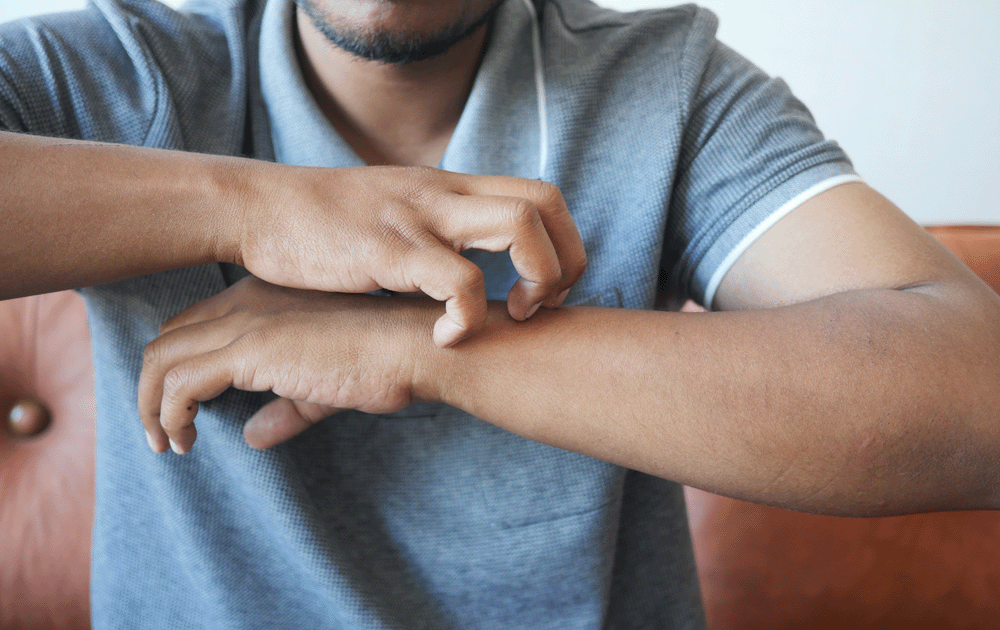
A man uncomfortable in his skin.

Table of Contents

Scabies isn’t exactly a dinner party conversation. It’s one of those things you assume disappeared sometime in the 1900s. But lately, this old skin nuisance has been making an unexpected comeback, quietly spreading through schools, dorms, nursing homes, and even apartment buildings. 

The tricky part is that scabies doesn’t look dramatic at first. It hides behind what seems like a simple rash or allergy, which means it often goes untreated for weeks. Meanwhile, the itching gets worse, and before you know it, the whole household is scratching. If you’ve ever had a rash you’d do anything to get a moment’s peace from, you know the kind of discomfort scabies creates. 

what is scabies, really?

Scabies is a skin condition caused by a tiny eight-legged mite called Sarcoptes scabies, a microscopic parasite that likes to live just under the top layer of your skin. The mites dig very small burrows where they lay their eggs, which your body reacts to with itching, redness, and bumps. 

It’s not dangerous, but it can be extremely irritating. The biggest misconception is that scabies is caused by poor hygiene, when in reality, anyone can get it. These mites don’t care how often you shower or change your sheets. They spread through skin-to-skin contact that lasts long enough for them to move from one person to another. That might mean holding hands, sleeping in the same bed, or helping care for someone else. 

Because of that, scabies tends to spread faster in places where people live close together. That includes: 

  • Children and teenagers in schools or daycare centers 
  • Elderly adults in assisted living or nursing homes 
  • Families sharing crowded homes or beds 
  • People in group housing, like dorms, shelters, or prisons 
  • Travelers staying in places with high turnover or limited sanitation 

So if you’re wondering why it seems like scabies is suddenly everywhere again, it helps to look at how connected our lives have become once again. 

why is scabies making a comeback?

A group interacting, hand in hand.

There’s no single reason behind the rise, but rather a perfect mix of timing, access, and missteps. 

We’re close again. 

For a few years, the world slowed down. We stayed apart, washed our hands constantly, and worried about every single type of germ. Now we’ve gone back to hugging friends, traveling, sharing rides, and living side by side again. That closeness is great for people, but also for mites that need skin contact to survive.

Scabies is often misdiagnosed. 

Many people mistake scabies for eczema, dry skin, or an allergic reaction. The rash can look similar, and because symptoms might not appear for two to six weeks after exposure, it’s easy to miss the connection. During that time, a person can unknowingly spread it to family, roommates, or anyone they touch often.

Access to treatment is limited.

Even once people realize they havescabies, getting the right medication can be difficult. There’s no effective over-the-counter treatment, so you need a prescription for the proper scabies cream or oral medication. When people can’t easily see a doctor, they sometimes rely on home remedies or lotions that don’t actually kill the mites. That’s when scabies lingers and potentially spreads even more. 

There’s talk about resistance and partial treatment problems. 

Some doctors believe that scabies mites are becoming more resistant to certain medications. But often, what looks like resistance is actually the result of incomplete treatment.  This just means the medication wasn’t used exactly right. Maybe the cream wasn’t applied to every part of the body, or a second dose wasn’t taken when needed, or not everyone in the house was treated at the same time. 

When you put all of that together — delayed diagnosis, close contact, limited access, and incomplete treatment — it’s easy to see how scabies has quietly made its way back into daily life. 

how to recognize scabies symptoms

The most common symptom of scabies is itching, and not the casual kind that comes and goes. It’s intense, especially at night when the mites are more active. You might notice tiny bumps, red patches, or what look like thin pencil marks. Those marks are the burrows mites make as they move under the skin. 

It can take two to six weeks after exposure for symptoms to show up, which makes it easy to pass along without realizing it. Once one person in the home has it, everyone needs to be treated, even if they aren’t itchy yet. Otherwise, it is likely to just come right back. 

Scabies is often mistaken for other skin conditions since symptoms can feel similar. Here’s how scabies compares to some other common skin problems: 

  • Scabies vs. eczema – Both cause itching, but eczema usually appears as dry, scaly patches and often shows up on elbows, knees, or face. Scabies causes smaller, more scattered bumps and tends to hide in warm areas like between fingers, wrists, waistlines, and genitals. 
  • Scabies vs. bed bugs – Bed bugs bite exposed areas in groups or rows, often leaving visible welts. Scabies causes burrows and bumps in areas that are usually covered by clothing. 
  • Scabies vs. allergies – Allergic reactions usually calm down with antihistamines or over-the-counter hydrocortisone cream. Scabies does not. If the itching doesn’t improve with those, it’s worth getting checked. 

Knowing what you’re looking for can make all the difference in stopping scabies early. 

why over-the-counter treatment wont work

Unfortunately, no amount of lotion, oil, or “natural” cream will cure scabies. The only real way to get rid of the mites is through prescription scabies medication. Doctors usually recommend one of two options: 

  • Permethrin cream – This is a prescription cream that kills both mites and their eggs. You apply it from the neck down and leave it on for several hours before washing it off. 
  • Ivermectin tablets – An oral medication often used when the infestation is severe or affects multiple people. It’s easy to take and especially helpful when topical treatment isn’t practical. 

Even after using these treatments correctly, itching can stick around for another week or two. That doesn’t always mean it failed, but that your body is still reacting to the irritation. 

Cleaning is also a big part of recovery. Wash bedding, towels, and clothes in hot water, then dry them on high heat. Anything that can’t be washed should be sealed in a plastic bag for three days. Vacuum furniture, carpets, and mattresses to make sure no mites are hiding out. 

If seeing a doctor in person doesn’t make sense for you, TelyRx makes it easy to get prescription scabies treatment online. You can request permethrin cream or ivermectin tablets through a simple online process and get these FDA-approved medications shipped directly to you. It’s private, fast, and saves you from the awkwardness of sitting in a waiting room scratching your arm. 

the stigma around scabies and why it shouldn’t stop you from getting help

Unfortunately, scabies suffers from an image problem. People often associate it with being dirty or unclean, but that couldn’t be further from the truth. You can be the most hygienic person in the world and still get scabies from a single handshake or shared blanket. 

The problem isn’t cleanliness, it’s contact. And because scabies spreads so easily, the longer someone delays treatment due to embarrassment, the more people it can reach. At an estimated 455 million cases each year, it’s clear that scabies is a global issue affecting people from all locations, classes, and lifestyles.  

If you suspect you have it, don’t feel ashamed or try to hide it. Talk to your doctor or seek treatment online. The sooner you start, the sooner the itching — and the anxiety that comes with it — goes away. 

Disclaimer

This blog post is for informational purposes only and does not constitute medical advice, diagnosis, or treatment. The content provided here is not a substitute for professional medical advice, consultation, or care from a qualified healthcare provider. Always seek the guidance of your physician or another licensed health professional with any questions you may have regarding a medical condition or treatment. Do not disregard or delay seeking professional medical advice based on information read on this site. Learn more about our editorial standards here.

Disclaimer

This blog post is for informational purposes only and does not constitute medical advice, diagnosis, or treatment. The content provided here is not a substitute for professional medical advice, consultation, or care from a qualified healthcare provider. Always seek the guidance of your physician or another licensed health professional with any questions you may have regarding a medical condition or treatment. Do not disregard or delay seeking professional medical advice based on information read on this site. Learn more about our editorial standards here.