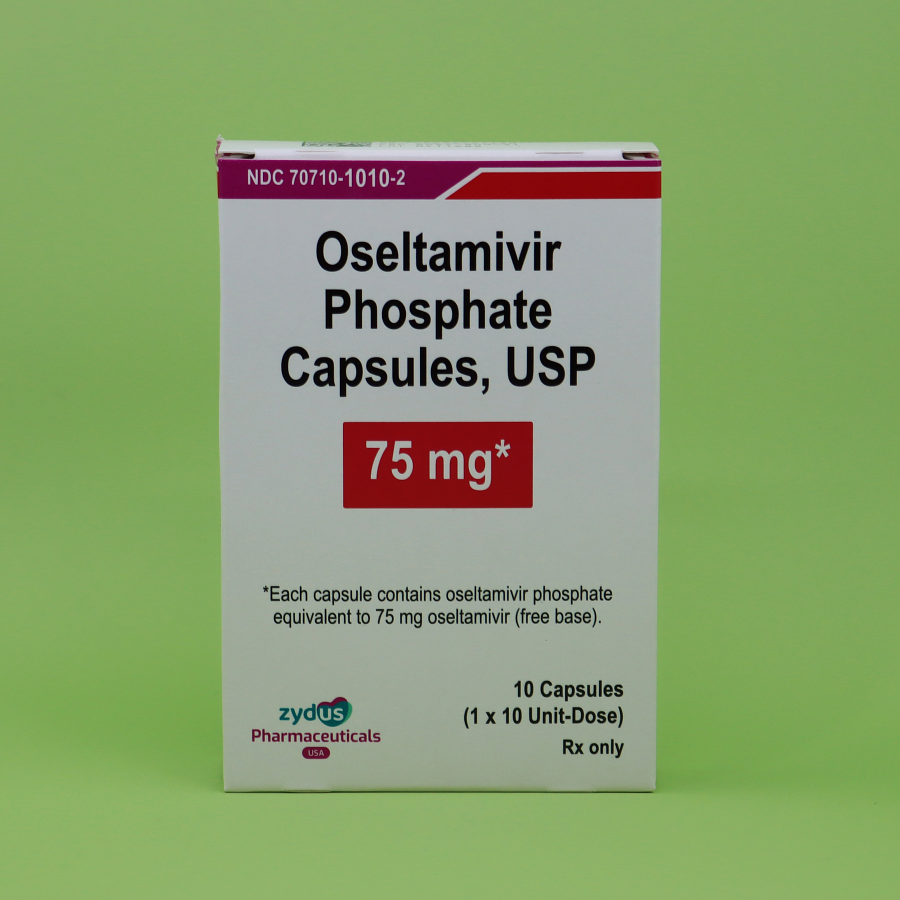
How It Works
Oseltamivir works by restricting the mobility of the influenza virus within the body. After entering a host cell and replicating, a virus uses an enzyme called neuraminidase to detach itself and travel through the respiratory tract to infect other healthy cells. As a neuraminidase inhibitor, oseltamivir blocks the virus from using the enzyme and forces the virus to remain confined within the dying host cell.
By slowing the influenza cell replication process, oseltamivir essentially buys time for your immune system to launch a coordinated attack against the virus.
| Quick Facts | |
|---|---|
| Common Brands | Tamiflu |
| Drug Class | Antiviral (neuraminidase inhibitor) |
| Generic Status | Generic version of Tamiflu |
| Availability | Prescription only |
Dosing
Standard guidelines recommend taking oseltamivir within 48 hours of first noticing influenza symptoms, but dosage and duration differs for using the drug as an influenza prophylaxis.
- Dosing for flu treatment: Most influenza patients follow a prescribed treatment plan with 75 milligrams (mg) of oseltamivir twice per day for 5 consecutive days.
- Dosing for flu prevention: For adults who have been in close contact with someone who has the flu, the standard recommended dose is 75 mg of oseltamivir once per day for at least 10 consecutive days. Your doctor can provide a more specific timetable based on your symptoms and medical history.
Most oseltamivir prescriptions call for oral capsules. The oral suspension form of oseltamivir is typically prescribed to pediatric patients or those with difficulty swallowing, with a dosage calculated by the patient’s weight.
Note: Dosing information is educational only. Your prescribing physician will determine your specific dose based on your individual health needs. Always follow your healthcare provider’s instructions for exact dosing.
Uses
FDA-Approved Uses
Oseltamivir is FDA-approved to treat acute Type A and Type B influenza for pediatric and adult patients who have had flu symptoms for no more than 48 hours. It is also FDA-approved as influenza prophylaxis to prevent the onset of infection in patients who have come into contact with someone who has the flu.
Off-Label Uses
You may see oseltamivir prescribed for uses that are not “FDA-approved.” This is a very common and legal practice called “off-label” prescribing, where a doctor uses their clinical judgment to prescribe a drug for a different (but well-researched) purpose.
Common off-label uses for oseltamivir currently used in clinical research and practice include:
- Severe illness (extended treatment): The standard guidelines for acute flu treatment call for a 5-day treatment course, but providers may extend this to 10 days or longer for hospitalized or immunocompromised patients with high viral load.
- Late symptoms onset: FDA approval for oseltamivir states acute flu patients must have symptoms for no longer than 48 hours. However, patients at high risk of complications who have passed the 48-hour window may still receive an oseltamivir prescription.
- Avian and swine flu strains: Per guidance from the Centers for Disease Control (CDC), oseltamivir may be used to treat specific outbreaks of non-seasonal influenza, including swine (H1N1) and avian (H5N1) strains.
Get Savings Updates for Oseltamivir
Join our mailing list for exclusive deals and more.
Side Effects
Oseltamivir is generally considered safe and well-tolerated by patients, with mostly mild and temporary side effects.
Common Side Effects
- Nausea and vomiting
- Headache
- Dizziness
Serious Side Effects
Serious side effects are rare, but it’s important to know what to look for if they do occur. Serious side effects that can occur from taking oseltamivir include:
- Neuropsychiatric events: Some people report confusion, hallucinations, or abnormal behavior after taking oseltamivir. This is especially common for pediatric patients, though it is unclear whether the symptoms occur due to the medication or virus.
- Severe skin reaction: Stevens-Johnson Syndrome, Toxic Epidermal Necrolysis, and other severe and potentially life-threatening skin infections can occur after taking oseltamivir. Symptoms include a painful red or purple rash that blisters or peels.
- Severe allergic reaction: As with many different types of medication, oseltamivir poses a rare risk of anaphylaxis in people who are allergic to one or more of the ingredients. Symptoms include itchy skin, difficulty breathing, and swelling of the face, lips, tongue, and throat.
Call your doctor immediately if you experience any concerning or prolonged symptoms.
Pharmacist Tips
Take With Food
Taking your oseltamivir dose on an empty stomach can increase the risk of nausea. A meal or snack can help prevent discomfort after taking your dose.
Follow the “48-Hour Rule”
People with flu symptoms who “wait and see” if they recover may be allowing the virus to spread further throughout their body. After 48 hours, the influenza virus reaches peak replication. For this reason, it is advised to seek medical attention and obtain an oseltamivir prescription within 48 hours of first noticing symptoms.
Don’t Force Yourself to Swallow
If you have difficulty swallowing large doses of medication, you can open up oseltamivir capsules and mix the powder into a liquid. Sweet mixtures like chocolate syrup can help mask the bitter taste.
Finish the Course
It is recommended to complete the oseltamivir treatment course, even if your symptoms begin to clear up before the last scheduled dose.
Drug Interactions
Current research shows that oseltamivir has very low potential for drug-drug interactions because it does not interact with liver enzymes like many other forms of medication. However, a few oseltamivir interactions have been observed.
- Live attenuated influenza vaccine: Oseltamivir can interfere with the nasal spray form of live flu vaccine. Standard guidelines recommend waiting at least 48 hours after stopping oseltamivir treatment to use the nasal spray vaccine.
- Probenecid: This medication commonly prescribed for gout may elevate the concentration of oseltamivir in the bloodstream.
- Warfarin: Oseltamivir may exacerbate the effects of warfarin, a commonly prescribed blood thinner. People who take these medications simultaneously should monitor their international normalized ratio (INR) levels throughout the flu treatment.
- Alcohol: There is no known interaction between oseltamivir and alcohol, but heavy drinking can cause dehydration, suppress the immune system, and prolong flu recovery.
Always give your doctor and pharmacist a complete list of all your medications, vitamins, and supplements to check for potential interactions.
FAQs
Why do I have to start taking oseltamivir within 48 hours of feeling sick?
After entering a host cell, the influenza virus replicates and spreads throughout the body, reaching peak levels around the 48-hour mark. Oseltamivir is most effective at preventing the replication of spread of influenza during the first 48 hours.
Does oseltamivir kill the flu virus?
Technically, oseltamivir prevents the influenza virus from replicating and confining it within the host cell. By trapping the virus, this enables the immune system to eliminate infected cells more efficiently – but oseltamivir does not directly kill the virus.
Is oseltamivir used for the stomach flu (gastroenteritis)?
No, oseltamivir is not effective against the stomach flu. This condition, also called gastroenteritis, is typically caused by norovirus bacteria, not the influenza virus for which oseltamivir has been specifically indicated.
Can I stop taking oseltamivir as soon as I feel better?
It is not advised to stop taking oseltamivir as soon as you feel better. Standard guidelines recommend completing the entire treatment course, even if you start to feel better, to help your body clear the influenza infection and reduce the risk of complications.
Does oseltamivir treat COVID-19?
No, oseltamivir is formulated to bind to the neuraminidase protein of the influenza virus. The SARS-CoV-2 virus, which causes COVID-19, does not contain neuraminidase proteins, so oseltamivir is ineffective at treating it.
Is oseltamivir safe to take during pregnancy?
Yes. Not only is oseltamivir considered safe for pregnant and postpartum patients, but is usually the preferred antiviral medication for these individuals. However, pregnant patients should consult their healthcare provider before taking any medications.
Can I take oseltamivir to prevent the flu if a family member is sick?
Yes, oseltamivir works to both treat and prevent flu. Standard guidelines suggest a daily dose for at least 10 days if you’ve come into contact with someone who has the flu but you are not yet showing symptoms. Talk to your doctor about obtaining a prescription and dosage specifics.
Can I take Tylenol or ibuprofen while on oseltamivir?
Yes, it is generally accepted that acetaminophen (Tylenol) and nonsteroidal anti-inflammatory drugs (NSAIDs) like ibuprofen (Advil) can be used in combination with oseltamivir to help manage symptoms like fever and body aches.
Does oseltamivir interfere with the flu shot?
No, oseltamivir is not believed to interfere with standard flu shot vaccines. However, it has been shown to interfere with the nasal spray flu vaccine – guidelines suggest waiting at least 48 hours after finishing oseltamivir before getting the nasal vaccine.
Can I drink alcohol while taking oseltamivir?
There is no known interaction between oseltamivir and alcohol. That said, many healthcare providers suggest limiting or completely avoiding alcohol while you have the flu.
Does oseltamivir work against all strains of the flu (Type A and B)?
Yes, oseltamivir is FDA-approved to treat Type A and Type B influenza for patients who have experienced symptoms for no longer than 48 hours. However, oseltamivir is ineffective against the stomach flu.
Should I use Tamiflu or Xofluza?
Both Tamiflu and Xofluza are effective. Tamiflu is taken twice daily and has a more established track record as an effective flu medication, whereas Xofluza is a newer medication that usually consists of a one-time single dose. Your doctor can recommend one or the other based on your medical history and severity of symptoms.
What is the best time to take Tamiflu?
Standard guidelines recommend taking Tamiflu within 48 hours of first experiencing flu symptoms. After 48 hours, your doctor will need to re-evaluate your condition and may prescribe a different medication.
Comparable Medications
Zanamivir
Sold under the brand name Relenza, zanamivir is an inhaled powder often prescribed to people who can't swallow pills or are resistant to oseltamivir. It may be recommended for people with asthma, COPD, or other underlying lung diseases.
Baloxavir
Bolavir, or Xofluza, is a relatively new antiviral medication that consists of a single-dose treatment. While this makes the drug more convenient than oseltamivir, which is usually taken daily for at least 5 days, Xofluza is more expensive and may not be covered under health insurance plans.
Prescription-Strength Ibuprofen
From $19.99
Ibuprofen is a widely used over-the-counter NSAID that can relieve fever, pain, and inflammation. It cannot treat influenza, but may be recommended alongside a more robust flu treatment like oseltamivir to manage certain symptoms.
Azithromycin
From $28.99
Sold under the brand name Z-Pak, azithromycin is an antibiotic medication often used to treat pneumonia or bronchitis. It is not effective against the flu, and taking it when you have the flu can lead to antibiotic resistance. Likewise, oseltamivir can treat and prevent the flu but is ineffective against bacterial infections.
We Have Oseltamivir in Stock. Get Yours Today!
Important: Information on this page is for educational purposes only. Prescribing decisions are made by independent, licensed providers. TelyRx operates technology-enabled pharmacies and a telehealth platform that connects patients with board-certified licensed providers. Prescriptions, when provider-approved and issued, are filled and shipped by TelyRx-affiliated pharmacies. We do not employ physicians or make prescribing decisions. Learn more about our editorial standards here.