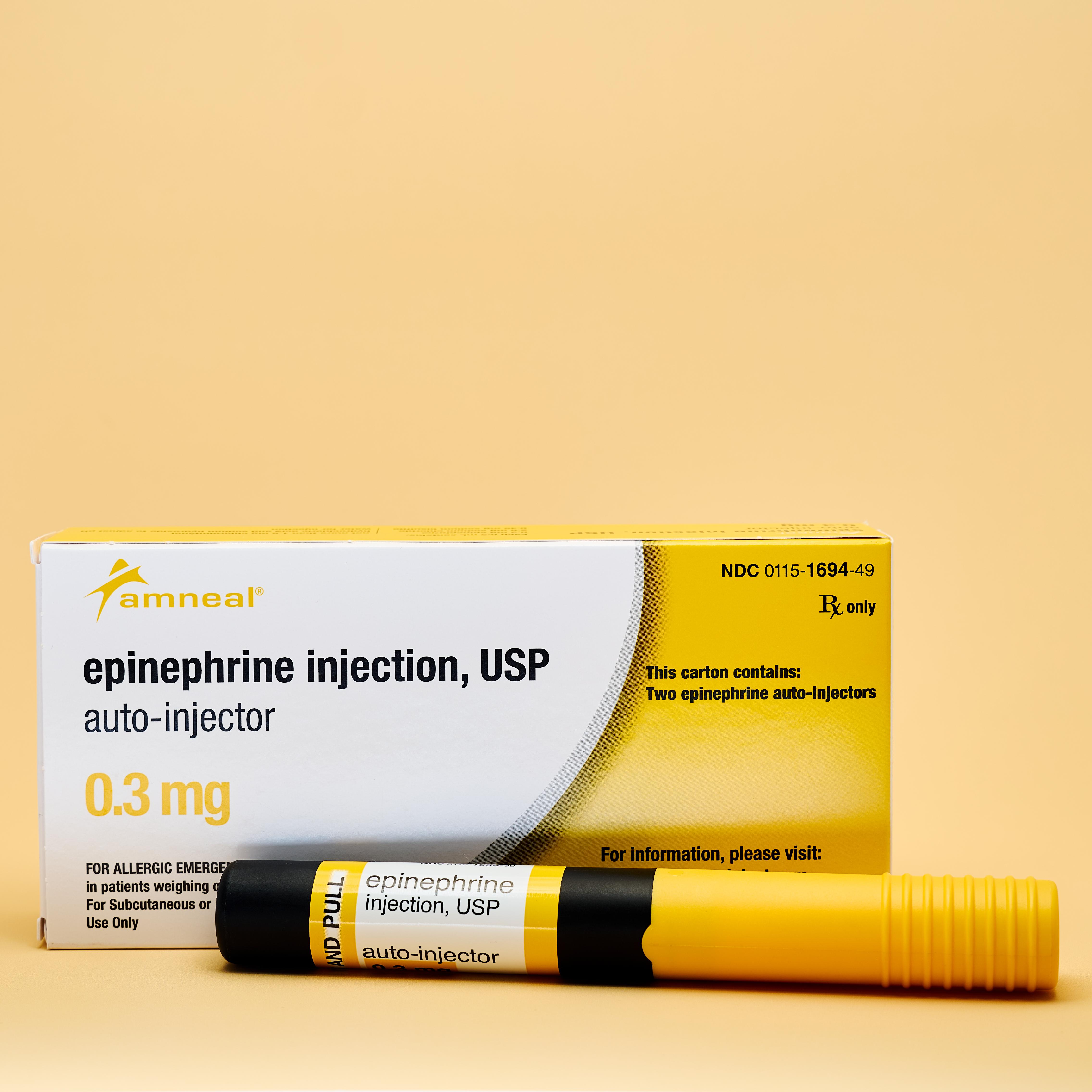
How It Works
Epinephrine works by targeting alpha-adrenergic and beta-adrenergic receptors. In doing so, the drug causes blood vessels to constrict in order to increase blood pressure and reduce swelling, and elevates the heart rate to improve blood flow to vital organs during shock.
Since epinephrine targets alpha-adrenergic and beta-adrenergic receptors at the same time, the drug is capable of stabilizing the cardiovascular and respiratory systems immediately following an allergic reaction. This is not a permanent fix, but it often provides the extra time needed to seek emergency medical care for the patient.
| Quick Facts | |
|---|---|
| Common Brands | EpiPen®, EpiPen Jr®, Adrenaclick®, Symjepi®, Auvi-Q® |
| Drug Class | Adrenergic receptor agonist (Sympathomimetic agent) |
| Generic Status | Generic version of EpiPen® |
| Availability | Prescription only |
Dosing
Epinephrine is administered using an auto-injector device with a dosage that’s usually determined by the patient’s body weight. For adults who weigh 66 pounds or more, the standard starting dose is 0.3 milligrams (mg). A smaller dose is typically given to lighter and younger patients.
To receive the full epinephrine dose, it is advised to hold the injector in place for about 3 to 10 seconds. This duration depends on the device’s mechanisms. If symptoms do not improve before help arrives, a second dose with a new auto-injector is sometimes recommended 5 to 15 minutes after the first dose has been administered.
Note: Dosing information is educational only. Your prescribing physician will determine your specific dose based on your individual health needs. Always follow your healthcare provider’s instructions for exact dosing.
Uses
FDA-Approved Uses
Epinephrine is FDA-approved for the emergency treatment of Type 1 severe allergic reactions. These include:
- Anaphylaxis reaction from bees, hornets, wasps, and other stinging insects
- Allergies to nuts, shellfish, dairy, and other foods
- Medication-induced allergies
- Latex allergies
- Exercise-induced anaphylaxis
- Idiopathic anaphylaxis (severe allergic reaction without a known cause)
Off-Label Uses
You may see epinephrine prescribed for uses that are not “FDA-approved.” This is a very common and legal practice called “off-label” prescribing, where a doctor uses their clinical judgment to prescribe a drug for a different (but well-researched) purpose.
Common off-label uses for epinephrine currently found in clinical research and practice include:
- Severe croup: Nebulized, or inhaled, epinephrine is sometimes used to reduce upper airway swelling for patients in pediatric emergency settings.
- Cardiac arrest: Epinephrine is listed among the Advanced Cardiovascular Life Support (ACLS) protocols to help restart the heart.
- Local anesthesia: During surgery, epinephrine may be added to local anesthetics to extend the numbing effect and reduce bleeding.
Get Savings Updates for Epinephrine
Join our mailing list for exclusive deals and more.
Side Effects
By mimicking adrenaline, epinephrine triggers the body’s “fight or flight” response. This means noticeable side effects can occur even if the drug is working as intended.
Common Side Effects
- Rapid or pounding heartbeat
- Tremors or shakiness in the hands or other places
- Anxiety or nervousness
- Sweating and paleness
- Dizziness and lightheadedness
- Headache
- Nausea and vomiting
Serious Side Effects
Serious side effects are rare, but it’s important to know what to look for if they do occur. Serious side effects of taking epinephrine can include the following:
- Cardiac arrhythmias: Epinephrine can trigger an irregular heart rhythm in people with underlying cardiovascular conditions.
- Severe hypertension: Epinephrine can cause a spike in blood pressure when working effectively.
- Injection site infection: A localized infection may occur where the auto-injector is administered, often causing the skin to redden, become warm, or swell.
- Accidental injection: It is not advised to inject epinephrine into the hands, fingers, or feet. This can cause a significant reduction in blood flow, and requires an immediate emergency medical evaluation.
Call your doctor immediately if you experience any concerning or prolonged symptoms.
Pharmacist Tips
Pack a Spare
If you have allergies and a doctor has prescribed epinephrine, it is recommended to carry two auto-injectors. Roughly 1 in 5 patients needs a second dose of epinephrine while experiencing a severe allergic reaction.
Check the Device Before Using
Most epinephrine auto-injector devices feature a window or port for inspecting the medicine. If it appears cloudy or discolored, or contains particles, the device should be discarded and replaced immediately.
Use the Right Injection Site
It is never advised to inject epinephrine in the hands, fingers, feet, buttocks, or veins. Standard guidelines suggest injecting in the middle of the outer thigh, which research shows has the best absorption rate and provides the lowest risk of complications.
Proper Storage Is Key
Epinephrine auto-injectors should be stored at a temperature of 68 to 77 degrees Fahrenheit. Hot cars, refrigerators and freezers, and other “extreme” temperature environments can reduce the drug’s potency and effectiveness.
Practice Makes Perfect
Injecting epinephrine for the first time can be an intimidating task. Many prescriptions for the drug include “trainer” devices you can use to practice injections and build muscle memory. Your family members, roommates, caregivers, and other close people in your life should also know how to operate the auto-injector.
Drug Interactions
Epinephrine can interact with a wide range of other medications, interfering with their effectiveness or increasing side effects in the process. Known interactions with epinephrine include:
- Beta-blockers: Beta-blockers, which are often used to treat high blood pressure, can antagonize epinephrine and limit its effectiveness during an emergency.
- Monoamine oxidase (MAO) inhibitors and tricyclic antidepressants: These medications can increase the heart’s sensitivity to epinephrine and cause a severe spike in blood pressure.
- Digoxin: Injecting epinephrine while taking digoxin can increase the risk of heart rhythm disturbances.
- Ergot alkaloids: Epinephrine interacting with ergot alkaloids can cause excessive blood vessel constriction.
Always give your doctor and pharmacist a complete list of all your medications, vitamins, and supplements to check for potential interactions.
FAQs
How do I use the “Blue to the Sky, Orange to the Thigh” method correctly?
This memory aid is used when administering epinephrine with a color-coded EpiPen® brand auto-injector device. The blue safety cap points upward, while the orange tip with the needle is pressed firmly against the outer thigh.
Can I inject epinephrine through clothing, such as jeans?
Yes, most epinephrine auto-injectors are strong enough to penetrate standard clothing, including denim.
Is it safe to use an expired EpiPen in an emergency if that’s all I have?
Standard guidelines for using epinephrine auto-injectors recommend replacing devices as soon as they have expired. However, if a life-threatening emergency occurs, most medical experts agree using an expired auto-injector is better than not administering any epinephrine at all – even if the drug’s potency is reduced.
Why do I need to go to the emergency room after using my epinephrine?
You need to go to the emergency room after using epinephrine because the drug is a temporary stabilizer, not a cure or long-term treatment. Symptoms may return hours after initially wearing off, a condition called biphasic reaction. Emergency medical professionals in a hospital setting can monitor you and ensure you are safe if biphasic reaction occurs.
Can I leave my epinephrine in the car?
It is not recommended to leave epinephrine in your car because the interior can reach excessively high or low temperatures, depending on the time of year. Proper epinephrine auto-injector storage includes a constant temperature between 68 and 77 degrees Fahrenheit.
Why is there liquid remaining in the auto-injector after I use it?
There is normally some liquid left in the auto-injector device after the epinephrine has been administered. The device is designed to administer an exact dose from a larger reservoir, so remaining liquid does not mean the dose is incomplete.
Can Benadryl (diphenhydramine) stop anaphylaxis instead of epinephrine?
No, Benadryl and other antihistamines treat symptoms of allergic reaction like hives and itching. They cannot address larger complications of a reaction, such as elevated blood pressure or blood pressure constriction. Epinephrine is considered the only medication that can treat anaphylaxis.
How long does one dose of epinephrine last in the body?
Epinephrine’s effects are quick-acting but also short-lived, so you should start to notice the effects tapering off after about 15 to 20 minutes. For this reason, a follow-up consultation with emergency medical professionals is vital.
Can I reuse an epinephrine auto-injector?
No, epinephrine auto-injectors are single-use devices. The needle is locked or retracted after the initial injection. It is urged to dispose of the device in a “sharps” container.
What should I avoid while using epinephrine?
During a severe allergic reaction or other medical emergency when epinephrine is needed, there are no listed contraindications.
How fast does epinephrine kick in?
Once injected, patients typically notice their breathing and blood pressure improving immediately. Full effects of the drug usually kick in within a few minutes.
How does Neffy compare to Epinephrine?
Neffy is epinephrine in the form of a nasal spray that is FDA-approved to treat Type 1 severe allergic reactions. Neffy does not involve any needles, so it may be a viable alternative for needlephobic people who are prescribed epinephrine.
Comparable Medications
Auvi-Q
Auvi-Q is an epinephrine auto-injector that differs from other devices like the EpiPen®. Auvi-Q is smaller and more compact than the EpiPen®. It also features voice prompts to talk people through the injection process.
Neffy
Neffy provides epinephrine in the form of a nasal spray, which earned FDA approval to treat severe allergic reactions in 2024. Since Neffy is newer, it does not have the same clinical data backing up factors like absorption during a medical emergency as the epinephrine auto-injector. However, some doctors may prescribe Neffy to patients who dislike or are averse to needles.
Diphenhydramine
This drug, sold under the brand name Benadryl, is an antihistamine that treats hives, itchy eyes, and other symptoms of mild allergic reactions. It is not advised to treat life-threatening Type 1 severe allergic reactions with diphenhydramine.
Norepinephrine
Epinephrine and norepinephrine are both vasosuppressors used to raise blood pressure, but the latter is almost exclusively used in hospital settings to treat conditions like severe hypotension or septic shock with an IV drip. Epinephrine is considered more effective than norepinephrine for opening up the lungs in response to anaphylaxis.
We Have Epinephrine in Stock. Get Yours Today!
Important: Information on this page is for educational purposes only. Prescribing decisions are made by independent, licensed providers. TelyRx operates technology-enabled pharmacies and a telehealth platform that connects patients with board-certified licensed providers. Prescriptions, when provider-approved and issued, are filled and shipped by TelyRx-affiliated pharmacies. We do not employ physicians or make prescribing decisions. Learn more about our editorial standards here.