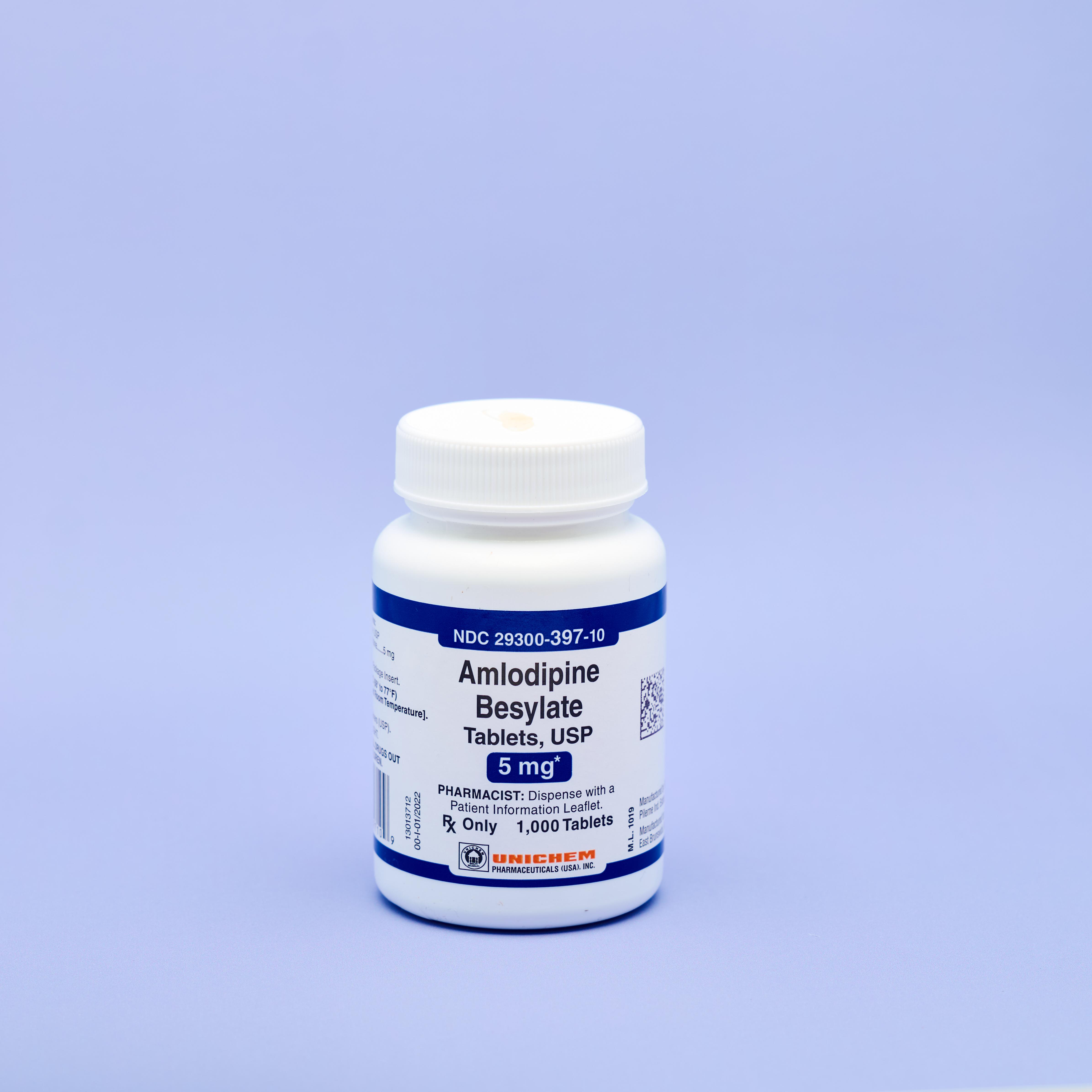
How It Works
As a calcium channel blocker, amlodipine works by relaxing the blood vessels. This lowers blood pressure and makes it easier for oxygen to reach the heart, helping to prevent chest pain.
| Quick Facts | |
|---|---|
| Common Brands | Norvasc |
| Drug Class | Calcium channel blocker |
| Generic Status | Generic version of Norvasc |
| Availability | Prescription Only |
Dosing
Note: Dosing information below is educational only. Your prescribing physician will determine your specific dose based on your individual health needs.
Amlodipine comes in three dosage strengths: 2.5 mg, 5 mg, and 10 mg. The recommended dose of amlodipine for adults is usually 5 mg daily taken by mouth. Your provider may increase the dose depending on how your blood pressure responds. The maximum dose is 10 mg daily.
A lower starting dose of 2.5 mg daily is recommended for small, fragile, or older adults, as well as adults with liver problems.
Always follow your healthcare provider’s instructions for exact dosing.
Uses
FDA-Approved Uses
Amlodipine is FDA-approved to treat cardiovascular conditions such as:
- High blood pressure (hypertension)
- Coronary artery disease, including chest pain (angina)
Off-Label Uses
You may see amlodipine prescribed for uses that are not “FDA-approved.” This is a very common and legal practice called “off-label” prescribing, where a doctor uses their clinical judgment to prescribe a drug for a different (but well-researched) purpose.
While amlodipine is FDA-approved for blood pressure and angina, healthcare providers may prescribe it for other circulatory conditions such as Raynaud’s phenomenon, a condition where fingers and toes feel numb or cold in response to temperature changes.
Get Savings Updates for Amlodipine
Join our mailing list for exclusive deals and more.
Side Effects
Like all medications, amlodipine can cause side effects. Common side effects may improve as your body adjusts to the medication, but others may be serious and require medical attention.
Common Side Effects
- Swelling of the ankles, feet, or hands
- Fatigue
- Tiredness or sleepiness
- Dizziness
- Redness or warmth in the face
- Heart palpitations
- Nausea
- Abdominal pain
Serious Side Effects
Serious side effects are rare, but it’s important to know what to look for if they do occur. Stop using amlodipine and call your doctor immediately if you experience:
- Severe Allergic Reactions – Swelling of the face, lips, tongue, or throat; difficulty breathing or swallowing; severe rash or itching; fever.
- Low Blood Pressure (Hypotension) – Severe dizziness or lightheadedness, especially when standing up. The risk of this side effect is higher in people with aortic stenosis (narrow heart valves) or when starting or increasing the dose.
- Worsening Chest Pain or Heart Attack – Chest pain or tightness, sweating, shortness of breath. The risk of this side effect is higher in people with coronary artery disease or when starting or increasing the dose.
- Liver Issues – Yellowing of the skin or eyes (jaundice), dark urine, pale stool, weakness, nausea, or severe upper stomach pain.
Call your doctor immediately if you experience any concerning or prolonged symptoms.
Pharmacist Tips
Take With Food
Amlodipine can be taken with or without food. If you find it upsets your stomach, try taking it with a meal.
Stick to a Schedule
It’s recommended to take amlodipine at the same time each day.
Manage Swelling
If you experience minor swelling in your legs or ankles, elevating your legs when sitting or wearing compression socks may help. If swelling becomes bothersome, consult your provider.
Avoid Grapefruit
It is generally recommended to avoid consuming grapefruit or grapefruit juice while on amlodipine, as it can affect how the drug works.
Limit or Avoid Alcohol
While alcohol is not known to directly interact with amlodipine, it can lower blood pressure and increase side effects like dizziness and sleepiness.
Missed Doses
If a dose is missed, take it as soon as you remember as long as it’s been less than 12 hours since your last dose. Otherwise, skip the missed dose and take the next dose at the regular time. Don’t take two doses at once to make up for a missed dose.
Monitor Blood Pressure
Checking your blood pressure at home and keeping a log can help your doctor determine if the medication is working effectively for you.
Drug Interactions
Amlodipine can interact with other medications, potentially altering their effectiveness or increasing side effects. For example:
- Simvastatin: Taking amlodipine with this cholesterol medication may require a dose adjustment of the simvastatin to prevent side effects.
- Cyclosporine & Tacrolimus: These immunosuppressant medications can interact with amlodipine. A dose adjustment may be needed.
- Clarithromycin: This antibiotic may affect how your body processes amlodipine.
- Itraconazole: This antifungal medication can interact with calcium channel blockers like amlodipine.
- Diltiazem: This calcium channel blocker may affect how the body processes amlodipine in older people.
Always give your doctor and pharmacist a complete list of all your medications, vitamins, and supplements to check for potential interactions.
FAQs
Why does amlodipine cause swelling?
Amlodipine works by relaxing and widening blood vessels. This relaxation can sometimes cause fluid to leak from the small blood vessels into the surrounding tissues, leading to swelling (edema), particularly in the ankles, hands, and feet.
Is it better to take amlodipine in the morning or at night?
You can take amlodipine at any time of day, with or without food. However, it is recommended to take it at the same time every day.
How quickly does amlodipine lower blood pressure?
Amlodipine may start to lower blood pressure within a few hours of the first dose, but it typically takes a few weeks of consistent daily use to see the full effects.
Does amlodipine cause weight gain?
Weight gain is not a common side effect of the drug itself. However, because amlodipine can cause fluid retention (swelling), some people may notice a slight increase in weight due to water retention.
Is amlodipine safe for kidneys?
Yes, amlodipine is generally considered safe for the kidneys. It is processed primarily by the liver, so dose adjustments are typically not needed for kidney disease.
Can I stop taking amlodipine if my blood pressure is normal?
You should keep taking the medication as prescribed unless your doctor tells you to stop. High blood pressure can be a chronic condition, and the medication can help keep your levels normal.
Does amlodipine interact with other blood pressure medications?
Amlodipine may be prescribed with other blood pressure medications. However, taking multiple drugs that lower blood pressure can sometimes cause it to drop too low (hypotension). Your doctor may recommend extra monitoring to prevent this from happening.
What are the most common side effects of amlodipine?
The most common side effects of amlodipine are swelling of the hands or feet, tiredness, dizziness, nausea, abdominal pain, heart palpitations, and flushing of the face.
Does amlodipine cause erectile dysfunction?
It is rare, but some men have reported erectile dysfunction (ED) while taking amlodipine. However, high blood pressure itself is also a common cause of ED. If you experience ED, speak with your provider for treatment options.
Comparable Medications
Amlodipine, Nifedipine, Lisinopril, Losartan, Amlodipine/Valsartan, or Amlodipine/Olmesartan?
There are several medications that your doctor can prescribe in place of amlodipine. Here are a few possible alternatives below.
Nifedipine ER Tablets
From $34.99
A calcium channel blocker that is used to treat high blood pressure and chest pain (angina).
Lisinopril
From $22.99
An angiotensin-converting enzyme (ACE) inhibitor that is used to treat high blood pressure.
Losartan
From $22.99
An angiotensin II receptor blocker (ARB) that is prescribed to treat high blood pressure, and to prevent stroke or kidney damage in people with certain health conditions.
Amlodipine/Valsartan Tablets
From $27.99
A combination medication that is used to treat high blood pressure.
Amlodipine/Olmesartan Tablets
From $27.99
A combination medication that is used to treat high blood pressure.
We Have Amlodipine in Stock. Get Yours Today!
Important: Information on this page is for educational purposes only. Prescribing decisions are made by independent, licensed providers. TelyRx operates technology-enabled pharmacies and a telehealth platform that connects patients with board-certified licensed providers. Prescriptions, when provider-approved and issued, are filled and shipped by TelyRx-affiliated pharmacies. We do not employ physicians or make prescribing decisions. Learn more about our editorial standards here.