Reviewed by Ashley Robinson, Pharmacy Manager for TelyRx
Every year, millions of Americans delay seeking treatment for respiratory illnesses because of a single barrier: confusion.
Are those sniffles cold symptoms or allergies? Or is it the start of the flu, which demands prescription antiviral treatment within a critical 48-hour window? Is your persistent cough lingering from a previous viral infection, or has it progressed to bacterial bronchitis that needs a targeted antibiotic?
The overlapping symptoms across Flu, COVID-19, RSV, and other acute infections make it hard to know what you’re dealing with. And when you’re sick, the last thing you have the energy for is guesswork. This guide will help you identify the unique clues of the season’s most common illnesses so you can go more directly from symptom recognition to seeking the right, fast-acting treatment.
The human body’s response to a respiratory invader is largely the same: inflammation, fever, and fatigue. This shared defense mechanism means the symptoms of a common cold, seasonal flu, COVID-19, RSV, and even Norovirus are frequently conflated.
Here’s why it’s so hard to tell them apart:
Shared Symptoms
The fundamental symptoms, like cough, fatigue, and fever, are present in all acute upper respiratory illnesses. For example, when comparing flu and COVID symptoms, both typically cause severe body aches and high fever, which makes telling them apart based on those factors alone pretty much impossible. The deep, rattling cough that comes with RSV in adults? That can easily look like acute bronchitis. Distinguishing bronchitis vs. flu often requires a closer look.
Seasonal Overlap
In any given winter, it is not unusual for cases of flu, COVID-19, and RSV to peak simultaneously. This combined respiratory burden creates a diagnostic challenge, especially when distinguishing RSV vs. COVID.
Misleading Terminology
The term “stomach flu” is misleading, from a medical standpoint. Can flu cause vomiting? Technically yes, but severe vomiting and diarrhea are rare with influenza in adults. When those gastrointestinal symptoms hit hard, it’s far more likely to be Norovirus.
Recognizing the distinction between Norovirus and flu is critical: Norovirus requires hydration and supportive care, whereas actual influenza requires timely antiviral treatment. Understanding stomach flu vs. Norovirus helps you get the right care.

Separating these illnesses requires paying attention to signals that go beyond “I have a fever.” You have to look at the speed of onset, the dominant symptoms, and the duration. How quickly you go from feeling fine to ill is often the biggest clue.
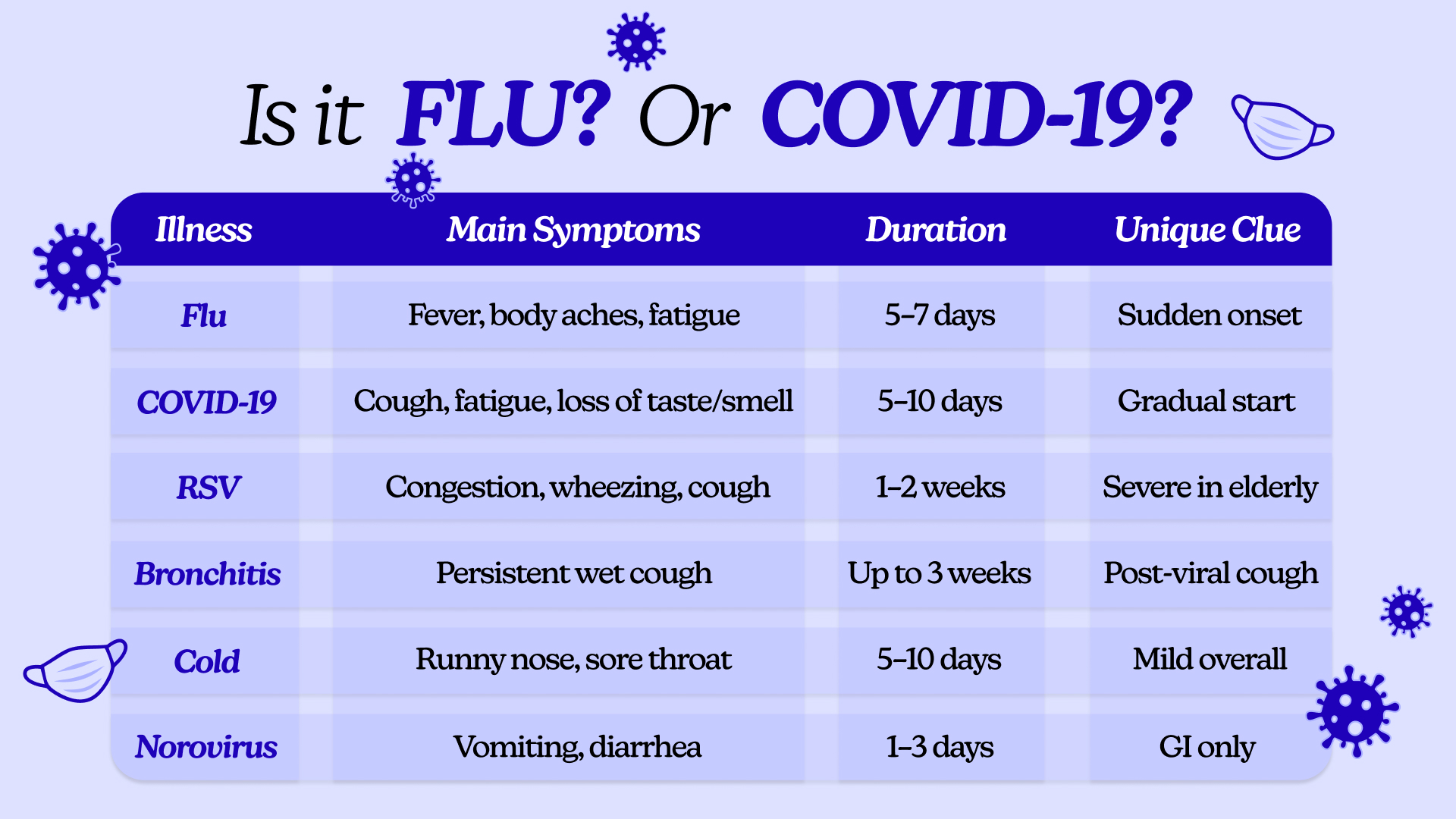
The seasonal flu tends to hit you like a truck. Sudden fever, chills, and severe body aches all arrive at once. This abrupt onset is what sets it apart from COVID-19, where symptoms usually develop more slowly and worsen gradually over several days. The incubation period for flu versus COVID is different too: flu takes 1–4 days, while COVID-19 can take 2–14 days. If you’re wondering when you should test for COVID versus flu, pay attention to this timing. It’s one of your best clues.
There’s another illness that often gets mistaken for flu or COVID: acute bronchitis. How your cough feels, and when it starts, is the major clue.
Bronchitis typically develops after an initial cold or viral infection has run its course, evolving into a persistent, deep, or wet cough that becomes the dominant symptom. A bronchitis cough can last 1–3 weeks, sometimes outlasting the original illness entirely. When comparing bronchitis vs. COVID, the key difference is that COVID-19 typically includes high fever, body aches, and potential loss of taste or smell, whereas bronchitis is dominated by the cough itself.
RSV (Respiratory Syncytial Virus) is another illness that often flies under the radar in adults. While it’s well-known for causing severe illness in infants, RSV in adults typically presents as what seems like a bad cold—but with one key giveaway: wheezing and shortness of breath. When comparing RSV vs. the common cold, the common cold usually resolves in 7–10 days without respiratory distress, whereas RSV can linger for 2–3 weeks and often involves significant wheezing, even in otherwise healthy adults.
The cough associated with RSV tends to be persistent and dry, and you may feel shorter of breath than you would with a typical cold. There’s no specific antiviral treatment for RSV in most adults, so management focuses on symptom relief, rest, and monitoring for complications. If you’re experiencing pronounced wheezing or difficulty breathing, it’s time to seek medical attention.
While no single symptom is a substitute for a clinical diagnosis, paying attention to specific clues can help you narrow down the possibilities.
Once you have an idea of what you’re dealing with, the next question is: Do I need a prescription? The answer depends on whether your illness has a targeted treatment available.
The most urgent scenario is the flu. If flu is strongly suspected or confirmed through testing, prescription antiviral medication like Oseltamivir (Tamiflu) must be started within 48 hours of symptom onset to be effective. This narrow window is critical—starting antivirals on day three or four won’t give you the same benefit. If you suspect flu, act fast.
Antibiotics don’t work against viruses like flu or COVID-19, but they’re essential for bacterial complications that can develop afterward. Bacterial bronchitis, sinus infections, and ear infections all require antibiotic treatment. Watch for signs like persistent fever, symptoms that improve and then suddenly worsen, or thick green or yellow mucus. These signal it’s time to connect with a physician about antibiotics like Amoxicillin or Azithromycin (Z-Pack).

When you’re sick, the last thing you need is more obstacles. TelyRx was designed to eliminate them. Through the TelyRx.com platform, you can connect with independent, licensed physicians who can review your symptoms and, when clinically appropriate, issue a prescription, even if you don’t have a regular doctor. The physician review costs a flat $22, whether you need one prescription or multiple medications, so there are no surprises.
And you won’t need to transfer records from your current pharmacy or deal with insurance back-and-forth. Once a licensed physician determines a prescription is appropriate, our licensed pharmacies fill it and ship your medications directly to your door. No waiting in line at the pharmacy while you’re feeling terrible.
Being sick is miserable enough without adding confusion and delays to the mix. You shouldn’t have to guess what you have, wonder if you need treatment, or wait days to get help. Whether it’s the 48-hour flu window closing fast, a lingering cough that won’t quit, the wheezing that’s making it hard to breathe, or the exhaustion of trying to figure out if this is “just a cold” or something that needs attention, you deserve access to care on your timeline, not a waiting room’s.
That’s what we’re here for. Clear information, fast access to independent, licensed physicians, and medications delivered to your door. No guesswork. No runaround. Just you, getting better.
This blog post is for informational purposes only and does not constitute medical advice, diagnosis, or treatment. The content provided here is not a substitute for professional medical advice, consultation, or care from a qualified healthcare provider. Always seek the guidance of your physician or another licensed health professional with any questions you may have regarding a medical condition or treatment. Do not disregard or delay seeking professional medical advice based on information read on this site. Learn more about our editorial standards.