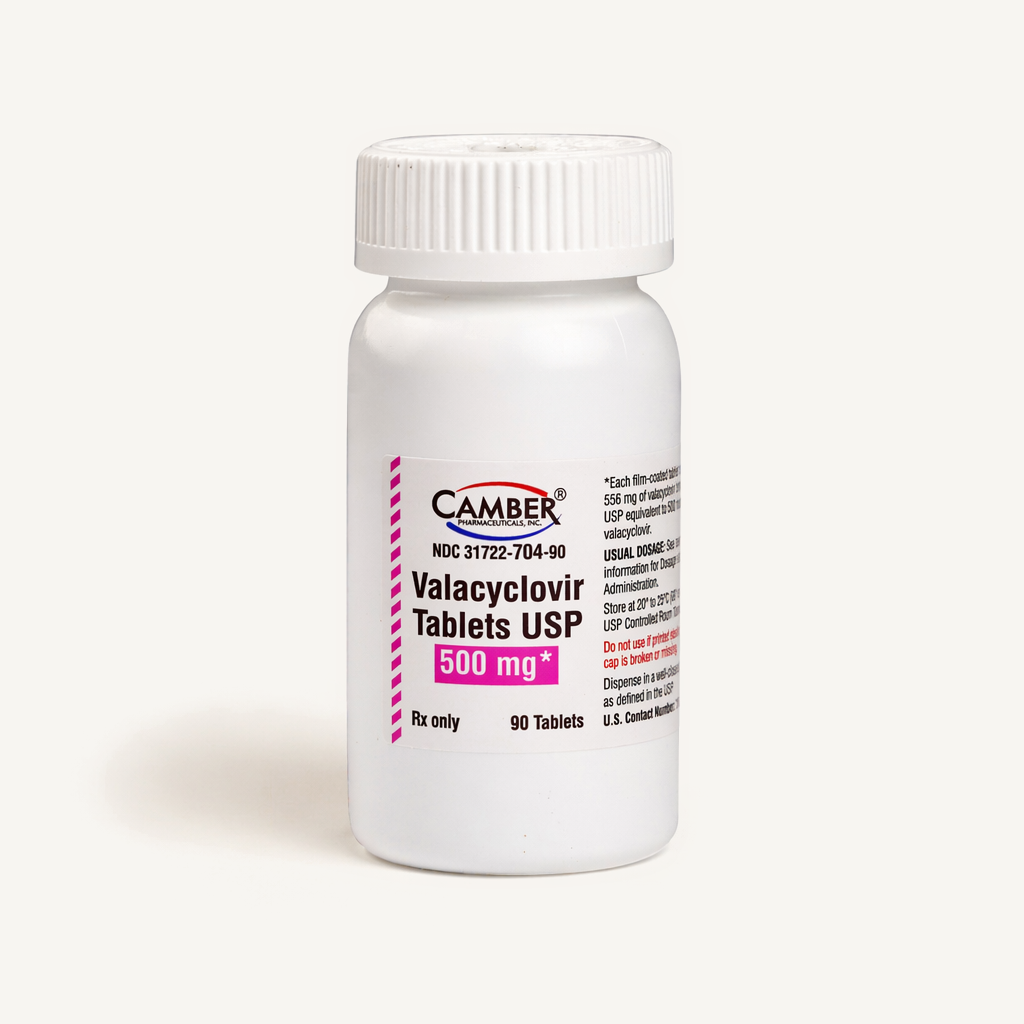
How It Works
Valacyclovir is a “prodrug,” meaning it remains inactive in the body after being ingested and absorbed until a bodily process converts it to active. The bodily process in this case is the liver converting valacyclovir into acyclovir.
Viral thymidine kinase, an enzyme produced by the virus, activates the acyclovir.The active acyclovir essentially mimics viral DNA and tricks the virus into incorporating the drug into its own DNA. The acyclovir’s DNA chain is defective by design, so the virus is unable to create new DNA strands and cannot replicate itself. By stopping the virus’s progress, the immune system can quickly clear the infection, heal sores, and reduce pain.
| Quick Facts | |
|---|---|
| Common Brands | Valtrex |
| Drug Class | Antiviral (DNA Polymerase Inhibitor) |
| Generic Status | Generic version available |
| Availability | Prescription only |
Dosing
Valacyclovir dosing depends on the nature of the infection, as well as the patient’s age and kidney function. For adults with preexisting renal conditions, providers may adjust the frequency and strength of dose.
- Herpes labialis: For herpes labialis, commonly known as cold sores, adults and adolescents are typically prescribed a high-intensity treatment with two 2-gram doses administered every 12 hours over the course of a single day.
- Genital herpes (initial): For treating an initial outbreak of genital herpes, when symptoms are often most severe, providers usually prescribe 1 gram of valacyclovir twice daily for 10 days.
- Genital herpes (recurring): Subsequent genital herpes outbreaks after the initial onset are frequently treated with 500 milligrams (mg) of valacyclovir twice daily for three days.
- Genital herpes (suppressive therapy): To help lower the frequency rate of recurrent genital herpes, providers may prescribe one daily dose of 500 mg to 1 gram of valacyclovir.
- Herpes zoster: Commonly known as shingles, herpes zoster is often treated with 1 gram of valacyclovir taken three times a day for seven days.
- Varicella: Valacyclovir to treat varicella, or chickenpox, is typically prescribed based on the child’s weight. Dosing frequency also varies.
Note: Dosing information is educational only. Your prescribing physician will determine your specific dose based on your individual health needs. Always follow your healthcare provider’s instructions for exact dosing.
Uses
FDA-Approved Uses
Valacyclovir is FDA-approved to treat shingles, cold sores, and chickenpox. It is also FDA-approved to treat active outbreaks of genital herpes and suppress the infection for people with recurrent cases. Valacyclovir can also reduce the risk of herpes transmission to sexual partners.
Off-Label Uses
You may see (medication) prescribed for uses that are not “FDA-approved.” This is a very common and legal practice called “off-label” prescribing, where a doctor uses their clinical judgment to prescribe a drug for a different (but well-researched) purpose.
Common off-label uses for valacyclovir found in clinical practice and research include:
- Prevention of cytomegalovirus (CMV): Valacyclovir is often used to help stave off CMV, a viral infection that commonly affects recipients of organ transplants and other people with weakened immune systems.
- Prevention of herpes simplex virus (HSV): For immunocompromised patients, including those undergoing chemotherapy or living with advanced HIV, valacyclovir may be prescribed to prevent HSV infection.
- Erythema multiforme: This condition, which can cause visible rings and lesions on the skin and mucus membranes, is often triggered by an underlying HSV infection. Valacyclovir can be prescribed to manage symptoms in these cases.
Side Effects
The most common side effects of taking valacyclovir are mild and temporary, and most people tolerate their medication well. That said, pain and discomfort may occur.
Common Side Effects
- Headache
- Nausea
- Abdominal pain
- Dizziness
- Fatigue
- Sensitivity to sunlight
Serious Side Effects
Serious side effects are rare, but it’s important to know what to look for if they do occur.
- Kidney impairment: Valacyclovir is processed in the kidneys, so it can cause crystals to form in the renal tubules. Dehydrated patients are considered especially high-risk for kidney impairment. Decrease in urination and swelling in the lower extremities are the most common symptoms.
- Central nervous system effects: In rare cases for certain people, including older adults and those with preexisting kidney issues, taking valacyclovir can lead to confusion, agitation, hallucinations, and bodily tremors.
- Thrombotic thrombocytopenic purpura/hemolytic uremic syndrome: TTP/HUS for short, these life-threatening blood disorders cause clots that can lead to red blood cell destruction and organ damage. This can occur for severely immunocompromised patients who take high doses of valacyclovir.
- Severe allergic reaction: As with a wide range of medications, taking valacyclovir can trigger a severe allergic reaction for certain patients. Key symptoms include hives, red skin, and swelling of the face, lips, tongue, and throat.
Call your doctor immediately if you experience any concerning or prolonged symptoms.
Pharmacist Tips
Begin Treatment ASAP
Valacyclovir tends to be most effective during the prodome stage, when the outbreak is first detected. Prodome symptoms include soreness and tingling that occur before the infection appears.
Stay Hydrated
It is advised to drink plenty of water during valacyclovir treatment. This drug is processed in the kidneys, and dehydration can lower the risk of renal complications.
Create a Consistent Routine
For the most effective results, it is recommended to take your valacyclovir dose at the same time or times each day. This helps ensure a steady balance of the medication in your bloodstream at all times.
Watch out for Sun Exposure
While rare, some people report sensitivity to sunlight while taking valacyclovir. If this occurs, it is advised to follow standard sun protection guidelines with layers and sunscreen.
Complete the Drug Course
It is strongly recommended to finish your full valacyclovir course, even if symptoms completely disappear before the course is complete. Taking the full prescription helps ensure the virus is sufficiently suppressed.
Drug Interactions
A small number of drug interactions with valacyclovir have been observed. These include:
- Kidney-stressing drugs: Medications that put stress on the kidneys can already strain the kidneys, and taking valacyclovir can further increase the risk of renal injury. These medications include ibuprofen, naproxen, and other NSAIDs, as well as certain antibiotics and chemotherapy drugs.
- Cimetidine and probenecid: These drugs can interfere with the body’s ability to clear valacyclovir and increase concentrations of the drug in the patient’s bloodstream.
- Vaccines: Valacyclovir can interact with live vaccines, especially the shingles and chickenpox vaccines. Most providers recommend stopping antivirals 24 hours before and 14 days after receiving the vaccine.
Always give your doctor and pharmacist a complete list of all your medications, vitamins, and supplements to check for potential interactions.
FAQs
How quickly does valacyclovir work?
Patients generally notice their symptoms improving within 24 to 38 hours of taking valacyclovir. For long-term treatment, cold sores typically need a few days to clear up, while shingles or an initial genital herpes outbreak can persist for up to 10 days after the patient takes the medication.
Does valacyclovir stop you from spreading herpes to a partner?
No, valacyclovir does not completely prevent a person from spreading herpes to their partner, but it significantly reduces the risk of transmission. Providers usually encourage use of condoms and avoiding sexual contact for maximum protection during outbreaks.
What is the difference between valacyclovir and acyclovir?
The main difference between valacyclovir and acyclovir is bioavailability, or the degree to which a substance is absorbed within the body. Based on numerous studies, valacyclovir has better bioavailability than acyclovir and does not require as much dosing to maintain healthy medication levels in the bloodstream.
Does valacyclovir cure herpes or shingles?
No, valacyclovir does not cure herpes or shingles. These viral infections do not currently have a cure, and viral cells remain dormant in the body even after drug treatment has concluded. Valacyclovir helps manage symptoms, expedite the healing process, reduce the frequency of outbreaks, and lower the risk of transmission to partners.
Is valacyclovir safe to take during pregnancy or breastfeeding?
Research suggests valacyclovir does not significantly increase the risk of birth defects, but it does pass into breast milk. Pregnant patients should discuss options with their provider, as valacyclovir is frequently prescribed during late pregnancy to minimize the risk of outbreak during delivery.
What happens if I miss a dose of valacyclovir?
If patients miss a dose of valacyclovir, it is advised to take the dose as soon as they remember. If it is almost time for the next dose, skip the missed dose. It is not advised to double the dose to “catch up” from missing an earlier one.
Does valacyclovir work for chickenpox in adults?
Yes, valacyclovir is often used as off-label treatment for adults with chickenpox. Beginning a valacyclovir course as soon as the first spots appear can greatly reduce the severity of symptoms and duration of the illness.
What are the most common side effects of valacyclovir?
The most common side effects of taking valacyclovir include a mild to moderate headache, which is reported in nearly 40% of patients, as well as nausea, abdominal pain, dizziness, fatigue, and sensitivity to sunlight.
Comparable Medications
Acyclovir
From $43.99
Acyclovir, sold under the brand name Zovirax, is considered the first breakthrough treatment for herpes. Acyclovir's bioavailability is low and patients typically take up to five doses per day, but Zovirax is the more cost-effective option for buyers.
Valacyclovir
From $29.99
This drug, sold under the brand name Valtrex, is a "prodrug" that the liver converts into acyclovir as part of a normal internal process. Valacyclovir has high bioavailability, so most patients take one to three doses per day, but Valtrex is more expensive than Zovirax on average.
We Have Valacyclovir in Stock. Get Yours Today!
Important: Information on this page is for educational purposes only. Prescribing decisions are made by independent, licensed providers. TelyRx operates technology-enabled pharmacies and a telehealth platform that connects patients with licensed providers. Prescriptions, when provider-approved and issued, are filled and shipped by TelyRx-affiliated pharmacies. We do not employ physicians or make prescribing decisions. Learn more about our editorial standards here.