




Nearly 1 in 2 U.S. adults has high blood pressure, according to Million Hearts. Yet many people walk out of the pharmacy with a new blood pressure prescription and only a vague idea of what it actually does.
Between ACE inhibitors, ARBs, beta blockers, calcium channel blockers, and diuretics, plus the long list of brand and generic names for each, it’s easy to feel a little lost.
This post will walk through the five main classes of blood pressure medications, the most common drugs and brands in each class, and how doctors typically decide which is best for a given patient. Think of this as a starting point for understanding your options and asking better questions, not a replacement for what your own doctor tells you about your treatment.
What is the Most Popular Medication for High Blood Pressure?
Overall, lisinopril (Zestril) is one of the most commonly prescribed blood pressure medications. It has been widely used for decades and is often an initial treatment for hypertension. Lisinopril is a type of drug called an ACE inhibitor, which works by relaxing your blood vessels so that your heart doesn’t have to work as hard to pump blood through your body.
The Most Common Blood Pressure Medications at a Glance
| Drug Class | How They Work | Common Suffixes | Examples |
| ACE inhibitor | Blocks the production of angiotensin II to relax blood vessels. | -pril | Lisinopril, benazepril, ramipril |
| Alpha blocker | Blunts norepinephrine’s effect to relax blood vessel muscles. | -osin | Doxazosin, prazosin, terazosin |
| Angiotensin II receptor blocker (ARB) | Blocks angiotensin II from binding to receptors | -artan | Losartan, valsartan, olmesartan |
| Beta blocker | Slows heart rate and reduces the force of each heartbeat. | -olol | Metoprolol, atenolol, propranolol |
| Calcium channel blocker (CCB) | Relaxes blood vessel muscles by blocking calcium from entering cells. | -dipine | Amlodipine, felodipine, nifedipine |
| Diuretic | Helps the kidneys remove excess water and salt, reducing blood volume. | -mide, -thiazide, -actone | Torsemide, hydrochlorothiazide, spironolactone |
| Vasodilator | Relaxes muscles around blood vessels to widen them. | -dil | Minoxidil |
The suffix of a generic drug name can tell you what drug class the medication belongs in. However, this is not a universal rule. For example, not all vasodilators end in -dil. In fact, hydralazine is a vasodilator even though it ends in -ine.
ACE Inhibitors
An ACE inhibitor medication causes your blood vessels to relax so that blood can flow more easily. A wider passageway means less pressure against the walls of your arteries and veins.
ACE inhibitors work by reducing the production of angiotensin II, a chemical your body makes that tightens blood vessels. They’re often used as a first-line treatment for high blood pressure, though they’re generally not recommended for women who are pregnant or planning to become pregnant.
Common ACE Inhibitors
- Lisinopril (Zestril)
- Enalapril (Epaned, Vasotec)
- Benazepril (Lotensin)
- Captopril (Capoten)
- Fosinopril (Monopril)
Possible Side Effects
- Persistent dry cough
- Dizziness
- Elevated potassium levels
Beta Blockers
Beta blockers decrease your heart rate and the force of each heartbeat. As the heart pumps less frequently and with less force, blood pressure can similarly drop.
Beta blockers aren’t usually the first choice for treating high blood pressure on its own, but doctors often prescribe them when a patient also has a history of heart attack, heart failure, or an irregular heartbeat.
Common Beta Blockers
- Metoprolol Succinate ER (Toprol XL)
- Atenolol (Tenormin)
- Carvedilol (Coreg)
- Bisoprolol (Zebeta)
- Nebivolol (Bystolic)
Possible Side Effects
- Fatigue
- Cold hands or feet
- Slowed heart rate
ACE Inhibitor vs. Beta Blocker
ACE inhibitors work by relaxing blood vessels, while beta blockers reduce the force and frequency of heartbeats. Both can reduce blood pressure, but ACE inhibitors are more likely to be used as an initial treatment for hypertension. However, ACE inhibitors are usually not recommended for women who are pregnant or planning to become pregnant due to risk to the developing fetus.
Beta blockers, on the other hand, are not usually prescribed for people with asthma or other lung conditions. Beta blockers can also mask the symptoms of low blood sugar, which can be a problem for people who take insulin to treat type 1 or type 2 diabetes.
Calcium Channel Blockers (CCB)
Calcium channel blockers (CCBs) lower blood pressure by relaxing the smooth muscle cells in your blood vessel walls and widening the vessels. CCBs do this by preventing calcium from entering those cells.
CCBs are also commonly used to treat chest pain (angina), so some patients take them to treat both conditions at once.
Common Calcium Channel Blockers
- Felodipine ER (Plendil®)
- Amlodipine (Norvasc)
- Diltiazem (Cardizem CD, Cardizem SR, Dilacor XR, Tiazac)
- Nifedipine LA (Adalat CC, Procardia XL)
- Verapamil (Calan SR, Covera HS, Isoptin SR, Verelan)
Possible Side Effects
- Swelling in the ankles or legs
- Headache
- Flushing
Beta Blockers vs. Calcium Channel Blockers
Beta blockers lower blood pressure by decreasing the rate and intensity of heartbeats. In contrast, calcium channel blockers work by widening blood vessels. Beta blockers are less likely to be prescribed if you have certain health issues, such as type 1 or type 2 diabetes because it can mask severe low blood sugar levels.
Angiotensin II Receptor Blockers (ARB)
Angiotensin II receptor blockers (ARBs) widen blood vessels by blocking the effects of angiotensin II, a chemical that narrows them.
ARBs work similarly to ACE inhibitors and are often prescribed as an alternative for people who develop a persistent cough on an ACE inhibitor.
Common ARBs
- Valsartan (Diovan®)
- Candesartan (Atacand)
- Losartan (Cozaar)
- Olmesartan (Benicar)
- Telmisartan (Micardis)
Possible Side Effects
- Dizziness
- Elevated potassium levels
- Headache
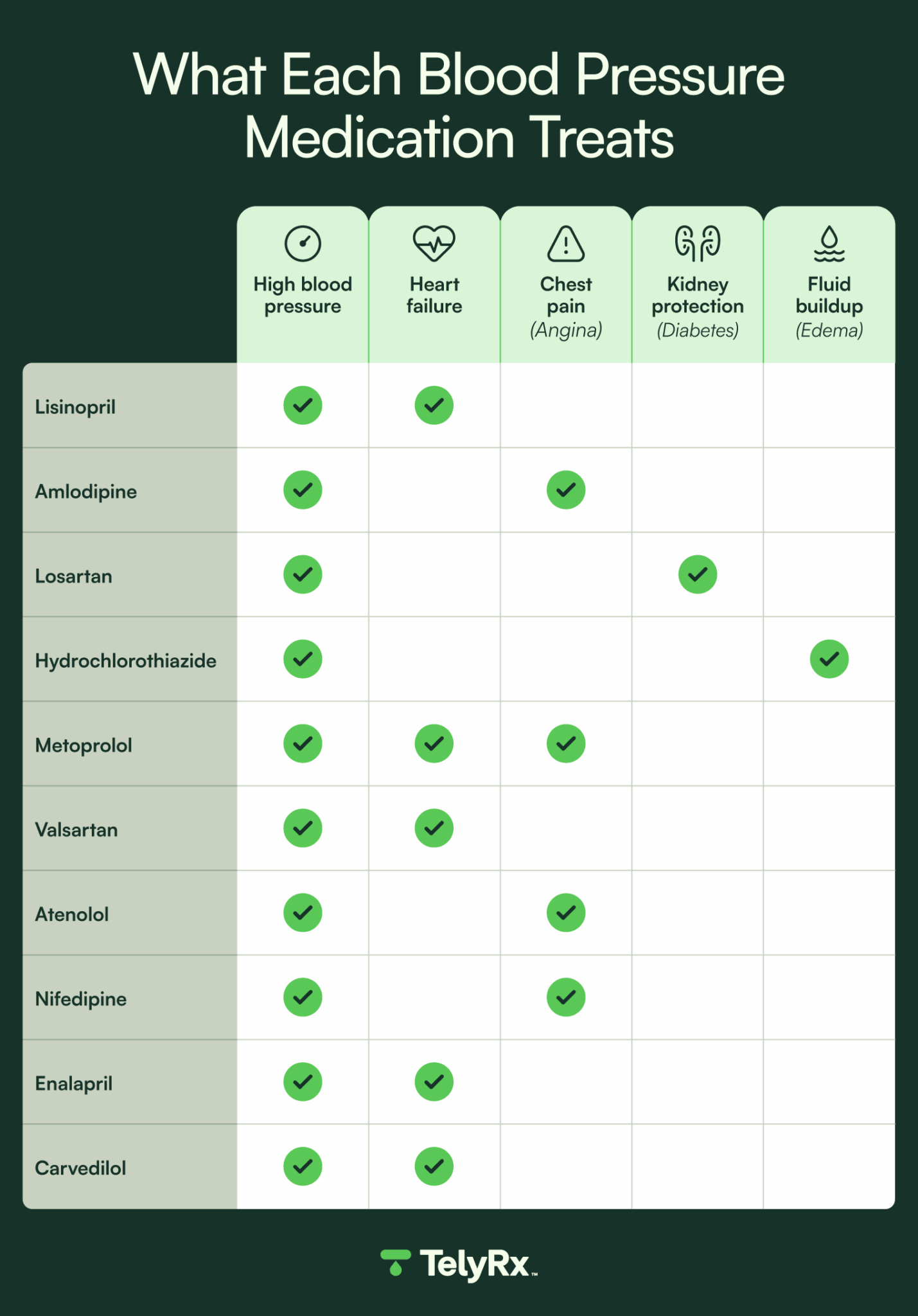
Alpha Blockers
Norepinephrine is a hormone that tightens blood vessels and speeds up your heart, both of which raise blood pressure. Alpha blockers work by blocking their effects, which relaxes blood vessels and allows blood to flow more easily.
Alpha blockers aren’t usually a first-choice treatment for high blood pressure on their own due to its side effects, but they’re often prescribed for men who also have an enlarged prostate (BPH).
Common Alpha Blockers
Possible Side Effects
- Dizziness or lightheadedness, especially when standing up
- Fatigue
- Headache
Diuretics
Diuretics for high blood pressure work by increasing the amount of water and salt your kidneys remove from your body. This decreases the amount of fluid in your blood vessels, and with less fluid, there’s less pressure. Because the excess fluid is drained through urine, diuretics are commonly called “water pills.”
Thiazide diuretics, such as hydrochlorothiazide, are often used as first-line treatment for high blood pressure, either alone or in combination with other medications.
Common Diuretics
- Hydrochlorothiazide (HCTZ)
- Furosemide (Lasix)
- Chlorthalidone (Thalitone)
- Indapamide (Lozol)
- Torsemide (Demadex)
Possible Side Effects
- Increased urination
- Low potassium levels
- Dehydration
Vasodilators
Vasodilator medications lower blood pressure by relaxing the muscles around your blood vessels. As these muscles relax, blood vessels get wider, allowing for easier blood flow and lower blood pressure.
Vasodilators aren’t typically a first-choice treatment and are usually prescribed for resistant hypertension, often alongside another blood pressure medication.
Common Vasodilators
- Minoxidil (Loniten)
- Hydralazine (Apresoline)
Possible Side Effects
- Rapid heart rate
- Fluid retention or swelling
- Headache
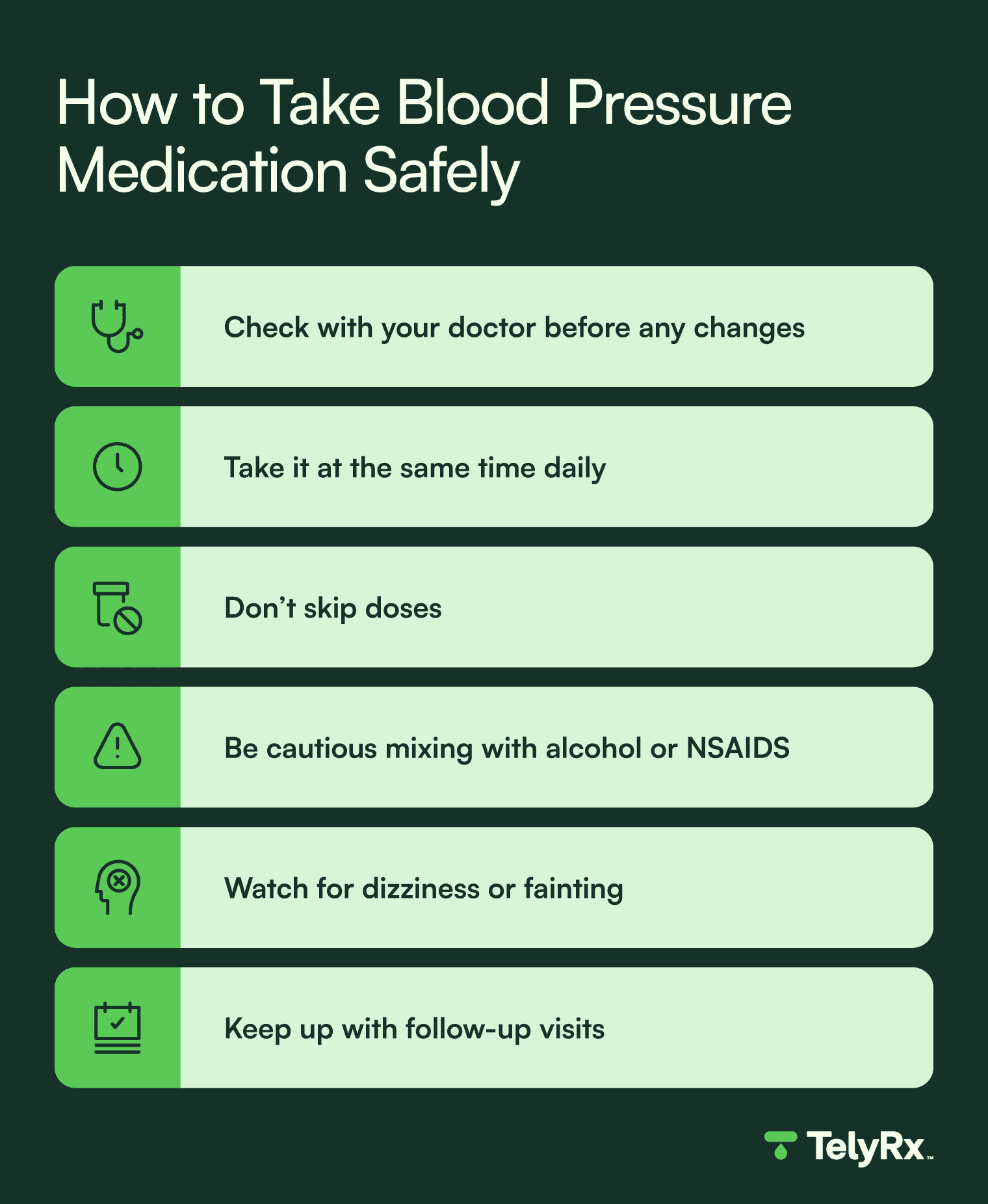
Important Blood Pressure Medication Safety Tips
Blood pressure medication works best when it’s taken consistently and as prescribed. There are a few common habits and warning signs that can make a real difference in how well it works and how safe it is.
Here’s what to keep in mind once you start treatment.
- Consult your doctor before stopping or changing your dose: topping suddenly, especially with certain beta blockers, can cause blood pressure to spike. The NIH notes that if you have concerns about side effects, your provider may adjust your dose or switch you to a different medicine rather than having you stop on your own.
- Take your medication at the same time daily: Consistent timing helps keep your blood pressure stable throughout the day and makes it easier to build the habit.
- Avoid skipping doses: Missed doses can cause your blood pressure to fluctuate and make it harder for your doctor to tell if your treatment is working.
- Avoid mixing with alcohol, NSAIDs, or certain supplements: These can interact with blood pressure medications, either reducing their effectiveness or increasing the risk of side effects like low blood pressure or kidney strain.
- Watch for dizziness or fainting: These can be signs that your blood pressure has dropped too low, and they’re worth reporting to your doctor rather than waiting them out.
- Schedule regular follow-ups to monitor progress: Routine check-ins let your doctor confirm your medication is working and adjust your treatment if your needs change.
TelyRx Makes Managing Blood Pressure Simple
Understanding the different classes of common blood pressure medications and how they work can make it easier to have an informed conversation with your doctor about what’s right for you.
If you already know which medication works for you, whether it’s amlodipine, lisinopril, or another option covered here, TelyRx can help you get what you need without a trip to the doctor’s office. An independent licensed provider reviews your request online, often within minutes, and your medication can ship directly to your door as soon as the next day.
Start your TelyRx journey today and take one more step toward managing your blood pressure on your terms.
Your Next Steps
There’s no single best blood pressure medication. The “right one” depends on your blood pressure goals, your overall health, other conditions you might have, and how your body responds to any given medication. You can talk to your doctor about cost, too, especially if you don’t have insurance and can get cheaper generic versions of the medications through platforms like TelyRx.
A recommended treatment to help you reach your blood pressure goals may also be a combination of drugs. Whatever the treatment, taking your prescribed medication consistently and making impactful changes to your diet and lifestyle can give you the best chance of keeping your blood pressure in a normal range.
Ready to explore prescription access without insurance constraints?
Blood Pressure Medicine FAQs
What’s the most popular medication for high blood pressure?
Lisinopril (Zestril) is one of the most commonly prescribed blood pressure drugs. It’s an ACE inhibitor, meaning it relaxes blood vessels so the heart doesn’t have to work as hard to pump blood through the body.
Can you take more than one blood pressure medication at once?
Yes, it’s common for doctors to prescribe two or more blood pressure medications together, either as separate pills or combined into a single tablet. Combining drug classes, such as an ACE inhibitor with a diuretic, may control blood pressure more effectively than increasing the dose of a single medication for some patients.
What’s the difference between ACE inhibitors and ARBs?
Both classes lower blood pressure by targeting the same chemical, angiotensin II, but they work at different points in the process. ACE inhibitors block the body from producing angiotensin II in the first place, while ARBs allow it to be produced but block its binding to receptors in blood vessels.
ARBs are often prescribed as an alternative for people who develop a persistent cough on an ACE inhibitor, since that side effect is specific to ACE inhibitors.
Can high blood pressure meds be stopped once your levels are controlled?
Usually not on your own. Controlled blood pressure is often a sign that the medication is working, not that the underlying condition is gone. Stopping abruptly can cause levels to rise again or, with some medications, trigger a dangerous rebound effect. If you want to change your dosage or discontinue treatment, you should do so under a doctor’s guidance.
Is losartan an ACE inhibitor?
No, losartan is not an ACE inhibitor. It is a different type of blood pressure medication called an angiotensin II receptor blocker (ARB).
Is valsartan an ACE inhibitor?
No, valsartan is an ARB drug, not an ACE inhibitor.
Is metoprolol an ACE inhibitor?
No. Metoprolol is a beta blocker, not an ACE inhibitor.
Is atorvastatin a beta blocker?
No, atorvastatin is not a beta blocker. It is a type of drug called a statin medication that is used to treat high cholesterol.
Is carvedilol a beta blocker?
Yes, carvedilol (Coreg) is a beta blocker.
Is valsartan a beta blocker?
No, valsartan is an ARB drug, not a beta blocker.
Is lisinopril a beta blocker?
No, lisinopril is not a beta blocker. It is an ACE inhibitor.
Is diltiazem a beta blocker?
No, diltiazem is a calcium channel blocker, not a beta blocker.
Is amlodipine a calcium channel blocker?
Yes, amlodipine is a calcium channel blocker.
Is lisinopril a calcium channel blocker?
No, lisinopril is an ACE inhibitor, not a calcium channel blocker.