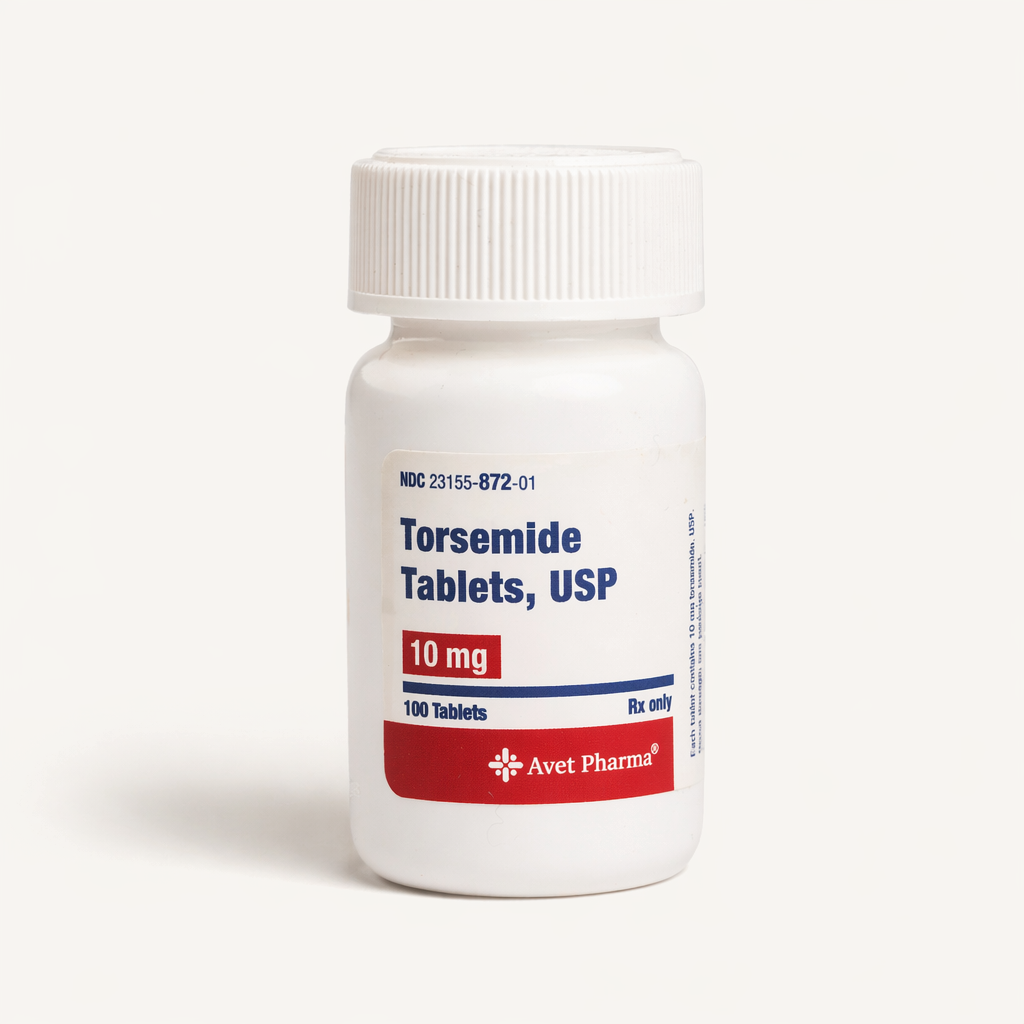
How It Works
The kidneys filter blood and maintain the body’s balance of water and salt. Torsemide works within the kidney’s nephrons, targeting the ascending limb of the loop of Henle.
Under normal circumstances, this part of the kidney reabsorbs sodium, chloride, and potassium from the filtered fluid back into the bloodstream. When the body reabsorbs these electrolytes, it also retains water. Torsemide works by inhibiting the transport system that reabsorbs these electrolytes.
Excess water remaining in the kidney tubules leads to increased urine production. As the patient urinates, the total volume of fluid circulating in the blood vessels and trapped in the tissues decreases, helping to lower blood pressure and reduce swelling.
| Quick Facts | |
|---|---|
| Common Brands | Soaanz |
| Drug Class | Loop Diuretic |
| Generic Status | Generic of Soaanz |
| Availability | Prescription only |
Dosing
- Heart failure edema: Providers typically recommend an initial dose of 10 mg or 20 mg once daily.
- Chronic renal failure: The standard starting dose is typically 20 mg once daily.
- Hepatic cirrhosis: Standard guidelines recommend a starting dose of 5-10 mg, often administered with a potassium-sparing diuretic.
- Hypertension: For high blood pressure, the typical starting dose is 5 mg once daily, which may be increased to 10 mg after 4 to 6 weeks if necessary.
Standard guidelines suggest taking torsemide at the same time every day. Because this medication increases the frequency of urination, it is generally recommended to take the dose in the morning or early afternoon to avoid sleep disturbances caused by the need to use the restroom during the night.
Note: Dosing information below is educational only. Your prescribing physician will determine your specific dose based on your individual health needs. Always follow your healthcare provider’s instructions for exact dosing.
Uses
FDA-Approved Uses
Torsemide is FDA-approved for the following indications:
- Edema associated with congestive heart failure: To reduce fluid buildup and improve breathing and physical comfort
- Edema associated with chronic renal failure: Helping the kidneys manage fluid balance when their normal function is compromised.
- Edema associated with hepatic disease: Managing ascites (fluid in the abdomen) and general swelling caused by liver cirrhosis.
- Hypertension: As a primary or secondary treatment to lower high blood pressure.
Off-Label Uses
You may see torsemide prescribed for uses that are not “FDA-approved.” This is a common and legal practice called “off-label” prescribing, where a doctor uses their clinical judgment to prescribe a drug for a different (but well-researched) purpose.
Torsemide may be prescribed for the following off-label uses:
- Pulmonary edema: Acute management of fluid in the lungs, often in emergency or hospital settings.
- Hypercalcemia: Occasionally used to help the body excrete excess calcium through the urine.
- Refractory edema: Used when other diuretics, such as furosemide, have failed to provide adequate fluid clearance.
Side Effects
Because torsemide significantly alters how the body handles water and minerals, side effects are primarily related to fluid and electrolyte shifts.
Common Side Effects
- Increased frequency and volume of urination
- Dizziness or lightheadedness
- Headache
- Thirst
- Dry mouth
- Stomach pain
- Indigestion
- Minor cough
- Nasal congestion
Serious Side Effects
Serious side effects are rare, but it’s important to know what to look for if they do occur.
Stop taking the medication and immediately contact your doctor if you experience any of the following symptoms:
- Dehydration and low blood pressure: Excessive fluid loss can cause fainting, confusion, and dark urine.
- Electrolyte imbalance: Symptoms include muscle cramps, unusual weakness, irregular heartbeat, and extreme fatigue.
- Kidney injury: Marked by a significant decrease in urine output or swelling in the hands and feet.
- Hearing problems: In rare cases, high doses can cause ringing in the ears (tinnitus) or temporary hearing loss.
- Severe skin reactions: Symptoms include painful blisters, peeling skin, or a widespread rash.
Call your doctor immediately if you experience any concerning or prolonged symptoms.
Pharmacist Tips
Utilize a Morning Routine
Standard guidelines suggest taking your dose in the morning. If you take it too late in the day, you may find yourself waking up several times during the night to urinate.
Stand up Slowly
Torsemide can cause a drop in blood pressure when you stand from a sitting position. Providers advise taking your time to reduce the risk of dizziness or falls.
Monitor Weight
Standard guidelines recommend weighing yourself every morning after using the bathroom and before eating. A sudden gain of 2 to 3 pounds in a single day may indicate the need to adjust the medication.
Beware of Sun Sensitivity
Loop diuretics can increase your skin’s sensitivity to sunlight. Using sunscreen and protective clothing when spending time outdoors can help reduce sun damage to skin.
Stay Hydrated
While you are taking a “water pill” to get rid of fluid, you will still need to drink water to prevent dehydration. Ask your doctor about the specific amount of fluid you should consume daily.
Check Potassium Levels
Torsemide can lower your potassium levels. Your provider may recommend eating potassium-rich foods (like bananas or spinach) or taking a supplement.
Drug Interactions
Torsemide can interact with several other medications, which may increase the risk of side effects or reduce the drug’s effectiveness.
Notify your doctor if you take:
- NSAIDs (ibuprofen, naproxen): These can reduce the effectiveness of torsemide and increase the risk of kidney damage.
- Digoxin: Low potassium levels from torsemide can increase the heart’s sensitivity to digoxin, increasing the risk of toxicity.
- Lithium: Torsemide can decrease the clearance of lithium from the body, leading to dangerously high levels.
- Aspirin: High-dose aspirin can increase the risk of torsemide toxicity.
- Cholestyramine: This cholesterol medication can interfere with the absorption of torsemide. It’s generally accepted that they should be taken at least several hours apart.
- Antibiotics (aminoglycosides): Taking certain antibiotics with torsemide can increase the risk of hearing damage.
Always give your doctor and pharmacist a complete list of all your medications, vitamins, and supplements to check for potential interactions.
FAQs
What is the difference between torsemide and furosemide?
While both are loop diuretics, torsemide is more potent and has a longer duration of action than furosemide (Lasix). Torsemide may also be more effective for certain patients with severe heart failure or kidney issues.
Why do I have to weigh myself every morning while taking this medication?
It’s generally accepted that daily weighing is the best way to track how much fluid your body is holding. Since one liter of water weighs about 2.2 pounds, a sudden change in weight is an early warning sign of fluid retention or excessive dehydration.
Can I take torsemide at night, or must it be in the morning?
It is generally accepted that the mornings are the best time to take torsemide. Taking it at night may cause you to wake up frequently to urinate, which can disrupt sleep.
Is torsemide safe to take if I have a sulfa allergy?
Torsemide contains a sulfonamide group. While most people with “sulfa” allergies do not react to diuretics, a cross-reaction is possible. Providers typically recommend caution and close monitoring for those with sulfa allergies.
Can I drink alcohol while taking torsemide?
Alcohol can increase the blood pressure-lowering effects of torsemide, which significantly raises the risk of dizziness, fainting, and falls. It is generally recommended to limit alcohol intake.
How quickly does torsemide start working to remove fluid?
Most patients will notice increased urination within 1 to 2 hours after taking the tablet. The effects can last for 6 to 8 hours.
Is torsemide used for high blood pressure?
Yes. While used to treat fluid retention, it can also be effective at lowering blood pressure by reducing the volume of fluid the heart must pump through the vessels.
Can I take ibuprofen or naproxen with torsemide?
Standard guidelines suggest avoiding NSAIDs while taking torsemide. These medications can cause the body to retain salt and water, which directly counteracts torsemide and can put strain on the kidneys.
Does torsemide raise blood sugar levels?
Standard guidelines suggest that loop diuretics can cause a modest increase in blood sugar. Patients with diabetes should monitor their levels more closely when starting this medication.
Can I stop taking it once the swelling goes away?
Generally, no. Edema is usually a symptom of an underlying chronic condition like heart failure. Stopping the medication abruptly can cause fluid to return rapidly, which can be dangerous.
Does torsemide interact with digoxin or lithium?
Yes. Because torsemide alters your electrolyte levels, it can increase the risk of digoxin-related heart complications. It also prevents the body from clearing lithium, which can lead to toxic levels of that medication in your blood.
Do I need to restrict my salt intake while taking this?
Yes. Salt (sodium) causes the body to retain water. Eating a high-salt diet can counteract the effects of torsemide, reducing its effectiveness.
What foods should I avoid while taking torsemide?
There are no specific foods to avoid, but it’s generally advised that you avoid foods very high in sodium, like processed meats, canned soups, and fast food. Additionally, providers typically recommend increasing your intake of potassium-rich foods, as your levels may need to be balanced with your dosage.
Comparable Medications
Furosemide, Hydrochlorothiazide, Chlorthalidone, Spironolactone, or Eplerenone?
Your provider may prescribe one of the following alternatives in place of torsemide:
Furosemide
From $26.99
A shorter-acting loop diuretic that is a commonly prescribed "water pill." It often requires twice-daily dosing.
Hydrochlorothiazide
From $25.99
A mild thiazide diuretic primarily used for high blood pressure. It is not generally powerful enough to treat the significant edema associated with heart or liver failure.
Chlorthalidone Tablets
From $29.99
A long-acting thiazide-like diuretic. Like HCTZ, it is used for hypertension but lacks the fluid-clearing potency of loop diuretics like torsemide.
Spironolactone
From $26.99
A potassium-sparing diuretic that works by blocking aldosterone. It is often used alongside torsemide to prevent potassium loss and provide additional heart-protective benefits.
Eplerenone Tablets
From $34.99
A selective aldosterone blocker used in heart failure. It is a weaker diuretic than torsemide and is typically used to prevent heart remodeling rather than for primary fluid removal.
We Have Torsemide in Stock. Get Yours Today!
Important: Information on this page is for educational purposes only. Prescribing decisions are made by independent, licensed providers. TelyRx operates technology-enabled pharmacies and a telehealth platform that connects patients with licensed providers. Prescriptions, when provider-approved and issued, are filled and shipped by TelyRx-affiliated pharmacies. We do not employ physicians or make prescribing decisions. Learn more about our editorial standards here.