How It Works
Triamcinolone functions by switching off the body’s inflammation reaction to external triggers. When your skin or body is exposed to an allergen or an autoimmune trigger, your immune system releases chemicals that cause blood vessels to widen and white blood cells to rush to the area. This results in the characteristic redness, heat, and itching associated with a rash or flare-up.
Triamcinolone works through three primary pathways to reduce the inflammation response:
- Inhibition of inflammatory chemicals: It prevents the release of substances such as prostaglandins and leukotrienes that trigger pain and swelling.
- Immune suppression: It localizes the body’s immune response, preventing the system from overreacting to irritants.
- Cellular regulation: In conditions such as psoriasis, triamcinolone helps slow the overproduction of skin cells, reducing the formation of thick, scaly patches.
| Quick Facts | |
|---|---|
| Common Brands | Kenalog, Triderm, Triasil, Oralone (dental paste), Nasacort (nasal spray) |
| Drug Class | Corticosteroid |
| Generic Status | Generic versions available |
| Availability | Prescription only; low-dose nasal sprays may be available OTC, but higher potencies and topical forms require a prescription |
Dosing
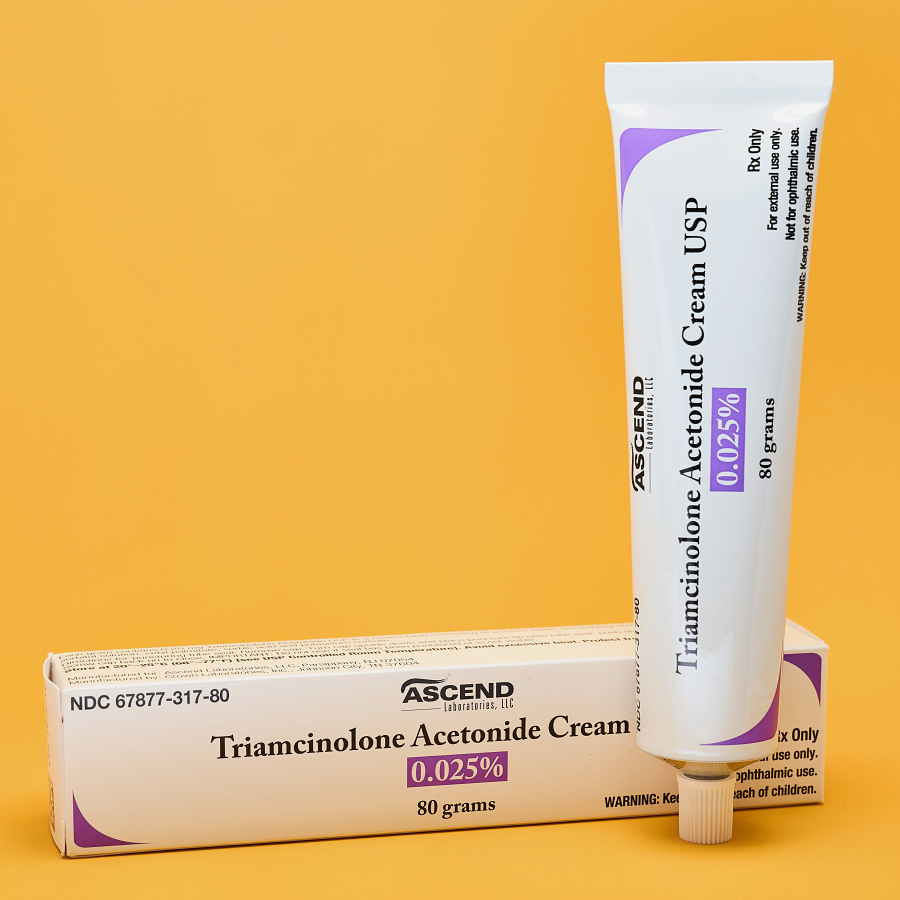
The application frequency of triamcinolone depends heavily on the product concentration, typically 0.025%, 0.1%, or 0.5%, as well as the specific area being treated.
- Topical cream and ointment: Providers typically recommend applying a thin layer to the affected area 2 to 4 times per day.
- Topical spray and lotion: These are often used for larger or hairy areas and are generally applied 3 to 4 times daily.
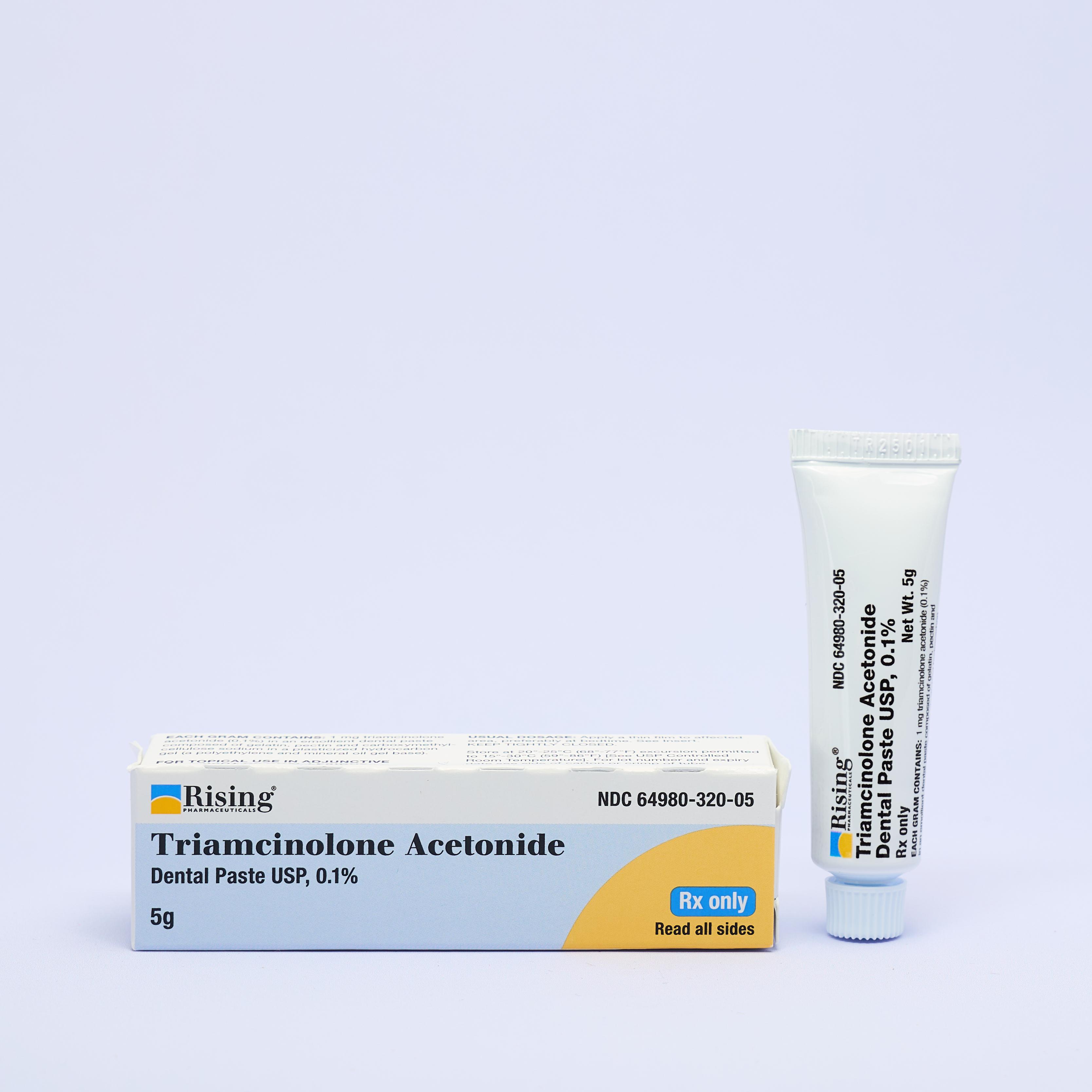
- Dental paste: Usually applied at bedtime or 2 to 3 times a day after meals to ensure the medication stays in contact with the oral sore.
For topical application, it is generally recommended to use only enough to cover the affected area. Over-application does not speed up healing and may increase the risk of the medication being absorbed into the bloodstream.
Note: Dosing information is educational only. Your prescribing physician will determine your specific dose based on your individual health needs. Always follow your healthcare provider’s instructions for exact dosing.
Uses
FDA-Approved Uses
Triamcinolone is FDA-approved for a range of conditions, depending on the formulation:
- Inflammatory skin conditions: Management of eczema (atopic dermatitis), psoriasis, and various forms of dermatitis.
- Allergic reactions: Relief from itching and rashes caused by contact with allergens, like poison ivy or certain chemicals.
- Mouth sores: The dental paste is approved for the treatment of aphthous ulcers (canker sores) and other inflammatory lesions in the mouth.
- Joint and muscle pain: Injectable forms are approved for the treatment of arthritis, gout, and bursitis flare-ups.
Off-Label Uses
You may see triamcinolone prescribed for uses that are not “FDA-approved.” This is a common and legal practice called “off-label” prescribing, where a doctor uses their clinical judgment to prescribe a drug for a different (but well-researched) purpose.
Triamcinolone is commonly prescribed for off-label usage to treat:
- Alopecia areata: Injections are sometimes used to stimulate hair regrowth in specific patches of hair loss.
- Keloid scars: Used to flatten and soften thick, raised scar tissue.
- Lichen planus: Managing this chronic inflammatory condition that affects the skin and mucous membranes.
Get Savings Updates for Triamcinolone
Join our mailing list for exclusive deals and more.
Side Effects
While triamcinolone can be effective in managing inflammation responses, its potency may lead to side effects, especially when used for prolonged periods or on sensitive skin.
Common Side Effects
- Local irritation
- Dryness
- Change in color
- Acne-like bumps
Serious Side Effects
Serious side effects are rare, but it’s important to know what to look for if they do occur. It’s generally recommended to stop taking the medication and contact your doctor immediately if you experience any of the following:
- Skin thinning (atrophy): Prolonged use can cause the skin to become fragile, leading to easy bruising or stretch marks.
- Adrenal suppression: If used over large areas or for too long, the body may absorb enough of the steroid to interfere with natural hormone production. This can lead to extreme fatigue, weight loss, or weakness.
- Visual changes: If used near the eyes, there is a rare risk of increased eye pressure (glaucoma) or cataracts.
- Infection masking: Because steroids suppress the immune response, they can hide the signs of a skin infection, allowing it to spread. Look for spreading redness, warmth, or pus.
Call your doctor immediately if you experience any concerning or prolonged symptoms.
Pharmacist Tips
Use The Damp Skin Technique
For topical creams, applying the medication to slightly damp skin (e.g., after a quick shower) may help the medication absorb more effectively.
Keep Your Hands Clean
Unless you are treating your hands, standard guidelines suggest washing them thoroughly before and after application to prevent accidental contact with the steroid in your eyes or mouth.
Do Not Cover The Area Unless Told
Providers typically recommend not covering the treated area with a bandage, plastic wrap, or tight clothing unless specifically instructed. This can significantly increase the potency and side effects.
Be Careful On The Face And Folds
Be extremely cautious when applying to the face, armpits, or groin. The skin is thinner in those areas and absorbs the medication much more readily, increasing the risk of thinning and stretch marks.
Dental Paste Grittiness
When using dental paste, providers generally recommend not rubbing it in. Dabbing it onto the sore creates a protective film. The “gritty” feel is normal and helps the medication stick to the moist surface of the mouth.
Drug Interactions
Topical triamcinolone is less likely to interact with oral medications than pill-form steroids, but caution is still necessary.
Notify your doctor if you take:
- Other steroids: Using triamcinolone alongside oral prednisone or other topical steroids can increase the risk of adrenal suppression.
- Diabetes medications: If absorbed into the bloodstream, steroids may raise blood sugar levels, potentially requiring an adjustment in diabetes medication.
- Immunosuppressants: Taking other drugs that weaken the immune system can increase the risk of developing a severe infection.
Always give your doctor and pharmacist a complete list of all your medications, vitamins, and supplements to check for potential interactions.
FAQs
What is the difference between triamcinolone cream and triamcinolone ointment?
Water-based creams absorb quickly into the skin and are better suited for weeping or oily skin. Ointments are oil-based, provide a thicker barrier, and are generally preferred for very dry, scaly patches because they lock in moisture.
Is triamcinolone a strong or weak steroid?
Triamcinoline is classified as a medium-to-high potency steroid. It is significantly stronger than over-the-counter hydrocortisone but generally less potent than steroids like clobetasol.
Can I use triamcinolone dental paste for cold sores?
No. The herpes virus causes cold sores. Because steroids suppress the immune response, applying triamcinolone to a cold sore may worsen the viral infection.
Does triamcinolone nasal spray cause nosebleeds?
Nasal steroids can dry out the lining of the nose. If used incorrectly or for extended periods, this dryness can cause minor nosebleeds. Providers generally recommend aiming the spray away from the middle wall (septum) of the nose.
Can I apply moisturizer or lotion on top of triamcinolone cream?
Standard guidelines suggest waiting at least 30 minutes after applying the steroid before using a moisturizer. This helps ensure the medication has been absorbed first.
Is it safe to cover the treated area with a bandage?
Generally, no. Covering the area increases drug absorption into the body, which can lead to more side effects. Only do this if specifically directed by your healthcare provider.
Why does the dental paste feel gritty and sticky in my mouth?
The “gritty” texture of triamcinolone dental paste is intentional. It is designed to absorb moisture from your saliva and not wash away immediately. This allows the medication to form a sticky, protective film that adheres to the ulcer.
What should I do if I accidentally swallow the dental paste?
While standard guidelines recommend that you avoid purposefully swallowing the medication, the small amount used for a typical application is generally not harmful if swallowed accidentally. However, if a large quantity is ingested, you should contact a healthcare provider or a poison control center as a precaution.
Does this medication treat fungal infections like ringworm?
No. Triamcinolone is not an antifungal medication. If you apply it to a fungal infection, the rash may temporarily look less red, but the fungus will continue to grow, often making the infection harder to treat later.
Can I use triamcinolone for a poison ivy rash?
Yes, it is generally accepted as a treatment for poison ivy. It helps calm the intense itching and allergic reaction caused by the oil in the plant.
Is triamcinolone safer than clobetasol?
Safety in steroids is usually relative to the potency and the area being treated. Triamcinolone is a mid-to-high potency steroid, while clobetasol is considered an ultra-high potency.
Triamcinolone is generally considered “safer” for slightly longer use or on larger areas because it has a lower risk of causing rapid skin thinning or adrenal suppression compared to clobetasol.
Can I use triamcinolone on an open wound or cut?
It is generally accepted that you should not apply triamcinolone to broken skin, open wounds, or deep cuts. Steroids can slow down the body’s natural healing process and may increase the risk of a bacterial infection taking hold in the wound.
Does triamcinolone cream expire?
Yes. Like all medications, triamcinolone has an expiration date printed on the tube or jar. After this date, the steroid’s chemical stability may degrade, making it less effective at treating your inflammation. Old tubes can also become a breeding ground for bacteria over time.
Is it safe to use triamcinolone on my face?
Providers typically recommend avoiding the face unless specifically instructed. The skin on the face is much thinner than the skin on your elbows or knees. Using triamcinolone on the face for more than a few days can lead to permanent skin thinning, visible spider veins, or a specific type of rash called perioral dermatitis.
Comparable Medications
Hydrocortisone, Clobetasol, Desonide, or Fluticasone?
Below are some potential alternatives to triamcinolone:
Hydrocortisone (Cortizone-10)
A low-potency steroid often available over the counter, used for mild rashes or on sensitive areas where triamcinolone might be too strong.
Desonide Cream
From $34.99
A low-potency prescription steroid frequently preferred for use on the face because of its milder profile compared to triamcinolone.
Clobetasol Cream
From $23.99
An ultra-high-potency steroid used for the most severe cases of psoriasis or eczema; it is stronger than triamcinolone and has a higher risk of side effects.
Fluticasone Nasal Spray
From $27.99
While triamcinolone is a multi-use steroid, fluticasone is most commonly used in nasal spray form for allergies, whereas triamcinolone topical focuses on skin inflammation.
Mometasone Cream
From $34.99
Similar to triamcinolone, this is a potent corticosteroid available in both topical and nasal forms, often used when once-daily application is preferred.
We Have Triamcinolone in Stock. Get Yours Today!
Important: Information on this page is for educational purposes only. Prescribing decisions are made by independent, licensed providers. TelyRx operates technology-enabled pharmacies and a telehealth platform that connects patients with board-certified licensed providers. Prescriptions, when provider-approved and issued, are filled and shipped by TelyRx-affiliated pharmacies. We do not employ physicians or make prescribing decisions. Learn more about our editorial standards here.