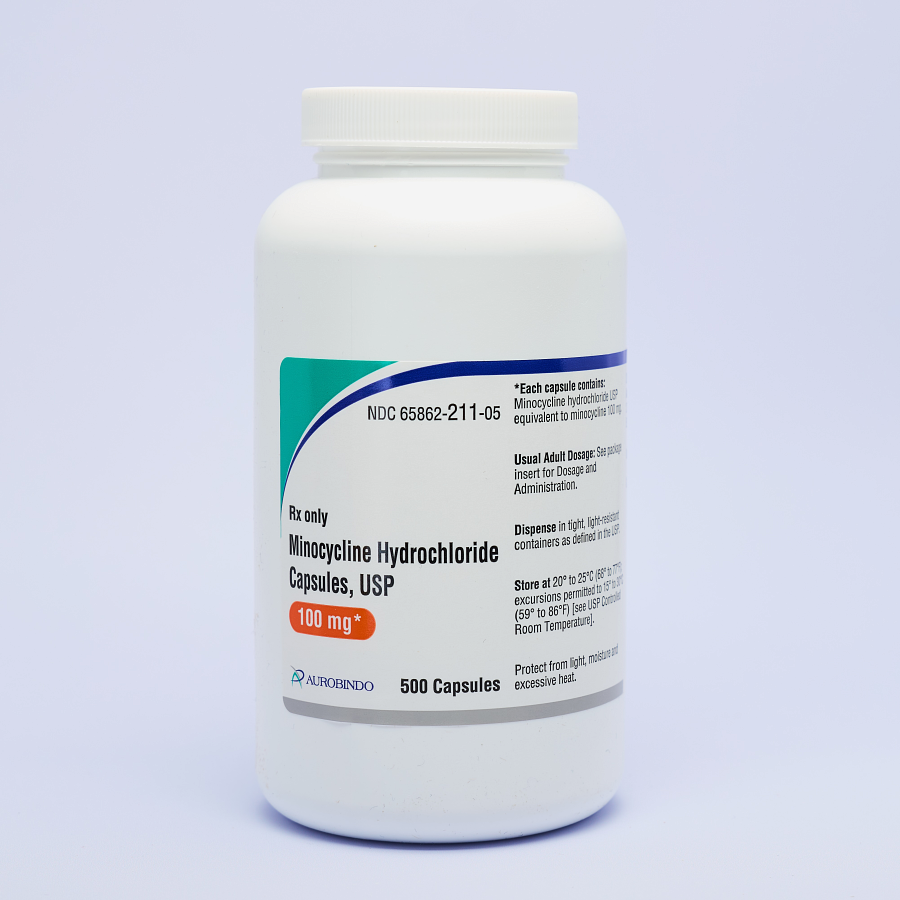
How It Works
As a tetracycline antibiotic, minocycline works by blocking bacteria from creating the proteins they need to grow and multiply. This helps stop the spread of the infection in your body.
For acne, minocycline reduces the number of bacteria naturally found on your skin that lead to breakouts. It also helps reduce skin redness and inflammation.
| Quick Facts | |
|---|---|
| Common Brands | Dynacin, Emrosi, Minocin, Minolira, Solodyn, Ximino |
| Drug Class | Tetracycline antibiotic |
| Generic Status | Generic for Dynacin, Emrosi, Minocin, Minolira, Solodyn, Ximino |
| Availability | Prescription only |
Dosing
Minocycline comes in various dosage forms and strengths:
- Oral Capsules: 50 mg, 75 mg, 100 mg
- Extended-release oral capsules: 45 mg, 90 mg, 135 mg
- Oral tablets: 50 mg, 75 mg, 100 mg
- Extended-Release oral tablets: 45 mg, 55 mg, 65 mg, 80 mg, 90 mg, 105 mg, 115 mg, 135 mg
The recommended dosage depends on what you’re taking minocycline to treat.
- Bacterial infections: The recommended starting dose is 200 mg by mouth, followed by 100 mg every 12 hours. Another option is a starting dose of 100 mg or 200 mg, followed by 50 mg taken four times a day.
- Acne: The recommended dose of immediate-release minocycline for acne is 50 mg to 100 mg once to twice daily.
Note: Dosing information is educational only. Your prescribing physician will determine your specific dose based on your individual health needs. Always follow your healthcare provider’s instructions for exact dosing.
Uses
FDA-Approved Uses
Minocycline is FDA-approved to treat a variety of bacterial infections, including:
- Moderate to severe inflammatory acne
- Respiratory tract infections, such as pneumonia, bronchitis, and sinusitis
- Sexually transmitted infections (STIs), including chlamydia, gonorrhea, syphilis, and chancroid
- Urinary tract infections (UTIs)
- Rickettsial infections, such as Rocky Mountain spotted fever and typhus fever, which are transmitted by ticks, fleas, or mites
- Skin infections
- Eye infections such as trachoma
- Rare infections, such as anthrax, plague, and cholera
- Certain infections as an alternative to penicillin
Off-Label Uses
You may see minocycline prescribed for uses that are not “FDA-approved.” This is a very common and legal practice called “off-label” prescribing, where a doctor uses their clinical judgment to prescribe a drug for a different (but well-researched) purpose.
Minocycline may be prescribed off-label for certain skin or autoimmune disorders.
Get Savings Updates for Minocycline
Join our mailing list for exclusive deals and more.
Side Effects
Like all medications, minocycline can cause side effects. Some common side effects may improve over time as your body adjusts to the medication. Other side effects may be serious and require medical attention.
Common Side Effects
- Diarrhea
- Upset stomach
- Vomiting
- Loss of appetite
- Increased sensitivity to sunlight
- Dizziness
- Headache
- Tiredness
- Itching
Serious Side Effects
Serious side effects are rare, but it’s important to know what to look for if they do occur. Stop using minocycline and call your doctor immediately if you experience:
- Severe allergic reactions: Symptoms include swelling of the face, lips, tongue, or throat; difficulty breathing or swallowing; severe rash or itching; fever. Rare reactions like DRESS (Drug Reaction with Eosinophilia and Systemic Symptoms) can affect organs and cause fever, rash, and swollen lymph nodes.
- Liver damage (hepatotoxicity): While rare, severe liver damage (hepatotoxicity) can occur when taking minocycline. Symptoms include yellowing of the skin or eyes (jaundice), dark urine, pale stools, stomach pain, nausea, vomiting, and fever.
- Clostridioides difficile (C. diff) diarrhea: Minocycline can alter gut bacteria, potentially leading to a severe intestinal infection characterized by stomach cramps, fever, and persistent, watery, or bloody diarrhea.
- Permanent tooth discoloration: Minocycline can permanently stain teeth yellow, gray, or brown, particularly if taken during the last half of pregnancy.
- Increased brain pressure: Minocycline can lead to a condition called intracranial hypertension. Symptoms include severe headaches, nausea, vomiting, dizziness, and vision changes.
- Photosensitivity: Minocycline can make skin more sensitive to sunlight, increasing the risk of severe sunburn.
- Autoimmune reactions: Long-term use of minocycline has been linked to lupus-like symptoms, including joint pain and fever.
- Tissue pigmentation: Minocycline may cause the skin, nails, eyes, mouth, or internal organs to darken or change color.
- Severe skin reactions: Severe rash, blistering, peeling of skin may occur on minocycline.
- Another infection: Minocycline may lead to another fungal or bacterial infection.
Call your doctor immediately if you experience any concerning or prolonged symptoms.
Pharmacist Tips
Take With Food
Minocycline can be taken with or without food, but taking it with food may help reduce the risk of esophageal irritation and upset stomach.
Protect Your Esophagus
It is recommended to swallow minocycline capsules or tablets whole with a full glass of water to prevent irritating the throat and esophagus.
Stay Upright
Staying in an upright position after taking your dose can help the medication move down to your stomach and prevent irritation.
Use Sun Protection
Minocycline increases sun sensitivity. Wear protective clothing, hats, and broad-spectrum sunscreen (SPF 30+) even on cloudy days. Avoid tanning beds.
Watch Your Supplements
Calcium, iron, magnesium, and aluminum can block the absorption of minocycline. Take minocycline at least 2 hours before or 2 hours after taking antacids or supplements containing these minerals.
Complete the Course
It’s important to finish all prescribed medication, even if symptoms disappear early, to prevent the infection from returning or becoming resistant.
Limit or Avoid Alcohol
While it’s unknown if alcohol interacts directly with minocycline, it can increase the risk of dizziness and reduce the immune response, so it is generally best to avoid it during treatment.
Be Careful Driving
Minocycline can impair your coordination or alertness. Consider avoiding driving or operating heavy machinery until you know how the medication affects you.
Missed Dose
If you miss a dose of minocycline, take it as soon as you remember. If it is almost time for your next dose, skip the missed dose and take your next dose as scheduled. Do not double up on doses of minocycline.
Drug Interactions
Certain medications and substances can interact with minocycline, potentially altering how it works or increasing the risk of side effects. For example:
- Blood thinners: Drugs like warfarin may need to have the dose adjusted while taking minocycline.
- Retinoids: Combining minocycline with oral retinoids like isotretinoin (Accutane) or acitretin is dangerous and increases the risk of high pressure in the brain.
- Birth control pills: Minocycline may reduce the effectiveness of hormonal contraceptives. A backup barrier method of birth control is recommended during treatment.
- Other antibiotics: Minocycline may interact with penicillin and other antibiotics.
- Antacids and supplements: Products containing aluminum, calcium, iron, or magnesium can prevent the body from absorbing minocycline properly.
Always give your doctor and pharmacist a complete list of all your medications, vitamins, and supplements to check for potential interactions.
FAQs
Why can minocycline cause my skin or gums to turn blue or grey?
Tetracycline antibiotics, including minocycline, can cause a side effect where tissues in the body — such as skin, nails, teeth, gums, and even the whites of the eyes — darken or change color. This pigmentation is generally harmless. If you notice color changes, contact your provider.
Is minocycline better for acne than doxycycline?
Both medications belong to the same tetracycline class and are considered effective for treating acne. The choice between them often depends on individual patient history and tolerance, though doxycycline is available in a liquid form which may be preferred for those who cannot swallow pills.
Can I take minocycline with food or milk?
Yes, you can take minocycline with or without food. In fact, taking it with food may help reduce the risk of an upset stomach or esophageal irritation.
How long does it take for minocycline to clear up acne?
Some people may see changes within 2 to 6 weeks. It often takes 12 weeks of consistent use to see the full benefits.
Is minocycline safe to use during pregnancy?
No, it is generally not recommended. Minocycline can harm an unborn baby, potentially causing bone development issues and permanent tooth discoloration. If you become pregnant while taking it, contact your provider immediately.
Does minocycline make birth control pills less effective?
Yes, there is a possibility that minocycline can reduce the effectiveness of birth control pills. It is recommended to use a second form of non-hormonal birth control while taking this antibiotic.
Can I drink alcohol while on minocycline?
While there is no direct chemical interaction between alcohol and minocycline, drinking alcohol can weaken the immune system and delay recovery from infection. Also, both alcohol and minocycline can affect the liver and cause dizziness, so combining them may worsen these side effects.
Is minocycline used for infections other than acne (like UTIs or STDs)?
Yes. Besides acne, minocycline is approved to treat various infections including urinary tract infections (UTIs), respiratory infections, and sexually transmitted infections (STIs) like chlamydia and gonorrhea.
Why shouldn’t I lie down immediately after taking minocycline?
Lying down immediately can increase the risk of the pill irritating the esophagus (food pipe). Staying upright for about 30 minutes helps the medication pass into the stomach.
Is minocycline better than doxycycline?
Both minocycline and doxycycline are tetracycline antibiotics used to treat similar conditions, including acne and bacterial infections. They are generally considered to be similarly effective for acne treatment.
Comparable Medications
Minocycline, Doxycycline (Vibramycin, Monodox), Isotretinoin (Accutane), Spironolactone, Sulfamethoxazole/Trimethoprim (Bactrim), Clindamycin Topical, or Tretinoin (Retin-A)?
There are several medications that your doctor can prescribe in place of minocycline. Here are a few possible alternatives below.
Doxycycline IR-DR Capsules
From $229.99
Another tetracycline antibiotic used to treat acne and various bacterial infections.
Isotretinoin (Accutane)
An oral retinoid used to treat severe acne.
Spironolactone
From $24.99
A diuretic (water pill) used to treat heart failure, high blood pressure (hypertension), fluid retention (edema), and low potassium levels (hypokalemia).
Sulfamethoxazole / Trimethoprim DS
From $29.99
A combination antibiotic used to treat pneumonia and various bacterial infections.
Clindamycin Gel
From $29.99
A topical antibiotic used to treat acne.
Tretinoin
From $43.99
An oral and topical retinoid used to treat acne.
We Have Minocycline in Stock. Get Yours Today!
Important: Information on this page is for educational purposes only. Prescribing decisions are made by independent, licensed providers. TelyRx operates technology-enabled pharmacies and a telehealth platform that connects patients with board-certified licensed providers. Prescriptions, when provider-approved and issued, are filled and shipped by TelyRx-affiliated pharmacies. We do not employ physicians or make prescribing decisions. Learn more about our editorial standards here.