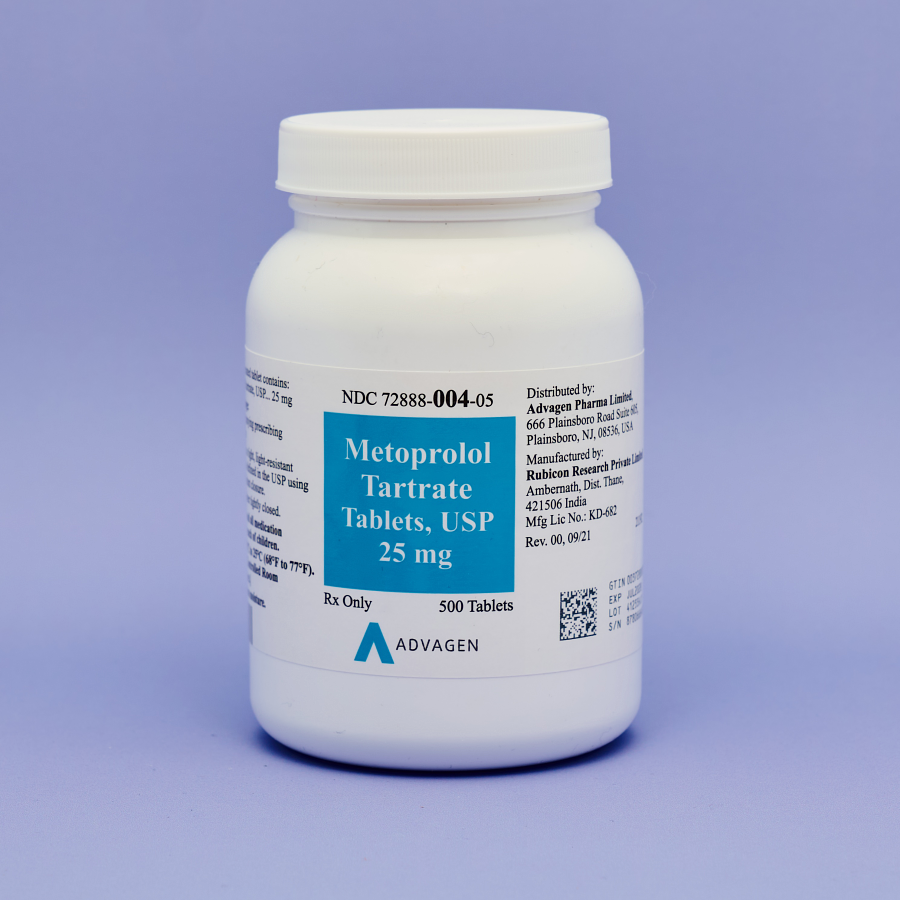
How It Works
Metoprolol tartrate blocks the effect of catecholamines like adrenaline (epinephrine) on the beta-1 receptors of the heart. Normally, catecholamines bind to these receptors and signal the heart to beat faster and with more force.
By blocking these sites, metoprolol tartrate works to do the following:
- Heart rate reduction: It slows the pulse, allowing the heart to beat more regularly and efficiently.
- Reduced force of contraction: It decreases the intensity with which the heart muscle pumps, lowering the oxygen demand of the heart.
- Blood pressure management: By reducing blood volume and relaxing certain blood vessels, it helps lower overall pressure in the circulatory system.
By reducing both the heart rate and the force of contraction (stroke volume), metoprolol tartrate lowers blood pressure and the workload on the heart.
| Quick Facts | |
|---|---|
| Common Brands | Lopressor |
| Drug Class | Beta-1 selective beta-adrenergic blocking agent (beta-blocker) |
| Generic Status | Generic for Lopressor |
| Availability | Prescription only |
Dosing
Metoprolol tartrate is available in several strengths, typically ranging from 25 mg to 100 mg tablets. Because it is not an extended-release medication, metoprolol tartrate usually requires two or more daily doses.
- Hypertension: Initial doses often start lower and may be titrated or adjusted by a provider to a range of 100 mg to 450 mg per day, divided into multiple doses.
- Angina: Typically ranges from 100 mg to 400 mg daily, usually split into two doses.
- Post-heart attack: Typically 50 mg to 100 mg taken twice daily for maintenance.
It is generally recommended to take metoprolol tartrate with food or immediately after a meal to improve absorption and reduce the risk of side effects such as dizziness.
Note: Dosing information is educational only. Your prescribing physician will determine your specific dose based on your individual health needs. Always follow your healthcare provider’s instructions for exact dosing.
Uses
FDA-Approved Uses
The U.S. Food and Drug Administration (FDA) has approved metoprolol tartrate for the following heart conditions:
- Hypertension: To lower high blood pressure and reduce the long-term risk of stroke and heart failure.
- Angina pectoris: For the long-term treatment of chest pain caused by reduced blood flow to the heart.
- Myocardial infarction (heart attack): To reduce cardiovascular mortality in patients whose vital signs are stable following a heart attack.
Off-Label Uses
You may see metoprolol tartrate prescribed for uses that are not “FDA-approved.” This is a common and legal practice called “off-label” prescribing, where a doctor uses their clinical judgment to prescribe a drug for a different (but well-researched) purpose.
Metoprolol tartrate may be prescribed for the following off-label uses:
- Performance anxiety: To manage physical symptoms such as rapid heart rate and tremors.
- Migraine prophylaxis: Helping to reduce the frequency and severity of migraine headaches.
- Arrhythmia control: Managing irregular heartbeats like atrial fibrillation.
- Hyperthyroidism: Temporarily controlling a rapid heart rate associated with an overactive thyroid.
Get Savings Updates for Metoprolol Tartrate
Join our mailing list for exclusive deals and more.
Side Effects
Like all heart medications, metoprolol tartrate can cause side effects as the body adjusts to the changes in heart rate and blood pressure.
Common Side Effects
- Fatigue and tiredness
- Dizziness or lightheadedness
- Gastrointestinal issues
- Skin reactions
- Depression
Serious Side Effects
Serious side effects are rare, but it’s important to know what to look for if they do occur. Please call your doctor immediately if you experience any of the following:
- Bradycardia: Because this medication is designed to slow the heart rate, it may slow it down too much. Symptoms include feeling like your heart is skipping or beating very sluggishly, weakness, and lightheadedness because your body isn’t getting oxygenated blood fast enough.
- Bronchospasm: Metoprolol may affect the small muscles in the airways. If you feel a sudden tightness in your chest, start wheezing, or find it difficult to catch your breath, this could be a severe reaction.
- Worsening heart failure: In some cases for those with preexisting heart conditions, a beta-blocker can make it harder for the heart to pump effectively. It is generally recommended that patients watch for fluid backup. This often looks like sudden weight gain (several pounds in a day or two), swelling in the ankles or feet, and feeling unusually winded while performing simple tasks or while lying flat in bed.
- Severe allergic reactions: Standard guidelines suggest seeking immediate help if you notice a full-body reaction, such as a widespread rash, hives, or swelling of the face, lips, and/or throat that makes swallowing difficult.
- Raynaud’s phenomenon: Reduced blood pressure can impact the amount of blood reaching your extremities. Watch for fingers or toes that feel icy cold, turn a pale or bluish color, or feel numb and painful, especially when it’s chilly outside.
Call your doctor immediately if you experience any concerning or prolonged symptoms.
Pharmacist Tips
Be Consistent With Food
It is generally recommended to take metoprolol tartrate at the same time every day, ideally with or right after a meal. This helps maintain steady levels in your system.
Stand Up Slowly
Because beta-blockers lower blood pressure, you may feel dizzy when rising from a chair or bed. Move slowly to give your body time to adjust.
Monitor Your Vitals
You can keep a log of your blood pressure and pulse at home. Bring the data to your provider during follow-up appointments.
Do Not Stop Taking The Medication Abruptly
Stopping this medication suddenly can lead to a rebound effect, potentially causing severe chest pain or even a heart attack. If the medication needs to be discontinued, a provider will typically taper the dose over 1 to 2 weeks.
Be Mindful Of Your Alertness
Use caution when driving or operating machinery until you know how the medication affects your coordination and energy levels.
Drug Interactions
Metoprolol tartrate can interact with a wide variety of substances, which may either increase the risk of side effects or decrease the effectiveness of the treatment.
Tell your doctor if you take:
- Calcium channel blockers: Medicines like diltiazem or verapamil, when taken with metoprolol, can cause an excessively slow heart rate.
- NSAIDs: Common pain relievers like ibuprofen or naproxen may reduce the effects of beta-blockers.
- Diabetes medications: Metoprolol can mask the signs of low blood sugar (hypoglycemia), such as a racing heart. Patients with diabetes should monitor their blood sugar closely.
- Alcohol: Consumption of alcohol can enhance the sedative effects of metoprolol, leading to increased dizziness and drowsiness.
- Epinephrine: Beta-blockers can interfere with the effectiveness of epinephrine (EpiPens) used for severe allergic reactions.
Always give your doctor and pharmacist a complete list of all your medications, vitamins, and supplements to check for potential interactions.
FAQs
What is the difference between metoprolol tartrate and metoprolol succinate?
The primary difference lies in the salt form and how it is released into the body. Metoprolol tartrate (Lopressor) is an immediate-release version, typically taken twice daily. Metoprolol succinate (Toprol XL) is an extended-release version designed to be taken once daily for 24-hour coverage.
Why do I have to take metoprolol tartrate twice a day instead of once?
Because the tartrate version is an immediate-release formulation, its effects wear off more quickly. Taking it twice daily is generally recommended to maintain a consistent level of the medication in your bloodstream, helping keep your heart rate and blood pressure stable.
Can I switch from tartrate to succinate if I want to take fewer pills?
While both contain the same active drug, they are not always interchangeable for every condition. For example, the succinate version is specifically FDA-approved for heart failure. It’s best to consult your healthcare provider to see if a switch is appropriate for your specific health needs.
Can I drink alcohol while taking metoprolol tartrate?
It is generally advised to limit or avoid alcohol. Alcohol can increase the blood-pressure-lowering effects of metoprolol, which may lead to significant dizziness, fainting, or extreme drowsiness.
Can I take metoprolol tartrate on an empty stomach?
While standard guidelines state that metoprolol tartrate can be taken without food, most providers recommend taking it with a meal. Food can help the body absorb the medication more effectively and may reduce side effects.
Is metoprolol tartrate used for anxiety or panic attacks?
While not FDA-approved for anxiety, it is commonly prescribed for off-label usage to manage the physical symptoms of performance anxiety, like a pounding heart and shaking hands. It does not treat the psychological aspects of anxiety.
Is metoprolol tartrate safe for people with asthma?
Metoprolol is cardioselective, meaning it is less likely to affect the lungs than older beta-blockers. However, at higher doses, it may still cause airway tightening. People with asthma or COPD should use it under close medical supervision.
Can I take ibuprofen or naproxen with metoprolol tartrate?
These medications (NSAIDs) can sometimes make metoprolol less effective at lowering blood pressure. It is best to discuss pain management options with your provider.
What foods should I avoid with metoprolol tartrate?
There are no specific forbidden foods, but it is generally recommended to maintain a heart-healthy diet low in sodium. Additionally, you may want to be mindful of excessive potassium intake if you are taking other heart medications, though metoprolol itself does not typically require a restricted diet.
Comparable Medications
Metoprolol Tartrate, Metoprolol Succinate, Atenolol, Bisoprolol, Nebivolol, Carvedilol, or Propranolol?
There are several medications that your doctor can prescribe in place of metoprolol tartrate. Here are a few possible alternatives below:
Metoprolol Succinate ER
From $22.99
An extended-release version of metoprolol designed for once-daily dosing with an additional approved indication for treating heart failure.
Atenolol
From $24.99
A long-acting, cardioselective beta-blocker primarily used for hypertension and chest pain that is cleared through the kidneys.
Bisoprolol
From $27.99
A highly selective beta-1 blocker with a long half-life, allowing for once-daily dosing to manage high blood pressure.
Nebivolol
From $24.99
A newer generation beta-blocker that encourages blood vessel dilation through nitric oxide release, often with fewer side effects like fatigue.
Carvedilol
From $27.99
A non-selective beta-blocker that also blocks alpha receptors and is commonly prescribed to patients with heart failure.
Propranolol
From $24.99
A non-selective beta-blocker that crosses the blood-brain barrier, making it effective for tremors, migraine prevention, and physical symptoms of anxiety.
We Have Metoprolol Tartrate in Stock. Get Yours Today!
Important: Information on this page is for educational purposes only. Prescribing decisions are made by independent, licensed providers. TelyRx operates technology-enabled pharmacies and a telehealth platform that connects patients with board-certified licensed providers. Prescriptions, when provider-approved and issued, are filled and shipped by TelyRx-affiliated pharmacies. We do not employ physicians or make prescribing decisions. Learn more about our editorial standards here.