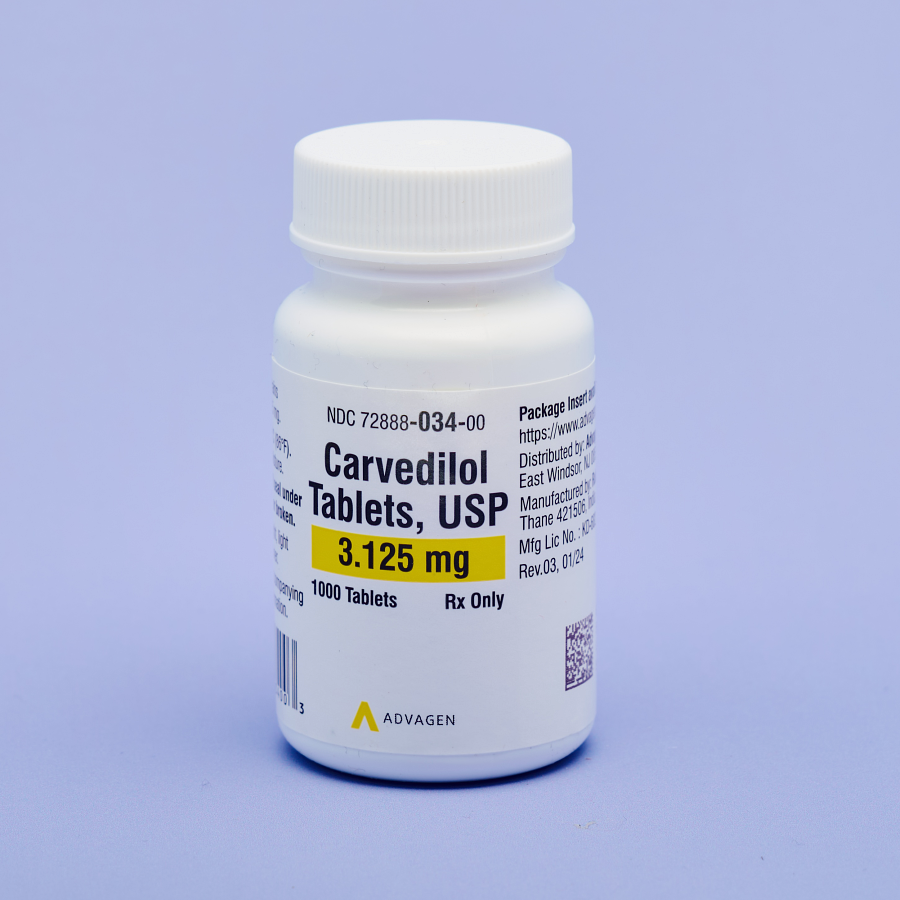
How It Works
Carvedilol is classified as both an alpha-blocker and a beta-blocker:
- Beta-receptor blockade: Carvedilol blocks beta-1 and beta-2 receptors. Blocking beta-1 receptors in the heart slows the heart rate and reduces the force with which the heart muscle contracts. This reduces the heart’s oxygen demand and prevents overwork.
- Alpha-receptor blockade: Carvedilol also blocks alpha-1 receptors found in the walls of the blood vessels. Blocking these receptors prevents the vessels from tightening or constricting.
The result of this combined action is vasodilation, or the widening and relaxation of the blood vessels. When blood vessels relax, blood pressure drops, and the heart does not have to work as hard to move blood through the body.
This protects the heart muscle from the strain of high pressure while ensuring the rest of the body receives the oxygenated blood it needs.
| Quick Facts | |
|---|---|
| Common Brands | Coreg, Coreg CR |
| Drug Class | Nonselective beta blocker with alpha-1 blocking properties |
| Generic Status | Generic version of Coreg |
| Availability | Prescription only |
Dosing
Carvedilol dosing is highly individualized and depends on the condition being treated. It is generally accepted that the immediate-release (IR) version is taken twice daily, while the extended-release (ER) version is taken once daily.
- Hypertension: Standard guidelines recommend an initial IR dose of 6.25 mg twice daily, which may be increased every 1 to 2 weeks to a maximum of 25 mg twice daily. The ER version typically starts at 20 mg once daily.
- Heart failure: Providers typically recommend a lower starting dose for heart failure to ensure the heart adjusts safely, usually 3.125 mg twice daily. This may be increased slowly over several weeks to a maintenance dose.
- Post-heart attack: Dosing commonly begins with 6.25 mg twice daily and is titrated based on patient tolerance.
Important dosing requirement: It is standard practice to take carvedilol with food. Taking the medication on an empty stomach may increase the speed of absorption, which can cause a sudden, sharp drop in blood pressure, leading to dizziness or fainting.
Note: Dosing information is educational only. Your prescribing physician will determine your specific dose based on your individual health needs. Always follow your healthcare provider’s instructions for exact dosing.
Uses
FDA-Approved Uses
Carvedilol has received FDA approval for several critical cardiovascular indications:
- Hypertension: For the management of high blood pressure, either alone or in combination with other antihypertensive agents.
- Heart failure: For mild-to-severe heart failure of ischemic or cardiomyopathic origin, usually in addition to standard therapies like ACE inhibitors and diuretics.
- Left ventricular dysfunction: To reduce cardiovascular mortality in clinically stable patients who have survived the acute phase of a heart attack and have a reduced ejection fraction (pumping capacity).
Off-Label Uses
You may see carvedilol prescribed for uses that are not “FDA-approved.” This is a common and legal practice called “off-label” prescribing, where a doctor uses their clinical judgment to prescribe a drug for a different (but well-researched) purpose.
Carvedilol may be prescribed off-label to treat the following conditions:
- Angina pectoris: Sometimes used to manage chronic chest pain by reducing the heart’s oxygen demand.
- Atrial fibrillation: Used to control the ventricular rate in patients with irregular heart rhythms.
- Portal hypertension: Used in patients with liver cirrhosis to reduce the pressure in the portal vein and prevent complications like esophageal variceal bleeding.
- Anxiety: While less common than other beta-blockers like propranolol, it is sometimes prescribed to manage the physical symptoms of performance anxiety.
Get Savings Updates for Carvedilol
Join our mailing list for exclusive deals and more.
Side Effects
As the body adjusts to a lower heart rate and relaxed blood vessels, certain side effects may occur. Many of these are temporary and subside as the body habituates to the medication.
Common Side Effects
- Dizziness or lightheadedness: Particularly when moving from a sitting to a standing position
- Fatigue: Feeling unusually tired or weak, especially during the initial weeks of treatment
- Diarrhea: Some patients report gastrointestinal changes
- Weight gain: Often related to fluid retention or metabolic changes
- Hyperglycemia: Increased blood sugar levels, which are especially important for patients with diabetes to monitor
Serious Side Effects
Serious side effects are rare, but it’s important to know what to look for if they do occur. Notify your doctor if you experience any of the following:
- Bradycardia (slow heart rate): A heart rate that drops too low can cause fainting, confusion, or extreme shortness of breath
- Worsening heart failure: Signs include a sudden increase in weight (more than 2-3 lbs in a day), swelling of the ankles or feet, and difficulty breathing while lying flat
- Bronchospasm: Tightness in the chest or wheezing, particularly in those with undiagnosed or underlying respiratory issues
- Kidney issues: Changes in urination frequency or swelling, especially in those with preexisting low blood pressure
- Severe allergic reaction: Hives, facial or throat swelling, and difficulty swallowing can require immediate medical intervention
Call your doctor immediately if you experience any concerning or prolonged symptoms.
Pharmacist Tips
Follow the Food Rule
Take your carvedilol with a meal. This slows the rate at which the drug enters your bloodstream, helping prevent the dizziness that can occur when your blood pressure drops too quickly.
Rise Slowly
To avoid falls, take your time getting out of bed or a chair. For example, you may dangle your feet over the side of the bed for a minute before standing up.
Know the Missed Dose Protocol
If you miss a dose, take it as soon as you remember, unless it is nearly time for your next dose. It’s typically advised that you do not “double up” on the medication.
Monitor Your Vitals
It is generally recommended to keep a log of your blood pressure and heart rate at home. This helps your provider determine if your dose is working effectively.
Diabetes Awareness
If you have diabetes, your provider may recommend more frequent blood sugar checks. Carvedilol can mask the symptoms of low blood sugar, such as a racing heart or tremors.
Avoid Abrupt Discontinuation
Avoid ending your carvedilol regimen abruptly. Doing so can cause rebound hypertension, severe chest pain, or even a heart attack. Your provider will help you taper off the medication safely if needed.
Drug Interactions
Carvedilol can interact with other medications, potentially altering its effectiveness or increasing the risk of side effects.
Tell your doctor if you take:
- Calcium channel blockers: Medications like diltiazem or verapamil can cause an excessively slow heart rate when combined with carvedilol.
- Digoxin: Carvedilol may increase digoxin levels in your blood, requiring closer monitoring of heart rhythms.
- Insulin and oral diabetes medications: Carvedilol can exacerbate the blood sugar-lowering effects and hide the warning signs of hypoglycemia.
- Non-steroidal anti-inflammatory drugs (NSAIDs): Common pain relievers such as ibuprofen or naproxen can reduce the blood pressure-lowering effects of beta-blockers and may strain the kidneys.
- Cyclosporine: Carvedilol can increase the concentration of this immunosuppressant in the body.
- Rifampin: This antibiotic can significantly lower the levels of carvedilol in your system, making it less effective.
Always give your doctor and pharmacist a complete list of all your medications, vitamins, and supplements to check for potential interactions.
FAQs
Why must I take carvedilol with food?
Taking carvedilol with food is standard practice because it slows the medication’s absorption. If absorbed too quickly on an empty stomach, it can cause an abrupt drop in blood pressure, leading to dizziness or fainting (orthostatic hypotension).
Is carvedilol safer than metoprolol for people with diabetes?
Some studies suggest that carvedilol may have a more neutral effect on blood sugar and insulin sensitivity compared to older beta-blockers. However, it can still hide the symptoms of low blood sugar, so close monitoring is recommended for any patient with diabetes.
Can I stop taking carvedilol suddenly if I run out?
No. Stopping a beta-blocker suddenly can lead to a dangerous spike in blood pressure and heart rate. This can trigger chest pain (angina) or a heart attack. It’s generally advised that you always have a refill ready and speak with a provider before stopping.
Can I drink alcohol while taking carvedilol?
Standard guidelines state that alcohol should be used with extreme caution. It can increase the blood pressure-lowering effects of carvedilol, increasing the risk of dizziness, fainting, and falls.
Why is carvedilol prescribed for heart failure?
In heart failure, the heart is often struggling to pump against high pressure. Carvedilol relaxes blood vessels (vasodilation) and slows the heart rate, reducing the heart’s workload and allowing the heart muscle to function more efficiently over time.
Is it better to take carvedilol in the morning or at night?
The most important factor is taking it at the same time every day to maintain steady levels. However, if you experience significant daytime sleepiness, your provider may suggest taking it in the evening.
Can carvedilol cause erectile dysfunction (ED)?
Like many blood pressure medications, beta-blockers are associated with a risk of sexual side effects. If you notice changes in sexual performance, it’s generally advised to discuss this with your provider.
Does carvedilol help with anxiety or stage fright?
While it is sometimes used off-label for the physical symptoms of anxiety, like a pounding heart, it is generally not the first choice for this purpose compared to other beta-blockers like propranolol.
Is carvedilol safe for people with asthma or COPD?
Carvedilol is a non-selective beta-blocker, meaning it can affect the receptors in the lungs that help the airways stay open. Standard guidelines recommend avoiding carvedilol in patients with significant asthma or bronchospastic disease.
Can I take ibuprofen or naproxen with carvedilol?
NSAIDs can cause the body to retain sodium and water, which counteract the blood pressure-lowering effects of carvedilol. Generally, frequent use of these pain relievers is best discussed with your healthcare provider.
Does carvedilol make you tired?
Fatigue is one of the most common side effects. This usually occurs because the heart is beating more slowly and the blood pressure is lower. For most, this feeling improves after a few weeks of treatment.
What is the difference between Coreg and Coreg CR?
Coreg is the immediate-release version, typically taken twice a day with food. Coreg CR is an extended-release capsule taken once a day. Coreg CR is designed to release the medication slowly over 24 hours.
Comparable Medications
Labetalol, Metoprolol Succinate, Metoprolol Tartrate, Bisoprolol, Entresto, Spironolactone, or Lisinopril?
Several medications can be prescribed in place of carvedilol. Here are a few possible alternatives below:
Labetalol Tablets
From $24.99
This medicine blocks both alpha and beta receptors and is commonly used for blood pressure management in specific clinical settings like pregnancy.
Metoprolol Succinate ER
From $22.99
This medicine is a long-acting, cardioselective beta-blocker taken once daily that focuses primarily on the heart's beta-receptors.
Metoprolol Tartrate
From $22.99
This medicine is a short-acting, cardioselective beta-blocker typically administered twice daily for immediate blood pressure and heart rate control.
Bisoprolol
From $27.99
This medicine is a selective beta-1 blocker used once daily for hypertension, known for its targeted effect on the heart muscle.
Entresto
This medicine is a combination therapy for heart failure that works through pathways entirely different from beta-blockers to reduce cardiac strain.
Spironolactone
From $24.99
This medicine is a potassium-sparing diuretic commonly used in conjunction with beta-blockers to manage fluid buildup and hormones related to heart failure.
Lisinopril
From $22.99
This is an ACE inhibitor that lowers blood pressure by relaxing blood vessels through the inhibition of the angiotensin-converting enzyme.
We Have Carvedilol in Stock. Get Yours Today!
Important: Information on this page is for educational purposes only. Prescribing decisions are made by independent, licensed providers. TelyRx operates technology-enabled pharmacies and a telehealth platform that connects patients with board-certified licensed providers. Prescriptions, when provider-approved and issued, are filled and shipped by TelyRx-affiliated pharmacies. We do not employ physicians or make prescribing decisions. Learn more about our editorial standards here.