How It Works
Liraglutide works by mimicking a natural hormone in the body called glucagon-like peptide-1 (GLP-1). This hormone helps regulate blood sugar levels, appetite, and digestion. GLP-1s like liraglutide help with type 2 diabetes and weight loss by:
- Balancing blood sugar levels
- Slowing down digestion
- Reducing appetite
| Quick Facts | |
|---|---|
| Common Brands | Victoza, Saxenda |
| Drug Class | Glucagon-like peptide-1 (glp-1) receptor agonist |
| Generic Status | Generic for Victoza, Saxenda |
| Availability | Prescription only |
Dosing
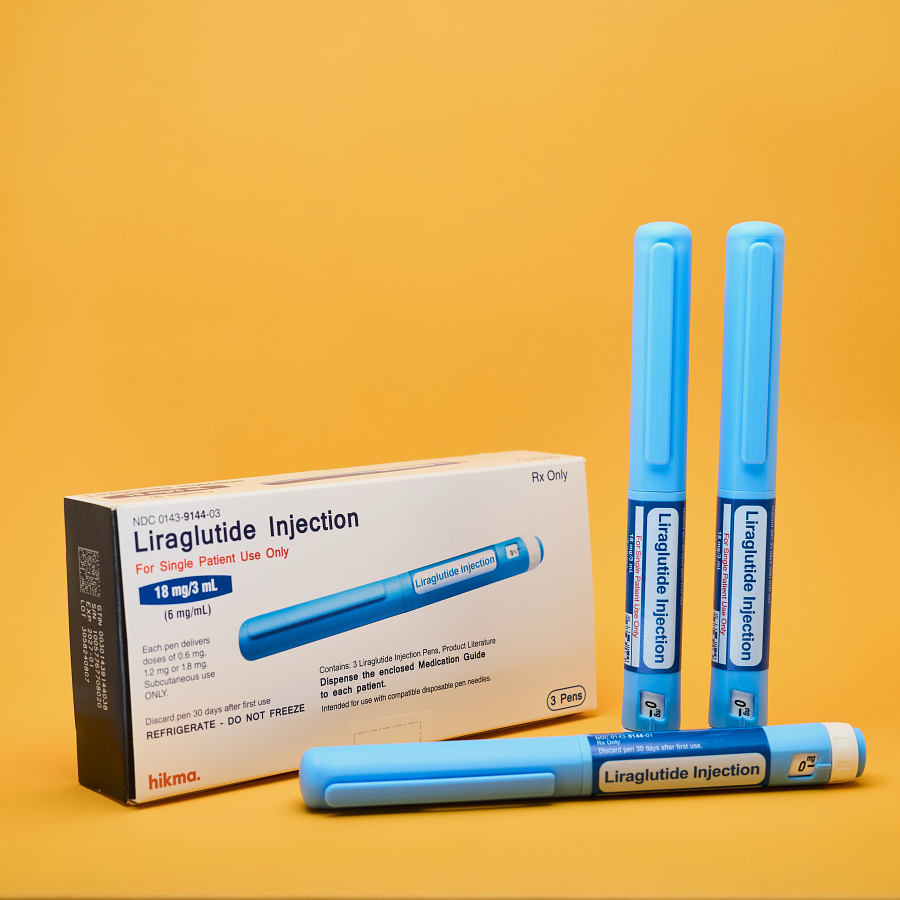
The liraglutide injection comes in pre-filled pens. These pens are designed to deliver specific doses, typically 0.6 mg, 1.2 mg, or 1.8 mg.
The recommended starting dose is 0.6 mg injected once daily. After at least one week, healthcare providers may increase the dose to 1.2 mg once daily. The dose may be increased again to the maximum dose of 1.8 mg once daily if more blood sugar control is still needed.
Liraglutide is injected under the skin (subcutaneously) of the upper thigh, stomach, or back of the upper arm. It can be injected regardless of when you last ate, but it’s recommended to inject it at the same time each day to establish a routine.
Note: Dosing information is educational only. Your prescribing physician will determine your specific dose based on your individual health needs. Always follow your healthcare provider’s instructions for exact dosing.
Uses
FDA-Approved Uses
Liraglutide is FDA-approved to:
- Lower blood sugar levels in people with type 2 diabetes
- Reduce the risk of major adverse cardiovascular events (heart attack, stroke, or death) in people with type 2 diabetes and established cardiovascular disease
Off-Label Uses
You may see the liraglutide prescribed for uses that are not “FDA-approved.” This is a common and legal practice called “off-label” prescribing, where a doctor uses their clinical judgment to prescribe a drug for a different (but well-researched) purpose.
Health providers may prescribe liraglutide off-label for weight loss. A higher-dose formulation (brand name Saxenda) is FDA-approved for weight loss in people with obesity.
Get Savings Updates for Liraglutide
Join our mailing list for exclusive deals and more.
Side Effects
Like all medications, liraglutide can cause side effects. Some common side effects may improve over time as your body adjusts to the medication. Other side effects may be serious and require medical attention.
Common Side Effects
- Nausea
- Diarrhea
- Vomiting
- Decreased appetite
- Upset stomach or indigestion
- Constipation
Serious Side Effects
Serious side effects are rare, but it’s important to know what to look for if they do occur. Stop using liraglutide and call your doctor immediately if you experience:
- Severe allergic reactions: Symptoms include swelling of the face, lips, tongue, or throat; difficulty breathing or swallowing; racing heart; severe rash or itching; and/or fever.
- Pancreatitis: Inflammation of the pancreas may occur when taking liraglutide. Symptoms include severe pain in the upper belly (which may spread to the back) and vomiting.
- Kidney damage: Dehydration from nausea or vomiting can lead to kidney damage or worsen existing kidney failure. Symptoms include a reduced need to urinate, unusual tiredness, confusion, nausea, seizures, and swelling in the feet, ankles, or legs.
- Gallbladder problems: Liraglutide may cause gallstones or inflammation. Symptoms include fever, yellowing of the skin or eyes, clay-colored stool, or upper stomach pain.
- Hypoglycemia (low blood sugar): Liraglutide may cause low blood sugar, especially when used with other diabetes medications like insulin or sulfonylureas. Symptoms include dizziness, confusion, headache, sweating, fast heartbeat, blurry vision, anxiety, and jitteriness.
- Thyroid tumors: Animal studies have shown that liraglutide may cause thyroid tumors, but it is unknown if it carries the same risk in humans. Symptoms include a lump in the neck, hoarseness, and trouble breathing or swallowing.
Call your doctor immediately if you experience any concerning or prolonged symptoms.
Pharmacist Tips
Stay Hydrated
If you experience nausea, vomiting, or diarrhea, drink plenty of water to prevent dehydration.
Practice Needle Safety
Liraglutide pens do not come with needles. Needles must be purchased separately. Always use a new needle for each injection to prevent infection and dispose of them in an appropriate sharps container.
Store Your Pens Properly
Store unused liraglutide pens in the refrigerator (36°F to 46°F, or 2°C to 8°C). Once a pen is in use, it can be kept at room temperature (up to 86°F or 30°C) or in the refrigerator for up to 30 days. Do not freeze the medication.
Rotate Through Injection Sites
You can inject liraglutide into the stomach, thigh, or the back of the upper arm. Rotate the injection sites each time to avoid skin irritation.
Know The Protocol For A Missed Dose
If you miss a dose of liraglutide, skip it and take the next dose at the regular time. Do not take double doses to make up for a missed one. If more than 3 days are missed, contact your provider, as you may need to restart at a lower dose to avoid side effects.
Drug Interactions
Certain medications and substances can interact with liraglutide, potentially altering how it works or increasing the risk of side effects. For example:
- Insulin and sulfonylureas: Taking liraglutide with insulin or drugs like glipizide or glyburide increases the risk of low blood sugar (hypoglycemia). Your healthcare provider may adjust the dose of insulin to prevent your blood sugar getting too low.
- Oral medications: Because liraglutide slows down digestion, it may affect how quickly your body absorbs oral medications.
Always give your doctor and pharmacist a complete list of all your medications, vitamins, and supplements to check for potential interactions.
FAQs
Why must I store new pens in the refrigerator but open pens at room temperature?
Unused pens are stored in the refrigerator to maintain potency until the expiration date. Once opened, the pen can be kept at room temperature or in the refrigerator for up to 30 days.
Do I need to buy pen needles separately, or are they included in the box?
You will need to buy needles separately, as the medication does not come with them. Ask your pharmacist for the correct type for your pen.
Why is the liquid in my pen cloudy?
If the liquid appears cloudy, discolored, or has particles, do not use it. Call your pharmacist or care team for new medication.
Can I inject liraglutide into my arm?
Yes, someone can help you inject the medication into the fatty area on the back of your upper arm.
Why do I have to “dial” the dose up slowly over several weeks?
Starting at a low dose of 0.6 mg helps your body get used to the medication and significantly lowers the chance of gastrointestinal side effects like nausea.
What should I do if I drop the pen?
If a pen is dropped, check the cartridge for cracks or damage. If you are unsure if it is safe to use, contact your pharmacist or care team for their advice.
Can I take liraglutide at night to sleep through the nausea?
Yes, you can inject liraglutide at any time of day that works best for you. Try to choose a time when you can consistently inject your dose day after day.
Is liraglutide the same thing as Ozempic?
No. While both are GLP-1 agonists, Ozempic contains semaglutide, not liraglutide. The brand names for liraglutide are Victoza and Saxenda.
Can I drink alcohol while taking liraglutide?
It is unknown if alcohol directly interacts with liraglutide, but alcohol can affect blood sugar levels, which may interfere with the medication’s effectiveness. It is recommended to limit alcohol intake while taking liraglutide.
Does liraglutide interfere with birth control pills?
Liraglutide is not known to interfere with birth control pills. However, it does delay gastric emptying, or how quickly food moves through your body. This may affect the absorption of oral medications like birth control pills. Ask your provider if you take oral contraceptives and have concerns.
What happens if I leave the cap off the pen?
When not in use, liraglutide pens should be stored with the cap on. This protects the medication from light and contamination.
How do I dispose of the used needles safely?
Put used needles and empty pens in an appropriate sharps container immediately after use. Do not throw them in the regular trash.
Can I mix liraglutide with insulin in the same injection?
No. While you may be prescribed both, they should be administered separately. Do not mix medications or inject them in the same place. If injecting in the same area of the body, such as the stomach, inject them in different spots.
Is liraglutide safe to use during pregnancy?
It is not known if liraglutide will harm an unborn baby. Tell your healthcare provider if you are pregnant or plan to become pregnant while taking liraglutide.
Why is the liquid not moving even though I pushed the button?
Ensure you have primed the pen if it is new. The box should come with instructions for how to do this. If the liquid does not dispense, the needle may be blocked or the pen may be damaged. Contact your pharmacist for assistance.
Comparable Medications
Liraglutide, Semaglutide (Ozempic / Wegovy), Tirzepatide (Mounjaro / Zepbound), Naltrexone/Bupropion (Contrave), Sitagliptin (Januvia), or Empagliflozin (Jardiance)?
There are several medications that your doctor can prescribe in place of liraglutide. Here are a few possible alternatives below.
Ozempic®
From $1149.99
A GLP-1 receptor agonist that is injected weekly and used for type 2 diabetes, weight loss, cardiovascular risk reduction, kidney disease, and noncirrhotic metabolic dysfunction-associated steatohepatitis (MASH).
Wegovy – 0.25MG – 1 Box (4 Injectable pens)
From $1399.99
Another GLP-1 receptor agonist that is injected weekly and used for type 2 diabetes, weight loss, cardiovascular risk reduction, kidney disease, and noncirrhotic metabolic dysfunction-associated steatohepatitis (MASH).
Dulaglutide (Trulicity)
A GLP-1 receptor agonist that is injected weekly and used to manage blood sugar levels and cardiovascular risk in people with type 2 diabetes.
Mounjaro®
From $1199.99
A dual GIP/GLP-1 receptor agonist that is injected weekly and used for type 2 diabetes, weight loss, and obstructive sleep apnea.
Zepbound®
From $1199.99
Another dual GIP/GLP-1 receptor agonist that is injected weekly and used for type 2 diabetes, weight loss, and obstructive sleep apnea.
Naltrexone/Bupropion (Contrave)
An oral weight loss medication that combines an opioid antagonist and an antidepressant.
Januvia®
From $479.99
An oral dipeptidyl peptidase-4 (DPP-4) inhibitor used for type 2 diabetes.
Jardiance®
From $879.99
An oral sodium glucose co-transporter-2 (SGLT2) inhibitor used for type 2 diabetes, heart failure, chronic kidney disease, and cardiovascular risk reduction.
We Have Liraglutide in Stock. Get Yours Today!
Important: Information on this page is for educational purposes only. Prescribing decisions are made by independent, licensed providers. TelyRx operates technology-enabled pharmacies and a telehealth platform that connects patients with board-certified licensed providers. Prescriptions, when provider-approved and issued, are filled and shipped by TelyRx-affiliated pharmacies. We do not employ physicians or make prescribing decisions. Learn more about our editorial standards here.