How It Works
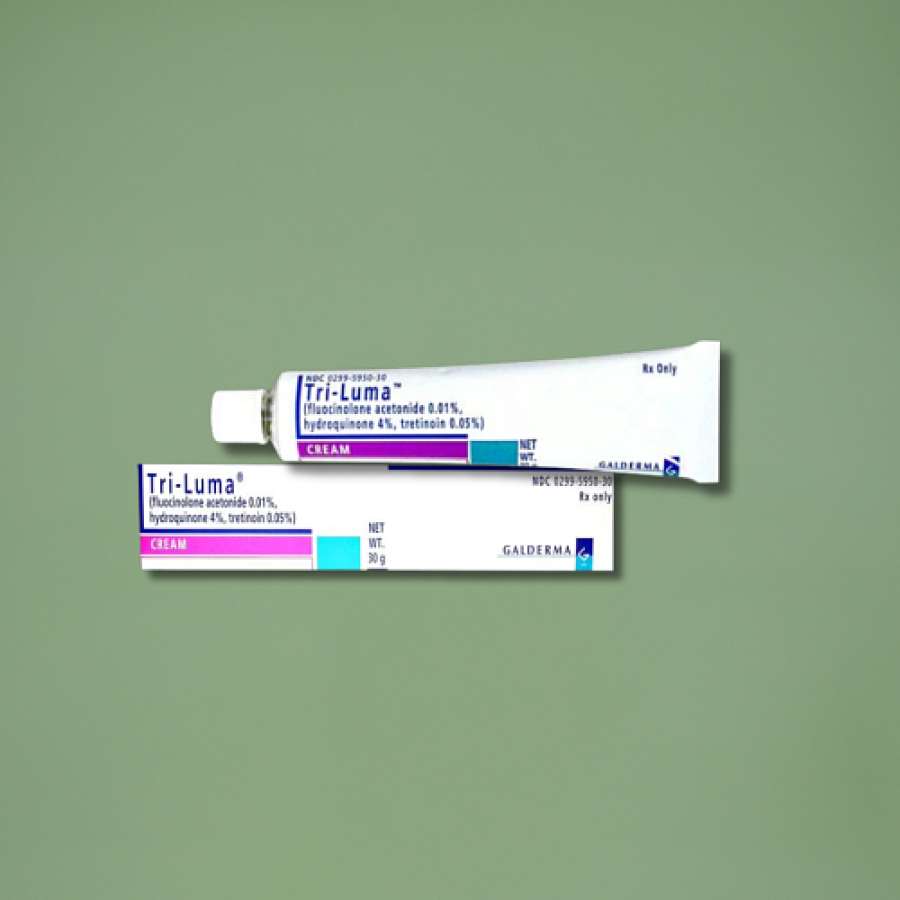
Tri-Luma uses three ingredients that work together to address dark patches. It does this by doing the following:
- Stopping new pigment formation: Hydroquinone 4% is the main lightening agent. It slows melanin production in the skin cells.
- Refreshing the skin: Tretinoin 0.05% is a type of vitamin A that helps your skin cells replace themselves faster. This helps the dark spots fade and also makes it easier for the other ingredients to penetrate the skin.
- Soothing irritated skin: Fluocinolone acetonide 0.01% is a mild steroid. Since the other two ingredients can sometimes be harsh or drying, this component helps prevent redness and itching.
| Quick Facts | |
|---|---|
| Common Brands | Tri-Luma |
| Drug Class | Topical corticosteroid, melanin synthesis inhibitor, and topical retinoid |
| Generic Status | No generic version is currently available |
| Availability | Prescription only |
Dosing
Tri-Luma dosing emphasizes using a small amount to avoid severe skin reactions. Providers usually recommend the following steps:
- Timing: It’s generally recommended to apply the cream once daily at night, at least 30 minutes before bed.
- Preparation: Gently wash your face with a mild cleanser and pat it dry with a soft towel before applying Tri-Luma.
- Application: Standard guidelines recommend applying a thin layer of the cream to the dark patches and up to half an inch of the skin surrounding the affected area.
- Amount: It’s generally advised to use a pea-sized amount of the medication. Using more than the recommended amount may cause skin irritation.
- Duration: Standard guidelines suggest a treatment course of up to 8 weeks. Using the cream for a longer period can increase the risk of skin thinning or permanent discoloration.
- Safety: Providers recommend washing your hands thoroughly after applying the cream to avoid getting it in your eyes or mouth.
Note: Dosing information below is educational only. Your prescribing physician will determine your specific dose based on your individual health needs. Always follow your healthcare provider’s instructions for exact dosing.
Uses
FDA-Approved Uses
Tri-Luma is FDA-approved for:
- Facial melasma: The short-term treatment of moderate to severe dark patches on the face caused by sun exposure or hormones.
Off-Label Use
You may see Tri-Luma prescribed for uses that are not FDA-approved. This is a common and legal practice called off-label prescribing, where a doctor uses their clinical judgment to prescribe a drug for a different (but well-researched) purpose.
Tri-Luma may be prescribed for the following conditions:
- Post-inflammatory hyperpigmentation: Some doctors prescribe it to treat dark spots left behind by severe acne or skin injuries.
- Solar lentigines: It may be used for stubborn age spots on the face that have not responded to other treatments.
Get Savings Updates for Tri
Join our mailing list for exclusive deals and more.
Side Effects
Because Tri-Luma contains three active medications, skin reactions are common, especially during the first few weeks as your skin adjusts.
Common Side Effects
- Skin redness and peeling
- Mild burning or stinging
- Dry skin and itching
- Acne breakouts
Serious Side Effects
Serious side effects are rare, but it’s important to know what to look for if they do occur.
It’s generally accepted that you stop taking the medication and immediately call the doctor if you experience any of the following symptoms:
- Exogenous ochronosis: A rare, permanent blue-black darkening of the skin. It is usually associated with prolonged hydroquinone use.
- Adrenal problems: In rare cases, Tri-Luma may be absorbed through the skin and affect the body’s natural hormone levels, causing tiredness or nausea.
- Cushing’s syndrome: Symptoms include weight gain in the upper body, a rounded face, and skin thinning.
- Severe reactions: Providers advise stopping use of the cream and contacting your doctor if you experience blistering, crusting, or severe swelling.
Call your doctor immediately if you experience any concerning or prolonged symptoms.
Pharmacist Tips
Refrigerate the Tube
It is generally recommended to keep Tri-Luma in the refrigerator. This helps keep the ingredients stable. Standard guidelines do not recommend freezing the cream.
Use Sun Protection
Tri-Luma makes your skin more sensitive to UV exposure. Standard guidelines suggest using sunscreen with an SPF of 30 or higher, wearing a hat, and avoiding tanning beds to protect your skin from UV exposure.
Moisturize In the Morning
To help with dryness and peeling, it’s generally advised to apply a gentle moisturizer in the morning after washing your face.
Avoid Irritants
Avoid using abrasive soaps, chemical exfoliants, or products with a high alcohol content while using Tri-Luma. These can make skin reactions worse.
Check the Color
If the cream turns dark brown, it has likely oxidized and should not be used.
Drug Interactions
Tri-Luma can interact with other skin products or medications that make you more sensitive to light.
Let your doctor know if you take:
- Photosensitizing drugs: Providers advise caution if you take certain diuretics or antibiotics, as they can increase your risk of sunburn.
- Topical products: Using benzoyl peroxide or sulfur-based acne treatments at the same time as Tri-Luma can cause significant irritation.
- Birth control: Hormonal contraceptives can sometimes make melasma worse. It’s generally advised to discuss alternative birth control options with your doctor.
Always give your doctor and pharmacist a complete list of all your medications, vitamins, and supplements to check for potential interactions.
FAQs
Why must I keep my tube of Tri-Luma in the refrigerator?
The ingredients in Tri-Luma are sensitive to heat and light. Keeping the tube in the refrigerator helps protect the cream throughout your treatment.
Why does the box say I can only use this cream for up to 8 weeks?
This limit is for your safety. Long-term use of the steroid and lightening agents in the cream can lead to skin thinning or permanent discoloration. It is intended for short treatment cycles.
What happens if I use Tri-Luma for several months without taking a break?
Using Tri-Luma continuously increases the risk of side effects like skin thinning, blue-black darkening, and issues with your body’s hormone production.
Can I use this cream as a spot treatment for acne scars or dark spots on my hands?
Tri-Luma is only FDA-approved for the face. The skin on your hands is different from facial skin so the cream may not work the same way. It’s generally accepted that it should not be used on open acne sores or broken skin.
Do I apply Tri-Luma to my whole face or just the dark patches?
It’s generally advised that you should only apply the cream to the dark patches and a small area of the surrounding skin. Standard guidelines do not recommend using it as a general facial moisturizer.
Can I use moisturizer before or after applying this medication?
It is generally recommended to wait until the morning to moisturize. If your skin is dry, your doctor may suggest applying a moisturizer at least 30 minutes after you apply Tri-Luma.
Why is my melasma getting darker after I started using Tri-Luma?
Initial redness or irritation can sometimes make the patches look darker. However, if the spots turn deep blue or black, it’s generally advised to stop using the cream and call your doctor immediately.
Is Tri-Luma safe to use during pregnancy or breastfeeding?
Standard guidelines suggest avoiding Tri-Luma during pregnancy. Both hydroquinone and tretinoin are generally not recommended for people who are pregnant or nursing.
How strict do I need to be with sunscreen while using this cream?
Even a small amount of sun exposure can make melasma return or worsen. Standard guidelines advise using a broad-spectrum sunscreen every day, even when it is cloudy.
Why is there a steroid in this skin-lightening cream?
The steroid can help reduce the inflammation and redness that often happens when you use tretinoin and hydroquinone together.
Can I use vitamin C or chemical exfoliants in the same routine?
It is usually best to avoid other strong active ingredients while using Tri-Luma to prevent severe skin irritation. Providers recommend sticking to a simple routine of using a mild cleanser and sunscreen.
Why do my dark spots come back almost immediately after I stop using the cream?
Melasma is a chronic condition. If you stop treatment and are exposed to the sun without protection, the pigment cells will quickly begin producing a dark color again.
Can I wax my face or get laser hair removal while using this medication?
It’s generally advised to avoid waxing or laser treatments on the areas where you apply Tri-Luma, as the cream can make your skin more sensitive to injury.
Does Tri-Luma work for freckles or age spots?
Tri-Luma is specifically approved for melasma. While it may lighten other types of spots, it’s best to speak with your doctor about the best treatment for your specific skin concerns.
How much cream should I apply, and how thick should the layer be?
It’s generally accepted that you apply a thin layer. Standard guidelines suggest using a small pea-sized amount for the entire affected area. The cream should be rubbed in gently until it becomes invisible. If you can still see white residue, you have applied too thick a layer.
Can I apply makeup immediately after putting on the cream at night?
No. Providers advise applying the cream at least 30 minutes before bed and to avoid putting other products on top of it so the medication can absorb as intended.
Comparable Medications
Hydroquinone 4%, Tretinoin (Retin-A), Azelaic Acid, or Cysteamine?
Below are some potential alternatives to Tri-Luma:
Hydroquinone
From $42.99
This is a single-ingredient cream. While it lightens skin, it does not offer the benefits of tretinoin or the soothing effect of the steroid found in Tri-Luma.
Tretinoin
From $43.99
This is a retinoid commonly used for acne, fine lines, and wrinkles. It can help fade dark spots over time, but it is typically not as powerful as the combination therapy in Tri-Luma for moderate melasma.
Fluocinolone acetonide
This is a mild steroid used to treat swelling and itching. On its own, it will not lighten dark spots.
Azelaic Acid
From $89.99
This is a gentler, non-bleaching option. It is commonly used for people with sensitive skin, though it may take longer to show results than Tri-Luma.
Cysteamine
This is a newer lightening agent that does not contain hydroquinone or steroids. It is commonly used for long-term maintenance rather than the intensive short-term treatment that Tri-Luma provides.
We Have Tri in Stock. Get Yours Today!
Important: Information on this page is for educational purposes only. Prescribing decisions are made by independent, licensed providers. TelyRx operates technology-enabled pharmacies and a telehealth platform that connects patients with board-certified licensed providers. Prescriptions, when provider-approved and issued, are filled and shipped by TelyRx-affiliated pharmacies. We do not employ physicians or make prescribing decisions. Learn more about our editorial standards here.