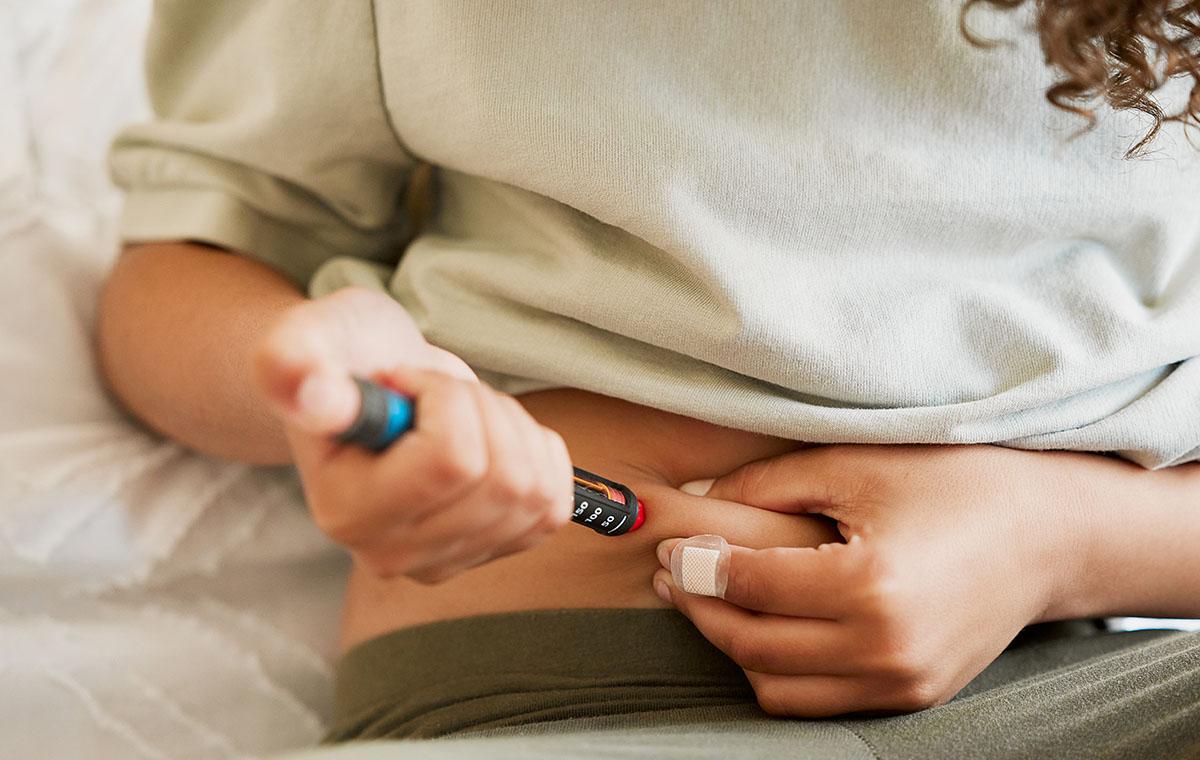
When money gets tight, it’s tempting to stretch a diabetes prescription by skipping doses or waiting longer between refills. In a 2026 TelyRx survey of adults who manage an ongoing prescription, 58% said they had run out of their medication or skipped a dose.
Without insurance, every refill comes out of pocket, and type 2 diabetes requires ongoing treatment. Newer brand-name drugs alone can cost several hundred dollars a month.
But finding cheap diabetes medication without insurance may be easier than you think. Some of the most widely prescribed diabetes drugs have lower-cost generics, and a number of programs can bring down the prices of the rest.
Key Takeaways
- With TelyRx, you can order diabetes medication online at low cash prices. You can transfer your current prescription or request a new one.
- Generic versions of brand-name diabetes medications, such as metformin, glipizide, and glimepiride, are among the lowest-cost options for people with type 2 diabetes.
- Digital pharmacy platforms, discount cards, 90-day supplies, patient assistance programs, and community health centers can lower what you pay without insurance.
- Skipping or rationing doses to save money can lead to costlier complications, so talk to your provider about lower-cost options before you run out.
Read on to see how common diabetes medications compare on price, ways to pay less, and how to get diabetes medication without insurance.
What Is the Cheapest Diabetes Medication Without Insurance?
Generic formulations of diabetes medications are the cheapest option without insurance. In fact, several of the most commonly prescribed generics often cost about $30 out of pocket, and digital pharmacy platforms like TelyRx, discount cards, or patient assistance programs can bring those prices even lower.
Low-cost generics for diabetes include:
- Metformin (generic Glucophage): Metformin is often the first medication prescribed for type 2 diabetes. It decreases glucose production in the liver, while also improving the body’s sensitivity to insulin in muscle and fat tissue.
- Glipizide (generic Glucotrol) and glimepiride (generic Amaryl): These sulfonylureas treat type 2 diabetes by stimulating the pancreas to release more insulin.
- Pioglitazone (generic Actos): Pioglitazone is a thiazolidinedione that treats type 2 diabetes by making the body more sensitive to insulin.
All of these generics treat type 2 diabetes, the most common form. Note that they do not treat type 1 diabetes, where the body makes little or no insulin. People with type 1 need insulin therapy, which oral medications alone can’t address.
For those with type 2 diabetes, these medications cost less because they’ve been available as generics for decades. A generic formulation of a drug contains the same active ingredient(s) as its brand-name version and works the same way. Having more options for the same drug keeps prices lower.
However, keep in mind that price is only one of the factors to weigh when choosing a diabetes medication. Your provider can help you find the right treatment based on your blood sugar goals, kidney function, heart health, and any other medications you take.
How Common Diabetes Medications Compare on Cost
Starting cash prices for common diabetes medications at TelyRx range from under $30 to nearly $900, and the biggest factor is usually whether a generic version is available.
| Medication | Brand or generic | How it’s commonly taken | Starting cash price* |
|---|---|---|---|
| Metformin | Generic | Oral tablet, once or twice daily | $27.99 |
| Glipizide | Generic | Oral tablet, once or twice daily | $24.99 |
| Pioglitazone | Generic | Oral tablet, once daily | $24.99 |
| Glimepiride | Generic | Oral tablet, once daily | $27.99 |
| Dapagliflozin (generic Farxiga) | Generic | Oral tablet, once daily | $89.99 |
| Sitagliptin (Januvia) | Generic | Oral tablet, once daily | $249.99 |
| Jardiance (empagliflozin) | Brand-name | Oral tablet, once daily | $879.99 |
*Prices reflect TelyRx’s starting cash prices for the lowest available dose and quantity as of November 2026. Prices are subject to change and don’t include the $22 provider review fee.
Newer drug classes, such as DPP-4 and SGLT2 inhibitors, tend to cost more than older options like metformin, even when a generic is available. Some, like Jardiance, are still only available as brand-name medications.
7 Ways to Save on Diabetes Medication Without Insurance
Paying less for diabetes medication usually comes down to two steps: having a prescribed medication that fits your budget and finding a lower-cost way to fill it.
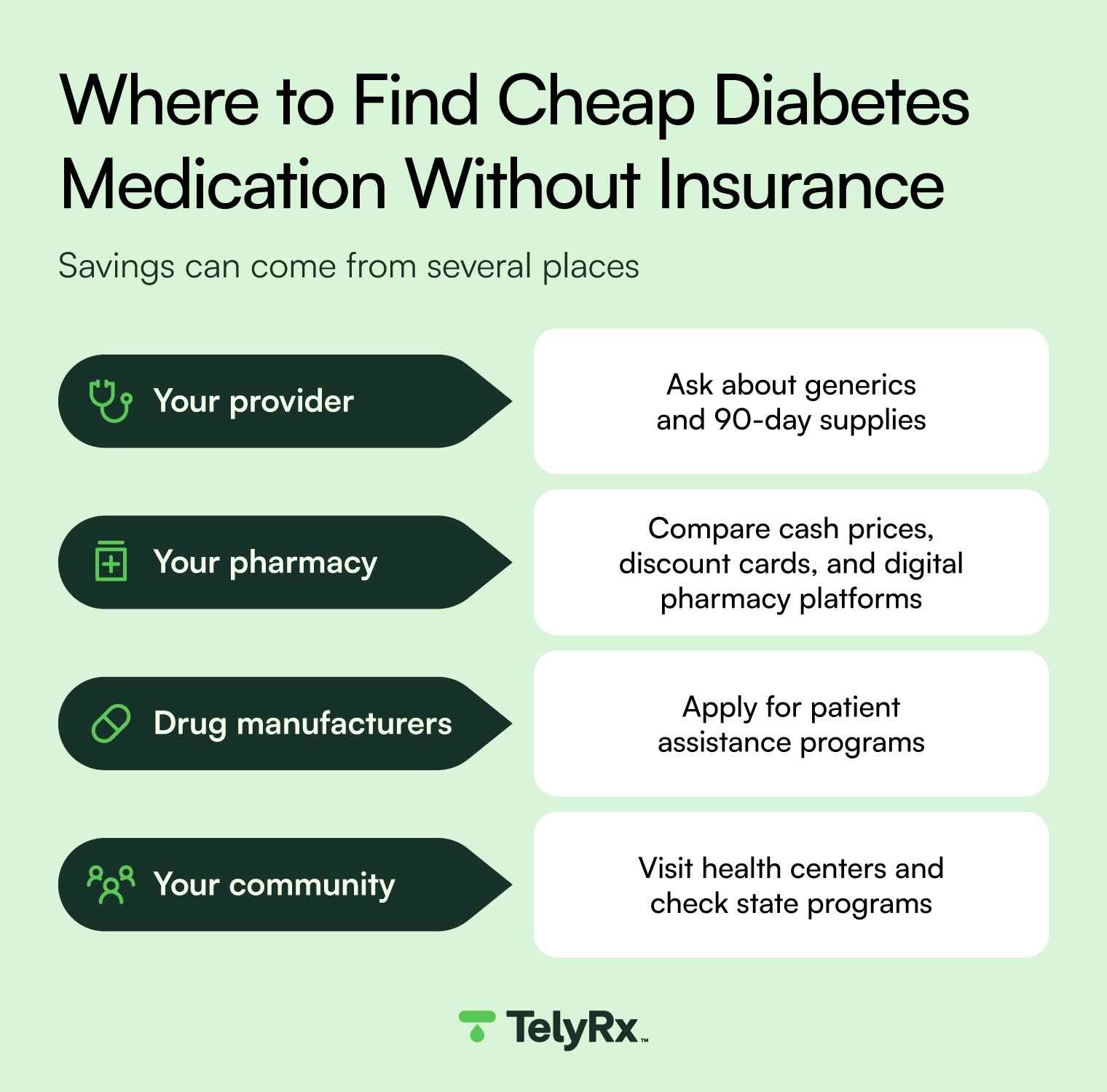
1. Ask Your Provider About Generics or Lower-Cost Drugs in the Same Class
Best for: People currently paying full price for a brand-name medication
Many brand-name diabetes medications have generic or lower-cost alternatives that work similarly. A provider may be able to determine whether it is safe for you to switch to the generic of your drug or to a cheaper medication in the same drug class.
For example, if you are prescribed a SGLT2 inhibitor, you may ask if it is appropriate to switch to another SGLT2 inhibitor. However, keep in mind that drugs are not interchangeable regardless of drug class, so only switch medications under provider supervision.
2. Compare Cash Prices and Use a Discount Card
Best for: People taking generic medications
Pharmacies set their own cash prices, and the same prescription can cost noticeably more at one pharmacy than at another nearby. Free prescription discount cards, such as the one from Drugs.com, show negotiated prices at local pharmacies. You present the card at the counter in place of insurance.
Discount card prices aren’t guaranteed and can change between refills, so check the price again before each fill. Note that discount cards may only be used at eligible pharmacies, as well as with existing prescriptions.
3. Use a Digital Pharmacy Platform With Upfront Pricing
Best for: People who want predictable pricing, home delivery, and may need a new prescription
Digital pharmacy platforms let you transfer your existing prescription as well as request a new prescription online if you are out of refills. Prices are also shown upfront to eliminate surprises.
For example, TelyRx lists cash prices up front and if you need a new prescription, TelyRx arranges for an independent, state-licensed provider to review your prescription request for a flat $22 fee. If the provider determines that the medication is safe and appropriate for you to take, they issue a new prescription which TelyRx fulfills at one of our pharmacies before shipping it to you.
Note that for ongoing care, you will still need to see a provider in person. For example, you will still need regular checkups and lab work, such as A1C tests, with a primary care provider to keep your treatment on track.
Interested in the diabetes medications discussed in this article?
4. Request a 90-Day Supply
Best for: People on a stable dose
Filling three months of medication at once often lowers the per-dose price, and many discount programs charge less for a 90-day fill than for three separate 30-day fills. Fewer refills also means fewer chances of running out between pharmacy trips. Keep in mind that to receive a 90-day refill, you will need a prescription authorizing it.
5. Apply for a Patient Assistance Program
Best for: Uninsured people with low to moderate income who take brand-name medications
Patient assistance programs (PAPs) are run by drug manufacturers and provide brand-name medications for free or at a reduced cost to people who meet income and insurance requirements.
Income limits vary by program and drug, and most programs base eligibility on household size and income compared with the federal poverty level. Tools like NeedyMeds let you search for programs by medication and check each one’s requirements.
Applications usually include a section your provider completes, and some programs ask for proof of income, such as recent pay stubs. Approval typically lasts a set period, often 12 months, before you need to reapply.
6. Visit a Community Health Center
Best for: People who need affordable medication and ongoing care in one place
Federally qualified health centers (FQHCs) receive federal funding to treat patients regardless of insurance status, and they charge on a sliding scale based on income. Many have on-site or partner pharmacies that offer discounted medication prices through the federal 340B program.
You can search for a nearby location with HRSA’s health center finder. Because services and pharmacy access vary from center to center, call ahead to ask what’s available.
7. Check State Programs and Coverage Options
Best for: People whose income has changed or who recently lost job-based coverage
Some states run State Pharmaceutical Assistance Programs (SPAPs) that help eligible residents pay for prescriptions, often focusing on older adults or people with certain health conditions.
Many uninsured adults also qualify for Medicaid, and others can find subsidized plans through the Health Insurance Marketplace that may cover diabetes medications at a lower cost.
Eligibility rules differ by state, and Marketplace enrollment is generally limited to the annual open enrollment period unless you have a qualifying life event, such as losing other coverage.
Steps to Get Diabetes Medication Without Insurance
If you decide to use a digital pharmacy platform, you can often get your diabetes medication without an in-person visit or insurance. The process usually follows a few steps:
- Choose your medication: Find the medication you need on a licensed digital pharmacy platform, check its price, and add it to your cart.
- Complete a health and physical attestation form: Share your medical history and current medications.
- Wait for provider review: A state-licensed provider reviews your request and, if appropriate, issues a prescription.
- Receive your medication: The platform’s own pharmacy or pharmacy partner fills approved prescriptions and ships them to your door.
TelyRx carries more than 500 FDA-approved medications, including diabetes treatments, and charges a flat $22 provider review fee per order instead of billing insurance. We work with independent providers licensed in your state for those who need new prescriptions. If transferring an existing prescription, the $22 fee is waived. We also fulfill all prescriptions in house at one of our two pharmacy locations.
Next-day prescription delivery is available for many orders, depending on your location and medication.
Getting medication this way can also reduce the hidden costs of a traditional refill, like provider visits, travel, and taking time off work.
Safety Tips When Choosing Lower-Cost Diabetes Medications
Switching to a cheaper medication or a new way of filling your prescription can save money, but a few precautions help keep your treatment safe and effective. Keep these tips in mind as you compare your options:
- Talk to your provider before switching medications: A lower-cost option may have different side effects or dosing. For example, sulfonylureas like glipizide carry a higher risk of low blood sugar than metformin.
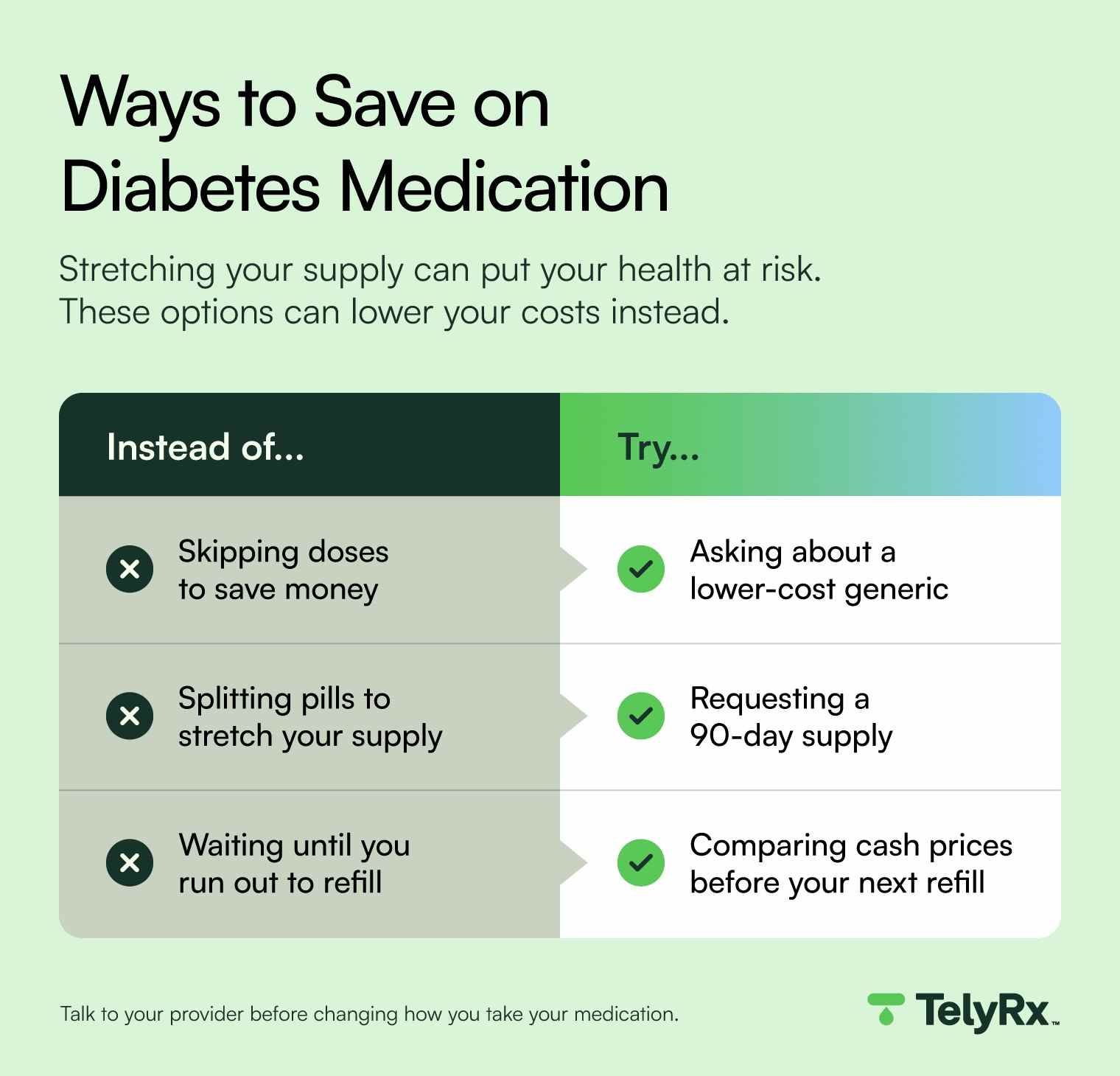
- Don’t skip, split, or ration doses: Stretching your supply by skipping or splitting doses can lead to complications that cost far more to treat. If you can’t afford a refill, ask your provider or pharmacist about lower-cost options before you run out.
- Know the signs of low blood sugar: Shakiness, sweating, confusion, and a fast heartbeat can indicate that your blood sugar has dropped too low, especially after starting a new medication. Contact your provider if these symptoms occur.
- Share your full medication list: Tell your provider and pharmacist about every medication and supplement you take. Some can interact with diabetes medications or affect your blood sugar.
- Keep up with regular checkups: Routine lab work, such as A1C tests and kidney function checks for people taking metformin, helps your provider confirm your treatment is working after any change.
Call your provider right away if you notice ongoing nausea, vomiting, unusual tiredness, or shortness of breath after starting or changing a diabetes medication.
Find Affordable Diabetes Medication That Works for You
The best diabetes medication is one you can afford to take consistently and safely, since even a low-cost prescription only works if you take it as prescribed. Comparing cash prices and asking about generics can help lower what you pay, and assistance programs may cover even more of the cost without cutting corners on your care.
TelyRx makes getting diabetes medication without insurance simple. Explore diabetes medication options with TelyRx today.
FAQs About Cheap Diabetes Medication
Can you buy metformin without a prescription?
No. Metformin requires a prescription in the U.S. But if you need a new prescription for metformin, TelyRx can help.
Are generic diabetes medications as effective as brand-name?
Yes. The FDA requires generic medications to contain the same active ingredient in the same strength as the brand-name version and to work the same way in the body. A generic may look different from the brand-name version because trademark laws don’t allow it to be an exact copy. Its inactive ingredients, such as fillers and dyes, can also vary, but these differences don’t affect how the medication works.
Is it safe to get diabetes medication online without seeing a provider in person?
Yes, as long as the platform meets standards like having third-party certification for safety, carrying FDA-approved drugs, requiring a prescription before any medication is shipped, and taking patient privacy seriously.
TelyRx meets these standards with LegitScript certification, more than 500 FDA-approved medications, HIPAA-level privacy protections, and helping patients who need a new prescription connect behind the scenes with an independent licensed provider before any medication is shipped.
You should still see a provider for regular checkups and lab work.
Do these savings options apply if I have Medicare?
Some do. Manufacturer coupons generally can’t be used with Medicare, but some patient assistance programs accept people with Medicare drug coverage.
Medicare Part D also limits annual out-of-pocket costs for covered drugs to $2,100 in 2026 and $2,400 in 2027. Once you reach that limit, you won’t pay out of pocket for covered Part D drugs for the rest of the year. If you have limited income, you may also qualify for Extra Help, which helps pay drug costs.