



Millions of people take medication regularly, but getting the next refill isn’t always guaranteed. In a new survey of more than 1,200 U.S. adults who manage an ongoing prescription, 58% said they had run out of, or rationed, doses to make their supply last longer.
For some, the consequences of these delays can be serious or even deadly. A closer look at the data reveals a maze of financial, administrative, and logistical barriers standing between patients and the medications they need.
Key Takeaways
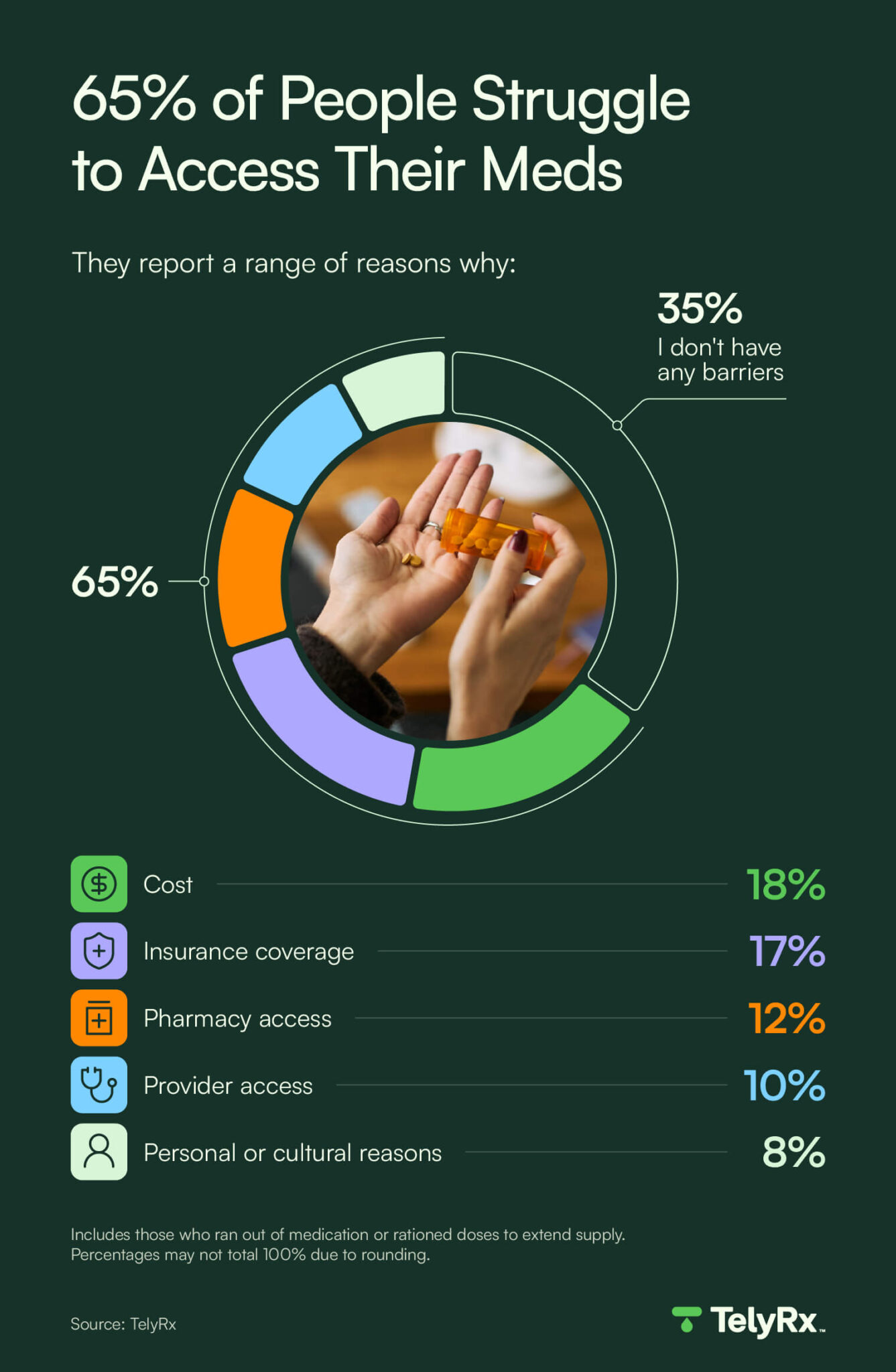
- 65% of respondents face barriers to consistently accessing their medication. Among those who have rationed or run out of a medication, 36% say the medication was out of stock or delayed, while 31% experienced insurance-related roadblocks.
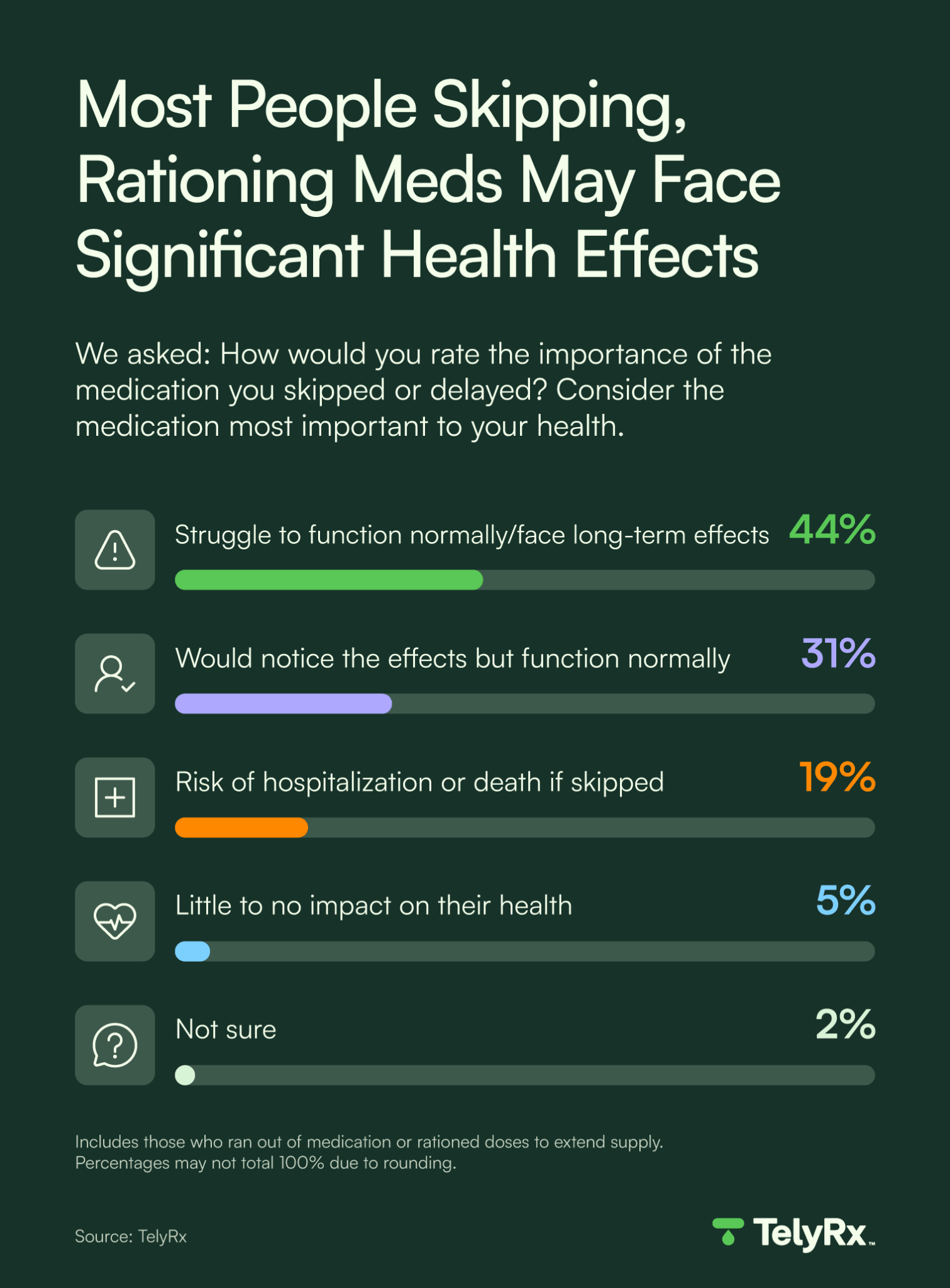
- For some, the stakes are especially high. 63% of those who skipped or rationed a medication said it was critical or significant to their health, including 19% who said going without it risks hospitalization or death.
- Medication access problems aren’t one-time events. 79% of people who have skipped a dose or run out of medication say it happened more than once in the last year, including 23% who ran out four or more times.
Among Patients Who’ve Skipped a Dose, 79% Have Done So More Than Once. Here’s Why.
Getting a prescription refill is often a multi-step process, and patients can hit a snag at almost any stage, from paying high costs for name-brand medication to time constraints and supply shortages. Among people who have run out of medication or skipped a dose, three reasons come up most often:
- 36% say their medication was out of stock or delayed at their pharmacy.
- 31% had an insurance delay, like waiting for a prior authorization or insurance approval.
- 30% were too busy or otherwise unable to pick up their refill.
When they encounter unexpected delays, most people go without their medication for up to a week. In fact, 59% say the longest they’ve gone without their medication was two to six days, and 28% say they’ve gone a week or longer. And for most, this isn’t a one-time problem: 79% have skipped a dose or run out of medication more than once in the past year.
When people are asked to name a single biggest barrier to consistently accessing their medications, though, no one issue stands out.
- 18% say medication or provider costs are their biggest barrier.
- 17% point to insurance coverage.
- 12% cite pharmacy access issues.
- 10% cite provider access issues.
- 8% name personal or cultural reasons, such as fear of judgment.
When medication costs more than someone can afford, prescriptions become another major expense on top of housing, food, and other bills. With the price of necessities rising quickly over the last few years, this leads some to skip doses to stretch their supply.
19% Who Skip or Ration Medication Risk Hospitalization or Death Without It
For some people, a missed refill is an inconvenience. For others, it’s dangerous. Among people who have skipped or delayed a medication, 63% say the prescription is important to their health, including 19% who say going without it could put them at risk of hospitalization or death.
“Rationing isn’t usually about a lack of understanding. Patients on critical medications typically know exactly what’s at stake,” says Ashley Robinson, PharmD, a pharmacy manager at TelyRx.
Even though stopping some medications suddenly can cause side effects or keep them from working as intended, 46% of people didn’t tell their provider right away the last time they skipped a dose. That includes 19% who never told their providers at all.
While some patients attributed this to expecting a refill soon without provider help (37%) or to not thinking it was necessary to disclose immediately (36%), many reported systemic obstacles that stopped them from seeking help:
- 24% were too embarrassed or nervous to tell their provider.
- 22% couldn’t afford the visit or the medication.
- 20% didn’t think their provider could help.
- 16% said it’s hard to reach their provider or get an appointment.
Why 28% of Patients Haven’t Changed Their Refill Routine After Missing a Dose
When faced with medication delays, most patients adapt as best they can. Since skipping a dose, 72% of people have made at least one change to refill their prescriptions more consistently. However, those adjustments are overwhelmingly logistical rather than systemic:
- 27% resolved concerns with their provider to get refills faster.
- 24% switched to a more convenient pharmacy.
- 23% made other changes to pick up their medication more easily (such as changing their work schedule).
Switching insurance providers, on the other hand, remains out of reach for almost everyone. Only 11% were able to switch insurance providers to get their medication more reliably. Coverage rules and pricing structures aren’t things patients can easily control on their own.
“People don’t always realize that insurance coverage changes can happen in the middle of the year,” Robinson says. “Medications covered by insurance might change costs, preferred pharmacies shift, and prior authorizations expire, forcing patients to restart the approval process even when nothing else about their health has changed. These unexpected hassles can slowly lead people to stop taking their medication.”
While systemic issues like drug shortages and insurance friction linger, a few proactive steps can lower the odds of running out of your prescriptions.
- Loop in your provider early: Reach out before you run low so your doctor can explore authorizing a refill or extending your supply in advance.
- Check for generic alternatives: Switching to generics could meaningfully reduce your out-of-pocket costs.
- Ask about a 90-day supply: Multi-month fills can lower per-pill costs and reduce pharmacy visits, leaving fewer chances to get caught short.
- Compare cash prices to copays: Cash-pay prices on common generics can sometimes beat insurance copays, especially on high-deductible plans.
- Switch to home delivery: If pharmacy hours or travel create a bottleneck, opting for affordable direct-to-door prescriptions lessens that friction.
TelyRx strives to streamline that final step. You can request routine maintenance medications online from over 500 FDA-approved options and have them shipped to your door within days.
Methodology
The survey was conducted by Centiment on behalf of TelyRx. The survey was fielded between July 8, 2026, and August 3, 2026. The results are based on 1,256 completed surveys. To qualify, respondents had to be U.S. adults aged 18+ who had ordered a prescription medication refill delivery for an ongoing medical condition within the last 12 months. (Short-term illnesses, such as infections, did not qualify.) Data is unweighted, and the margin of error is approximately ±3% for the overall sample, with a 95% confidence level.
The data of people who ran out of medication or skipped a dose is based on 734 completed responses. Data is unweighted, and the margin of error is approximately ±3.6%, with a 95% confidence level.