



Amid rising health care costs, medication shortages, and insurance coverage delays today, it’s difficult for many people with chronic health conditions to reliably access their medication. Two-thirds (69%) of people with chronic conditions say they have barriers to managing their medication, like high out-of-pocket costs or finding time to pick up their medicine.
This data comes from a TelyRx survey conducted by Centiment of 866 U.S. adults living with chronic conditions. The results show how many people with chronic conditions, especially younger adults, struggle to manage essential, life-sustaining medication due to factors outside their control.
Key Takeaways
- Two-thirds (69%) of people with chronic conditions have barriers to managing their prescriptions. Common barriers include high out-of-pocket costs (22%) and the need for in-person appointments that people feel are unnecessary (19%).
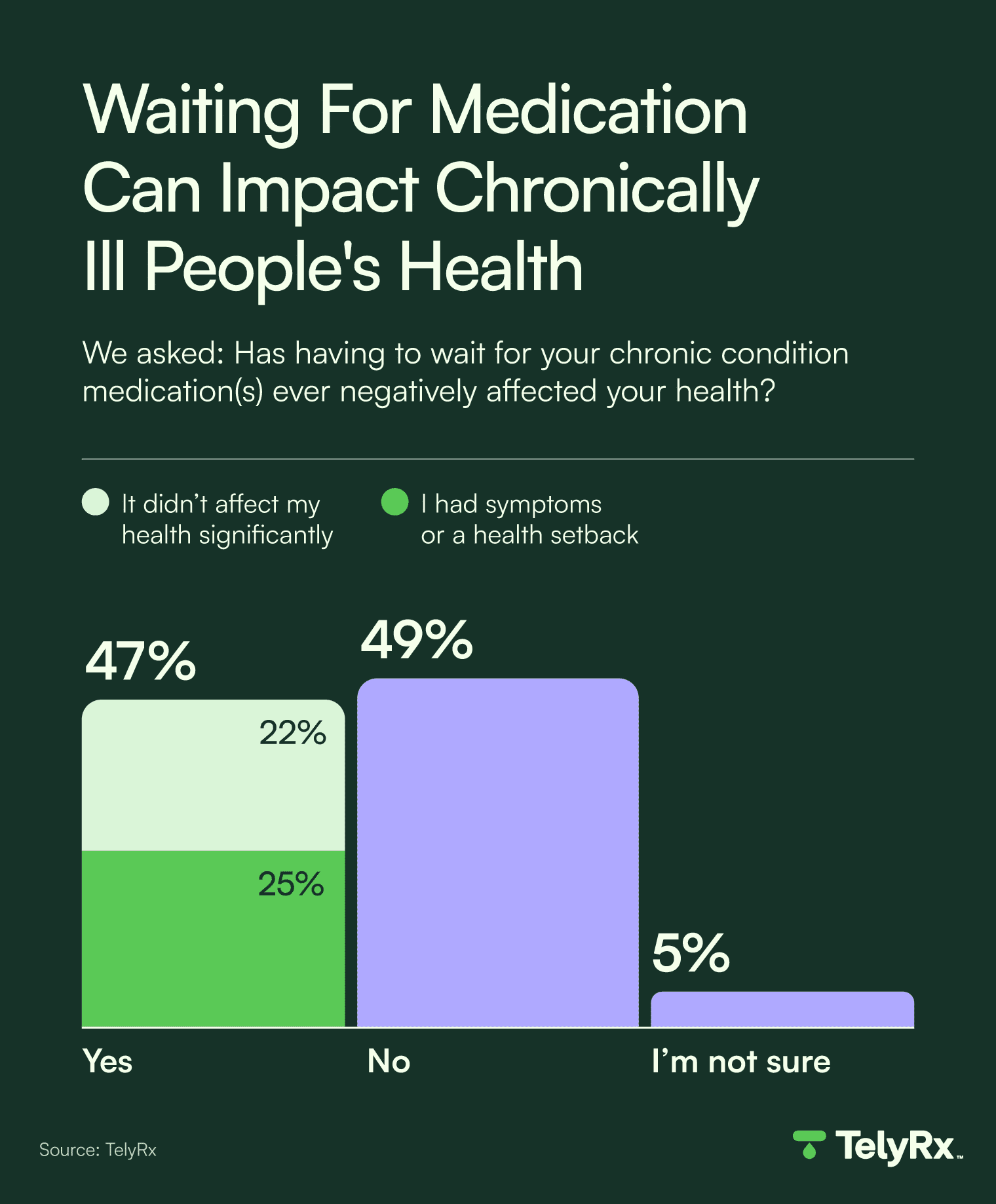
- Nearly half (47%) of people with chronic conditions have had adverse health effects while waiting to receive their medications. One in 4 (25%) experienced noticeable symptoms or a health setback.
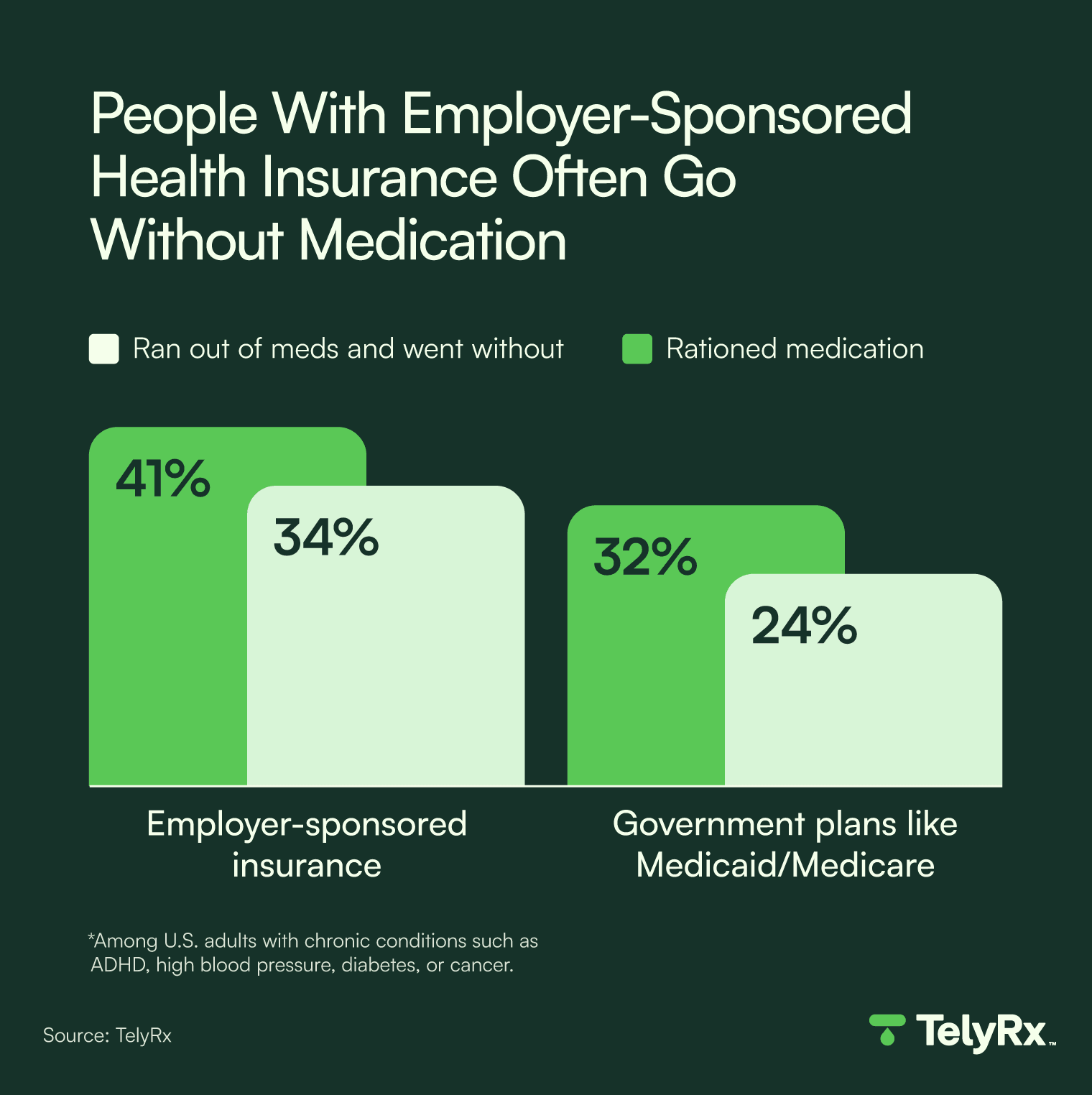
- Three in 5 (75%) of people with a chronic condition and whose insurance is provided by their or their partner’s employer have rationed or run out of medications and gone without, compared to 55% of people on Medicaid, Medicare, or other government insurance plans.
- Among people with chronic conditions who rationed their medications and went without, one third (32%) didn’t tell their doctor.
Nearly 2 in 3 Chronically Ill U.S. Adults Have Run Out of Meds
No matter their health status, it’s more difficult today than it was a few years ago for many people to see their physician or order a medication refill. Affordable Care Act (ACA) premium tax credits expired at the end of last year, and the prices of many common prescriptions are skyrocketing. As a result, monthly health care premiums have doubled this year for millions of people.
But even if they can afford their treatment, some people are experiencing medication delays and shortages. Drug shortages, physician shortages, and pharmacy deserts are impacting people across the country, especially in rural areas.
These problems are especially common for people with a chronic illness. The majority of people with a chronic illness say they have barriers to managing their prescriptions, including:
- High out-of-pocket costs: 22%
- Needing in-person appointments that feel unnecessary: 19%
- Finding the time to pick up prescriptions: 17%
- Medication supply issues: 17%
Of all obstacles faced, medication affordability is the biggest concern. 25% of people with chronic conditions have occasionally skipped buying groceries, paying a utility bill, or paying for another essential expense to afford their medication. One in 6 (15%) do this frequently.
For patients juggling several prescriptions at once, those costs can compound quickly.
“For individuals taking multiple medications, even a modest price increase, when spread across several prescriptions, can quickly add up to a significant monthly expense,” said Ashley Robinson, PharmD, a pharmacy manager at TelyRx. “With ongoing changes in insurance coverage and rising drug costs, many patients are experiencing pressure from both sides. This makes medication affordability an increasingly challenging issue.”
But budget is only part of the overall accessibility problem. Beyond the cost of their medication refill, other issues like struggling to see a doctor, facing out-of-stock notifications at the pharmacy, and general inconvenience increases the risk of running out of medicine. Around 1 in 3 (35%) of people with chronic conditions went without their medication entirely while they waited on a refill, and 28% resorted to rationing their medications to avoid running out.
Pharmacy distance, in particular, can be a notable barrier: 66% of people within five miles of their usual brick-and-mortar pharmacy face barriers to managing their prescriptions, rising to 76% for those living six miles or farther from a pharmacy.
Generally, people who live farther from a pharmacy are more likely to have rationed or run out of their medications, and to have experienced health effects from waiting for them.
Nearly Half of Those Who Waited for Medication Say It Impacted Their Health
Missing even one medication dose can have major health consequences for some people with chronic conditions. For example, patients who take beta blockers may experience serious withdrawal symptoms if the medication is stopped suddenly without a doctor’s supervision.
Nearly half (47%) of people with a chronic condition reported that delays in filling their prescription affected their health. One-quarter (25%) of people reported experiencing noticeable symptoms or a health setback.
Multiple factors can cause refill delays, such as affordability concerns, overall medication availability, and other accessibility issues. When access is a barrier, online pharmacy platforms, mobile clinics, home delivery, and other on-the-go options can help people refill their medication without having to drive for miles or rely on their local pharmacy’s supply. But not everyone knows about or uses these resources, and affordability can still be a struggle, even for those with reliable employer-sponsored insurance.
Having Employer-Provided Insurance Doesn’t Guarantee Medication Access
In theory, having health insurance through your employer means you have reliable access to the health care you need. In reality, it isn’t always that simple. People with employer-sponsored health insurance are consistently shown in TelyRx’s data to struggle more with accessing their medications than people with Medicaid or Medicare.
Three in 5 (60%) of people who have a chronic condition and whose insurance is provided by their or their partner’s employer have rationed or gone without their medications, compared to 47% of people on Medicaid, Medicare, or other government-sponsored insurance plans. But of the people who had accessibility issues to their medication, those with Medicaid/Medicare saw more health impact: Nearly two-thirds (62%) of people on Medicaid/Medicare have experienced negative health effects from waiting on medication, compared to 39% of people on employer-sponsored health insurance.
But no insurance type guarantees immunity from facing obstacles in managing chronic condition medication needs. Employer-sponsored health care plans vary widely, and they don’t always guarantee affordable, convenient access to medication. Even with insurance, if someone’s prescription isn’t covered, they may need to pay for their medication out of pocket.
Overall, people with health insurance provided by their employer are 30% more likely to experience barriers to managing their medication compared to people with Medicare or Medicaid. They’re especially more likely to have difficulty getting a doctor to renew a prescription or sign off on time (23% compared to 15% of people on Medicare/Medicaid).
On the other hand, Medicaid and Medicare coverage varies by state, so not all recipients have equal access to low- or no-cost medical treatment. And the most basic Medicare plan, Original Medicare, doesn’t include prescription drug coverage. That means affordability can still be a concern for individuals on these plans, and it’s also unclear to what extent recent Medicare cuts will affect recipients’ ability to access their medication.
“With ongoing changes in insurance coverage and rising drug costs, many patients are experiencing pressure from both sides. This makes medication affordability an increasingly challenging issue.”
Ashley Robinson, PharmD, TelyRx Pharmacy Manager
Coverage itself may also become less stable. Under new federal rules, some Medicaid enrollees will need to document work or a qualifying activity to maintain eligibility.
“Losing coverage is different from struggling to afford your medication. It can leave patients without access to essential care,” said Robinson. “With new Medicaid work requirement rules, some individuals may lose coverage not because they are unable to work, but because of complex requirements or administrative barriers. The patients with the greatest healthcare needs are often the ones most vulnerable to falling through the cracks of these changes.”
3 Tips To Confidently Manage Your Meds
If you’re managing a chronic health condition, you know how important your meds are. Consider these resources if you’re struggling to manage or afford your medications.
Look for local or digital pharmacy platforms that allow automatic refills and shipping.
If you struggle to access a local pharmacy or often forget to order medications, you may be able to have them automatically shipped to you either through your insurance provider or with a digital pharmacy platform.
Digital pharmacy platforms like TelyRx are a great option for affordable, next-day delivery if you do not have health insurance or simply do not want to deal with the hassle of insurance coverage nuances. If you know which medication you need, you can request a prescription through TelyRx. An independent provider licensed in your state reviews the request and if approved, TelyRx fills the prescription and ships the medication directly to you.
Tell your provider if you struggle to access your medication.
Around 1 in 3 (32%) people with a chronic condition who skipped or rationed their medications didn’t tell their doctor they were going without their full dose. But it’s important to speak to a provider if you can’t access your medication. If your provider is associated with a hospital system or community clinic, they might be able to offer financial assistance or discounts. Some also provide patient advocates, who can talk to you about your needs and help connect you with resources.
“There are many assistance resources available that patients may not know about, including patient assistance programs, discount cards, and sliding-scale clinics,” said Robinson. “The challenge is often not that support does not exist, but that patients are unaware of where to find it. My advice to every patient who says they cannot afford their medication is simple: ask first, assume second.”
Whether you use a digital pharmacy platform like TelyRx or a local assistance program, don’t be afraid to utilize every resource available to you.
Look up medication costs through your insurance provider in advance.
If you have health insurance, determine ahead of time whether your treatment is covered and how. Most major insurance carriers offer web portals or apps with price estimators so you can research potential costs ahead of time. Price estimators can be especially helpful for looking into expected medication coverage and costs.
Methodology
The survey was conducted by Centiment on behalf of TelyRx. The survey was fielded between June 18, 2026 and June 23, 2026. The results are based on 866 completed surveys. To qualify, respondents had to be U.S. adults aged 18+ who are currently managing at least one chronic health condition and regularly use prescription medication to manage it. Data is unweighted, and the margin of error is approximately ±3% for the overall sample with a 97% confidence level.