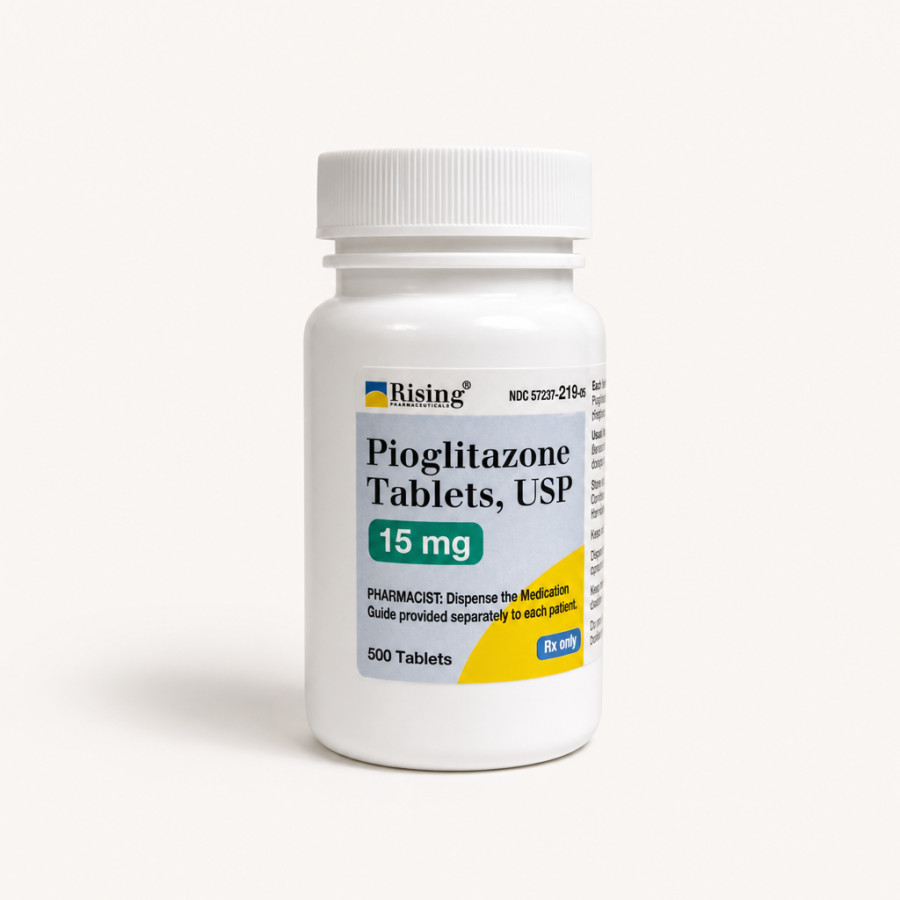
Pioglitazone tablets (Actos®) are a prescription medication commonly prescribed to help improve blood sugar control in adults with type 2 diabetes. They belong to a drug class known as thiazolidinediones (TZDs), which work by making the body more sensitive to insulin. This helps improve glucose uptake into muscles and fat while lowering the amount of sugar produced by the liver.
Pioglitazone is often prescribed in combination with diet and exercise, and it may be used alone or together with other diabetes medications such as metformin, sulfonylureas, or insulin. While not a cure for diabetes, pioglitazone helps reduce blood sugar levels and can contribute to lowering the risk of diabetes-related complications when used as part of an overall treatment plan.
How to Use:
Typically prescribed as one daily tablet, with or without food.
Dosing often begins at 15 mg or 30 mg once daily, and may be increased up to a maximum of 45 mg daily based on blood sugar response and tolerability.
It may take several weeks to see the full blood sugar–lowering effect.
Take pioglitazone exactly as prescribed and continue therapy even if blood sugar readings begin to improve.
Do not stop or adjust the dose without guidance from your healthcare provider.
Black Box Warning:
Pioglitazone tablets carry a boxed warning regarding the risk of congestive heart failure. Thiazolidinediones, including pioglitazone, may cause or worsen heart failure in some patients. Pioglitazone should not be used in patients with established severe heart failure (NYHA Class III or IV) and should be used with caution in those with milder heart failure. Patients should promptly report symptoms such as rapid weight gain, swelling in the ankles or legs, or shortness of breath.
Important Notes and Warnings:
Common side effects may include weight gain, swelling, headache, muscle pain, or sore throat.
Fluid retention and edema are possible; this risk is higher if combined with insulin therapy.
Pioglitazone may increase the risk of bone fractures, particularly in women.
There have been reports of bladder cancer with long-term use; patients should inform their provider if they have a history of bladder cancer or unexplained blood in the urine.
Not recommended for patients with active liver disease; periodic liver function tests may be performed.
Inform your healthcare provider if you are pregnant, planning pregnancy, or breastfeeding before starting therapy.
Side effects may include headache, weight gain, sore throat, muscle pain, or signs of a common cold. If severe side effects are experienced, such as swelling in the arms or legs, chest pain, bone pain, or changes in eyesight, then medical attention must be sought immediately.