

TelyRx pharmacist Ashley Robinson, PharmD, answers frequently asked questions about managing diabetes, from blood sugar numbers and food labels to medication side effects and foot care.
In this article, our pharmacist answers:
- What do my blood sugar numbers actually mean?
- How often should I check my blood sugar?
- What’s the easiest way to check my blood sugar?
- What should I do if my blood sugar drops too low?
- How do I read a food label for blood sugar?
- How do I check my feet at home?
About Our Pharmacist
Ashley Robinson, PharmD, is the Pharmacy Manager at TelyRx’s Clearwater location, where she oversees daily operations, ensures regulatory compliance, and focuses on patient safety and care.
Robinson earned her Doctor of Pharmacy from LECOM Bradenton. Before joining TelyRx, Ashley spent three years in community pharmacy, where she built strong patient relationships through personalized medication management.
If you or someone you love has diabetes, you’re far from alone. According to the CDC, about 40 million Americans do. Whether you’re managing it yourself or supporting someone else, you know that most of the day-to-day care happens between doctor’s visits: in the grocery aisle, at the kitchen table, upon waking, and before bed. These everyday scenarios are where questions tend to pop up most.
To clear up some of the confusion, we turned to Ashley Robinson, PharmD, the Pharmacy Manager at our Clearwater, Florida pharmacy, to answer the diabetes questions she hears most. Feel free to share her expertise with anyone you feel might benefit from it.
Q: What do my blood sugar numbers actually mean?
A: A blood sugar reading is measured in milligrams per deciliter (mg/dL) and tells you how much glucose (sugar) is in your blood at any given moment. This number naturally fluctuates throughout the day, rising after you eat and dropping between meals. As a result, a reading taken before a meal will look quite different from a reading taken after one.
While a “healthy” blood sugar varies a bit from person to person, the American Diabetes Association suggests these target ranges for many adults:
- Before meals: 80 to 130 mg/dL
- One to two hours after the first bite of a meal: under 180 mg/dL
A reading above these ranges means your blood sugar is running high. Anything under 70 mg/dL is considered low and warrants immediate treatment.
Q: How often should I check my blood sugar?
A: The answer depends on the medication routine you’re currently following. Some meds can cause your blood sugar to drop too low, while others rarely have this effect. Your provider can help you set a testing schedule that’s right for you, but here are some general guidelines:
- If you take insulin or a sulfonylurea (like glipizide or glimepiride): Both can cause low blood sugar, so checking is often part of the daily routine. The ADA recommends people who take several insulin shots a day check their blood sugar up to 6 to 10 times a day.
- If you take metformin alone: Metformin rarely causes low blood sugar, so if you’re on this medication, the ADA notes that daily checks aren’t always needed.
Common times to check:
- First thing in the morning, before breakfast
- Before lunch and dinner
- One to two hours after meals
- Before exercise
- Any time you notice signs of low blood sugar, such as shakiness, sweating, a racing pulse, sudden hunger, or feeling foggy or confused
I often encourage patients to check blood sugar levels whenever something significant changes, such as adding a new medication, taking a different dose, trying out a new workout routine, or when you’re down with an illness.
Q: What’s the easiest way to check my blood sugar?
A: The methodology for checking blood sugar has evolved a lot in the last decade or so. You can check the old-fashioned way with a fingerstick meter, like the OneTouch Verio® Flex, and this will give you a single, on-the-spot reading. Or you can opt for a continuous glucose monitor (CGM), like the Dexcom® G7 or FreeStyle Libre® 3.
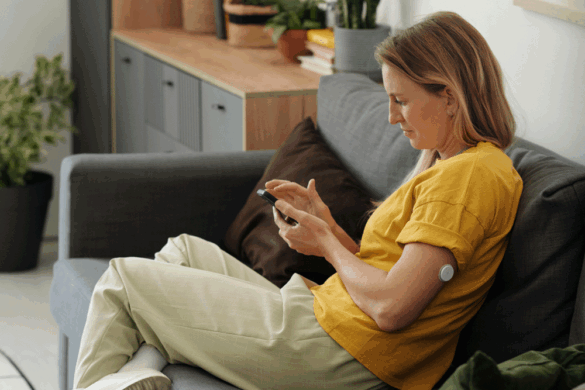
A CGM is a small sensor that sits on the back of your upper arm and checks your glucose day and night, so you no longer have to prick your finger for routine checks. Your readings show up on your phone, along with arrows that tell you whether your numbers are rising or falling. With a CGM, you can also set alerts that signal blood sugar highs and lows, including while you’re sleeping.
Q: What should I do if my blood sugar drops too low?
A: Act right away. Shakiness, sweating, a racing heart, sudden hunger and feeling foggy or confused can all be signs of low blood sugar.
The ADA’s go-to approach is the 15-15 rule:
- Have 15 grams of fast-acting carbs, like half a cup of juice or regular (not diet) soda, a tablespoon of sugar or honey, or 3 to 4 glucose tablets.
- Wait 15 minutes, then check again.
- Still under 70 mg/dL? Repeat.
Once your blood sugar is back above 70 mg/dL, eating a snack that contains protein and slow-acting carbs (like cheese and crackers or a peanut butter sandwich) can help keep it there. If it stays low after a few rounds, or your symptoms get worse, it’s imperative that you seek medical help right away.
Q: How do I read a food label for blood sugar?
A: Food labels contain a lot of numbers, but only a few of them really matter in regard to blood sugar. Here’s the fastest way to get to the information you need:
- Start at the very top of the label with Serving Size. Every number below this refers to one serving only, and plenty of packages contain two or more.
- Next, find Total Carbohydrate. This is the number that affects blood sugar the most. It includes starches, not just sugar, which is why “sugar-free” cookies can still raise blood sugar.
- Right below this, look for Dietary Fiber. More fiber is usually a good sign, since it slows digestion.
- And here’s one final tip: When choosing between two similar foods, compare the grams of Total Carbohydrate per serving. The food with fewer grams will usually have less effect on your blood sugar, provided the serving sizes are the same.
Q: How do I check my feet at home?
A: Once a day, in good lighting, take a close look at the tops and bottoms of your feet, your heels, and the spaces between your toes. Bedtime or right after a shower works well, since your shoes and socks are already off. Doing a daily foot check matters because diabetes can slow healing and dull sensation in the feet, so a small cut or blister can go unnoticed longer than it should. And if the bottoms of your feet are hard to see, using a hand mirror or asking a family member for help are both good options.
The CDC suggests keeping an eye out for:
- Cuts, blisters or sores
- Redness or swelling
- Changes in your toenails
If you notice tingling, burning or pain, a sore that isn’t healing, an ingrown toenail, or any change in the color, shape or temperature of your feet, don’t wait for your next appointment to bring it up. These are all signs to contact your provider right away.
For dry, rough skin, using the right type of lotion can help. Apply it to the tops and bottoms of your feet, but not between your toes, where the CDC notes it could lead to infection. For skin that stays dry and rough, a provider may prescribe ammonium lactate 12% lotion (generic for AmLactin®), which moisturizes and gently exfoliates.
Your Next Steps
Managing diabetes day to day should never feel like a moving target. Tracking your numbers, spotting low blood sugar early, and building a few simple habits takes a lot of the guesswork out of it.
Through TelyRx, you can request prescriptions for a variety of type 2 diabetes medications, CGM sensors and testing supplies, with no waiting for an in-person appointment or pharmacy errands required. And if you ever have a question about a medication you’re already taking, our pharmacy team is just a phone call or email away.