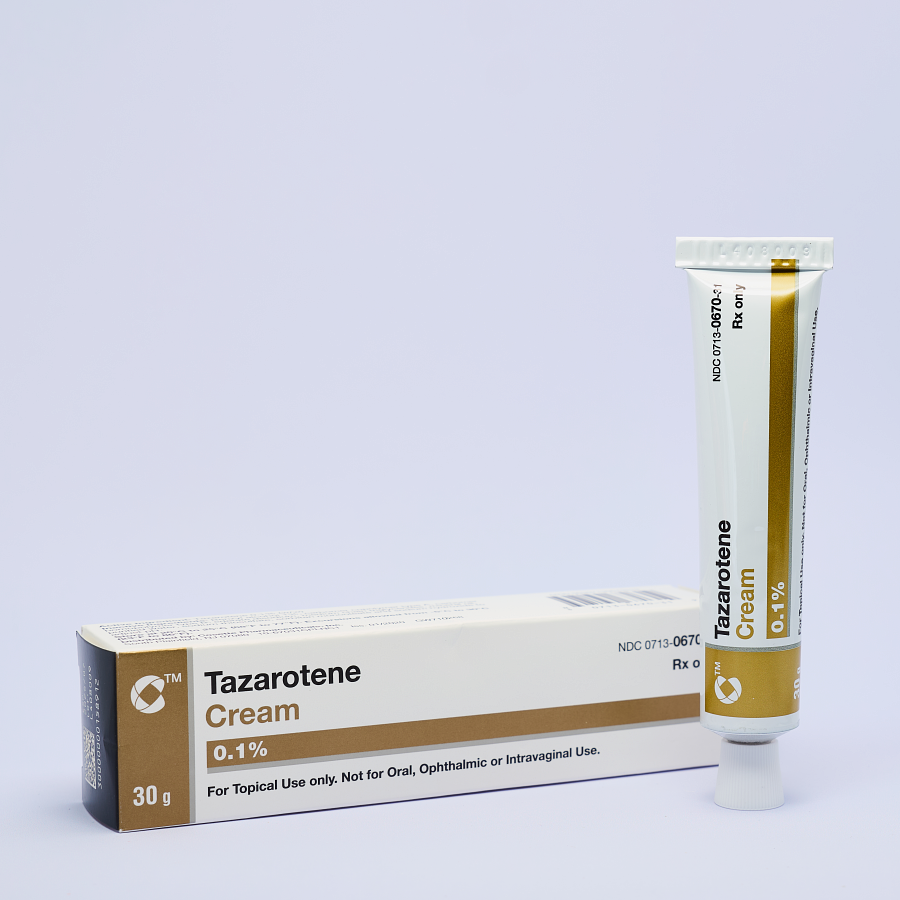
How It Works
Tazarotene works by binding to retinoic acid receptors (RARs) in the skin. By targeting RARs, the drug can influence how your skin behaves and reacts.
Psoriasis causes skin cells to multiply too quickly and create thick, scaly plaques. Tazarotene slows down the multiplication process to thin plaque and decrease redness. Tazarotene also works to suppress inflammatory chemicals in the skin that create painful cysts and the red, itchy rashes associated with psoriasis.
For acne and anti-photoaging treatments, tazarotene increases the speed at which dead skin cells are shed from the body. This helps prevent older skin cells from clogging pores and brings newer skin cells to the surface. It also thins the lining of pores to allow oil to flow more freely, helping to prevent the formation of blackheads and whiteheads.
| Quick Facts | |
|---|---|
| Common Brands | Tazorac, Arazlo, Fabior, Avage |
| Drug Class | Topical retinoid |
| Generic Status | Generic version available |
| Availability | Prescription only |
Dosing
Tazarotene is a potent topical medication, so the “low and slow” approach is advised for application. Using more lotion or cream than needed will not speed up results, but can increase the risk of side effects like chemical burns and severe peeling.
- Standard application: Providers generally recommend applying a thin film of tazarotene on the affected area(s) once a day in the evening.
- Preparation: Before applying topical tazarotene, standard guidelines recommend cleaning your skin with a gentle, non-medicated cleanser and drying it completely. Applying retinoid topicals to damp skin can interfere with absorption and cause irritation.
- Dosage strength: Tazarotene is available in strengths of 0.05% and 0.1%. Patients typically begin treatment with the lower-strength formulation to assess their skin tolerance.
- Surface area warning: Per standard guidelines, people with psoriasis are advised to avoid covering more than 20% of the surface area of their body with tazarotene.
Note: Dosing information below is educational only. Your prescribing physician will determine your specific dose based on your individual health needs. Always follow your healthcare provider’s instructions for exact dosing.
Uses
FDA-Approved Uses
Tazarotene is FDA-approved for the following:
- Treating active breakouts of acne vulgaris and preventing new breakouts
- Reducing the thickness, scaling, and redness of psoriasis plaque patches
- Reducing the fine lines and age spots (lentigines) on the face that occur due to photoaging
Off-Label Uses
You may see tazarotene cream and lotion prescribed for uses that are not “FDA-approved.” This is a common and legal practice called “off-label” prescribing, where a doctor uses their clinical judgment to prescribe a drug for a different (but well-researched) purpose.
Common off-label uses for tazarotene currently found in clinical research and practice include:
- Acne scarring: Tazarotene lotion and cream can help smooth the texture of shallow, atrophic acne scars.
- Keratosis pilaris: Some providers prescribe tazarotene off-label to exfoliate keratin plugs and treat keratosis pilaris, a condition that creates a “chicken skin” texture on the arms and legs.
- Hyperpigmentation: Doctors may prescribe tazarotene to fade melasma or the post-inflammatory hyperpigmentation left behind when acne heals.
Get Savings Updates for Tarazotene Cream
Join our mailing list for exclusive deals and more.
Side Effects
Common Side Effects
Tazarotene is intended to remain on the skin surface, so most side effects are localized to the area of application. Common side effects from using tazarotene include:
- A pinkish tint on the skin (dubbed “The Retinoid Glow”)
- Flaking of the skin, especially around the mouth and nose
- Dryness and itching around the treated areas
- Mild burning or stinging at the application site
Serious Side Effects
Serious side effects are rare, but it’s important to know what to look for if they do occur.
Serious side effects from using tazarotene topical medication may include:
- Severe skin irritation: Tazarotene can cause severe irritation on the skin, with symptoms such as blistering, crusting, or raw “weeping” skin.
- Extreme photosensitivity: Even with minimal sun exposure, people who use tazarotene have a higher risk of severe sunburn.
- Deep grooves or discolorations on skin: Some people who use tazarotene report unusual changes to skin pigmentation or texture.
- Severe allergic reaction: Tazarotene poses a risk of anaphylaxis for people who are allergic to one or more of the drug’s ingredients.
Call your doctor immediately if you experience any concerning or prolonged symptoms.
Pharmacist Tips
Wait Before Application
Per standard guidelines, you are advised to wash your face prior to application, then wait at least 20 minutes before using tazarotene. This helps reduce the risk of stinging.
Try the Sandwich Method
If you have sensitive skin, your doctor may recommend a sandwich-style layering method with a base of light moisturizer, a middle layer of tazarotene topical, and a top layer with more moisturizer. This can help alleviate side effects without interfering with its effectiveness.
Use Sun Protection
Tazarotene has been shown to significantly increase the risk of UV-related skin damage. It is advised to use a broad-spectrum sunscreen of SPF 30 or higher every time you plan to go outside, even on cloudy days.
Avoid Hot Spots
It is not recommended to apply tazarotene to the corners of the nose or mouth, or around the eyelids. The medication tends to pool around these areas and cause irritation.
Proper Hygiene is Key
Thoroughly washing your hands before and after use is recommended every time you use tazarotene topical cream or lotion.
Drug Interactions
Most significant interactions with tazarotene involve other topical medications that increase skin sensitivity. Known interactions with tazarotene include:
- Benzoyl peroxide: Benzoyl peroxide can reduce the effectiveness of tazarotene. It is not recommended to use both at the same time, though your doctor may advise using one in the morning and the other in the evening.
- Exfoliating acids: It is advised to avoid salicylic acid, glycolic acid, lactic acid toner, and other exfoliating acids while using tazarotene. Combining these topicals can compromise the skin barrier.
- Photosensitizing drugs. Certain oral medications can further increase the risk of severe sunburn if you’re using tazarotene. These medications include doxycycline and other tetracyclines, thiazide diuretics, and sulfonamides.
- Astringents: Astringent products with a high alcohol content can cause excessive dryness when combined with tazarotene.
Always give your doctor and pharmacist a complete list of all your medications, vitamins, and supplements to check for potential interactions.
FAQs
Why is tazarotene the only topical retinoid strictly rated Pregnancy Category X?
Tazarotene is strictly contraindicated for pregnancy because clinical data suggests it poses a risk of causing birth defects. Per standard guidelines, patients should have a negative pregnancy test within 2 weeks of beginning tazarotene treatment and use birth control during the entire course.
Is tazarotene stronger than tretinoin (Retin-A)?
Tazarotene 0.1% has been shown to be more potent and faster-acting than tretinoin for acne and sun damage. However, higher potency can also mean a greater risk of causing side effects.
Can I use tazarotene for acne scars and wrinkles (photoaging)?
Yes, standard guidelines state you can use tazarotene for acne scars and photoaging. The drug is FDA-approved to treat the lines and age spots brought on by prolonged UV exposure.
What is the difference between tazarotene cream and gel?
Tazarotene creams and gels are used to treat the same skin conditions, but they differ in skin type suitability. Tazarotene cream has moisturizing properties for healing dry skin, whereas gels tend to be better suited for oily skin.
Does tazarotene cause a “purge” phase?
Yes, tazarotene can cause a “purge” phase as cell turnover increases and small bumps called microcomedones are pushed to the surface of the skin. This can create the appearance of a new whitehead breakout, and usually resolves on its own within 4 to 6 weeks.
Why shouldn’t I use tazarotene at the same time as benzoyl peroxide?
It is generally accepted that you shouldn’t use tazarotene at the same time as benzoyl peroxide. The latter has “oxidizing” properties that can render tazarotene and other retinoids ineffective.
Can I wax or get laser hair removal while using tazarotene?
Generally no, it is not advised to wax or get laser hair removal while using tazarotene. The medication makes the skin more sensitive to burns, tears, and hyperpigmentation. Standard guidelines state patients should stop using tazarotene at least 5 to 7 days before waxing or laser hair removal.
Is tazarotene safe to use on sensitive skin or rosacea?
Tazarotene is a potent retinoid that can be used on sensitive skin and rosacea, but caution and gradual introduction are recommended. Consult with a healthcare provider for more information.
Does tazarotene help with psoriasis plaques?
Yes, tazarotene can help with psoriasis plaques. The medication is FDA-approved and used to treat psoriasis plaques. Tazarotene may be used to treat psoriasis plaques alone, or used in combination with other drugs.
Can I use moisturizer before applying tazarotene?
Yes, you can use moisturizer before applying tazarotene, but extra measures are advised to prevent dryness and irritation. Providers generally recommend the “sandwich method”: apply a base layer of moisturizer and let it dry for at least an hour, then apply a middle layer of tazarotene, and finish with a top layer of moisturizer.
Why is tazarotene sometimes prescribed for “sun damage”?
Tazarotene is sometimes prescribed for sun damage because it is a potent retinoid medication that helps speed up cell turnover. This can reduce the appearance of wrinkles and dark spots. Treating sun damage is one of tazarotene’s FDA-approved uses.
What is the difference between Tazorac and Arazlo?
Tazorac is a brand-name topical containing 0.1% tazarotene in the form of a gel or cream. Arazlo is a newer brand-name lotion with 0.045% tazarotene potency and may be gentler on the skin than Tazorac.
Can I use salicylic acid or glycolic acid toners with tazarotene?
Per standard guidelines, you can use salicylic acid or glycolic acid toners with tazarotene, but extreme caution is advised. Dermatologists routinely recommend alternating days and times, such as toner in the morning and tazarotene in the evening, to reduce the potential for irritation and redness.
How long does it take to see results for acne?
People who use tazarotene often see their symptoms improve within 4 weeks, but it typically takes 12 to 16 weeks for the drug to take full effect.
Can I use tazarotene if I am allergic to fish?
Standard tazarotene topical medication does not contain fish-derived ingredients, but it is recommended to check the active and inactive ingredients of a medication if you have allergies.
Comparable Medications
Tazarotene, Tazorac, Arazlo, Tretinoin, Adapalene, Calcipotriene, or Clobetasol?
Tazarotene is a potent retinoid topical used to treat plaque psoriasis, eczema, and spots from aging or sun damage. Your doctor may recommend this medication or a tazarotene alternative, depending on your medical history and the nature of your symptoms. Alternatives to tazarotene include:
Tazorac
Tazorac is a brand-name topical cream and gel containing tazarotene as its active ingredient.
Arazlo
Arazlo is a brand-name formulation of tazarotene (0.045%) used as a lotion to treat acne. Due to its lower potency, Arazlo may be preferred for milder cases or people with sensitive skin.
Tretinoin
From $43.99
Sold under the brand name Retin-A, tretinoin is a commonly prescribed retinoid available in a range of strengths. It is commonly used to treat acne.
Adapalene and Benzoyl Peroxide
From $29.99
Adapalene, the generic for Differin, is a retinoid available in a prescription strength and over the counter. It is not as potent as tazarotene.
Calcipotriene Cream
From $119.99
Calcipotriene, the generic for Dovonex, is a vitamin D analogue used to treat psoriasis. It does not treat acne or aging marks like tazarotene, but may be prescribed for use together.
Clobetasol Cream
From $23.99
Clobetasol is a powerful corticosteroid that quickly reduces inflammation and scaling from plaque psoriasis. Doctors may prescribe clobetasol and tazarotene together to treat plaque psoriasis.
We Have Tarazotene Cream in Stock. Get Yours Today!
Important: Information on this page is for educational purposes only. Prescribing decisions are made by independent, licensed providers. TelyRx operates technology-enabled pharmacies and a telehealth platform that connects patients with board-certified licensed providers. Prescriptions, when provider-approved and issued, are filled and shipped by TelyRx-affiliated pharmacies. We do not employ physicians or make prescribing decisions. Learn more about our editorial standards here.