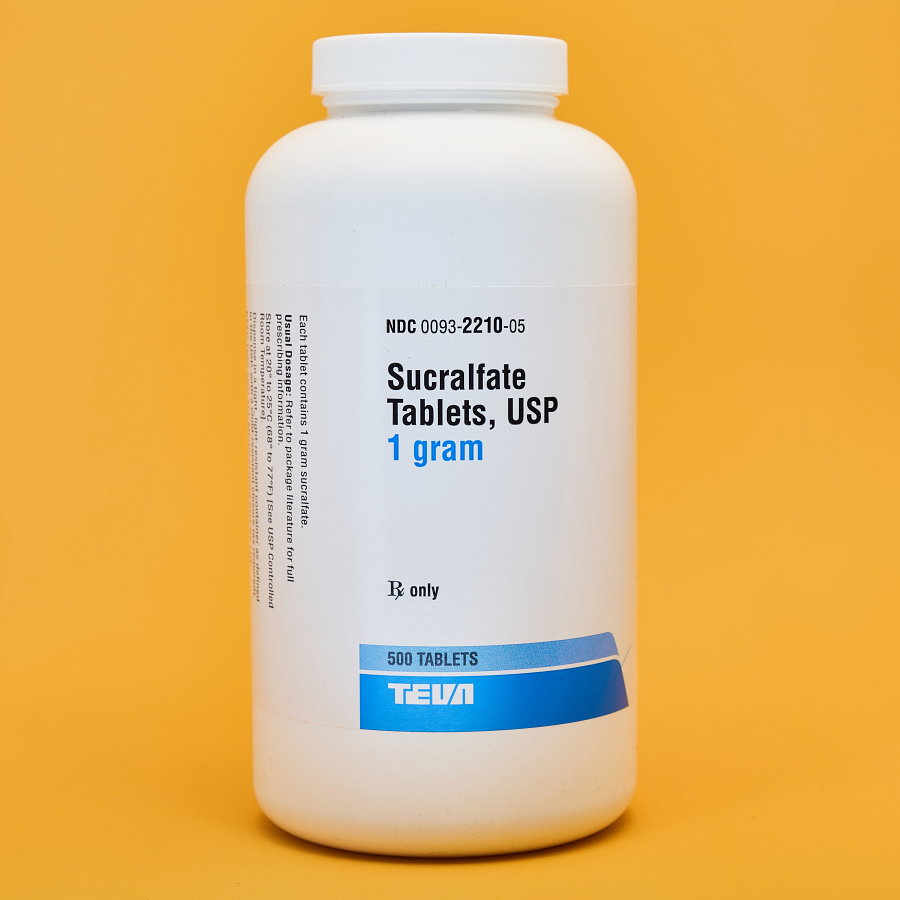
How It Works
Sucralfate works by forming a protective coating over the duodenal ulcer. This creates a barrier that shields the ulcer from further damage so it can heal. Sucralfate begins to take effect within hours, though full healing of the ulcer may take weeks to months.
In addition to treating an active ulcer, sucralfate may be prescribed as a maintenance therapy to prevent recurring ulcers.
| Quick Facts | |
|---|---|
| Common Brands | Carafate |
| Drug Class | Antiulcer |
| Generic Status | Generic is available |
| Availability | Prescription only |
Dosing
Sucralfate is available as oral tablets and a liquid suspension. Sucralfate dosing depends on whether you’re taking sucralfate to treat an active ulcer or to prevent recurring ulcers.
- Active duodenal ulcer: The recommended dose is 1 gram by mouth four times per day for 4 to 8 weeks.
- Maintenance therapy: The recommended dose is 1 gram by mouth two times per day.
It’s recommended to take the medication on an empty stomach with a full glass of water.
Note: Dosing information below is educational only. Your prescribing physician will determine your specific dose based on your individual health needs. Always follow your healthcare provider’s instructions for exact dosing.
Uses
FDA-Approved Uses
Sucralfate is FDA-approved for:
- Short-term treatment (up to 8 weeks) of active duodenal ulcers (tablets and liquid suspension)
- Maintenance therapy to prevent recurring duodenal ulcers (tablets only)
Off-Label Uses
You may see sucralfate prescribed for uses that are not “FDA-approved.” This is a common and legal practice called “off-label” prescribing, where a doctor uses their clinical judgment to prescribe a drug for a different (but well-researched) purpose.
Sucralfate may be used off-label for indigestion, gastroesophageal reflux disease (GERD) during pregnancy, and other stomach or gastrointestinal conditions, as determined by a healthcare provider.
Get Savings Updates for Sucralfate
Join our mailing list for exclusive deals and more.
Side Effects
Like all medications, sucralfate can cause side effects. Some common side effects may improve over time as your body adjusts to the medication. Other side effects may be serious and require medical attention.
Common Side Effects
- Constipation
- Dry mouth
- Upset stomach
- Dizziness
- Diarrhea
- Nausea
- Vomiting
- Gas
- Itching
- Headache
- Rash
- Drowsiness
Serious Side Effects
Serious side effects are rare, but it’s important to know what to look for if they do occur. Stop using sucralfate and call your doctor immediately if you experience:
- Severe allergic reactions: Symptoms include swelling of the face, lips, tongue, or throat; difficulty breathing or swallowing; racing heart; severe rash or itching; and/or fever.
- Intestinal blockage: Sucralfate may cause a bezoar, which is a blockage formed from partially digested material. Symptoms include a lack of appetite, feeling full after a small amount of food, stomach bloating or pain, nausea, vomiting, or blood in the stool.
- Aluminum accumulation: Sucralfate contains trace amounts of aluminum. While the kidneys usually filter this out, people with impaired kidney function may have an increased risk of high aluminum levels. Symptoms include confusion, muscle weakness, and bone pain.
Call your doctor immediately if you experience any concerning or prolonged symptoms.
Pharmacist Tips
Take With Food
It’s recommended to take sucralfate on an empty stomach. Take the medication at least one hour before eating or at least two hours after eating.
Wait 30 Minutes Before Taking Antacids
If your doctor recommends taking an antacid to help with ulcer pain, it’s recommended to take your antacid at least 30 minutes before or after your sucralfate dose.
Take Other Medications At Least 2 Hours Apart
Sucralfate can interact with some medications. To prevent interactions, the doses of these medications should be timed at least 2 hours apart from sucralfate. Share a full list of all the medications you’re taking with your doctor so they can advise you if you need to change the timing of any of your doses.
Store At Room Temperature
Both the tablet and liquid forms of sucralfate should be kept at room temperature between 68°F and 77°F (20°C to 25°C). Store the medication in a cool, dry place.
Monitor Blood Sugar Levels
The liquid suspension may have an impact on blood glucose levels. People with diabetes may be advised to monitor their blood sugar levels more frequently.
Shake The Liquid Suspension Well Before Using
If you’re prescribed the oral liquid, it should be shaken well before each dose.
Don’t “Double Up” A Missed Dose
If you accidentally miss a dose of sucralfate, take it as soon as you remember, unless it is almost time for your next dose. In that case, skip the missed dose and take your next dose at the usual time.
Drug Interactions
Certain medications and substances can interact with sucralfate, potentially altering how it works or increasing the risk of side effects.
For example, sucralfate is known to attach to certain medications within the stomach, which can significantly hinder the body’s ability to absorb those other drugs. Because of this binding effect, it is generally recommended that the following oral medications be taken at least two hours apart from sucralfate:
- Heartburn and acid reflux medications such as cimetidine or ranitidine
- Heart medications, including digoxin or quinidine
- Antibiotics such as ciprofloxacin, levofloxacin, ofloxacin, and tetracycline
- Antifungal medications such as ketoconazole
- Thyroid hormone replacement medications, including levothyroxine
- Seizure medications, including phenytoin
- Respiratory medications such as theophylline
- Blood thinners such as warfarin
- Certain HIV antiviral medications, including dolutegravir, elvitegravir, raltegravir, or bictegravir
Antacids may be taken at least 30 minutes apart from your sucralfate dose.
Always give your doctor and pharmacist a complete list of all your medications, vitamins, and supplements to check for potential interactions.
FAQs
Why must I take sucralfate on an empty stomach?
Taking sucralfate with food can negatively impact its effectiveness. The medicine needs a clear path to physically reach the stomach and intestinal lining so it can form a protective layer over the ulcer. Food can block this process.
Can I dissolve the tablet in water if I can’t swallow it?
The tablets are scored so they can be cut in half, which may make it easier to swallow. If you struggle with swallowing pills, a liquid oral suspension formulation is available.
Why do I have to wait 2 hours to take my other medications?
Sucralfate works by creating a sticky coating in the stomach. This coating can inadvertently attach to other medications present in the digestive tract, preventing them from being properly absorbed into the bloodstream. Waiting 2 hours helps ensure your body can absorb the other medications properly.
Does sucralfate cause severe constipation?
Constipation is considered a common side effect of sucralfate. Staying well-hydrated and eating more high-fiber foods may help prevent constipation.
Does sucralfate contain aluminum?
Yes, the medication does contain a trace amount of aluminum. While this generally isn’t an issue for most people, it can increase the risk of high aluminum levels in people with kidney problems.
Can I take antacids at the same time as sucralfate?
No. It’s generally not recommended to take them at the same time, as this can make the ulcer medication less effective. Instead, it’s suggested to separate your antacid and sucralfate doses by at least 30 minutes.
How long do I need to take this medication for my ulcer to heal?
Sucralfate usually starts working within 1 to 2 hours of taking it. However, it may take several weeks to months of treatment for the ulcer to fully heal.
Is sucralfate safe to use during pregnancy?
It’s not known if or how sucralfate might affect pregnancy or harm an unborn baby, so risk cannot be ruled out. If you’re pregnant or planning to become pregnant, tell your healthcare provider so they can help you determine whether this medication is safe for you to take.
Does this medication reduce the amount of acid my stomach makes?
No, sucralfate does not work by reducing or neutralizing stomach acid the way traditional antacids do. Instead, it forms a protective barrier over the ulcer to help it heal.
Can I drink alcohol while taking sucralfate?
It’s not known if alcohol interacts with sucralfate. Your healthcare provider can advise you whether it’s safe to drink alcohol while taking sucralfate.
Can I take sucralfate right before bed?
When treating an active ulcer, sucralfate may be taken up to four times per day on an empty stomach. Taking a dose before bed may be recommended, as long as it doesn’t disrupt the timing of other medications you’re taking.
Is it safe for people with kidney disease to take this?
People with kidney disease may have a higher risk of experiencing increased aluminum levels on sucralfate. Your healthcare provider can advise you whether sucralfate is safe for you based on your health history.
Can this medication be used for acid reflux (GERD) or just for ulcers?
Sucralfate is FDA-approved for duodenal ulcers. It is sometimes prescribed off-label for other conditions, which may include acid reflux.
Can I take sucralfate if I am on thyroid medication (levothyroxine)?
It is possible, but caution is advised. Taking levothyroxine at the same time as sucralfate can negatively affect the absorption of levothyroxine. It’s recommended to separate the doses of these drugs by at least four hours.
Comparable Medications
Sucralfate, carafate, misoprostol (Cytotec), omeprazole (Prilosec), pantoprazole (Protonix), or famotidine (Pepcid)?
There are several medications that your doctor can prescribe in place of sucralfate. Here are a few possible alternatives below.
Carafate
The brand-name version of sucralfate tablets
Misoprostol
A prostaglandin E1 analog used to prevent and treat gastric ulcers caused by NSAIDs (e.g. aspirin, ibuprofen)
Omeprazole
From $19.99
A proton pump inhibitor (PPI) used to treat erosive esophagitis and conditions characterized by too much stomach acid
Pantoprazole Tablets
From $19.99
A proton pump inhibitor (PPI) used to treat gastroesophageal reflux disease (GERD), erosive esophagitis, various types of ulcers, and conditions characterized by too much stomach acid
Famotidine
From $19.99
A histamine-2 (H2) receptor antagonist that is less potent than PPIs but safer for long-term use in treating duodenal and gastric ulcers, gastroesophageal reflux disease (GERD), and conditions characterized by too much stomach acid
We Have Sucralfate in Stock. Get Yours Today!
Important: Information on this page is for educational purposes only. Prescribing decisions are made by independent, licensed providers. TelyRx operates technology-enabled pharmacies and a telehealth platform that connects patients with board-certified licensed providers. Prescriptions, when provider-approved and issued, are filled and shipped by TelyRx-affiliated pharmacies. We do not employ physicians or make prescribing decisions. Learn more about our editorial standards here.