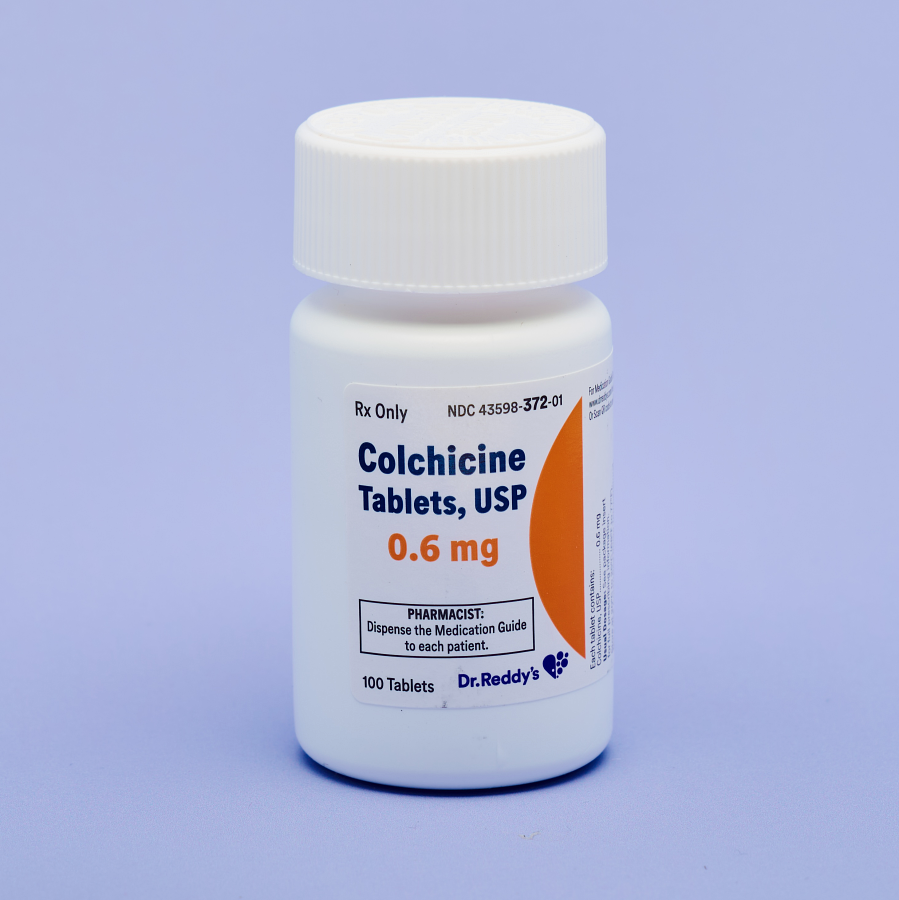
How It Works
Colchicine works by reducing the body’s inflammatory response to the uric acid crystals that cause gout. More specifically, it disrupts white blood cells (called neutrophils) that cause the joint inflammation and pain associated with gout and Familial Mediterranean fever.
| Quick Facts | |
|---|---|
| Common Brands | Colcrys, Gloperba, Lodoco, Mitigare |
| Drug Class | Alkaloid, Antigout agent |
| Generic Status | Generic for Colcrys |
| Availability | Prescription only |
Dosing
Colchicine is taken by mouth, with or without food. The dosage depends on what you’re taking colchicine to treat.
- Gout treatment: The recommended dose is 1.2 mg by mouth at the first sign of a flare, and 0.6 mg one hour later. It is often recommended to wait 3 days before repeating the dose regimen, even if you have another attack.
- Gout prevention: The recommended dose is 0.6 mg taken by mouth once or twice daily.
- Familial Mediterranean fever (FMF): The recommended dose for adults is between 1.2 mg to 2.4 mg by mouth once daily.
Note: Dosing information is educational only. Your prescribing physician will determine your specific dose based on your individual health needs. Always follow your healthcare provider’s instructions for exact dosing.
Uses
FDA-Approved Uses
Colchicine is FDA-approved for:
- Treating acute gout flares
- Preventing future gout attacks
- Treating familial Mediterranean fever (FMF)
Off-Label Uses
You may see colchicine prescribed for uses that are not “FDA-approved.” This is a very common and legal practice called “off-label” prescribing, where a doctor uses their clinical judgment to prescribe a drug for a different (but well-researched) purpose.
Colchicine may be prescribed off-label for coronary artery disease and recurrent pericarditis, an inflammation of the sac surrounding the heart.
Get Savings Updates for Colchicine
Join our mailing list for exclusive deals and more.
Side Effects
Like all medications, colchicine can cause side effects. Some common side effects may improve over time as your body adjusts to the medication. Other side effects may be serious and require medical attention.
Common Side Effects
- Diarrhea
- Nausea
- Vomiting
- Stomach pain or cramping
- Sore throat
- Muscle problems
- Tiredness
- Headache
Serious Side Effects
Serious side effects are rare, but it’s important to know what to look for if they do occur. Stop using colchicine and call your doctor immediately if you experience:
- Severe allergic reactions: Symptoms include swelling of the face, lips, tongue, or throat; difficulty breathing or swallowing; severe rash or itching; fever.
- Muscle problems: Colchicine can cause muscle pain, weakness, or tenderness. In rare cases, this can lead to muscle breakdown (rhabdomyolysis), which can cause kidney damage. Symptoms include unexplained muscle weakness or cramps, low energy levels, dark-colored urine, and fever.
- Blood disorders: Colchicine can affect the body’s ability to produce blood cells, leading to conditions like leukopenia (low white blood cells), pancytopenia (low blood cells) or thrombocytopenia (low platelets). Symptoms may include easy bruising or bleeding, frequent infection, unusual tiredness, headache, fever, abnormal or fast heartbeat, and pale skin or lips.
- Nerve problems: Colchicine may cause nerve damage. Symptoms include pain, tingling, numbness, or burning sensations in the hands, arms, legs, or feet.
- Fatal overdose: Taking too much colchicine has led to death. Seek emergency medical attention if you accidentally take more than your prescribed dose.
Call your doctor immediately if you experience any concerning or prolonged symptoms.
Pharmacist Tips
Avoid Grapefruit
Avoid eating grapefruit or drinking grapefruit juice while taking colchicine. Grapefruit interferes with how the body processes the medication, potentially leading to dangerously high levels of the drug in your system.
Measuring Liquid Doses
If prescribed the oral liquid (Gloperba), use the specific measuring device provided by your pharmacist. Household spoons are not accurate enough for this medication.
Store at Room Temperature
Store colchicine at room temperature, away from light and moisture.
Overdose
Even slight colchicine overdoses can be fatal. If you take too much colchicine, call 911 or Poison Control (1-800-222-1222).
Missed Dose
If you miss a dose of colchicine, take it as soon as you remember. Do not double up on doses.
Drug Interactions
Certain medications and substances can interact with colchicine, potentially altering how it works or increasing the risk of side effects. For example:
- CYP3A4 inhibitors & P-gp inhibitors: Certain antibiotics (clarithromycin, erythromycin) and antifungals (ketoconazole, itraconazole) can significantly increase colchicine levels.
- Cholesterol medications: Taking colchicine with statins (atorvastatin, simvastatin) or fibrates (gemfibrozil) increases the risk of muscle problems.
- Heart and blood pressure medications: Interactions may occur when colchicine is combined with calcium channel blockers (diltiazem, verapamil) and digoxin.
- HIV medications: Protease inhibitors like ritonavir or atazanavir can interact with colchicine.
Always give your doctor and pharmacist a complete list of all your medications, vitamins, and supplements to check for potential interactions.
FAQs
Why is the standard dosage “two pills now, and one pill an hour later”?
This dosing regimen is designed to interrupt a gout attack while reducing the risk of overdosage. The recommended colchicine dosage for treating a gout flare-up is 1.2 mg (two tablets) at the first sign of an attack, followed by 0.6 mg (one tablet) one hour later.
Can I take colchicine with grapefruit or grapefruit juice?
No. It is recommended to avoid grapefruit and grapefruit juice while taking colchicine. Grapefruit slows the breakdown of colchicine in your body, which increases the risk of serious side effects.
Is colchicine a painkiller or an anti-inflammatory?
Colchicine is an anti-inflammatory medication, not a general painkiller. It specifically works to block the cells that cause joint inflammation in gout. It does not relieve other types of pain and should not be used as a general analgesic.
Why is colchicine used for heart inflammation?
Although primarily an anti-gout agent, colchicine modulates the body’s inflammatory pathways. Neutrophils, which cause joint inflammation in gout, are also involved in the inflammation associated with coronary artery disease and pericarditis. Colchicine may be prescribed for this purpose.
Can I take colchicine every day for gout prevention?
Yes, for the prevention of gout flares, colchicine can be taken daily. The recommended dose for gout prevention is 0.6 mg by mouth once or twice daily. Dosing for treating an active flare is different and should not be done daily.
Can I take ibuprofen or naproxen at the same time as colchicine?
NSAIDs like ibuprofen or naproxen are not known to negatively interact with colchicine. However, because taking multiple medications can increase risks, it’s best to your healthcare provider to ensure this combination is safe for you.
How long does it take for colchicine to stop a gout flare?
Colchicine tablets are designed to work quickly to treat gout flares if taken immediately. It is recommended to take the first dose at the first sign of pain.
Is colchicine safe to take during pregnancy?
It is currently not known if or how colchicine affects pregnancy or if it can harm an unborn baby. If you are pregnant or planning to become pregnant, talk with your healthcare provider about whether colchicine is safe for you.
Can I drink alcohol while taking colchicine?
It is unknown if alcohol directly interacts with colchicine, but alcohol is known to increase the risk of gout attacks. Talk to your healthcare provider about whether you should avoid alcohol while taking colchicine.
Does colchicine affect male or female fertility?
Rarely, colchicine can cause infertility in men, which may make it difficult to get a female partner pregnant. This effect may be reversible once the medication is stopped.
Comparable Medications
Colchicine, Colcrys, Mitigare, Indomethacin (Indocin), Prednisone, Naproxen, or Allopurinol (Zyloprim)?
There are several medications that your doctor can prescribe in place of colchicine. Here are a few possible alternatives below.
Colcrys
Brand-name colchicine tablets used to both treat and prevent gout flares and treat FMF.
Mitigare
Brand-name colchicine capsules used only to prevent gout flares.
Indomethacin ER Capsules
From $37.99
A non-steroidal anti-inflammatory drug (NSAID) used to treat pain, arthritis, gout, ankylosing spondylitis, bursitis, and a congenital heart defect called patent ductus arteriosus.
Prednisone Tablets
From $35.99
A corticosteroid used to treat pain and inflammation caused by various conditions, including arthritis, severe allergies, asthma, multiple sclerosis, lupus, and skin disorders.
Naproxen
An over-the-counter and prescription NSAID used to treat gout attacks, ankylosing spondylitis, bursitis, osteoarthritis, tendonitis, rheumatoid arthritis, and painful menstrual cramps (dysmenorrhea).
Allopurinol
From $24.99
A xanthine oxidase inhibitor used to treat high uric acid levels caused by gout, cancer medications, and kidney stones.
We Have Colchicine in Stock. Get Yours Today!
Important: Information on this page is for educational purposes only. Prescribing decisions are made by independent, licensed providers. TelyRx operates technology-enabled pharmacies and a telehealth platform that connects patients with board-certified licensed providers. Prescriptions, when provider-approved and issued, are filled and shipped by TelyRx-affiliated pharmacies. We do not employ physicians or make prescribing decisions. Learn more about our editorial standards here.