How It Works
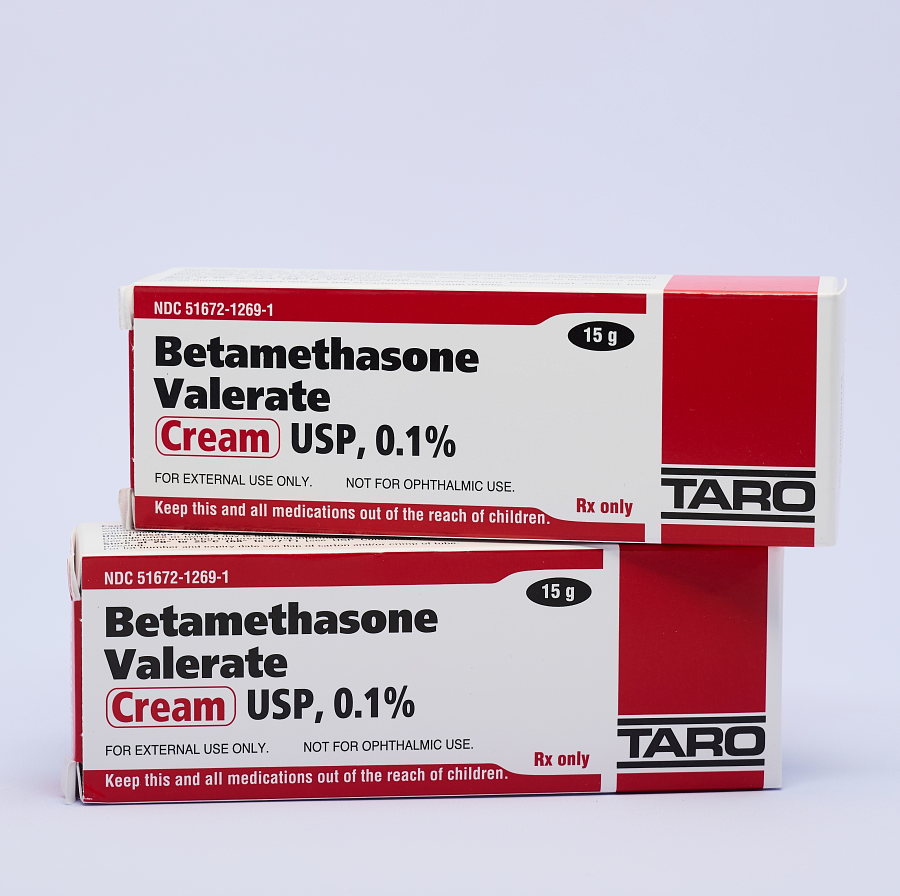
Betamethasone belongs to a class of drugs known as corticosteroids. It works by blocking the chemical reactions in the body that trigger inflammation and narrowing blood vessels in the area where it is applied. Together, these effects help treat skin that is red, swollen, itching, or scaling.
| Quick Facts | |
|---|---|
| Common Brands | Diprolene, Luxiq, Sernivo, Beta-Val, Dermabet, Valnac |
| Drug Class | Topical corticosteroid |
| Generic Status | Generic is available |
| Availability | Prescription only |
Dosing
Betamethasone comes in various strengths and forms, including creams, lotions, sprays, foams, and ointments. Dosing instructions may vary based on the form you’re prescribed. For example:
- Creams and ointments: It is recommended to apply in a thin film to the affected area once or twice daily, ideally to moist skin after bathing.
- Lotions: It is recommended to apply a few dallops to the affected area twice daily and massage lightly until the lotion disappears into the skin.
- Sprays (brand name Sernivo): It is recommended to apply to the affected area twice daily. Shake the bottle well before use.
- Foams (scalp): It is recommended to apply twice daily, massaging gently into the skin until the foam disappears.
It’s recommended to use this medication for the shortest duration necessary to achieve results. Most products are limited to 2 weeks of continuous use, while specific sprays may be used for up to 4 weeks.
Note: Dosing information below is educational only. Your prescribing physician will determine your specific dose based on your individual health needs. Always follow your healthcare provider’s instructions for exact dosing.
Uses
FDA-Approved Uses
Betamethasone is FDA-approved to treat a range of inflammatory skin conditions, including:
- Plaque psoriasis
- Atopic dermatitis (eczema)
- Seborrheic dermatitis.
- Contact dermatitis
- Lichen planus
- Allergic skin rashes
Off-Label Uses
You may see betamethasone prescribed for uses that are not “FDA-approved.” This is a common and legal practice called “off-label” prescribing, where a doctor uses their clinical judgment to prescribe a drug for a different (but well-researched) purpose.
Healthcare providers may prescribe betamethasone off-label to relieve swelling, itching, and inflammation caused by insect bites, poison ivy, or other skin issues.
Get Savings Updates for Betamethasone
Join our mailing list for exclusive deals and more.
Side Effects
Like all medications, betamethasone can cause side effects. Most common side effects are localized to the area of skin where it’s applied. These may improve over time as your body adjusts to the medication. Other side effects may be serious and require medical attention.
Common Side Effects
- Dry skin
- Stinging or burning skin
- Itchy skin
- Skin irritation or redness
- Inflamed hair follicles
Serious Side Effects
Serious side effects are rare, but it’s important to know what to look for if they do occur. Stop using betamethasone and call your doctor immediately if you experience:
- Severe allergic reactions: Symptoms include swelling of the face, lips, tongue, or throat; difficulty breathing or swallowing; racing heart; severe rash or itching; and/or fever.
- Adrenal insufficiency: Betamethasone can pass through the skin and suppress the adrenal glands, stopping them from making enough cortisol (the stress hormone). The risk may be higher if you apply betamethasone to damaged skin or over large areas, cover the skin after applying, or if you use it with other corticosteroids. Symptoms include nausea, vomiting, weakness, low blood pressure, and fatigue.
- Cushing’s syndrome: This condition is caused by being exposed to too much cortisol. Symptoms include weight gain in the upper body, a rounded face, thinning skin, acne, mood changes, sleep problems, kidney stones, and unusual weakness or hair growth.
- High blood sugar (hyperglycemia): Betamethasone may increase blood glucose levels. Symptoms include increased thirst or hunger, frequent urination, fruity breath odor, tiredness, and confusion.
- Vision problems: Topical corticosteroids like betamethasone may increase the risk of cataracts or glaucoma. Symptoms include vision changes, loss of vision, cloudy vision, eye pain or redness, seeing halos around lights, headache, or vomiting.
- Severe skin reactions: Betamethasone may cause skin reactions such as infections, skin thinning, cracking or scaly skin, rash, stretch marks, lightening of skin color, blisters, or inflamed hair follicles.
Call your doctor immediately if you experience any concerning or prolonged symptoms.
Pharmacist Tips
Do Not Bandage, Wrap, or Cover the Treated Skin
Doing so increases the amount of drug that gets absorbed into the blood, which raises the risk of serious side effects.
Wash Your Hands
Thoroughly wash your hands after applying betamethasone, unless your hands are the area being treated.
Avoid Sensitive Areas
Do not apply betamethasone to the face, groin, or underarms.
Avoid Open Flames if Using the Foam
The foam formulation of betamethasone is flammable, so avoid fire, open flames, and smoking during and immediately after use.
Apply the Scalp Foam Onto a Separate Surface, Not the Hands
Do not dispense foam directly onto warm hands, as it will melt. Dispense it onto a cool, clean surface (like a saucer) first, then apply.
Tell Your Doctor if You Are Pregnant or Breastfeeding
It is not known if betamethasone harms an unborn baby or passes into breast milk, so risks cannot be ruled out.
Do Not Double Up on Doses
If you miss a dose of betamethasone, use it as soon as you remember, unless it is almost time for your next dose. In that case, skip the missed dose and apply your next dose as usual.
Drug Interactions
Certain medications and substances can interact with betamethasone, potentially altering how it works or increasing the risk of side effects. For example:
- Other corticosteroids: It is recommended to avoid using betamethasone at the same time as other oral or topical steroids, such as prednisone, dexamethasone, or methylprednisolone. Doing so can increase the risk of side effects
Always give your doctor and pharmacist a complete list of all your medications, vitamins, and supplements to check for potential interactions.
FAQs
What is the difference between betamethasone dipropionate and betamethasone valerate?
These are two different forms of the same steroid. While both are used for similar conditions, they differ in potency. Betamethasone dipropionate is generally considered more potent (stronger) than betamethasone valerate. Your doctor will select the appropriate form based on the severity of your condition and the area of the body being treated.
Can I use betamethasone for a fungal infection like ringworm or jock itch?
No, betamethasone is a corticosteroid used to treat inflammatory skin conditions, not fungal infections. However, it’s also available as a combination medication with clotrimazole that may be prescribed for fungal infections like ringworm.
Why is the “augmented” version considered stronger than the regular version?
“Augmented” betamethasone dipropionate is formulated in a way that enhances the drug’s penetration into the skin. This makes the augmented version more potent than the regular version, even at the same concentration.
How long can I safely use this medication before I need to stop?
Standard guidelines limit use to 2 weeks for most creams and ointments, and 4 weeks for specific sprays like Sernivo. Using it longer increases the risk of side effects. Always follow the specific timeline recommended by your doctor.
Is betamethasone safe to use during pregnancy?
The safety of betamethasone during pregnancy is not fully established, so risks cannot be ruled out. Tell your doctor if you are pregnant or planning to be so they can determine if betamethasone is safe for you to use.
Can I cover the treated area with a bandage or plastic wrap?
Generally, no. Covering the treated skin increases absorption, which can lead to serious side effects.
What is the difference between the cream, ointment, and lotion forms?
The cream, ointment, and lotion forms of betamethasone come in different strengths and may spread more or less easily. Different forms may be recommended based on the area of skin you’re treating and the severity of your condition.
Can I use betamethasone on my scalp for dandruff or psoriasis?
Yes, but usually in specific formulations like foam. Do not use heavy ointments on the scalp unless directed, as they may be difficult to wash out.
Why do I have to wash my hands immediately after applying it?
If you don’t wash your hands, the skin on your fingers and palms absorbs the steroid, which can lead to skin thinning or absorption into your bloodstream. You also risk accidentally rubbing the medication into your eyes or mouth if you do not wash your hands after use.
Can I use betamethasone for poison ivy or bug bites?
Betamethasone may be used off-label for severe reactions to poison ivy or bug bites to reduce inflammation and itching. However, it is a prescription drug and should only be used if recommended by a professional for severe reactions, not mild bites.
What should I do if I miss a dose?
If you accidentally miss a dose of betamethasone, apply it as soon as you remember. However, if it is almost time for your next dose, skip the missed one and apply your next dose on your regular schedule. Do not double up on doses to “catch up.”
Does betamethasone help with acne?
No, it is not a treatment for acne. Betamethasone can cause acne or make it worse.
Can I use moisturizer at the same time as betamethasone?
It depends, but the usual recommendation is to apply them at least 30 minutes apart. Tell your healthcare provider about your skin care products so they can recommend when and how to apply your moisturizer and betamethasone.
What is “Topical Steroid Withdrawal” and can betamethasone cause it?
Topical steroid withdrawal (TSW) is a rare reaction that can occur after stopping long-term, high-potency steroid creams. Symptoms include intense burning, redness, and itching. Because betamethasone is a high-potency steroid, using it for longer than recommended increases the risk of TSW.
Comparable Medications
Betamethasone, Betamethasone Dipropionate Augmented (Diprolene), Betamethasone Dipropionate (Regular), Betamethasone Valerate (Luxiq / Beta-Val), Sernivo (Betamethasone Dipropionate Spray), Clobetasol Propionate (Temovate), Halobetasol (Ultravate), or Triamcinolone Acetonide (Kenalog)?
There are several medications that your doctor can prescribe in place of betamethasone. Here are a few possible alternatives below.
A more potent formulation of betamethasone designed to enhance absorption and treat more severe skin conditions.
Betamethasone Dipropionate Cream
From $29.99
A more potent formulation of betamethasone without the absorption enhancer used for more severe skin conditions.
Betamethasone Valerate Ointment
From $29.99
A less potent formulation of betamethasone used for milder skin conditions.
Sernivo
A spray formulation of betamethasone that can be used for up to 4 weeks to treat plaque psoriasis.
Clobetasol Cream
From $23.99
A high-potency topical corticosteroid used for severe plaque psoriasis and inflammatory skin conditions such as eczema.
Halobetasol Cream
From $42.99
A high-potency topical corticosteroid used for severe plaque psoriasis and inflammatory skin conditions such as eczema.
Triamcinolone
From $24.99
A medium-potency topical corticosteroid (less potent compared to betamethasone) used for inflammatory skin conditions such as eczema.
We Have Betamethasone in Stock. Get Yours Today!
Important: Information on this page is for educational purposes only. Prescribing decisions are made by independent, licensed providers. TelyRx operates technology-enabled pharmacies and a telehealth platform that connects patients with board-certified licensed providers. Prescriptions, when provider-approved and issued, are filled and shipped by TelyRx-affiliated pharmacies. We do not employ physicians or make prescribing decisions. Learn more about our editorial standards here.