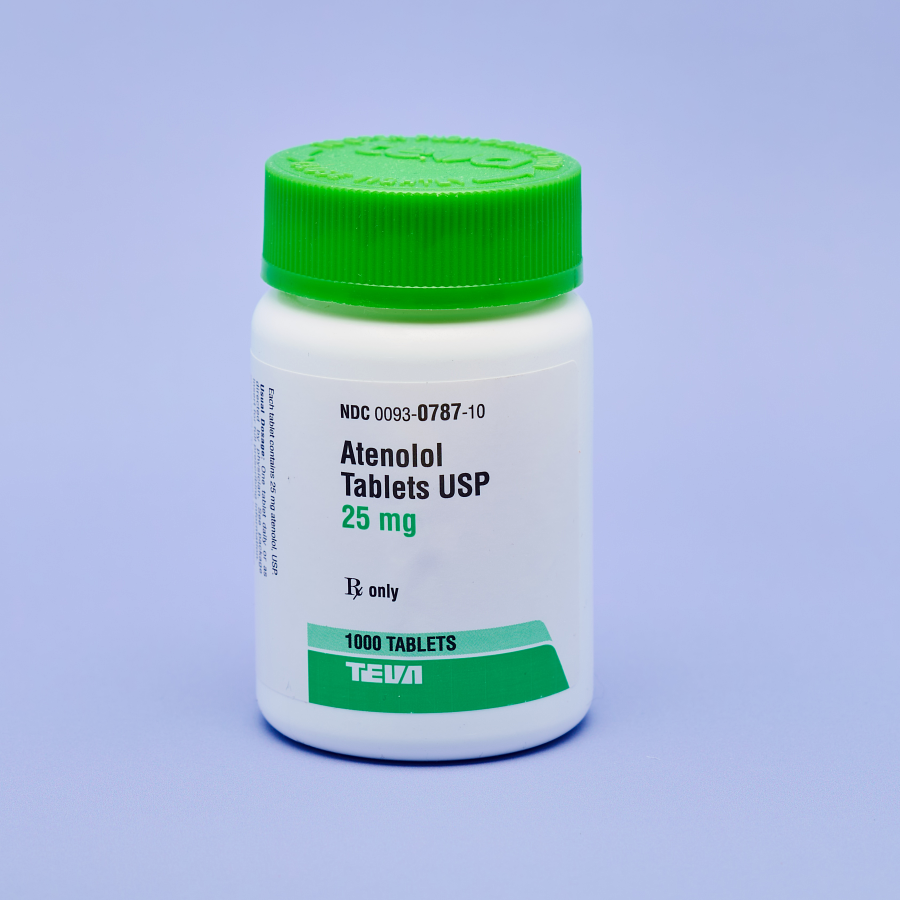
How It Works
As part of the body’s stress response, hormones called catecholamines bind to beta-1 receptors in the heart muscle – this causes the heart to beat faster. Atenolol works by targeting these beta-1 receptors and prevents them from binding with catecholamines. This slows the heart rate and reduces the force of contraction, so the heart requires less oxygen to pump blood.
As atenolol takes effect, pressure within the blood cells decreases. This systemic reduction in blood pressure helps prevent long-term damage to the arteries, kidneys, and brain. Atenolol also improves the balance between the heart’s blood supply and the amount of blood needed for healthy circulation, which can help minimize chest pain for people with angina.
| Quick Facts | |
|---|---|
| Common Brands | Tenormin |
| Drug Class | Beta-1 selective beta-adrenergic blocking agent (beta-blocker) |
| Generic Status | Generic for Tenormin |
| Availability | Prescription only |
Dosing
Most providers prescribe atenolol to be taken as an oral tablet. Specific dosage varies by factors like the patient’s age, medical history, and pre-treatment blood pressure level.
- Hypertension: For treating high blood pressure, providers typically start patients at a dose of 25 to 50 milligrams (mg) per day. This dose may be increased up to 100 mg per day if blood pressure goals are not met within two weeks of the start of treatment.
- Angina: The starting dose for managing angina-related chest pain is 50 mg per day. Doctors may increase dosage up to 100 to 200 mg per day (often divided into two doses) based on the patient’s clinical response.
- Post-heart attack: If appropriate, patients may first receive an intravenous dose of atenolol in a monitored setting and are then transitioned to an oral dose of 50 to 100 mg per day, depending on clinical response and tolerance.
- Administration: Although standard guidelines state atenolol can be taken with or without food, timing the dose with a meal or snack can help prevent nausea and other side effects. Patients should take it at the same time each day.
Note: Dosing information is educational only. Your prescribing physician will determine your specific dose based on your individual health needs. Always follow your healthcare provider’s instructions for exact dosing.
Uses
FDA-Approved Uses
Atenolol is FDA-approved for the following:
- To treat hypertension (high blood pressure).
- To provide long-term management for patients with chronic stable angina.
- To reduce the risk of cardiovascular mortality in hemodynamically stable patients who have recently experienced a heart attack.
Off-Label Uses
You may see atenolol prescribed for uses that are not “FDA-approved.” This is a very common and legal practice called “off-label” prescribing, where a doctor uses their clinical judgment to prescribe a drug for a different (but well-researched) purpose.
Common off-label uses for atenolol currently found in clinical practice and research include:
- Migraine prevention: Atenolol is sometimes used to decrease the severity and frequency of migraine headaches.
- Anxiety and performance anxiety: Since atenolol helps slow the heartbeat, it may be prescribed off-label to manage rapid heartbeat, tremors, and other physical symptoms of anxiety and performance anxiety.
- Hyperthyroidism: Providers may recommend atenolol off-label to control rapid heartbeat and other cardiovascular symptoms caused by an overactive thyroid.
- Alcohol withdrawal: In clinical settings, atenolol may be administered to patients to manage the autonomic hyperactivity associated with alcohol withdrawal.
Get Savings Updates for Atenolol
Join our mailing list for exclusive deals and more.
Side Effects
Since atenolol is a medication that affects the cardiovascular system, some side effects can occur. Most people find that the side effects improve as the body adjusts to the drug.
Common Side Effects
- Fatigue and lethargy
- Dizziness and lightheadedness
- Cold extremities (hands and feet)
- Slow heartbeat (bradycardia)
- Mild nausea and diarrhea
- Mood changes and vivid dreams and/or nightmares
Serious Side Effects
Serious side effects are rare, but it’s important to know what to look for if they do occur. Serious side effects that can occur from taking atenolol include:
- Worsening heart failure: Sudden weight gain, swelling in the ankles and feet, and shortness of breath are some warning signs of worsening heart failure.
- Bronchospasm: Wheezing and difficulty breathing may occur in some patients, especially people with pre-existing lung conditions.
- Excessive bradycardia: For some people, atenolol is too effective and their heart rate slows to a level that causes fainting, confusion, or chest pain.
- Raynaud’s syndrome: Atenolol may lead to symptoms of Raynaud’s, a condition characterized by numbness or tingling in the fingers and toes.
- Severe allergic reaction: As with most types of medication, atenolol may cause anaphylaxis in people who are allergic to one or more of the drug’s ingredients.
Call your doctor immediately if you experience any concerning or prolonged symptoms.
Pharmacist Tips
Don’t Quit Cold Turkey
Per standard guidelines, patients are advised to never stop taking atenolol suddenly. This can cause a rebound effect with a risk of dangerously high blood pressure, chest pain, and a heart attack.
Check Your Pulse
Monitoring your pulse regularly is recommended if you take atenolol. Standard guidelines state you should contact your provider if your pulse drops below 50 beats per minute.
Take Caution When Standing
Taking atenolol can cause dizziness and lightheadedness. Standing up too quickly can increase your risk of injury from a fall.
Log Your Blood Pressure
As part of your treatment, your doctor may request a written record of your daily blood pressure readings. This data is especially valuable if your medication needs its dosage adjusted.
Watch for Hypoglycemia Symptoms
The effects of atenolol can mask the shakiness and racing heartbeat brought on by low blood sugar. If you have diabetes, it is advised to be extra vigilant about checking your glucose levels.
Drug Interactions
Atenolol interacts with a wide range of medications, particularly those that affect heart rhythm or blood pressure. Known interactions with atenolol include:
- Calcium channel blockers: Verapamil, diltiazem, and other calcium channel blockers can interact with atenolol to create a dangerously slow heartbeat or “heart block.”
- Nonsteroidal anti-inflammatory drugs (NSAIDs): Ibuprofen, naproxen, and other NSAIDs commonly used to relieve pain can counteract atenolol’s blood-pressure-lowering effects.
- Digoxin: Both digoxin and atenolol slow the heart’s electrical conduction, so taking them together can produce serious side effects.
- Clonidine: Patients who are taking both atenolol and clonidine to lower their blood pressure are advised to talk to their doctor if they need to quit taking one or both. A provider will draw up a specific schedule for tapering off the drugs in order to prevent rebound hypertension.
- Alcohol: Drinking alcohol can exacerbate side effects from taking atenolol, such as dizziness and lightheadedness, and cause blood pressure to drop too much.
Always give your doctor and pharmacist a complete list of all your medications, vitamins, and supplements to check for potential interactions.
FAQs
Can I stop taking atenolol suddenly if I run out?
It is never advised to stop taking atenolol suddenly, as this is considered dangerous and can lead to severe cardiovascular events. Patients who are running low are urged to contact their pharmacy as soon as possible to arrange a refill.
Does atenolol cause weight gain?
Weight gain is not considered a common side effect of taking atenolol, but some patients report gaining a small amount of weight after taking the medication. This may be caused in part by fatigue, a side effect from atenolol that can lead to a decrease in physical activity.
Is atenolol safe to take during pregnancy?
Atenolol is generally not recommended during pregnancy, especially during the second and third trimesters, because the drug has been linked to low birth weight and low blood sugar in infants. It is advised to consult with your provider about safe alternatives during pregnancy.
Can I drink alcohol while taking atenolol?
It is generally recommended to limit or avoid alcohol while taking atenolol. Both the medication and alcohol can lower blood pressure, so combining them can increase the risk of fainting or falls.
Does atenolol cause erectile dysfunction?
Some men report sexual side effects after taking atenolol, including difficulty maintaining an erection and decreased libido. This is a known side effect of numerous blood pressure medications, but you can consult your provider if these or other sexual side effects become bothersome.
Is it better to take atenolol in the morning or at night?
Most providers recommend taking atenolol in the morning to maintain consistent blood pressure throughout the day and night. However, taking the tablet at the same time every day is considered more crucial to effective treatment than taking the tablet at a specific time of day.
Can atenolol be used for anxiety or stage fright?
Yes, atenolol is often used off-label to treat a racing heart, tremors, and other symptoms of anxiety and stage fright. The medication steadies the heartbeat and reduces tremors without causing drowsiness.
Is atenolol safe for people with asthma or COPD?
Since atenolol is cardioselective, it is considered safer for people with asthma or COPD than older beta-blockers like propranolol. However, atenolol can still cause bronchospasm, or constriction of the airway, and standard guidelines suggest a lower dose for people with these respiratory conditions.
Can I take ibuprofen or naproxen with atenolol?
Yes, you can take ibuprofen or naproxen with atenolol, but extreme caution is advised. These and other NSAIDs can interfere with atenolol’s ability to lower your blood pressure, so acetaminophen is often recommended as an alternative for pain relief.
Does atenolol prevent migraines?
Yes, atenolol can prevent migraines – migraine prophylaxis is one of the drug’s most common off-label uses. Atenolol is thought to prevent the onset of migraines by stabilizing blood flow and reducing excitability in the sympathetic nervous system.
Why is atenolol often combined with a diuretic like chlorthalidone?
Atenolol is often combined with a “water pill” diuretic like chlorthalidone to treat high blood pressure. When combined, these medications help slow the heartbeat and reduce the volume of fluid in the blood vessels.
Comparable Medications
Atenolol, Metoprolol, Bisoprolol, Propranolol, Carvedilol, Lisinopril, or Amlodipine?
Atenolol is a cardioselective beta-blocker that can help reduce blood pressure and manage angina-related chest pain without producing broader systemic effects or inducing drowsiness like many older beta-blockers. However, based on your symptoms and medical history, your doctor may prescribe an atenolol alternative instead. Alternatives to atenolol include:
Metoprolol Tartrate
From $22.99
Atenolol and metoprolol are both cardioselective beta-blockers, but they are processed in different ways. This affects how the drugs work within your body and which conditions they most effectively treat. Atenolol is cleared by the kidneys and typically prescribed for high blood pressure, whereas metoprolol is broken down by the liver and commonly used for management of chronic heart failure.
Bisoprolol
From $27.99
Atenolol and bisoprolol share a lot of similarities, as both drugs are cardioselective beta-blockers often used to treat high blood pressure. Bisoprolol is more likely to be chosen as first-line treatment because it is more cardioselective, has a longer half life, and may reduce the heart rate more – but both are considered generally effective.
Propranolol
From $24.99
Sold under the brand name Inderal, propranolol is a non-selective beta-blocker that targets receptors in the heart, lungs, and blood vessels. This means it has a broader systemic effect on the body than atenolol, and may be more effective for conditions like migraines because it crosses the blood-brain barrier more easily. However, the cardioselective atenolol may be preferred for patients with respiratory issues and other conditions outside the heart.
Carvedilol
From $27.99
Carvedilol blocks both alpha and beta receptors to provide extra blood vessel dilation. For this reason, it is considered the gold-standard treatment for heart failure. Atenolol is cardioselective and only targets beta-1 receptors, so it is better suited for patients with angina and less effective for advanced heart failure.
Lisinopril
From $22.99
Lisinopril is an angiotensin-converting enzyme (ACE) inhibitor that lowers blood pressure by targeting hormones that constrict blood vessels. This differs from atenolol's mechanism of slowing the heartbeat to reduce blood pressure. Lisinopril and atenolol are frequently prescribed together for "dual-action" management of high blood pressure.
Amlodipine
From $24.99
Amlodipine is a calcium channel blocker that relaxes the walls of blood vessels in order to lower blood pressure, rather than slowing the heartbeat like atenolol. These two medications are often prescribed in combination to decrease blood pressure at two different levels.
We Have Atenolol in Stock. Get Yours Today!
Important: Information on this page is for educational purposes only. Prescribing decisions are made by independent, licensed providers. TelyRx operates technology-enabled pharmacies and a telehealth platform that connects patients with board-certified licensed providers. Prescriptions, when provider-approved and issued, are filled and shipped by TelyRx-affiliated pharmacies. We do not employ physicians or make prescribing decisions. Learn more about our editorial standards here.