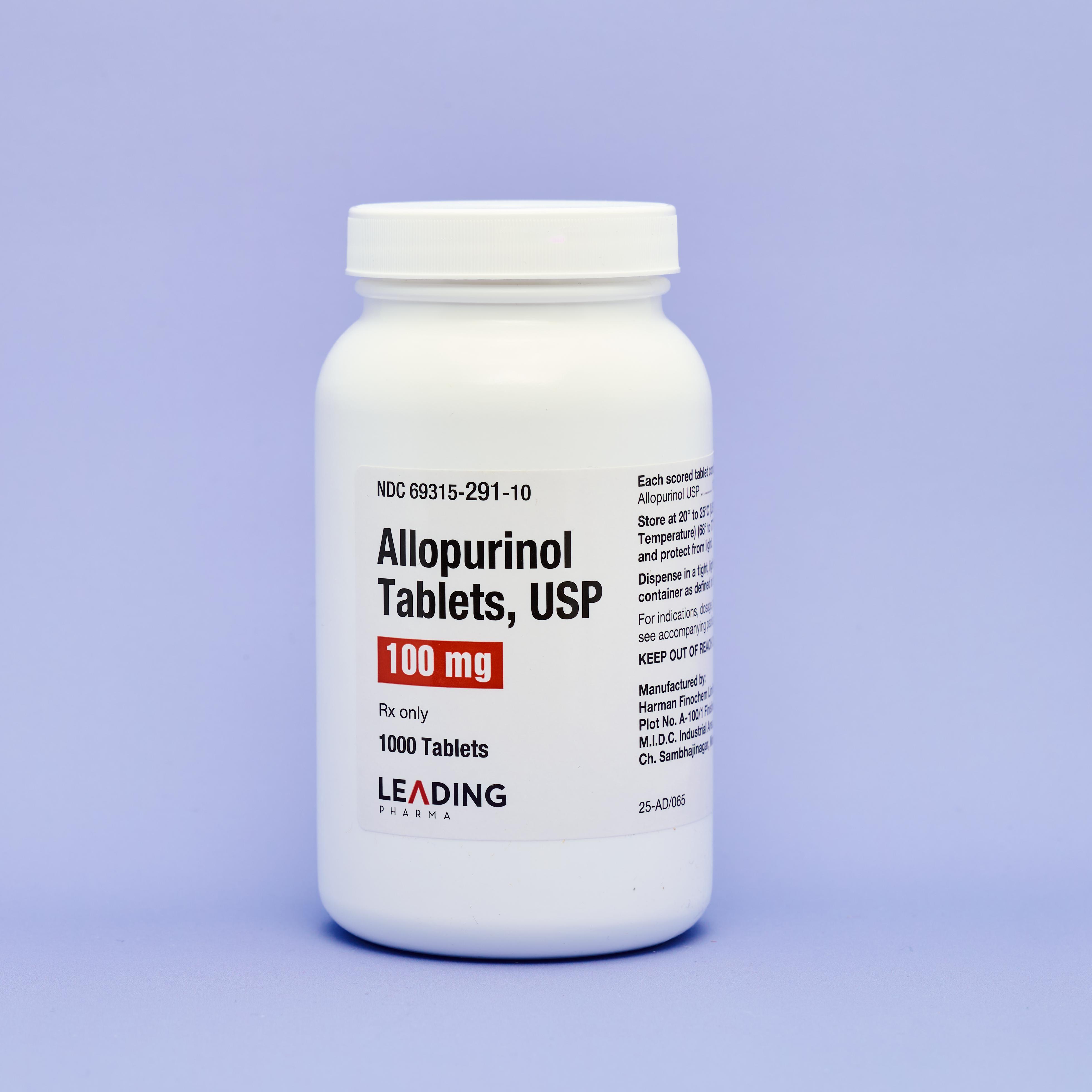
How It Works
Allopurinol works by inhibiting xanthine oxidase, which is an enzyme involved in uric acid production. By stopping this enzyme from producing uric acid, allopurinol decreases the overall levels of uric acid in the body.
When uric acid levels get too high, crystals can form in the joints, leading to the inflammation and pain of a gout flare. Stones can also develop in the kidneys. By reducing the formation of uric acid, allopurinol helps prevent these gout flares and the formation of kidney stones.
This reduction in uric acid levels also helps prevent complications associated with tumor lysis syndrome, a spike in uric acid levels caused by certain chemotherapy medications.
| Quick Facts | |
|---|---|
| Common Brands | Zyloprim, Lopurin |
| Drug Class | Antigout agent, xanthine oxidase inhibitor |
| Generic Status | Generic for Zyloprim, Lopurin |
| Availability | Prescription only |
Dosing
Allopurinol comes in dosage strengths of 100 mg, 200 mg, and 300 mg. The dosage is individualized and may be adjusted by a healthcare provider based on the patient’s uric acid levels, kidney function, and response to the medication.
- Gout: The recommended starting dose is 100 mg taken by mouth once daily (or 50 mg daily for those with kidney problems). From there, your provider may increase your dose to a range of 200 mg to 600 mg per day. The maximum dose is 800 mg daily.
- Kidney stones: The recommended dose ranges from 200 mg to 300 mg taken by mouth once daily.
- High uric acid levels from chemotherapy: The recommended dose ranges from 300 mg to 800 mg per day. Treatment usually begins a day or two before chemotherapy and continues for 2 or 3 days after the session.
Note: Dosing information is educational only. Your prescribing physician will determine your specific dose based on your individual health needs. Always follow your healthcare provider’s instructions for exact dosing.
Uses
FDA-Approved Uses
Allopurinol is FDA-approved to treat:
- Gout
- Recurrent calcium oxalate kidney stones
- High uric acid levels from cancer therapy (to prevent tumor lysis syndrome)
Off-Label Uses
You may see allopurinol prescribed for uses that are not “FDA-approved.” This is a very common and legal practice called “off-label” prescribing, where a doctor uses their clinical judgment to prescribe a drug for a different (but well-researched) purpose.
Allopurinol does not currently have any common off-label uses.
Get Savings Updates for Allopurinol
Join our mailing list for exclusive deals and more.
Side Effects
Like all medications, allopurinol can cause side effects. Some common side effects may improve over time as your body adjusts to the medication. Other side effects may be serious and require medical attention.
Common Side Effects
- Nausea
- Diarrhea
- High liver enzyme levels
- Dizziness
- Sleepiness
- Rash
- Fever
- Headache
- Swelling of the face or throat
- Confusion
- Indigestion
- A temporary increase in gout attacks
Serious Side Effects
Serious side effects are rare, but it’s important to know what to look for if they do occur. Stop using allopurinol and call your doctor immediately if you experience:
- Severe allergic reactions: Symptoms include swelling of the face, lips, tongue, or throat; difficulty breathing or swallowing; severe rash or itching; fever. Rare reactions like DRESS (Drug reaction with eosinophilia and systemic symptoms) can affect multiple organs and cause breathing problems, fever, racing heart, and swollen lymph nodes.
- Gout flares: It’s possible to experience more gout flares during the first few months of taking allopurinol, due to changing uric acid levels. Your healthcare provider may prescribe an additional gout medication during this time.
- Liver damage (hepatotoxicity): While rare, severe liver damage (hepatotoxicity) can occur when taking allopurinol. Symptoms include yellowing of the skin or eyes (jaundice), dark urine, pale stools, stomach pain, nausea, vomiting, and fever.
- Severe skin reactions: Allopurinol can cause severe, life-threatening skin reactions such as Stevens-Johnson syndrome (SJS) and toxic epidermal necrolysis (TEN). Symptoms include painful red or purple skin that peels, blisters on the mouth or genitals, and red watery eyes.
- Kidney damage: Signs include a reduced need to urinate, swelling in the feet or legs, confusion, nausea, weakness, and difficulty catching one’s breath.
- Blood disorders: Allopurinol can cause low blood cell counts, leading to symptoms like pale skin, easy bruising or bleeding, frequent infections, fever, unusual weakness, shortness of breath, headache, and abnormal heartbeat.
- Dizziness and sleepiness: It’s recommended to avoid driving or operating heavy machinery until you know how allopurinol affects you.
Call your doctor immediately if you experience any concerning or prolonged symptoms.
Pharmacist Tips
Take With Food
Allopurinol can be taken with or without food, but taking it with food may help reduce stomach upset.
Stay Hydrated
It is recommended to drink at least 2 liters of fluid per day while taking allopurinol to help support kidney function and prevent the formation of kidney stones.
Avoid Alcohol
Drinking alcohol can increase the risk of side effects like dizziness and drowsiness, and potentially trigger gout attacks.
Dietary Changes
Certain foods can increase the risk of kidney stones or worsen gout, such as animal proteins. Ask your healthcare provider if they recommend adjusting your diet while taking allopurinol.
Be Careful Driving
Allopurinol can cause drowsiness and dizziness, so it’s recommended to avoid driving or operating heavy machinery until you know how the medication affects you.
Genetic Testing
People of African, Asian, Native Hawaiian, or Pacific Islander ancestry may be more likely to experience severe allergic or skin reactions on allopurinol. Your provider may recommend getting tested for the HLA-B*5801 gene.
Missed Dose
If you miss a dose of allopurinol, take it as soon as you remember. If it is almost time for your next dose, skip the missed dose and take your next dose as scheduled. Do not double up on doses of allopurinol.
Drug Interactions
Certain medications and substances can interact with allopurinol, potentially altering how it works or increasing the risk of side effects. For example:
- Certain antibiotics: Medications like ampicillin and amoxicillin can increase the risk of skin reactions on allopurinol.
- Thiazide diuretics: Medications like hydrochlorothiazide and chlorthalidone, used for blood pressure or edema, may also increase the risk of serious skin reactions.
- Blood thinners: Allopurinol can enhance the effects of warfarin, potentially increasing the risk of bleeding.
- Immunosuppressants: Drugs such as azathioprine, cyclosporine, and mercaptopurine can interact with allopurinol.
- Other gout medications: Allopurinol should not be used at the same time as certain gout medications, including probenecid and pegloticase.
- Theophylline: Allopurinol may affect how your body processes this medication used for breathing conditions.
- Cancer medications: Allopurinol can cause interactions with cancer medications like bendamustine and capecitabine.
Always give your doctor and pharmacist a complete list of all your medications, vitamins, and supplements to check for potential interactions.
FAQs
Why did my gout get worse when I first started taking allopurinol?
It is possible for gout flares to increase in frequency during the first few weeks or months of taking allopurinol. This typically happens because the medication rapidly lowers uric acid levels. As uric acid crystals dissolve, they can irritate joints and cause inflammation. Providers often prescribe other medications, such as colchicine, to help prevent these initial attacks.
Do I need to stop taking allopurinol if I have a gout attack?
Generally, you should continue taking allopurinol unless your care team tells you to stop. Allopurinol is meant for ongoing prevention, and while starting it during a flare can worsen symptoms, stopping it abruptly might also disrupt uric acid management. Always consult your healthcare provider for specific advice regarding flares.
Is allopurinol a painkiller?
No, allopurinol is not a painkiller. It works by inhibiting the production of uric acid to prevent future issues, rather than treating acute pain directly.
Can I drink alcohol while taking allopurinol?
It is generally recommended to avoid alcohol while taking allopurinol. Alcohol can raise the risk of side effects such as sleepiness and liver damage, and it can also increase the risk of gout flares, counteracting the medication’s purpose.
Does allopurinol dissolve existing gout crystals (tophi)?
Allopurinol helps reduce uric acid production. By keeping uric acid levels low over time, it helps prevent new crystals from forming and may allow existing crystals to dissolve, improving symptoms like joint pain and damage.
Can allopurinol prevent kidney stones?
Yes, allopurinol may help prevent kidney stones from forming by lowering uric acid levels. It is FDA-approved for managing recurrent calcium oxalate kidney stones in adults.
How long does it take for uric acid levels to drop?
It may take several weeks or months before the maximum benefits set in and uric acid levels are reduced enough to control gout flares.
Can I take ibuprofen or colchicine with allopurinol?
Yes, colchicine is often prescribed alongside allopurinol to help prevent gout attacks that might happen when treatment is first started. Ibuprofen may also be used, but it’s recommended to check with your healthcare provider first to avoid any drug interactions.
What happens if I miss a dose?
If you miss a dose of allopurinol, take it as soon as you remember — unless it is almost time for your next dose. Then, skip the missed dose and take your next dose as scheduled. Do not take double or extra doses.
Will I have to take allopurinol for the rest of my life?
Allopurinol is usually used for long-term management of chronic conditions like gout. People are generally advised to keep taking it unless their healthcare provider tells them to stop.
What foods should I avoid with allopurinol?
While there are no known direct interactions between allopurinol and specific foods, certain foods and drinks can worsen gout or increase the risk of kidney stones, such as animal proteins. Ask your healthcare provider which foods and beverages to avoid to support your treatment plan.
Comparable Medications
Allopurinol, Febuxostat (Uloric), Colchicine (Colcrys), Prednisone, or Pegloticase (Krystexxa)?
There are several medications that your doctor can prescribe in place of allopurinol. Here are a few possible alternatives below.
Febuxostat Tablets
From $39.99
A gout medication that may be prescribed to people who cannot take allopurinol or for whom allopurinol has not been effective.
Colchicine
From $69.59
A gout medication used to both prevent and treat gout flares, and to treat familial Mediterranean fever (FMF).
Prednisone Tablets
From $35.99
A corticosteroid used to treat a variety of conditions, including gout, arthritis, severe allergies, asthma, inflammatory bowel disease, and skin and eye conditions.
Pegloticase (Krystexxa)
A medication used to treat severe refractory gout.
We Have Allopurinol in Stock. Get Yours Today!
Important: Information on this page is for educational purposes only. Prescribing decisions are made by independent, licensed providers. TelyRx operates technology-enabled pharmacies and a telehealth platform that connects patients with board-certified licensed providers. Prescriptions, when provider-approved and issued, are filled and shipped by TelyRx-affiliated pharmacies. We do not employ physicians or make prescribing decisions. Learn more about our editorial standards here.