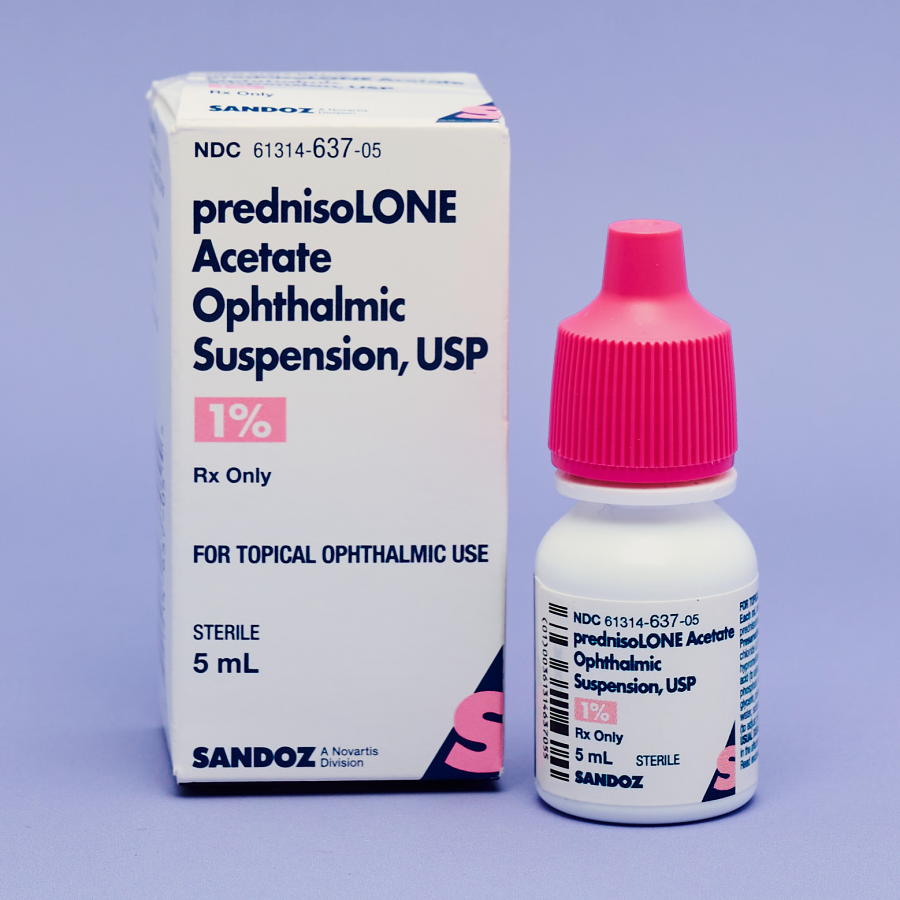
How It Works
Prednisolone works by calming the overactive immune response within the eye. The medication enters the cells of the eye and interacts with specific receptors to “turn off” the production of these inflammatory mediators. By suppressing the immune system’s local reaction, prednisolone:
- Reduces the dilation of blood vessels (lessening redness)
- Decreases the accumulation of fluid in the tissues (reducing swelling)
- Stabilizes cell membranes to prevent the release of further irritating chemicals
| Quick Facts | |
|---|---|
| Common Brands | Pred Forte, Omnipred, Pred Mild |
| Drug Class | Ophthalmic Corticosteroid |
| Generic Status | Generic version of Pred Forte, Omnipred, Pred Mild |
| Availability | Prescription only |
Dosing
Dosing for prednisolone eye drops is based on the severity of the inflammation. Standard guidelines suggest the following:
- Typical frequency: For moderate cases, the common dose is 1 to 2 drops in the affected eye(s) 2 to 4 times daily.
- Acute/severe cases: In the early stages of severe inflammation, a provider may recommend using the drops every hour, reducing the frequency as symptoms improve.
- The tapering process: Providers advise against stopping steroid eye drops abruptly. They typically recommend a “taper,” in which the frequency is gradually reduced (e.g., from four times a day to twice a day, then once a day) before stopping completely.
To apply the drops, it is generally accepted to tilt the head back, pull the lower eyelid down to create a small pouch, and deposit the prescribed number of drops. To prevent the medication from draining into the tear duct and being absorbed into the rest of the body, you can gently press the inner corner of the eye (near the nose) for 1 to 2 minutes after application.
Note: Dosing information below is educational only. Your prescribing physician will determine your specific dose based on your individual health needs. Always follow your healthcare provider’s instructions for exact dosing.
Uses
FDA-Approved Uses
Prednisolone ophthalmic is cleared by the FDA for the treatment of the following:
- Ocular inflammation: Managing swelling and redness of the palpebral and bulbar conjunctiva, cornea, and anterior segment of the globe
- Post-surgical care: Reducing inflammation and promoting comfort following procedures like cataract surgery
- Chemical/thermal burns: Treating the inflammatory aftermath of eye injuries
- Specific inflammatory conditions: This includes allergic conjunctivitis, acne rosacea keratitis, and cyclitis
Off-Label Uses
You may see prednisolone ophthalmic prescribed for uses that are not “FDA-approved.” This is a common and legal practice called “off-label” prescribing, where a doctor uses their clinical judgment to prescribe a drug for a different (but well-researched) purpose.
Prednisolone is commonly prescribed for the following off-label uses:
- Severe seasonal allergies: When over-the-counter medications do not provide relief, a short course of steroid drops may be used to break a severe allergic cycle.
- Non-infectious pink eye: Managing the redness and discomfort of viral conjunctivitis (though it does not cure the virus itself).
- Dry eye flare-ups: Occasionally used for short periods to reduce the surface inflammation associated with chronic dry eye disease.
Get Savings Updates for Prednisolone
Join our mailing list for exclusive deals and more.
Side Effects
Providers advise using caution because steroids like prednisolone can affect the internal structures of the eye over time.
Common Side Effects
- Temporary burning or stinging immediately after use
- Blurred vision (often lasting only a few minutes)
- Feeling like something is in the eye (foreign body sensation)
- Increased sensitivity to light
- Temporary change in taste
Serious Side Effects
Serious side effects are rare, but it’s important to know what to look for if they do occur. Below are serious side effects that can require immediate medical attention:
- Increased intraocular pressure (IOP): Steroids can cause the pressure inside the eye to rise, which can lead to glaucoma and permanent vision loss if not monitored.
- Cataract formation: Long-term use of steroid drops is linked to the development of “secondary cataracts” (clouding of the lens).
- Delayed healing: Steroids can slow the body’s ability to heal wounds on the surface of the eye (cornea).
- Secondary infections: By suppressing the immune system, steroids can make patients more susceptible to fungal, viral, or bacterial infections.
- Corneal thinning: In rare cases, prolonged use can cause the outer layer of the eye to thin, which may lead to perforation.
Call your doctor immediately if you experience any concerning or prolonged symptoms.
Pharmacist Tips
Shake Well
If your bottle is labeled “prednisolone acetate,” it is a suspension. Standard guidelines recommend shaking the bottle vigorously for 5 to 10 seconds before each use to ensure the medicine is evenly distributed.
Avoid Contamination
Providers advise against letting the dropper tip touch your eye, eyelashes, or any other surface to prevent bacteria from entering the bottle.
Use Caution With Contact Lenses
It is generally recommended that you do not wear contact lenses while your eyes are inflamed or while using these drops. The preservative in the drops (benzalkonium chloride) can be absorbed by soft contact lenses and cause irritation.
Wait Between Medications
If you use other eye drops, providers recommend waiting at least 5 to 10 minutes between different products to ensure each drop is fully absorbed and not washed away by the next.
Store Your Medication Safely
Standard guidelines recommend storing your bottle upright at room temperature. They also advise against freezing the medication, as this can change its effectiveness.
Try the “Punctal Occlusion” Trick
Pressing the corner of your eye near your nose after administering the eyedrops can keep the medicine in your eye and also prevents the bitter taste that some patients experience in the back of their throat.
Drug Interactions
While systemic drug interactions with medications taken by mouth are unlikely, your provider will need to know about all ocular medicines.
Notify your doctor if you take:
- Other ophthalmic steroids: Using multiple steroid drops may significantly increase the risk of high eye pressure.
- NSAID eye drops: Combining steroids with non-steroidal anti-inflammatory eye drops (like ketorolac) is common after surgery but requires careful monitoring, as both can affect corneal healing.
- Glaucoma medications: Steroids can counteract the effects of drops used to lower eye pressure.
Always give your doctor and pharmacist a complete list of all your medications, vitamins, and supplements to check for potential interactions.
FAQs
Why must I shake the bottle of prednisolone acetate eye drops before every use?
Prednisolone acetate is a suspension, meaning the medicine particles settle at the bottom of the bottle. If you don’t shake it, you risk missing the active ingredient. Shaking ensures you get the correct dose every time.
Can I wear contact lenses while using prednisolone eye drops?
Generally, providers advise against wearing contact lenses until the inflammation has resolved. Additionally, the preservative in the drops can damage soft lenses. If your doctor allows lens wear, they typically advise waiting at least 15 minutes after applying the drops before inserting your contacts.
Why does this eye drop feel “gritty” when I put it in?
The “grittiness” is caused by the tiny particles of medicine in the suspension. This feeling usually passes quickly as the drops spread across the surface of the eye.
What is the difference between prednisolone acetate (Pred Forte) and prednisolone sodium phosphate?
The acetate version is a suspension that penetrates the eye’s tissues to treat deeper inflammation. The sodium phosphate version is a clear solution used for superficial surface inflammation.
How long should I wait between using prednisolone and other eye drops?
It is generally recommended to wait 5 to 10 minutes between different types of eye drops. This prevents the second drop from diluting or washing out the first one.
Does prednisolone treat eye infections (bacterial/viral) or just inflammation?
Prednisolone is a steroid, not an antibiotic or antiviral. It only treats inflammation. If you have an active infection, using a steroid alone can mask the symptoms without treating it.
Can I drive immediately after using these eye drops?
Your vision may be blurry for several minutes after applying the drops. Generally, it is safest to wait until your vision is completely clear before driving or operating machinery.
Why shouldn’t I stop using these drops suddenly?
If you stop a steroid suddenly, the inflammation can return in a phenomenon known as “rebound inflammation.” Tapering, or slowly using less medicine over time, allows your eye to gradually adjust and resume its natural anti-inflammatory response.
Is it safe to use prednisolone eye drops during pregnancy?
The safety of these drops during pregnancy is not fully established. Because very little of the drug reaches the bloodstream when applied correctly, the risk is thought to be low, but it’s advised that you discuss the risks and benefits with your provider.
What should I do if the dropper tip touches my eyelash or eye?
If the tip is contaminated, it can introduce bacteria into the bottle. If this happens, contact your pharmacist for advice. You may need a replacement bottle to prevent introducing bacteria into an already inflamed eye.
Can I use these drops for eye allergies?
Generally, prednisolone can sometimes be used for severe allergic conjunctivitis that does not respond to standard antihistamines.
Does the oral form (pills/syrup) cause the same side effects as the eye drops?
No. Oral prednisolone affects the whole body. Eye drops deliver treatment locally, reducing systemic risks.
How do I apply the drops correctly to prevent them from draining out?
Standard guidelines recommend pressing on the inner corner of your eye (near the nose) for one minute after instilling the drop to close the drainage duct and keep the medicine in the eye.
Why is the liquid in the bottle white/cloudy?
This is the nature of a suspension. The white color is the actual medicine particles floating in the liquid. This is why shaking the bottle before use is important.
Comparable Medications
Prednisolone Sodium Phosphate, Prednisolone Tablets, Dexamethasone, or Loteprednol?
Your doctor may prescribe one of the following alternatives:
Prednisolone
From $59.99
An oral liquid form of prednisolone used for systemic conditions like asthma or severe rashes. Unlike the eye drops, this affects the entire body.
Prednisone Tablets
From $35.99
A pill form used for systemic inflammation. These carry a higher risk of side effects like weight gain and mood changes compared to localized eye drops.
Dexamethasone
Another steroid eye drop commonly used after surgery.
We Have Prednisolone in Stock. Get Yours Today!
Important: Information on this page is for educational purposes only. Prescribing decisions are made by independent, licensed providers. TelyRx operates technology-enabled pharmacies and a telehealth platform that connects patients with board-certified licensed providers. Prescriptions, when provider-approved and issued, are filled and shipped by TelyRx-affiliated pharmacies. We do not employ physicians or make prescribing decisions. Learn more about our editorial standards here.