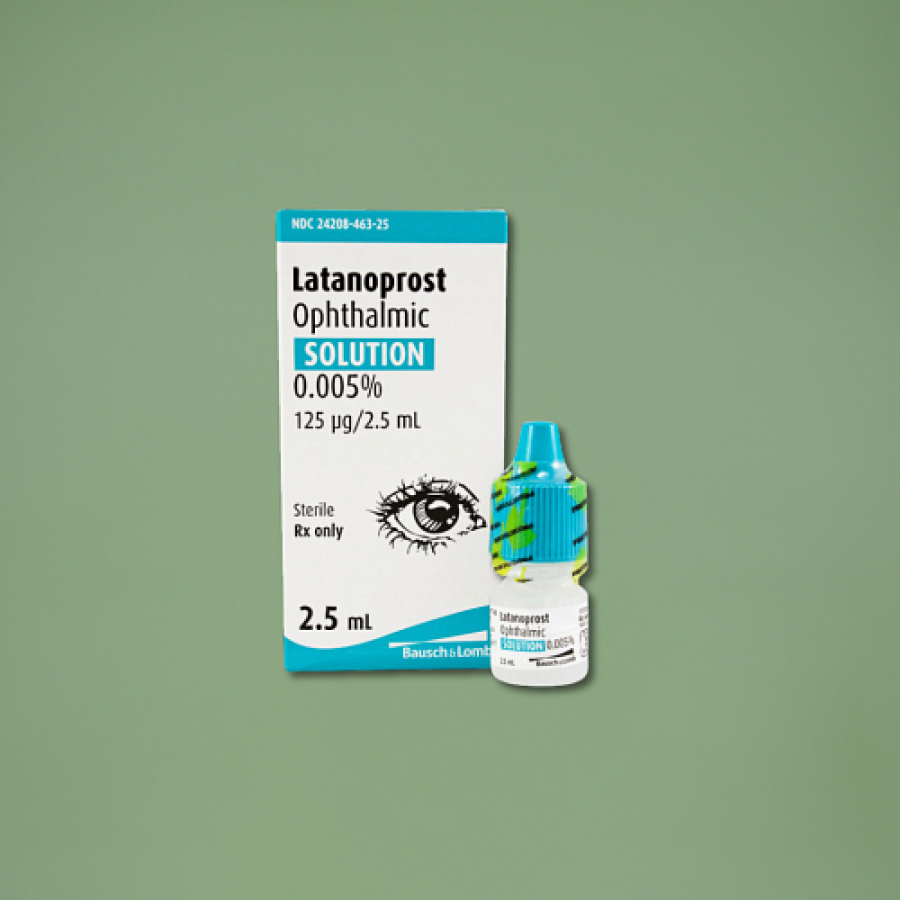
How It Works
As a prostaglandin analog, latanoprost works by reducing the amount of fluid in the eye. This helps relieve the eye pressure associated with conditions like glaucoma or ocular hypertension.
| Quick Facts | |
|---|---|
| Common Brands | Xalatan, Iyuzeh, Xelpros |
| Drug Class | Prostaglandin analog |
| Generic Status | Generic is available. |
| Availability | Prescription only |
Dosing
The typical recommended dose for latanoprost is one drop administered into the affected eye(s) once daily, usually in the evening. The prescription label will have specific instructions for how to apply latanoprost, but here are the general guidelines:
- Wash and clean your hands.
- If wearing contact lenses, remove them. You may put them back in after 15 minutes.
- Tilt your head back and pull the lower eyelid down with a finger.
- Without touching the dropper to your eye, squeeze one drop into the eye.
- Close your eye and gently press the inside corner of the eye to help spread the medication.
Note: Dosing information below is educational only. Your prescribing physician will determine your specific dose based on your individual health needs. Always follow your healthcare provider’s instructions for exact dosing.
Uses
FDA-Approved Uses
Latanoprost is FDA-approved to reduce elevated intraocular pressure (IOP) in people with open-angle glaucoma or ocular hypertension.
Off-Label Uses
You may see latanoprost prescribed for uses that are not “FDA-approved.” This is a very common and legal practice called “off-label” prescribing, where a doctor uses their clinical judgment to prescribe a drug for a different (but well-researched) purpose.
There are currently no common off-label uses for latanoprost.
Get Savings Updates for Latanoprost
Join our mailing list for exclusive deals and more.
Side Effects
Like all medications, latanoprost can cause side effects. Some common side effects may improve over time as your body adjusts to the medication. Other side effects may be serious and require medical attention.
Common Side Effects
- Eye burning, stinging, or itching
- Eye redness
- Dry eye
- Increased tear production
- Temporary blurred vision
- Darkening of the iris or skin around the eyes
- Increased eyelash growth, number, or thickness
- Feeling of something being in the eye
- Small spots on the cornea
- Eye discharge
Serious Side Effects
Serious side effects are rare, but it’s important to know what to look for if they do occur. Stop using latanoprost and call your doctor immediately if you experience:
- Severe allergic reactions: Symptoms include swelling of the face, lips, tongue, or throat; difficulty breathing or swallowing; racing heart; severe rash or itching; and/or fever.
- Macular edema: This swelling of the retina can lead to vision changes, including wavy or blurry vision or colors appearing dull.
- Severe eye inflammation: Latanoprost may cause or worsen eye inflammation, including increased redness, swelling, or pain.
- Herpes eye infection: In people with a history of herpes keratitis, latanoprost may increase the risk of the infection returning.
- Bacterial eye infection: Serious eye infections affecting the cornea can occur if the latanoprost bottle gets contaminated. Symptoms include eye swelling and pain.
- Darker eyes, eyelashes, or eyelids: Latanoprost can cause your iris, eyelashes, or skin around the eyes to get darker. These changes may not appear until months or years later. Changes in eye color may be permanent, but changes in eyelash or skin color typically go away after you stop using the medication.
Call your doctor immediately if you experience any concerning or prolonged symptoms.
Pharmacist Tips
Store Latanoprost Properly
Unopened bottles of latanoprost should be stored in the refrigerator. Once the bottle is opened, it can be stored at room temperature (up to 77ºF) for up to 6 weeks (42 days). Keep the bottle away from light.
Remove Contacts Before Applying
Latanoprost contains a preservative called benzalkonium chloride, which can be absorbed by soft contact lenses. Remove contact lenses before applying the drops and wait at least 15 minutes before putting them back in.
Avoid Contaminating the Eye Dropper or Bottle
To prevent serious infections, never touch the dropper tip to your eye, fingers, or any other surface. Wash and clean your hands before and after using latanoprost.
Apply Other Eye Drops 5 Minutes Apart
If you use other eye drops, wait at least 5 minutes between applying latanoprost to allow each medication to be absorbed.
Be Careful With Blurry Vision
Your vision may be temporarily blurry after applying latanoprost. Avoid driving or operating machinery until your sight clears.
Do Not Double Up on Doses
If you miss a dose of latanoprost, use it as soon as you remember, unless it is time for your next dose. In that case, skip the missed dose and apply your next dose as usual.
Drug Interactions
Certain medications and substances can interact with latanoprost, potentially altering how it works or increasing the risk of side effects. For example:
- Other prostaglandin analogs: Using latanoprost concurrently with other prostaglandin eye drops (such as bimatoprost or travoprost) is generally not recommended unless directed by a healthcare provider. Doing so may negatively affect the medication’s ability to lower eye pressure.
- Thimerosal-containing drops: If latanoprost is used at the same time as eye drops containing the preservative thimerosal, cloudiness may occur. These medications should be administered at least 5 minutes apart.
Always give your doctor and pharmacist a complete list of all your medications, vitamins, and supplements to check for potential interactions.
FAQs
Can latanoprost permanently change my eye color to brown?
Yes, this is a known side effect. Latanoprost can increase the melanin, or pigment, in the iris, leading to a darker or browner eye color. These changes are often permanent.
Why do I have to keep the unopened bottle in the refrigerator?
Unopened bottles of latonprost require refrigeration to maintain stability until the expiration date. Once you open a bottle, it can be stored at room temperature for up to 6 weeks.
Does latanoprost make my eyelashes grow thicker?
Generally, yes. While using latanoprost, you may notice your eyelashes becoming longer, thicker, darker, or more numerous. These eyelash changes usually reverse after you stop using the medication.
Why should I take this medication at night rather than in the morning?
Latanoprost is typically prescribed for evening use. It takes 8 to 12 hours to reach its maximum effect.
Can I wear contact lenses while using latanoprost?
You should not wear soft contact lenses when applying the medication. Latanoprost contains a preservative that can damage or stain soft contacts. Remove contact lenses before applying latanoprost. You can put them back in after 15 minutes.
Can I use latanoprost in only one eye if I have glaucoma in just one eye?
Yes. The medication should be applied to the affected eye(s). Follow your provider’s specific instructions on which eye(s) to treat.
Is it normal for my eyes to be red and stinging for the first few weeks?
Eye redness, burning, and stinging are common side effects of latanoprost. These symptoms often improve over time as your body adjusts to the medication.
Can I use artificial tears with latanoprost?
Yes, as long as your healthcare provider says it’s okay. If you need to use artificial tears or other eye drops, wait at least 5 minutes between each application to ensure the eye absorbs each medication properly.
Does this medication affect my vision?
Latanoprost can cause temporary blurry vision immediately after application. It may also cause sensitivity to light. More serious vision changes, while rare, should be reported to a doctor immediately.
Is latanoprost safe to use during pregnancy?
It is currently unknown if latanoprost affects pregnancy or can harm an unborn baby, so risks cannot be ruled out. Tell your healthcare provider if you are pregnant or plan to become pregnant so they can advise you on whether latanoprost is safe to use.
What is the difference between Xalatan and generic latanoprost?
Latanoprost is the generic version of the brand-name drug Xalatan. They contain the same active ingredient and work the same way.
Can I stop using the drops once my eye pressure is normal?
No. You should not stop using latanoprost until your doctor tells you to, even if you think your condition is better. Glaucoma requires continuous management to keep pressure low.
Does latanoprost interact with other eye drops like timolol?
Latanoprost may be used with other drops like timolol, but they should not be applied at the same time. It’s recommended to wait at least 5 minutes between different eye drops.
How long can I keep the bottle at room temperature after opening it?
Once opened, the bottle is safe to store at room temperature (up to 77ºF) for 6 weeks (42 days).
Does latanoprost work for narrow-angle glaucoma?
The FDA-approved indications for latanoprost are open-angle glaucoma and ocular hypertension. People with other types of glaucoma should ask their doctor about the most appropriate treatment for their specific condition.
Comparable Medications
Latanoprost, bimatoprost (Lumigan), travoprost (Travatan Z), timolol (Timoptic), or rocklatan (netarsudil + latanoprost)?
There are several medications that your doctor can prescribe in place of latanoprost. Here are a few possible alternatives below.
Bimatoprost
From $129.99
An ophthalmic prostaglandin analog used to lower eye pressure in open-angle glaucoma and ocular hypertension.
Travoprost
An ophthalmic prostaglandin analog used to lower eye pressure in open-angle glaucoma and ocular hypertension.
Timolol Eye Drops
From $27.99
An ophthalmic beta-blocker used to lower eye pressure in open-angle glaucoma and ocular hypertension.
Rocklatan
An ophthalmic combination medication used to lower eye pressure in open-angle glaucoma or ocular hypertension.
We Have Latanoprost in Stock. Get Yours Today!
Important: Information on this page is for educational purposes only. Prescribing decisions are made by independent, licensed providers. TelyRx operates technology-enabled pharmacies and a telehealth platform that connects patients with board-certified licensed providers. Prescriptions, when provider-approved and issued, are filled and shipped by TelyRx-affiliated pharmacies. We do not employ physicians or make prescribing decisions. Learn more about our editorial standards here.