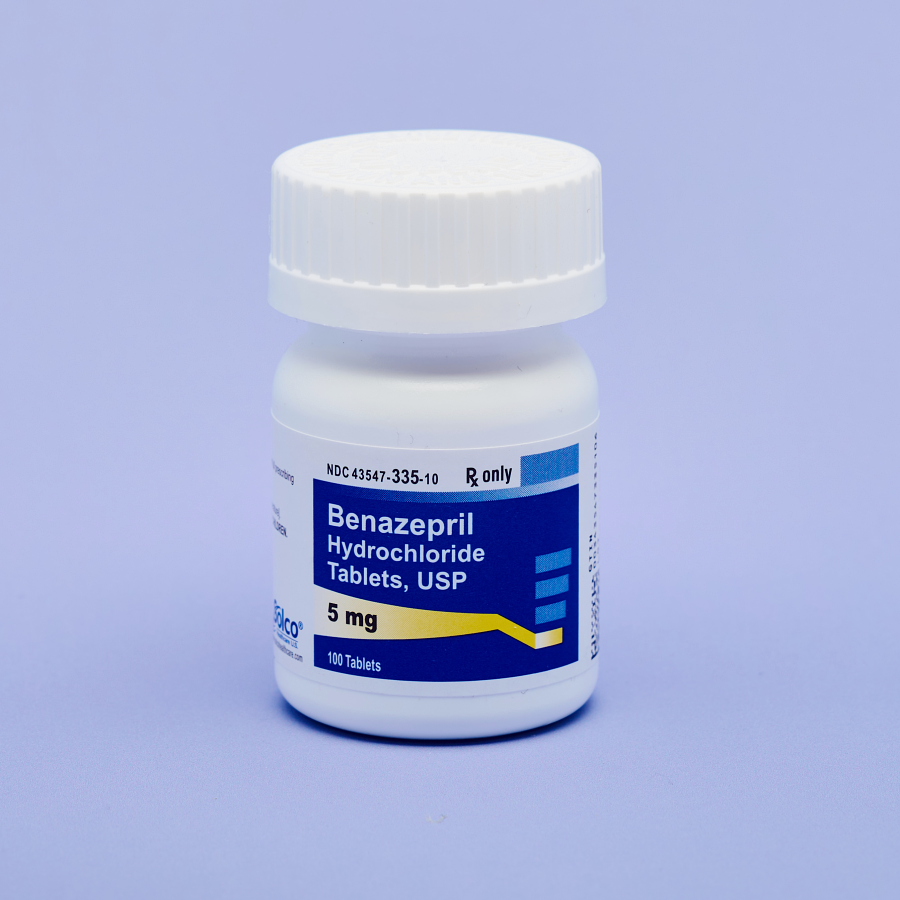
How It Works
Benazepril belongs to a class of drugs called angiotensin-converting enzyme (ACE) inhibitors. It blocks the action of the angiotensin-converting enzyme, which is responsible for forming a hormone called angiotensin II that causes blood vessels to narrow.
By blocking the formation of angiotensin II, benazepril allows the blood vessels to relax and widen. This allows for easier blood flow, which helps lower blood pressure and reduce the workload placed on the heart.
Benazepril also decreases the amount of protein lost in the urine (proteinuria), which can help protect kidney function and slow the progression of kidney damage over time.
| Quick Facts | |
|---|---|
| Common Brands | Lotensin |
| Drug Class | Angiotensin-converting enzyme (ACE) inhibitor |
| Generic Status | Generic is available |
| Availability | Prescription only |
Dosing
Benazepril tablets come in dosage strengths of 5 mg, 10 mg, 20 mg, and 40 mg. The recommended starting dose is 10 mg taken by mouth once daily. For people with kidney problems or who are also taking a diuretic (water pill), the typical starting dose is lowered to 5 mg taken by mouth once daily.
The usual maintenance dose of benazepril ranges from 20 mg to 40 mg. This may be taken as a single dose taken once per day or split into two even doses taken twice per day.
Note: Dosing information below is educational only. Your prescribing physician will determine your specific dose based on your individual health needs. Always follow your healthcare provider’s instructions for exact dosing.
Uses
FDA-Approved Uses
Benazepril is FDA-approved to treat high blood pressure (hypertension) and manage heart failure.
Off-Label Uses
You may see benazepril tablets prescribed for uses that are not “FDA-approved.” This is a common and legal practice called “off-label” prescribing, where a doctor uses their clinical judgment to prescribe a drug for a different (but well-researched) purpose.
Benazepril may be used off-label to protect kidney function in people with diabetes or chronic kidney disease.
Get Savings Updates for Benazepril Tablets
Join our mailing list for exclusive deals and more.
Side Effects
Like all medications, benazepril tablets can cause side effects. Some common side effects may improve over time as your body adjusts to the medication. Other side effects may be serious and require medical attention.
Common Side Effects
- Cough
- Dizziness
- Headache
- Drowsiness
- Fatigue
- Nausea
- Vomiting
- Muscle pain
Serious Side Effects
Serious side effects are rare, but it’s important to know what to look for if they do occur. Stop using benazepril tablets and call your doctor immediately if you experience:
- Severe allergic reactions: Symptoms include swelling of the face, lips, tongue, or throat; difficulty breathing or swallowing; racing heart; severe rash or itching; and/or fever.
- Angioedema: Benazepril may cause a rare reaction that causes swelling of the lips, face, tongue, throat, hands, feet, or gut. It can be life-threatening if it causes trouble breathing.
- Low blood pressure (hypotension): Benazepril may cause blood pressure to drop too low. The risk may be higher in people who experience frequent sweating, vomiting, or diarrhea. Symptoms include dizziness, lightheadedness, fainting, weakness, tiredness, or confusion.
- Kidney damage: Benazepril may worsen kidney function. Symptoms include urinating less than usual, unusual tiredness, difficulty breathing, chest pain, confusion, nausea, seizures, or swelling in the feet, ankles, or legs.
- High potassium levels (hyperkalemia): Benazepril can cause potassium levels to get dangerously high. Symptoms include muscle weakness, unusual tiredness, slow or irregular heartbeat, nausea, vomiting, or difficulty breathing.
- Liver damage (hepatotoxicity): Liver problems may occur on benazepril. Symptoms include yellowing of the skin or eyes (jaundice), stomach pain, light-colored stool, fever, nausea, vomiting, dark-colored urine, weakness, or loss of appetite.
- Low neutrophil levels (neutropenia): Benazepril can lower the number of white blood cells called neutrophils, which help prevent infection. Symptoms include fever, chills, sweats, mouth or throat sores, tiredness, shortness of breath, sore throat, or cough.
Call your doctor immediately if you experience any concerning or prolonged symptoms.
Pharmacist Tips
Take Your Dose At The Same Time Every Day
You can choose a time that works for you, but the important thing is to be consistent. Taking your dose at the same time every day helps maintain a steady level of the medication in your body.
Take With Or Without Food
Benazepril tablets can be taken with or without food. If it upsets your stomach, taking your dose with a meal may help.
Manage Dizziness
Dizziness may be more common when starting benazepril and when increasing your dose. Avoid getting up too quickly from sitting or lying down. Hold onto something for support and stand up slowly.
Limit Alcohol
Alcohol can increase the risk of feeling dizzy on benazepril. It can also raise blood pressure, so limiting or abstaining from alcohol may help reduce these side effects.
Stay Hydrated
Drinking plenty of water throughout the day can help prevent your blood pressure from dropping too low while on this medication.
Soothe a Cough
If you develop a persistent cough while taking benazepril, using honey and a humidifier might offer relief. You can also ask your provider about an alternative medication.
Monitor Your Blood Pressure At Home
Regularly check your blood pressure at home and write down the readings. Sharing these with your prescriber helps them track how well the medication is working.
Tell Your Provider If You’re Pregnant Or Breastfeeding
Benazepril can harm an unborn baby and should not be taken during pregnancy. It also passes into breast milk.
Store At Room Temperature
Benazepril tablets should be kept at room temperature between 68°F and 77°F (20°C to 25°C). Store the medication in a cool, dry place.
Try To Avoid Missing Doses
Benazepril works best when taken consistently. If you accidentally miss a dose of benazepril, take it as soon as you remember, unless it is almost time for your next dose. In that case, skip the missed dose and take your next dose as usual. Do not take extra or double doses to make up for a missed dose.
Drug Interactions
Certain medications and substances can interact with benazepril tablets, potentially altering how it works or increasing the risk of side effects. For example:
- Entresto (sacubitril/valsartan): Benazepril must not be taken with this heart failure medication due to an increased risk of severe adverse reactions.
- Other blood pressure medications: It is generally not recommended to combine benazepril with other ACE inhibitors, angiotensin II receptor blockers (ARBs), or aliskiren.
- Potassium salts or supplements: Taking potassium supplements or salt substitutes containing potassium with benazepril can dangerously raise blood potassium levels.
- NSAIDs: Nonsteroidal anti-inflammatory drugs, such as ibuprofen and naproxen, can interact with benazepril and potentially affect kidney function or blood pressure.
- Diuretics: Water pills can increase the risk of your blood pressure dropping too low on benazepril.
- Diabetes medications: Taking benazepril with diabetes medications may increase the risk of low blood sugar (hypoglycemia).
- Immunosuppressants: Medications used after organ transplants or for cancer, such as everolimus, sirolimus, or temsirolimus, may increase the risk of serious side effects on benazepril.
- Lithium: This medication used for mental health conditions can interact with benazepril.
Always give your doctor and pharmacist a complete list of all your medications, vitamins, and supplements to check for potential interactions.
FAQs
What is the difference between benazepril and lisinopril?
Both benazepril and lisinopril are ACE inhibitors that work to lower blood pressure. One main difference is the dosing schedule. Benazepril can be taken once daily or split into two doses taken twice daily, whereas lisinopril is usually taken once a day. Lisinopril is also used to treat heart failure and lower the risk of death following a heart attack.
Why did my doctor warn me to avoid potassium supplements and salt substitutes?
Benazepril can cause your body to retain potassium, leading to high potassium levels (hyperkalemia). Taking additional potassium through supplements or salt substitutes (which often use potassium instead of sodium) increases the risk of this condition, which can be life-threatening.
Is it true that I cannot take ibuprofen (Advil) or naproxen (Aleve) while on this medication?
Nonsteroidal anti-inflammatory drugs (NSAIDs) like ibuprofen and naproxen are known to interact with benazepril. It is generally recommended to avoid using these over-the-counter pain relievers when taking benazepril tablets. Taking them together may compromise your kidney health or blood pressure management.
Why is benazepril strictly forbidden if I am pregnant or trying to conceive?
Benazepril is considered unsafe during pregnancy because it can cause severe, life-threatening harm to an unborn baby. If you become pregnant, it’s recommended that you stop the medication immediately and contact your care team.
Should I take this medication in the morning or at night before bed?
You can take benazepril at any time of the day. The important thing is to be consistent. Try to choose a time that you can consistently take benazepril every day.
What is the difference between standard benazepril and “Lotrel”?
Benazepril is a generic single-ingredient medication that contains only benazepril as the active ingredient. Lotrel is a combination medication that contains benazepril and amlodipine.
Is it safe to drink alcohol while taking this medication?
It is generally recommended to limit or avoid alcohol while taking benazepril. Drinking alcohol can increase the risk of experiencing dizziness as a side effect. It may also counteract the medication by raising your blood pressure.
Does benazepril cause weight gain or fluid retention in the legs?
Rapid weight gain or swelling (edema) in the feet, ankles, or lower legs can be a sign of a serious complication, such as kidney damage. If you experience these symptoms on benazepril, it is important to contact a healthcare provider right away.
Do I need to take this pill with food, or can I take it on an empty stomach?
You can take benazepril tablets with or without food. If you find that it upsets your stomach, taking your dose with food may offer relief.
Can I stop taking benazepril suddenly if my blood pressure returns to a normal reading?
No, you should keep taking benazepril as prescribed unless your care team tells you to stop. Consistent use over time is often required for long-term heart and kidney health benefits, even when your blood pressure readings appear normal.
Does this medication interact with my diabetes drugs or insulin?
Yes, benazepril can potentially interact with medications used to treat diabetes, including insulin. Additionally, having diabetes can increase the risk of experiencing high potassium levels while taking benazepril.
How long does it actually take for benazepril to lower my blood pressure?
Benazepril typically starts to lower blood pressure within 1 hour of taking a dose. A single dose reaches its full effect in about 4 hours. However, it may take a few weeks of consistent daily treatment to observe the full effects on your overall blood pressure.
Why must I wait 36 hours between taking benazepril and Entresto?
Benazepril and Entresto (sacubitril/valsartan) are not taken together because the combination significantly increases the risk of serious side effects, including angioedema. A 36-hour washout period is commonly required between stopping benazepril and starting Entresto.
Comparable Medications
Benazepril tablets, lisinopril (Zestril / Prinivil), enalapril (Vasotec), ramipril (Altace), losartan (Cozaar), amlodipine, or sacubitril / valsartan (Entresto)?
There are several medications that your doctor can prescribe in place of benazepril tablets. Here are a few possible alternatives below.
Lisinopril
From $22.99
An angiotensin-converting enzyme (ACE) inhibitor used to treat high blood pressure (hypertension) and heart failure
Enalapril Tablets
From $22.99
An angiotensin-converting enzyme (ACE) inhibitor used to treat high blood pressure (hypertension) and heart failure
Ramipril Capsules
From $24.99
An angiotensin-converting enzyme (ACE) inhibitor used to treat high blood pressure (hypertension) and heart failure
Losartan
From $22.99
An angiotensin II receptor blocker (ARB) used to treat high blood pressure (hypertension) and diabetic kidney disease (diabetic nephropathy)
Amlodipine
From $24.99
A calcium channel blocker used to treat high blood pressure (hypertension) and a type of chest pain caused by reduced blood flow to the heart (angina)
Sacubitril / Valsartan Tablets
From $79.99
A combination neprilysin inhibitor and angiotensin II receptor blocker (ARB) used to treat heart failure
We Have Benazepril Tablets in Stock. Get Yours Today!
Important: Information on this page is for educational purposes only. Prescribing decisions are made by independent, licensed providers. TelyRx operates technology-enabled pharmacies and a telehealth platform that connects patients with board-certified licensed providers. Prescriptions, when provider-approved and issued, are filled and shipped by TelyRx-affiliated pharmacies. We do not employ physicians or make prescribing decisions. Learn more about our editorial standards here.