

Experiencing ear pain? This can sometimes be a sign of an ear infection. Ear infections occur when germs get into specific parts of the ear, causing inflammation and uncomfortable symptoms. There are actually several different types of ear infections, and they are categorized by where the infection is and what specific type of germ that is causing it. The three main types of ear infections are:
- Outer ear infections
- Middle ear infections
- Inner ear infections
Most are caused by viruses or bacteria, but sometimes can be caused by fungi, which is then called a fungal ear infection. Each of these ear infections can also affect one or both ears. When both ears are infected at the same time, it is called a double ear infection, which can cause more intense symptoms. Depending on the cause and severity of infection, treatments can range from simple at-home care, to needing prescription ear drops or oral medications.
In this guide, we break down what you need to know about the types of ear infections, including their causes, symptoms, and the best treatment options for each type.
Overview of Ear Infection Types
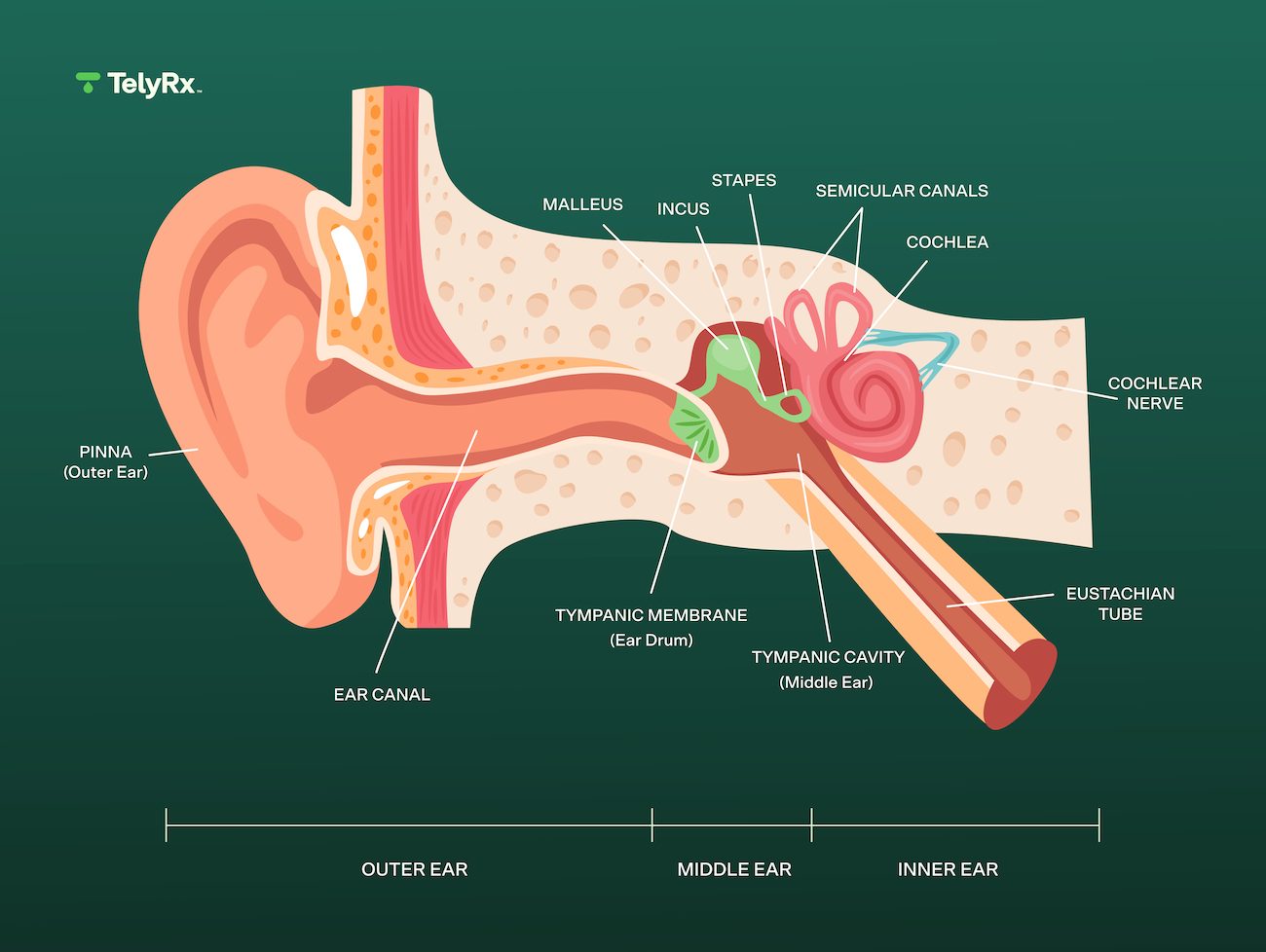
There are three main parts of the ear: the inner ear, middle ear, and outer ear. When these parts of the ear become infected or inflamed, they cause an ear infection. While the most common symptom of any ear infection is pain or discomfort, there are unique characteristics that vary depending on the part of the ear that is affected.
| Type of Ear Infection | Affected Area | Common Symptoms | Treatments |
|---|---|---|---|
| Outer Ear (Otitis Externa) | Outer ear canal and skin of the outer ear | Ear pain, redness, itchiness, outer ear swelling, clear or colored discharge or bloody drainage from the ear | Antibiotic ear drops for bacterial infections; antifungal ear drops for fungal infections; ear irrigation; ear wicks; OTC pain relievers |
| Middle Ear (Otitis Media) | Air-filled space behind the ear drum called the Eustachian Tube | Ear pain, fullness, pressure, muffled hearing, fever | Viral infections may resolve on their own; bacterial infections require oral antibiotics; OTC pain relievers; placement of ear tubes for frequent infections |
| Inner Ear (Otitis Interna) | The inner ear, cochlea and semicircular canals (balance and hearing center) | Vertigo, dizziness, feeling off-balance, nausea, vomiting, ringing in the ear, hearing loss | Steroids to help with inflammation in severe infections; bacterial infections may require oral antibiotics; symptom management as needed with antihistamines, antiemetics, and OTC pain relievers |
| Fungal Infection (Otomycosis) | Outer ear canal and skin of the outer ear; can spread to the ear drum in rare cases | Ear pain, intense itching, flaky skin, outer ear swelling, ear pressure or fullness, white or yellow discharge, ringing in the ear, headache | Topical antifungal creams, ointments or ear drops; oral antifungals; medical ear irrigation/cleaning debris |
| Double ear infection | Same locations as any of the above, but affecting both ears | Same symptoms as any of the above, but affecting both ears | Same treatments as any of the above, but used for both ears |
What Is an Outer Ear Infection, or Swimmer’s Ear?
An outer ear infection (otitis externa) occurs when bacteria or fungi infect the outer ear canal and cause inflammation. It’s also commonly known as “swimmer’s ear” because people most often get it after swimming, though you don’t have to be a swimmer to get it. This can happen whenever moisture gets trapped in the ear, such as from a shower, sweat, or from using ear buds or hearing aids. Excess moisture softens the skin and allows bacteria and fungi to enter and grow easily in the ear canal, causing the infection.
It’s also possible to get swimmer’s ear from skin irritation or damage that can happen when removing ear wax with a cotton swab or fingernail. You might accidentally scratch the skin of your ear canal and give germs an opening to enter the wound and cause an infection.
About 10% of adults will get swimmer’s ear at some point in their lives, making it the most common type of ear infection affecting adults. Common symptoms include:
- Ear pain or discomfort that can worse when pulling on the outer ear
- Ear itching
- Skin changes or swelling of the outer ear
- Discharge draining from the ear
- Ear fullness or pressure, feeling “clogged”
- Muffled hearing
Outer Ear, or Swimmer’s Ear Infection Treatment
Because this type of infection only involves the surface and outer parts of the ear canal and not the deeper parts, this type of infection can usually be treated with topical antibiotic or antifungal drops applied directly into the ear canal (for bacterial or fungal infections, respectively).
In addition to drops, treating outer ear infections often can also involve pain relievers and anti-inflammatory treatments to help symptoms. This may include:
- Antibiotic ear drops, such as ofloxacin or ciprofloxacin, for bacterial infections
- Antifungal ear drops, such as clotrimazole, for fungal infections
- Over-the-counter pain relievers like ibuprofen or acetaminophen to reduce the pain and discomfort
Sometimes, outer ear infections cause severe swelling that narrows or blocks the opening of the ear canal, making it difficult for medication to fully reach the infected parts of the ear. If this happens, healthcare providers may use an ear wick, which is a small, straw-like sponge that is inserted into the swollen ear canal and kept in place until swelling goes down, usually for up to a few days. It absorbs the ear drops and expands, keeping the canal open so the medication can reach and clear the infection.
Corticosteroids, a prescription anti-inflammatory medication, are sometimes combined with other medications to help reduce swelling and ease discomfort from the infection. These combination ear drops may include:
- Ciprofloxacin/dexamethasone, ciprofloxacin/hydrocortisone, or neomycin/polymyxin B/hydrocortisone: an antibiotic and corticosteroid drop
- Hydrocortisone/acetic acid, a corticosteroid and antiseptic combination drop
The length of treatment depends on the type of outer ear infection you have and the severity. Antibiotic drops typically clear bacterial ear infections within 7-10 days. Fungal infections can take much longer to clear, sometimes up to 3-4 weeks. However, symptoms usually start to improve within 2-3 days after starting proper treatment.
Ready to explore ear infection treatments?
What Is a Middle Ear Infection?
A middle ear infection (otitis media) is a bacterial or viral infection of the middle ear — or more specifically, the space directly behind the eardrum. This is the type of ear infection we most commonly associate with early childhood, with up to 90% of kids experiencing it before they even start school. However, around 3% of adults get middle ear infections too, especially if they were more prone to them in childhood.
Middle ear infections occur when the Eustachian tube, which is a small tube behind the ear drum that helps balance air pressure and allows fluid to drain from the middle ear into the back of your throat, becomes swollen or blocked. Conditions such as colds, the flu, and seasonal allergies can trigger this process by causing inflammation and congestion. This causes fluid to build up behind the eardrum, where bacteria or viruses can grow and cause an ear infection.
Most middle ear infections commonly follow upper respiratory infections such as the cold or flu because of the increased mucous and inflammation they cause, but can also be caused by seasonal allergies. Common symptoms of middle ear infections include:
- Ear pain
- A feeling of pressure or fullness in the ear
- Muffled hearing, popping sensation, or ringing in the ear
- Dizziness or a loss of balance
Because middle ear infections can be triggered by upper respiratory infections, there might be nasal congestion, sore throat, cough, or a fever along with ear symptoms. It is important to get an ear exam by a medical professional if you think you have an ear infection for proper treatment.
Middle Ear Infection Treatment
Most middle ear infections are caused by viruses and improve on their own. That’s why the CDC and healthcare providers usually recommend waiting 48-72 hours after ear pain symptoms start before issuing a prescription for antibiotics. Alternately, they may write you a prescription, but recommend you wait a couple days before filling it. If your symptoms don’t resolve within that timeframe, it’s time to start treatment.
The antibiotic choice depends on your age, symptom severity, if you took antibiotics recently, and medication allergies. It may also include medications to help manage your pain while antibiotics take effect. Common treatments include:
- First-line antibiotics: Amoxicillin, which is a type of penicillin, is usually the preferred antibiotic choice as it effectively treats the most common bacteria that cause middle ear infections. Amoxicillin-clauvalanate is a broader medication that may be used if you recently used amoxicillin and it didn’t clear your infection.
- Second-line or alternative antibiotics: If penicillins cannot be used, your provider may select another type of antibiotic, such as cefdinir, cefuroxime, cefpodoxime, or clindamycin.
- Pain relievers: Over-the-counter medications such as ibuprofen and acetaminophen are often recommended to use alongside antibiotics to relieve pain and fever while the antibiotic clears the infection.
It is important to tell your provider if you have an allergy to penicillins or amoxicillin and what your reaction is, as this will help guide selection of the safest medication for you.
The length of antibiotic treatment ranges from 5-10 days, depending on your age and how severe the infection is. If you have chronic middle ear infections, your healthcare provider might recommend ear tubes, which are placed during a minor outpatient surgical procedure. They work by supporting healthy eustachian tube function, allowing more air to reach the inner ear and preventing fluid buildup. If you develop middle ear infections after having the tubes placed, your provider may recommend antibiotic ear drops, such as ofloxacin.
“Home remedies can feel low-risk, but the ear is a small, sensitive space close to the eardrum and inner ear. Improvised treatments can cause real harm if the diagnosis is wrong.”
Ashley Robinson, PharmD, Pharmacy Manager at TelyRx
What Is An Inner Ear Infection?
Otitis interna is the medical term for inflammation of the inner ear. The inner ear is located deep inside the skull behind the middle ear and houses the structures that control your hearing and balance. Otitis interna is commonly referred to as an inner ear infection, but the inflammation is not always caused by an infection. While viral infections are the most common cause, they can also result from bacterial or fungal infections, head or ear injuries, certain medications, or autoimmune conditions. Because the inner ear plays a different role than the middle and outer ear, inflammation in this part can cause different types of symptoms.
For example, symptoms of an inner ear infection may include:
- Vertigo (a severe spinning sensation)
- Dizziness or loss of balance
- Nausea and vomiting
- Ringing in the ear (tinnitus)
- Hearing loss or changes
Inner ear infections are much less common than middle or outer ear infections, though they can occur when these types of infections spread deeper into the inner ear. They are also more common in adults than in children. However, sometimes they can take longer to treat, and require a more comprehensive exam to diagnose and rule out other conditions.
Inner Ear Infection Treatment
Because they are usually caused by viruses, such as the cold or flu, viral inner ear infections typically go away on their own and symptoms can be treated at home with plenty of rest and fluids. Sometimes, antivirals or antibiotics may be prescribed if it is being caused by a treatable virus or bacterial infection. In severe cases, a course of steroids may be prescribed to help with inflammation. However, most treatment is aimed at relieving the symptoms until they resolve on their own.
Other medications that your healthcare provider may prescribe to help:
- Antihistamines to help with vertigo and dizziness, including meclizine, fexofenadine, diphenhydramine, or loratadine. These are available OTC and as prescription medications.
- Antiemetic medications to help with nausea and vomiting, including ondansetron or prochlorperazine. These are only available with a prescription.
Unlike middle or outer ear infections, inner ear inflammation can’t be seen on just a visual exam. Because otitis interna can share similar symptoms with other neurological conditions, a more comprehensive evaluation may be needed to determine the cause and rule out other problems, such as stroke.
Note that it is always recommended to seek prompt medical attention if you have difficulty walking, persistent vomiting, severe dizziness, or concerning symptoms.
What Is a Fungal Ear Infection?

A fungal ear infection (otomycosis) occurs when fungi infect the outer ear canal. Common causes include the Aspergillus or Candida fungi.
Fungal ear infections cause symptoms that are similar to a standard bacterial outer ear infection (otitis externa), but may have slightly differing and severe symptoms, including:
- Intense itching of the ear canal (usually more severe than bacterial outer ear infections)
- Thick ear discharge that looks white, yellow, green, gray, black, or may appear fuzzy or wooly green
- Flaky or scaly skin around the ear canal
- Swelling and/or redness of the outer ear
- A feeling that your ear is blocked or full
- Ringing in the ear (tinnitus)
- Headache
- You have received treatment for swimmer’s ear (otitis externa) recently and symptoms aren’t improving
Fungal ear infections are less common than bacterial outer ear infections. They are more common in humid or tropical climates where fungi thrive, and affect 9% to 30% of people worldwide. They are also more common in those with weakened immune systems, such as older adults, diabetics, or those with autoimmune diseases. You may also be more likely to get them if you regularly swim, participate in watersports, or use tools to clean your ears that can disrupt the skin and increase moisture presence within the ear.
Fungal Ear Infection Treatment
Fungal ear infections are different from bacterial ear infections. Antibiotics will not work on fungal ear infections, so if you suspect a fungal infection, go see a medical provider for diagnosis. Though fungal ear infections may be identifiable visually, typically a swab of your ear discharge is collected to identify the pathogen causing the infection.
Treating a fungal ear infection requires a thorough professional ear cleaning before starting medications. Your healthcare provider will use special instruments and rinses to gently remove fluid, debris, or discharge that may be obstructing the ear canal so the medication can reach the infection source. Depending on the extent of the infection, either a topical or oral antifungal medication is prescribed, which may include:
- Topical antifungal ear drops, such as clotrimazole or fluconazole
- Topical antifungal creams or ointments, such as clotrimazole, ketoconazole, or exonazole
- Oral antifungal medications, such as itraconazole (only for severe or resistant infections that do not respond to topical treatments)
- Over-the-counter pain relievers, such as ibuprofen or acetaminophen
Fungal infections require longer treatment, usually anywhere from 2-4 weeks depending on the severity. It is always important to finish your medication as directed even if your symptoms improve to prevent the infection from returning.
The Do’s and Don’ts of At-Home Ear Infection Care
When you have an ear infection, there are things you can do to ease your symptoms, but there are also things that can make them worse. Consider this your go-to list of the dos and don’ts of home ear infection care.
DO
- Use OTC pain relievers: Medications like ibuprofen and acetaminophen can help reduce the pain and fever associated with ear infections.
- Apply a warm compress: Soaking a washcloth in warm water, wringing it out, and placing it over your affected ear for up to 20 minutes can help soothe pain.
- Keep your head elevated: Staying upright or propping up your head with an extra pillow while you sleep can help encourage fluid to drain out your middle ear, relieving pressure.
- Rest and hydrate: Resting and drinking plenty of fluids helps support your immune system while your body fights off the infection.
DON’T
- Don’t stick things in your ear: Never stick a cotton swab, hairpin, fingernail, or any other object into your ear canal to scratch an itch or clear earwax. This can drive debris deeper, injure the skin, and worsen your infection.
- Don’t use ear candles: Ear candling involves lighting a hollow cone on fire and placing it in the ear. It is dangerous, ineffective, and can cause severe burns or puncture your eardrum.
- Don’t go swimming: Keep your ears completely dry while healing from an ear infection to avoid introducing more bacteria.
Treatment Types: Pills, Drops, Creams, and More
We’ve talked about several different treatment options for ear infections. Here’s a look at all of them together and which ear infections they work best for:
- Pills: Oral antibiotics are systemically absorbed, which means they are processed through your digestive system and enter your bloodstream, allowing them to reach all parts of your body, including the isolated middle ear space behind the eardrum. They’re the standard treatment for severe middle ear infections. Oral antifungals may be prescribed for fungal ear infections, but only if topical treatments fail.
- Ear drops: Topical drops are used for outer ear infections (swimmer’s ear) because they deliver the medication directly to the infected skin of the ear canal. Since these medications act locally, they generally cause fewer whole-body side effects than oral medications, making ear drops the preferred treatment when appropriate. The type of drop used depends on the type of infection being treated. Antibiotic drops treat bacterial infections, while antifungal drops treat fungal infections. Drops cannot reach deeper into the ear, which is why they’re not prescribed for middle or inner ear infections.
- Tropical creams and ointments: If a fungal infection is affecting the external, visible part of the ear and causing symptoms like flaky skin, topical antifungal creams can be applied to clear the fungus.
Looking for treatment for your ear infection?
When To Seek In-Person Care
While many ear infections are mild, an in-person evaluation is required to make the correct diagnosis, which typically involves having a healthcare professional look into your ear with special medical equipment. The CDC recommends seeking in-person care if you:
- Have a fever of 102.2°F (39°C) or higher.
- See pus, fluid, or blood draining from the ear.
- Experience hearing loss, severe pain, or dizziness.
- Have symptoms that have either gotten worse or lasted more than 2 to 3 days.
Delaying treatment of an ear infection can lead to unnecessary complications, such as long-term hearing loss or balance issues. It is always important to get evaluated when you are experiencing symptoms of an ear infection to determine the proper diagnosis and receive appropriate and timely treatment.
Finding Online Ear Infection Treatment
When you are suffering from ear pain, sitting in a crowded waiting room is the last thing you want to do. Fortunately, telehealth and digital pharmacy platforms allow you to get treatment online, so you can manage your symptoms quickly from your own home.
Digital pharmacy platforms make it easier to skip the pharmacy lines and receive needed treatment delivered to your door. TelyRx offers a comprehensive catalog of FDA-approved treatments for ear infections that can be delivered as quickly as the next day.
When using an online prescription delivery service, look for clear signs that the service is safe. Check to confirm that the platform is LegitScript certified, is licensed in your state, and follows safe prescribing practices. For example, TelyRx is LegitAScript certified and our Clearwater, Florida and Irving, Texas pharmacies are licensed to operate in 48 states, as well as Washington, D.C. and Puerto Rico.
FAQs About Ear Infections
What is the best treatment for swimmer’s ear (otitis externa)?
The best treatment for swimmer’s ear may include prescription antifungal or antibiotic ear drops, depending on if the infection is being caused by a bacteria or fungus. Your healthcare provider can help determine the cause of your infection through a physical exam and lab testing if needed. Over-the-counter pain medications such as ibuprofen or acetaminophen may also be recommended to help relieve symptoms.
Do all ear infections need antibiotics?
Not necessarily. Ear infections can be caused by viruses, bacteria, or fungi. Only bacterial infections will respond to antibiotics. Viruses and fungi will not. Many middle ear infections are caused by viruses, which typically clear up on their own without antibiotics, which is why doctors often recommend waiting a few days before prescribing or taking them. This is why it is important to see a medical professional who can help determine the cause of your infection so you receive a proper diagnosis and avoid unnecessary medications.
What can I do for an ear infection at home?
While you treat your ear infection with doctor-prescribed treatments, there are steps you can take at home to make yourself more comfortable. For example, your provider may recommend taking over-the-counter pain relievers like ibuprofen or acetaminophen, applying a warm compress to the affected ear, and getting plenty of rest and fluids to help your body heal.
Are antibiotic ear drops different from oral antibiotics?
Yes. Antibiotic ear drops are applied topically to treat infections in the outer ear canal and skin surfaces. Oral antibiotics used for infections of the body that topical drops cannot reach. They are swallowed and enter the bloodstream and are used to treat middle or inner ear infections, as well as infections that do not respond to topical treatments.
What is a double ear infection?
A double ear infection is when you have an ear infection in both ears at the same time. You can have a double infection of any type, including outer, middle, and inner ear infections, and it can be caused by bacteria, fungi, or viruses.
Can I get online ear infection treatment?
Yes. By using reputable, LegitScript-certified telehealth platforms like TelyRx, you can transfer your prescription online to receive your medication at home. Or, if you already know which treatment is needed, you may request a new prescription through TelyRx. We work behind the scenes to connect your request with a provider licensed in your state, who will review your request, health profile, and attestation for medication safety. If appropriate, they will issue a new prescription, which TelyRx fulfills and ships to your home.
Your Next Steps
Ear infections can be extremely painful and frustrating. Whether you are struggling with intense ear pressure, pain, or itching, a healthcare provider can diagnose the type of ear infection you have. With the right treatment plan — whether that means watchful waiting, prescription ear drops, or using an online pharmacy for quick relief — you can manage your ear infection effectively and prevent complications
Research & Resources
Barkwill, D., Winters, R., & Arora, R. (2025, July 23). Labyrinthitis. StatPearls – NCBI Bookshelf. https://www.ncbi.nlm.nih.gov/books/NBK560506/
Bojanović, M., Stalević, M., Arsić-Arsenijević, V., Ignjatović, A., Ranđelović, M., Golubović, M., Živković-Marinkov, E., Koraćević, G., Stamenković, B., & Otašević, S. (2023). Etiology, predisposing factors, clinical features and diagnostic Procedure of otomycosis: A literature review. Journal of Fungi, 9(6), 662. https://doi.org/10.3390/jof9060662
De Nava, A. S. L., & Lasrado, S. (2023, August 14). Physiology, ear. StatPearls – NCBI Bookshelf. https://www.ncbi.nlm.nih.gov/books/NBK540992/
Getaneh, A., Ayalew, G., Belete, D., Jemal, M., & Biset, S. (2021). Bacterial etiologies of ear infection and their antimicrobial susceptibility Pattern at the University of Gondar Comprehensive Specialized Hospital, Gondar, Northwest Ethiopia: A Six-Year Retrospective Study. Infection and Drug Resistance, Volume 14, 4313–4322. https://doi.org/10.2147/idr.s332348
Jackson, E. A., & Geer, K. (2023, February 15). Acute otitis externa: Rapid evidence review. AFP. https://www.aafp.org/afp/2023/0200/acute-otitis-externa
Jamal, A., Alsabea, A., & Tarakmeh, M. (2022). Effect of ear infections on hearing ability: A narrative review on the complications of Otitis media. Cureus, 14(7), e27400. https://doi.org/10.7759/cureus.27400
Matz, O., Sutton, A. E., & Ashurst, J. V. (2026, June 8). Acute otitis media. StatPearls – NCBI Bookshelf. https://www.ncbi.nlm.nih.gov/books/NBK470332/
Medina-Blasini, Y., & Sharman, T. (2023, July 31). Otitis externa. StatPearls – NCBI Bookshelf. https://www.ncbi.nlm.nih.gov/books/NBK556055/
MedlinePlus. (2025). Labyrinthitis. https://medlineplus.gov/ency/article/001054.htm
Sanfins, M. D., Donadon, C., Borges, L. R., Skarzynski, P. H., & Colella-Santos, M. F. (2020). Long-term effects of unilateral and bilateral otitis media and myringotomy on Long-Latency Verbal and Non-Verbal Auditory-Evoked potentials. International Archives of Otorhinolaryngology, 24(04), e413–e422. https://doi.org/10.1055/s-0039-1697006
Smith, T., Rider, J., Cen, S., & Borger, J. (2023, July 21). Vestibular neuronitis. StatPearls – NCBI Bookshelf. https://www.ncbi.nlm.nih.gov/books/NBK549866/
Sogebi, O. A., & Oyewole, E. A. (2022). Prevalence and Co-Morbidities of Adult-Onset Otitis Media with effusion. Journal of West African College of Surgeons, 12(1), 76–82. https://doi.org/10.4103/jwas.jwas_107_22
U.S. Centers for Disease Control and Prevention (CDC). (2024). Ear infection Basics. https://www.cdc.gov/ear-infection/about/
Wiegand, S., Berner, R., Schneider, A., Lundershausen, E., & Dietz, A. (2019). Otitis Externa: Investigation and Evidence-Based Treatment. Deutsches Ärzteblatt International, 116(13), 224–234. https://doi.org/10.3238/arztebl.2019.0224