

How It Works
Meloxicam works by blocking the production of prostaglandins, which are chemical substances in the body that trigger inflammation and pain.Specifically, meloxicam does this by targeting cyclooxygenase (COX) enzymes. Because meloxicam focuses more on COX-2 than COX-1, it is thought to cause fewer stomach and kidney-related side effects compared to other NSAIDs that block both enzymes equally.
| Quick Facts | |
|---|---|
| Common Brands | Mobic, Vivlodex, Anjeso |
| Drug Class | Nonsteroidal anti-inflammatory drug (NSAID) |
| Generic Status | Generic for Mobic |
| Availability | Prescription only |
Dosing
Meloxicam is available in several forms, including oral tablets, capsules, and an oral suspension (liquid). There is also an injection form (Anjeso) used in hospital settings. It is important to note that different dosage forms — such as capsules vs. tablets — may not be interchangeable on a milligram-per-milligram basis.
- Oral capsules: The recommended starting dose is 5 mg taken by mouth once daily. The maximum dose is 10 mg taken by mouth once daily.
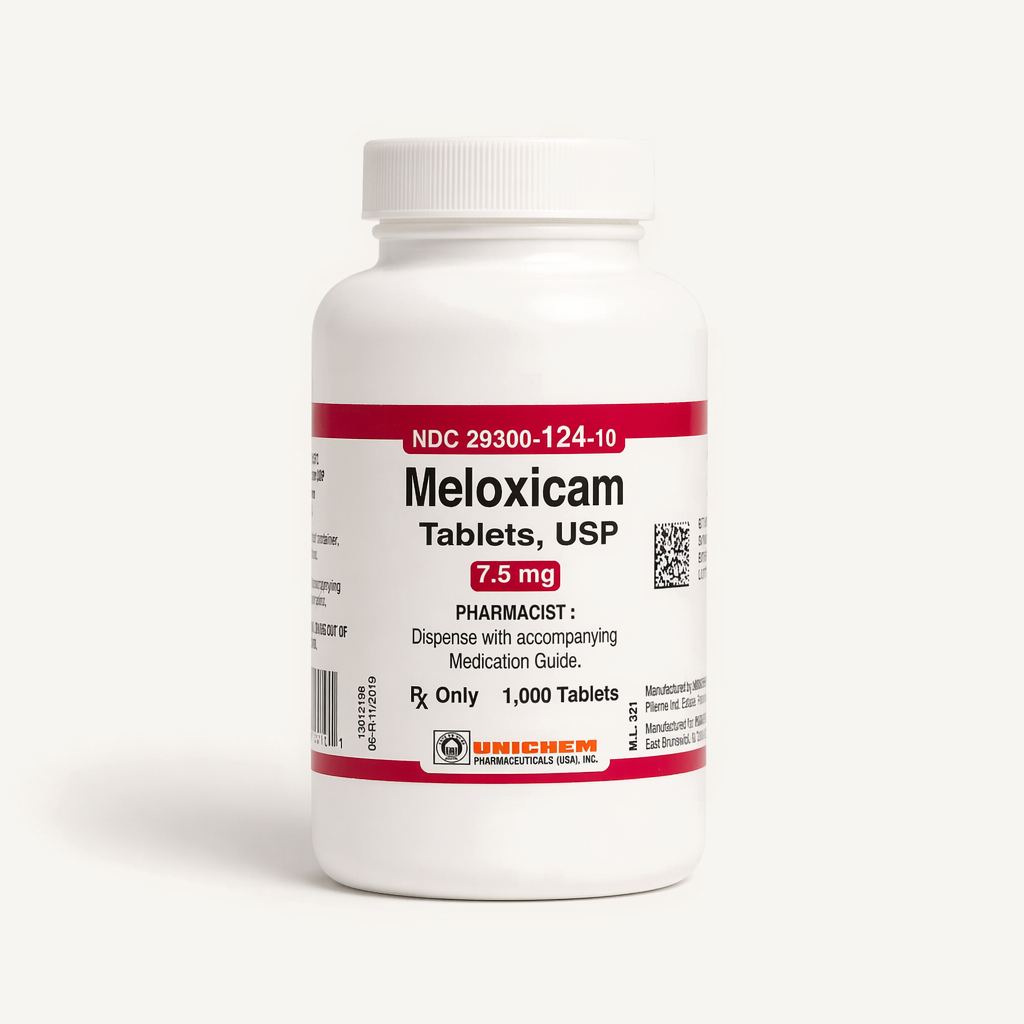
- Oral tablets and suspension: The recommended starting dose is 7.5 mg taken by mouth once daily. The maximum dose is 15 mg taken by mouth once daily.
Note: Dosing information is educational only. Your prescribing physician will determine your specific dose based on your individual health needs. Always follow your healthcare provider’s instructions for exact dosing.
Uses
FDA-Approved Uses
Meloxicam is FDA-approved to treat:
- Osteoarthritis (OA)
- Rheumatoid arthritis (RA)
- Moderate-to-severe pain (injection only)
Off-Label Uses
You may see meloxicam prescribed for uses that are not “FDA-approved.” This is a very common and legal practice called “off-label” prescribing, where a doctor uses their clinical judgment to prescribe a drug for a different (but well-researched) purpose.
Meloxicam may be prescribed off-label to treat pain associated with gout attacks, ankylosing spondylitis (a form of arthritis that affects the spine), and other conditions.
Side Effects
Like all medications, meloxicam can cause side effects. Some common side effects may improve over time as your body adjusts to the medication. Other side effects may be serious and require medical attention.
Common Side Effects
- Stomach pain
- Diarrhea
- Constipation
- Gas
- Heartburn
- Dizziness
- Nausea
- Headache
- Vomiting
- Flu-like symptoms (sore throat, runny nose)
Serious Side Effects
Serious side effects are rare, but it’s important to know what to look for if they do occur. Stop using meloxicam and call your doctor immediately if you experience:
- Severe allergic reactions: Symptoms include swelling of the face, lips, tongue, or throat; difficulty breathing or swallowing; severe rash or itching; fever. Anaphylaxis (closing of the throat) or DRESS (Drug Reaction with Eosinophilia and Systemic Symptoms) may also occur.
- Heart attack or stroke: Symptoms include chest pain or pressure, fast heartbeat, trouble breathing, sweating, dizziness, slurred speech, sudden and severe headache, or weakness on one side of the body.
- Stomach bleeding and ulcers: Symptoms include vomiting blood or material that looks like coffee grounds, black or tarry stools, and persistent stomach pain.
- Liver damage: Symptoms include yellowing of the skin or eyes (jaundice), dark urine, light-colored stools, stomach pain, fever, nausea, vomiting or unexplained fatigue.
- Kidney damage: Symptoms include swelling in the feet, legs, or ankles (edema), reduced urination, unexplained fatigue, confusion, nausea, or shortness of breath.
- Heart failure: Meloxicam can cause fluid retention, which can increase your risk for heart failure. Symptoms include unusual tiredness, shortness of breath, rapid weight gain, and swelling in the feet, ankles, or legs.
- High blood pressure (hypertension): Symptoms include sudden and severe headache, chest pain, dizziness, difficulty breathing, nausea or vomiting, blurred vision, anxiety, nosebleed, and buzzing in the ears.
- Severe asthma attack: Meloxicam can cause the airways to tighten, which may make severe asthma attacks more likely.
- High potassium levels (hyperkalemia): Symptoms include shortness of breath, chest pain, fast or irregular heartbeat, nausea, or vomiting.
- Anemia: Meloxicam may cause low levels of red blood cells. Symptoms include unusual fatigue, cold hands and feet, pale skin, fast or irregular heartbeat, and dizziness or lightheadedness.
- Severe skin reactions: Serious skin conditions like Stevens-Johnson Syndrome (SJS), Toxic Epidermal Necrolysis (TEN), and Exfoliative Dermatitis may occur when taking meloxicam. Symptoms include painful red or purple skin, blistering, rashes, fever, skin crusting or peeling, and red and watery eyes.
Call your doctor immediately if you experience any concerning or prolonged symptoms.
Pharmacist Tips
Take with Food
While meloxicam can be taken with or without food, taking it with a meal or a glass of milk is recommended to reduce the risk of stomach upset.
Avoid Alcohol
It is recommended to avoid drinking alcohol while taking meloxicam, as combining alcohol with NSAIDs increases the risk of stomach ulcers and bleeding.
Be Patient
You may notice some pain relief within a few hours of your first dose, but it can take weeks to experience the full effects of meloxicam. Do not increase your dose or stop meloxicam without consulting your provider first.
Missed Dose
If you miss a dose of meloxicam, take it as soon as you remember, unless it’s almost time for your next dose. In that case, skip the missed dose and take your next dose as scheduled. Don’t double up on doses of meloxicam.
Pregnancy Considerations
Meloxicam can cause fetal harm if it’s taken after 20 weeks of pregnancy. Inform your healthcare provider if you’re pregnant or planning to be before starting meloxicam.
Drug Interactions
Certain medications and substances can interact with meloxicam, potentially altering how it works or increasing the risk of side effects. For example:
- Blood thinners: Combining meloxicam with anticoagulants (like warfarin) or antiplatelet agents increases the risk of bleeding.
- Other NSAIDs: Combining meloxicam with other NSAIDs such as ibuprofen, naproxen, or aspirin may increase the risk of stomach bleeding and ulcers.
- Blood pressure medications: Meloxicam may reduce the effectiveness of ACE inhibitors, ARBs, beta blockers, and diuretics (water pills).
- Antidepressants: Taking SSRIs or SNRIs with meloxicam may increase the risk of bleeding.
- Methotrexate: Meloxicam can raise the levels of this medication in the blood to toxic levels.
- Lithium: Meloxicam can affect how your body metabolizes lithium.
- Corticosteroids: Combining meloxicam with steroids (like prednisone) can increase the risk of stomach bleeding.
- Digoxin: Meloxicam can affect how your body metabolizes digoxin.
Always give your doctor and pharmacist a complete list of all your medications, vitamins, and supplements to check for potential interactions.
FAQs
Is meloxicam a narcotic or opioid?
No, meloxicam is not a narcotic or an opioid. It is a non-steroidal anti-inflammatory drug (NSAID) that works by reducing inflammation rather than depressing the central nervous system. It does not carry the same risks of addiction or dependence associated with opioids.
How long does it take for meloxicam to start working for arthritis pain?
Initial pain relief may be felt within a few hours of taking the first dose. However, for conditions involving significant inflammation like rheumatoid arthritis, it may take several days or even a few weeks of consistent daily use to feel the full therapeutic benefit.
Can I take meloxicam with ibuprofen, naproxen, or aspirin?
Generally, no. You should avoid taking meloxicam with other NSAIDs like ibuprofen, naproxen, or aspirin unless specifically directed by your doctor. Combining these medications increases the total NSAID load in your body, which significantly raises the risk of serious side effects like stomach bleeding, ulcers, and kidney damage.
Why is meloxicam usually prescribed to be taken only once a day?
Meloxicam has a long half-life, meaning it stays active in the body for a longer period compared to shorter-acting NSAIDs. This allows for a convenient once-daily dosing schedule.
Does meloxicam cause weight gain?
It’s possible. Sudden or unusual weight gain can be a sign of fluid retention (edema), which is a known side effect of NSAIDs like meloxicam. If you experience rapid weight gain accompanied by swelling in the hands or feet, or shortness of breath, contact your healthcare provider as this could be a sign of heart failure or other serious conditions.
Can I drink alcohol while taking meloxicam?
It’s recommended to limit or avoid alcohol while taking meloxicam. Alcohol irritates the stomach lining, and when combined with an NSAID, it increases the risk of developing stomach bleeding or ulcers.
Is meloxicam safer for the stomach than ibuprofen?
Meloxicam preferentially blocks COX-2 enzymes more than COX-1 enzymes. Because of this selectivity, it is believed to have a lower risk of stomach side effects compared to non-selective NSAIDs like ibuprofen, although risk still exists.
Is meloxicam a muscle relaxer?
No, meloxicam is not a muscle relaxer. It is a nonsteroidal anti-inflammatory drug (NSAID) designed to treat pain and inflammation in the joints. While it helps with pain that might cause muscle tension, it does not directly act on muscle tissue to induce relaxation.
Can I take meloxicam on an empty stomach?
Yes, you can take meloxicam on an empty stomach. But, taking it with food or milk can help prevent nausea and upset stomach.
Can I cut or crush the meloxicam tablet?
It’s recommended to swallow meloxicam tablets whole. Because meloxicam is available in various formulations (e.g. tablets, capsules), it is best to ask your pharmacist about your specific prescription. If you have trouble swallowing pills, they may recommend another option, such as the oral suspension.
Is meloxicam used for gout flare-ups?
While meloxicam is FDA-approved for osteoarthritis and rheumatoid arthritis, providers may prescribe it off-label for other painful inflammatory conditions, including gout flare-ups.
What is the maximum daily dose of meloxicam?
For most adults with osteoarthritis or rheumatoid arthritis, the maximum daily dose of meloxicam is 15 mg.
Comparable Medications
An oral and topical NSAID used to treat pain from osteoarthritis, rheumatoid arthritis, and ankylosing spondylitis, as well as certain eye conditions and a skin condition called actinic keratosis.
Etodolac Capsules
From $49.99
An NSAID used to treat mild to moderate pain from osteoarthritis and rheumatoid arthritis.
Celecoxib
From $29.99
An NSAID used to treat pain from osteoarthritis, rheumatoid arthritis, ankylosing spondylitis, migraine, and painful menstrual cramps.
Naproxen (Aleve, Naprosyn)
An over-the-counter and prescription NSAID used to treat pain from gout, bursitis, ankylosing spondylitis, osteoarthritis, tendonitis, rheumatoid arthritis, and painful menstrual cramps.
Prednisone Tablets
From $35.99
A corticosteroid used for severe, acute inflammation and autoimmune flares associated with a variety of conditions, including arthritis, eye problems, lupus, multiple sclerosis, and kidney issues.
Methylprednisolone
From $38.99
Another corticosteroid used for acute flares of severe inflammation and associated pain from arthritis, asthma, multiple sclerosis, and allergic reactions.
We Have Meloxicam in Stock. Get Yours Today!
Important: Information on this page is for educational purposes only. Prescribing decisions are made by independent, licensed providers. TelyRx operates technology-enabled pharmacies and a telehealth platform that connects patients with licensed providers. Prescriptions, when provider-approved and issued, are filled and shipped by TelyRx-affiliated pharmacies. We do not employ physicians or make prescribing decisions. Learn more about our editorial standards here.